
*View accurate shipping rates and availability






12 Items


Up to 70% off across the store, plus free towels and mirrors up for grabs on orders over $800*
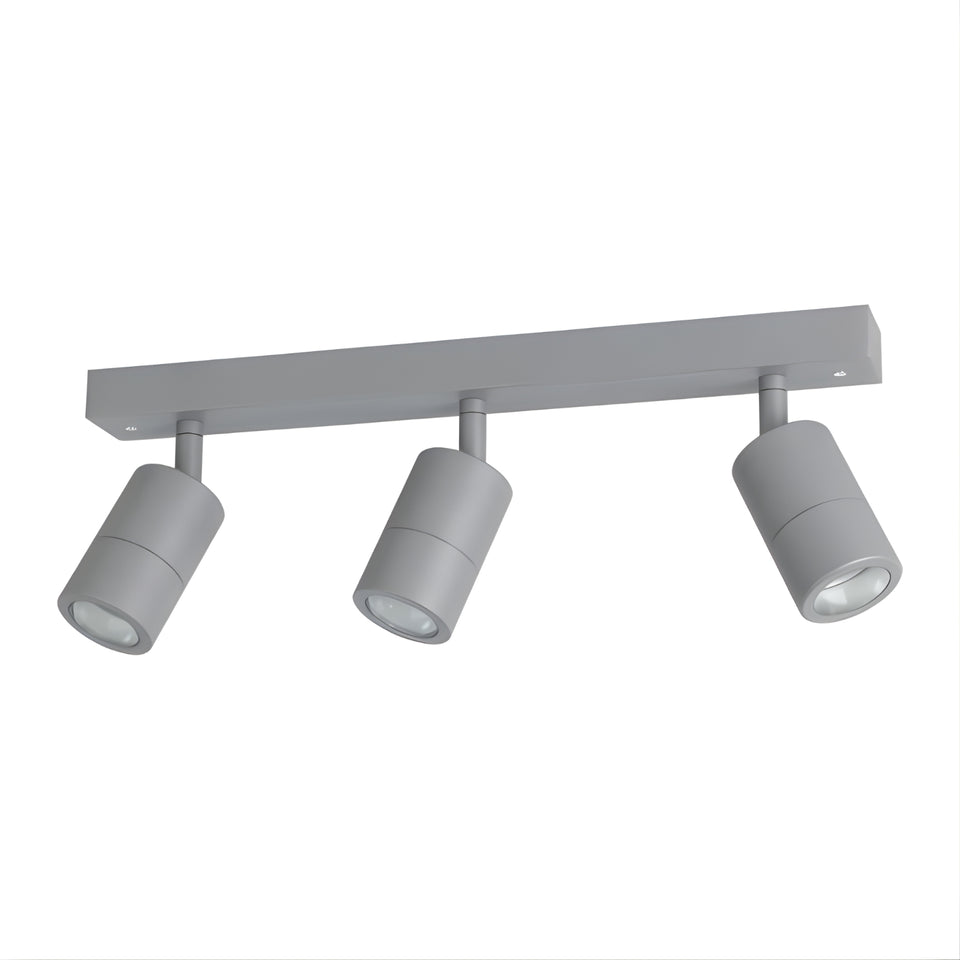




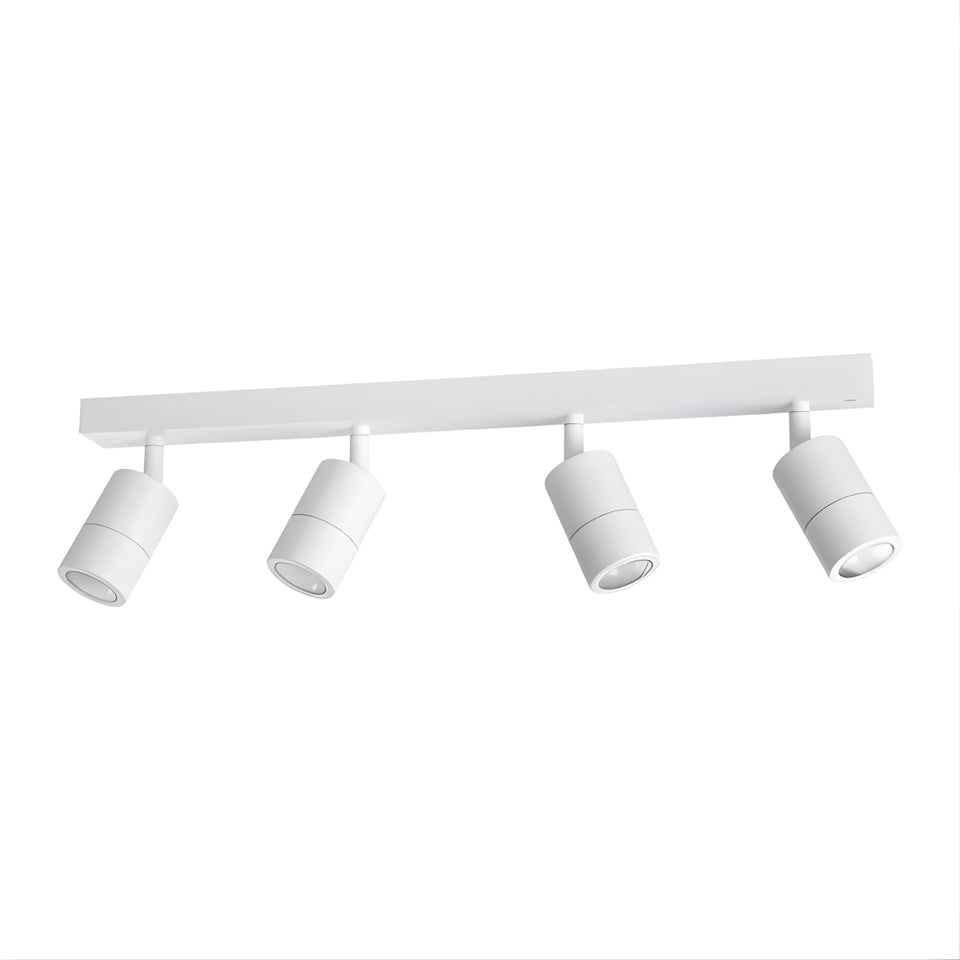
An outdoor ceiling light lights the space under a roof: a porch, a verandah, a carport, a covered deck or an alfresco dining area. Because it sits above you, its light lands on the floor and on the people standing on it. That makes it a different tool from a wall light, even on the same house. This page holds the Eglo Fremantle outdoor ceiling lights. Below you will find where each kind of ceiling fitting goes, how to read the IP rating, how to judge brightness for a space and what to settle before the electrician arrives. It also makes clear what these fittings are and are not.
Every fitting here is a Fremantle adjustable outdoor ceiling light: a slim aluminium bar with adjustable GU10 heads. It comes as a two-light, three-light or four-light bar, 28.5 cm, 46 cm and 63.5 cm long. All three are 6 cm wide and 17 cm high, so the bar hugs the ceiling and projects very little. Finishes are black, silver grey, titanium and white.
The technical lines are the same across the versions. The rating is IP65, which means dust and waterproof. Supply is 240V, approvals list RCM, and electrical protection is Class I, which needs an earth. The GU10 globes are included. The output is 400 lumens and a 5W maximum, the colour temperature is adjustable and the bar is not dimmable.
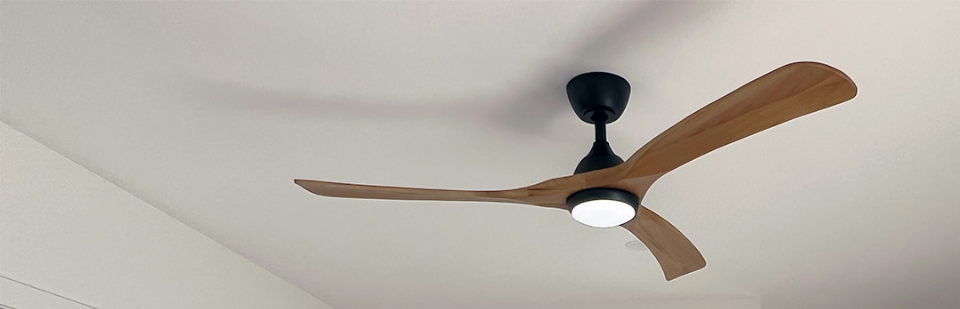
These are adjustable bars and nothing else. No flush dome, bunker light or pendant is on this page, and neither is a motion sensor version. For the rest of the outdoor range, the outdoor lighting page covers wall lights, garden lights and the rating and placement rules. Several searches that land here want outdoor fans, which live on the ceiling fans page.
Under cover. Porches, decks, verandahs, carports and alfresco areas all suit a ceiling light, and so do entrances and balconies. The roof gives the fitting something to mount to and keeps most of the rain off it.
Match the fitting type to the ceiling. Pendants and semi-flush fittings suit a porch ceiling with some height, spotlights and downlights suit eaves, and flush fittings suit low clearances. An adjustable bar like the Fremantle belongs with the spotlights. It sends light where you aim it, which works along an eave or across a wall and works less well as the single central light for a whole room.
A ceiling mount gives downward, fairly even light with a streamlined look next to wall or post lights. That fits a carport or a long verandah, where the whole floor needs light. At an entry it works best as half of a pair, matched with wall sconces. The exterior wall lights page covers the wall side of that pairing.
An IP rating has two digits. The first covers solid objects and dust, the second covers water. On the common reading of the scale, the 6 in IP65 means dust tight and the 5 means protected against jets of water.
Under a roof, that is a high rating. Ratings are set by exposure. IP44 is the usual benchmark under a roof, IP54 to IP65 suits a wall that faces the weather, and IP65 suits a spot that gets hosed or driven by weather. IP55 is enough for fully exposed positions, so the figures differ by a step. IP44 suffices for most outdoor use, and outdoor spots should be at least IP65. On any of those readings, IP65 covers a porch, a carport, a verandah or an exposed eave.
The rating does not measure corrosion. An IP rating does not cover salt damage, and solid brass, concrete or 316 stainless steel suit sites within about five kilometres of the ocean. The Fremantle is aluminium. Near the coast, ask the supplier about the coating and finish, and plan to wash the fitting.
Bar length decides how far the light spreads along the ceiling. A short bar suits a front porch or a back door, and a long bar suits a carport, a long verandah or the edge of an alfresco area. For bigger spaces, centre the fitting for even coverage and use more than one in a large area to avoid dark spots. In plain terms, if one four-light bar leaves the far corner dim, add a second bar rather than reaching for a brighter globe.
Brightness is measured in lumens, and the targets vary a lot. A small porch needs roughly 800 to 1,200 lumens and a larger patio or carport around 2,000 or more. 100 to 150 lumens per square metre is enough for a parking space when the light is even. About 120 lumens is a starting point for outdoor spaces and 100 to 200 for walkways. Because the targets differ, treat them as ranges.
GU10 is a pin base that pushes into the socket and twists. It is common in spotlights and downlights and runs on 240V. The Fremantle includes the globes, and because it does not dim, the bar should not go on a standard dimmer. The light bulbs and globes page covers base types, and GU10 should not be mixed up with the similar-looking 12V MR16, which needs a transformer.
Beam angle is the other choice. A wide beam gives a softer, feathered glow suited to ambient light, while a narrow beam is concentrated and picks out a garden or architectural feature. A narrow outdoor GU10 beam is about 25 to 36 degrees and a medium beam about 40. A ceiling that lights a floor is better served by a medium or wide beam, since a wider beam does not add light, it spreads it further. A bar aimed at a wall or a planter does better with a narrow one.
Colour temperature leans warm outdoors. Warm white suits patios, gazebos and outdoor living areas and cooler white suits paths and workstations. Warm white is 2700K to 3000K, and 4000K to 5000K suits security lighting. The Fremantle's colour temperature is adjustable, so you can choose within that range. Pick one warmth for the covered area and hold it across every fitting there. The globes page explains lumens, colour temperature and bases in more detail.
Adjustable heads are the reason to pick a bar over a fixed dome, and they are also where glare comes from. Angle a fitting slightly away from the direct line of sight, which cuts glare and improves beam control. Aim the heads at the floor, the wall or the plants and keep them off eye height, where anyone sitting under the roof ends up staring into a bare globe. With several heads on one bar, a sensible start is to angle them in different directions, check the result after dark and adjust.
Class I protection with an earth required means the fitting connects to the house earth conductor as well as live and neutral. At 240V it is a mains fitting. In Australia a licensed electrician installs any hardwired outdoor fitting, so ask about placement, junction boxes and weatherproof connections before you drill. Weatherproof junction boxes and conduit suit outdoor wiring, and the electrician decides what your site needs.
The box holds the ceiling light with globes and installation instructions. Read the instructions before the electrician visits, and decide the position of the bar in daylight, with the roof structure in view, so the mounting points land on something solid.
Corrosion-resistant aluminium or stainless steel, or powder-coated finishes, are the usual outdoor materials, with polycarbonate or tempered glass covers over the light source and UV-resistant coatings to stop fading. Solid brass, rattan and galvanised steel also appear outdoors. The Fremantle is aluminium with a finish colour. The coating is not described, so the finish name tells you the look and not the treatment.
The Fremantle is sold as a complete fitting rated IP65, with GU10 globes included and heads you can aim. It has no cover over the light source. If a closed cover matters to you, check the product photos, and treat the adjustable heads as the reason to choose this style.
Black blends with most exteriors and copper is hardwearing with a distinctive look. The Fremantle bars come in black, silver grey, titanium and white, so match the finish to what is already in view, such as door hardware and window frames. To compare finishes across the range, see the black lighting and white lighting pages.
Fremantle is a family name in the Eglo outdoor range. The Eglo Fremantle outdoor lighting page groups the whole family, and Eglo lighting covers the brand's indoor and outdoor ranges. For indoor ceiling fittings, ceiling lights covers sizing and types for inside the house.
Outdoor fittings should be reachable for cleaning and globe changes, and replaceable parts allow a partial repair instead of replacing the whole fitting. The Fremantle takes a standard GU10 globe, so a failed globe is a globe change. That is simple with the power off, provided the replacement matches the base. Switch the fitting off at the switchboard first and let the globe cool. Near the coast, wash salt off more often, since the rating does not cover corrosion.
An outdoor ceiling light suits a covered area, and the Fremantle adjustable bar suits a carport, verandah, porch or eave where you want to aim the light. It is rated IP65, which meets or beats the usual exposure ratings for a covered area, and it is aluminium. It does not dim, it needs a licensed electrician and an earth, and its rating does not cover salt corrosion. Pick the number of lights from the floor area, aim the heads away from eye level, keep one colour temperature across the area and confirm the lumens on the specification sheet.


