
*View accurate shipping rates and availability






3 Items
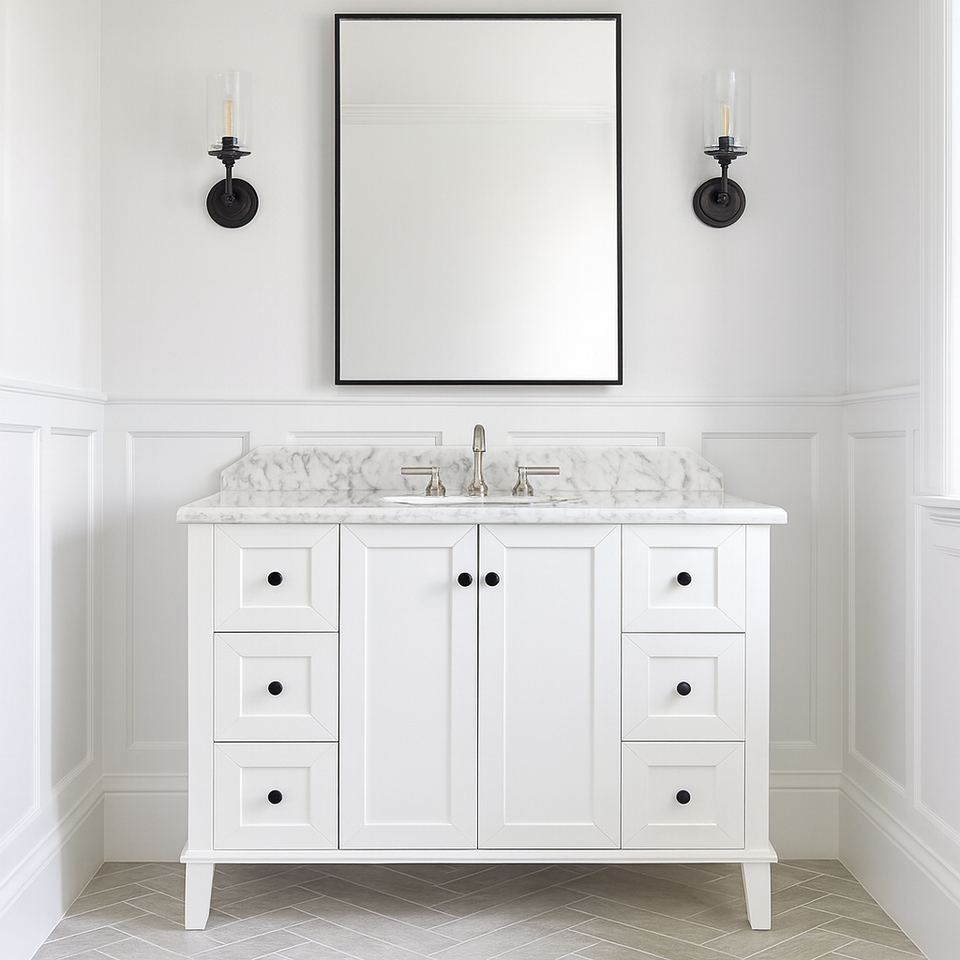
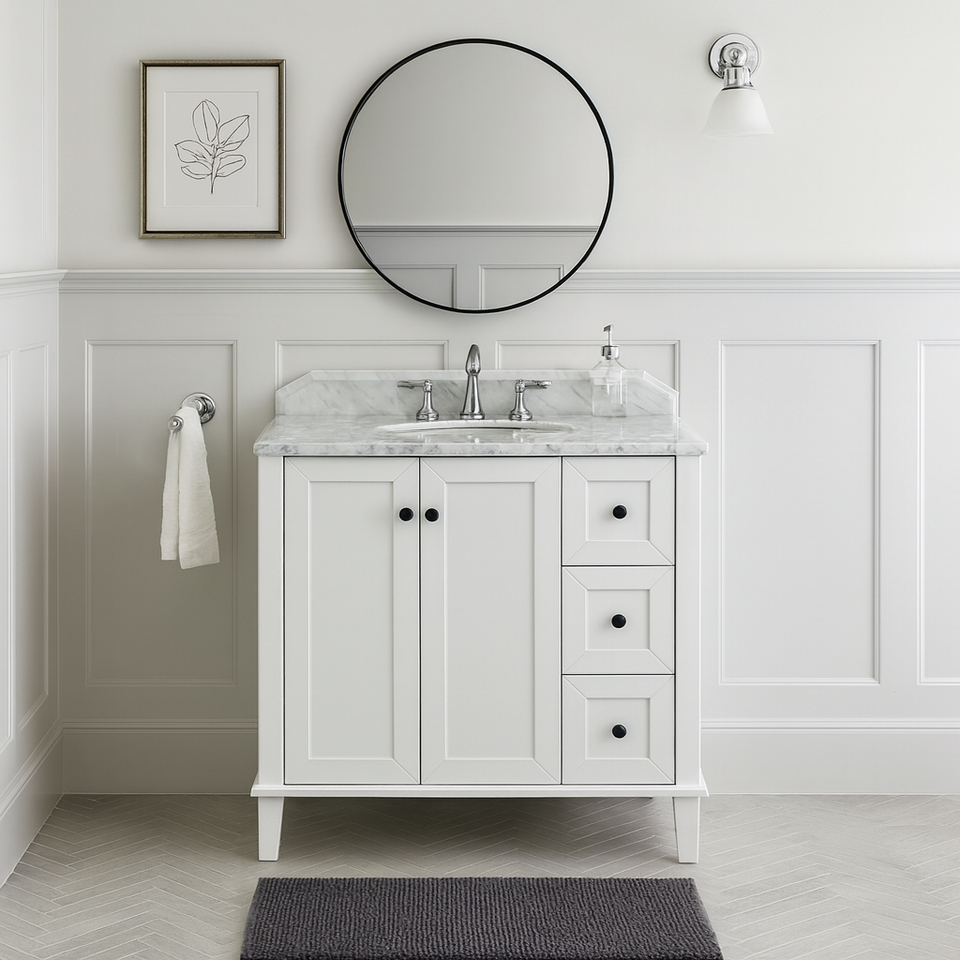
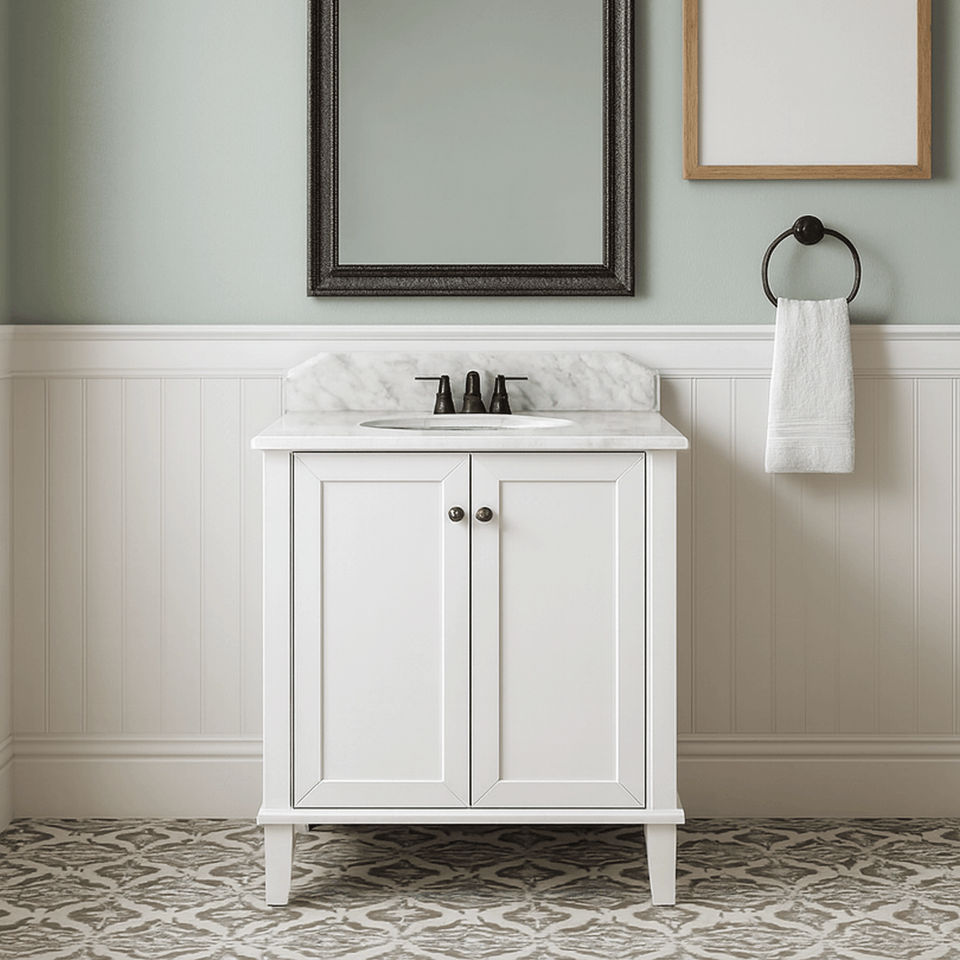
A pre-made vanity is a finished cabinet that comes with its top and basin, so you are not matching a cabinet, a stone top and a basin from three suppliers. This page holds three of them: the Turner Hastings Coventry, a floor standing cabinet in white satin polyurethane on solid rubberwood with a Carrara marble top, and the BelBagno Prado and Ancona, two wall hung gloss white vanities with a solid surface top and an integrated basin. This guide covers what each includes, the tops, the tap holes, the sizes, and the fitting and care steps. It sits in the bathroom vanity guide, and the Coventry brand range is at Turner Hastings vanities.
Pre-made means the cabinet, the top and the basin are chosen for you and sold together, so the pieces are designed to fit. It does not mean ready to use out of the box. Every vanity still needs a licensed plumber, a fixed or levelled cabinet, a waste and a tap. Check what is in the box on each product page before you order: the Prado and the Ancona arrive as a basin top, a drawer and a vanity base, and the Coventry as a cabinet and a top. If you need to know how a piece is packed before you order, ask us, and measure the route from the door to the bathroom, including hallway width, stair turns and door frames.
Each Coventry comes with a natural Carrara marble top, an under-counter ceramic white gloss basin, a 100mm marble splashback, an adjustable internal shelf and knob handles in matte black or chrome, with antique brass on request. The 32mm plug and waste is sold separately, and tapware is not included. The basin suits a P-trap or an S-trap installation, which your plumber can confirm against your wall or floor outlet.
The Prado and the Ancona include a chrome 32mm plug and waste with overflow, an integrated basin in a solid surface top, and a single tap hole for a basin mixer. The Prado is 744mm wide, 476mm deep and 450mm high in the 750mm size, and the Ancona is 893mm wide, 476mm deep and 450mm high in the 900mm size. Both have full extension soft close drawer runners and an E0 water-resistant MDF carcase, painted in several coats.
Choose the Coventry for a heritage or Hamptons room. It has panelled doors, soft curved corners, a marble top and a floor standing cabinet that looks like furniture. Choose the Prado or the Ancona for a modern room. They are wall hung, so the floor stays visible, the face is flat, and the top and basin are one piece of solid surface that wipes clean in a single pass. The Coventry is the bigger, more traditional cabinet, and the Prado and Ancona are lighter, shallower and simpler to clean.
The top is Italian sourced natural Carrara marble, and each piece is different, so no two vanities match exactly. Marble varies in colour, shade, pattern, texture and density. It can etch and stain even when sealed, and care varies by stone, so follow the instructions for the specific top and wipe spills quickly. Our recommendation: choose this top for its veining, wipe spills quickly, and keep acidic cleaners off it.
The Prado top is solid surface in semi gloss white, and the Ancona top is solid surface in gloss white, each with an integrated basin and an overflow. The basin and the bench are one piece, so there is no join to seal and the surface wipes clean. A solid surface top is non-porous, so it does not take up stains the way an open-pored stone can, and a small mark can often be polished out. Keep hot items off it, and avoid abrasive pads.
The Coventry comes with one tap hole or three. The Prado and Ancona come with one tap hole only, for a basin mixer, so they do not suit a wall-mounted tap or a three-piece set. The tap hole position is set when the top is made, so choose the tap before you order the vanity. A wall-mounted tap needs its rough-in set before the wall is lined and tiled. See taps and mixers.
The waste is the other fitting to match. Check the waste fits the basin, tighten it by hand only, because overtightening stresses the basin, and look for debris or an unlocked plug if it will not hold water.
The Coventry is sold in 75, 90 and 120 sizes, which read as width in centimetres, with 55 as the depth, so 750mm, 900mm and 1200mm wide and about 560mm deep. The 120 is a single bowl. The Prado comes in 750mm, 900mm and 1200mm, in gloss white or Maple Oak Grey woodgrain. The Ancona comes in 600mm, 900mm and 1200mm, in gloss white, White Oak or Rosewood. Check the spec sheet before you fix the plumbing positions.
A 750mm vanity suits a small main or guest bathroom with a single basin. A 900mm vanity suits a main or family bathroom with one basin, and it is not wide enough for two. A 1200mm vanity suits a large single basin or a tight double. The size pages list each width: 750mm, 900mm and 1200mm. For small rooms see small vanities.
The drawer layout changes with the size. The 900mm Coventry has two doors and three drawers, and the 1200mm has two doors and six drawers. The Prado has one large drawer and an additional inner drawer. Read the product page for the width you choose. For the finishes that suit the Coventry, see Hamptons vanities, where panelled doors and marble tops are the usual pairing, with chrome as the traditional tapware finish and black as a modern edge. For a white cabinet, see white bathroom vanities.
The Coventry knobs come in matte black or chrome, with antique brass on request, so match the tap to the knob. Chrome is the traditional choice with a heritage cabinet, and matte black gives a modern edge. The Prado and the Ancona have a fingerpull recess or a drawer front you open from the edge, so there is no handle to match, and the chrome waste sets the tone. Chrome or brushed nickel tapware sits well with a gloss white front.
The Prado comes in gloss white or Maple Oak Grey woodgrain, and the Ancona comes in gloss white, White Oak or Rosewood woodgrain. Gloss white reflects light and suits a small room, but it shows fingerprints and water marks, so keep a cloth to hand. A woodgrain finish hides marks and warms a white tile. Maple Oak Grey is a cool, soft grey wood, White Oak is a pale, natural tone, and Rosewood is a warmer, darker timber. Hold a sample against the tile and the floor in the light of the room, because a woodgrain looks different from a flat white swatch.
A vanity with a marble or solid surface top is heavy. Measure the route from the delivery point to the bathroom, including doorways, hallway turns and stairs, and plan for two people to carry each piece. Unpack on the day of delivery, check every piece against your order, and photograph any damage before you sign. Keep the packaging until you are sure everything is right. Store a stone or solid surface top flat or on a soft surface until it is fitted, and keep it away from heavy tools.
A floor standing vanity must sit level and true, or be packed so it does. The wall must be plumb and straight, and a bowed wall twists the cabinet when it is fixed. Floor standing still needs fixing: fix the cabinet through the back into at least two supports, with horizontal fixings no more than 300mm apart, and make sure the fixings clear water and electrical services. Transport blocks come off only after the cabinet is fixed.
Use a qualified tradesperson, and a licensed plumber for the plumbing. Check the plumbing positions against the cabinet's interior layout and note the clearance behind the drawers, because water supply fittings inside the cabinet can stop a drawer closing. Check the vanity for damage when it arrives and do not install one that is damaged.
A wall hung vanity needs solid backing. Fix the cabinet to support noggins fitted between the studs, added before the wall is sheeted, and make the noggin wider than the vanity. If the wall is already tiled, the support has to sit behind the tiles. The top of a wall hung vanity sits 850mm to 900mm from the finished floor, and the installer sets the final height from the users, the basin and the wall. At 450mm high, the Prado and Ancona cabinets are low, so mark the finished top height on the wall with a level before anything is drilled. See wall hung vanities.
A mirror looks best slightly narrower than the vanity, about 50mm to 100mm in from each side, hung about 100mm to 200mm above the bench or basin rim so it clears the tap handles. The Coventry has matching mirror shaving cabinets. See mirrors.
Wipe the cabinet with a soft cloth and a weak solution of non-abrasive detergent, and dry any spill. Wipe away pooled water around the basin, and avoid strong chemical cleaners and abrasive pads. Glazed ceramic scratches cannot be repaired. Marble needs a pH-neutral cleaner and quick wiping of spills, and solid surface wipes clean with a damp cloth and mild detergent. Check the silicone each month and reseal any that has lifted.
For other floor standing vanities, see freestanding vanities.


