
*View accurate shipping rates and availability






75 Items


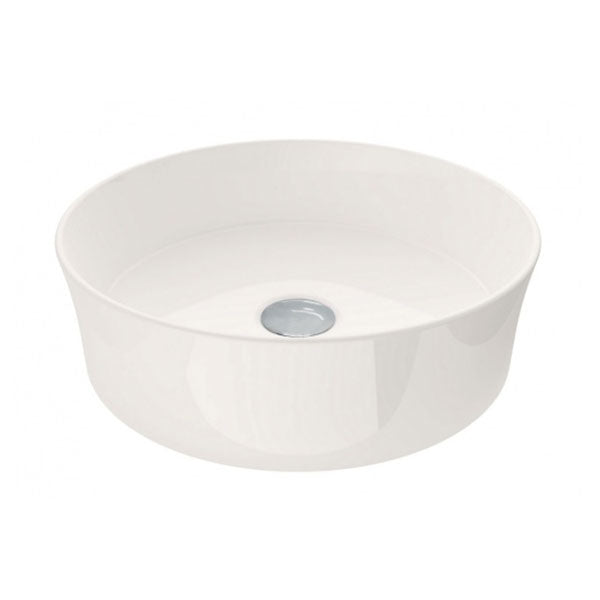
A small basin is the answer to a powder room, a narrow ensuite or a vanity with little depth. This page holds basins under about 400mm across, mostly above counter rounds, with semi-inset, inset, under counter and wall hung basins for the cases where the bench is the problem and not the bowl. They come from ADP, Eight Quarters, Timberline, Fienza, Bao, Kaskade, Otti, Clark and Caroma, in ceramic, concrete, stone composite and solid surface. The guide below covers how small is small, the narrow and low profile basins, the best type for a small bathroom, the smallest basins sold here, and the tap and waste lines to read. Facts below are attributed to a listing, a guide or a spec sheet, and conflicts between sources are stated.
People ask for the smallest basin size, the smallest washbasin available and good small sinks for tiny bathrooms, and the sources give bands and not a rule. A small-basin retailer says small hand basins are usually less than 400mm wide, and that for powder rooms and narrow spaces, basins between 250mm and 400mm wide work best. A powder room guide gives guest powder room basins as about 300mm by 200mm, with a slim bowl depth as shallow as 100mm to 120mm. Retailers stretch the word. One retailer's small space collection runs from a 300mm basin to an 800mm one, and the ADP small spaces collection runs from a 277mm semi-inset basin to a 500mm one. Australia has no official minimum basin size. For projection and clearances the sources point to the manufacturer's installation sheet, the National Construction Code and the AS/NZS 3500 plumbing series, or a licensed plumber. On this page small means under about 400mm, and the smallest sold here is 300mm. See small hand basins and small above counter basins for the neighbouring ranges.
The ADP Maggie is a 300mm by 300mm round, 110mm high, holding 4 litres. The Bao Classic is a 310mm by 310mm round, 155mm high overall, holding 4 litres, and its listing says it suits ensuite and powder room vanities. The ADP Pluto is a 325mm round, 130mm high, holding 5.5 litres. The Kaskade round stone basin is 350mm across and 120mm high, holding 6 litres. The Clark round and square inset basins are 350mm and hold 3.2 and 4.7 litres to the overflow. The Luna from Eight Quarters is 360mm across and 125mm high, holding 7 litres. The listings give a capacity to compare, because a very small basin is a short bowl, and a basin of 360mm to 390mm holds between 7 and 15 litres.
People also search for a narrow basin and a low profile basin, which are about depth and height and not width. The ADP small spaces range is defined by a narrower depth for small vanities, and its wall basins show how far a basin can project: the Halo is 450mm wide, 160mm deep and 100mm high, and the Eon is 450mm wide and 150mm deep. The Halo listing says its contoured design maximises usability and clears swinging doors when space is minimal. Low profile is the height above the bench. The Kaskade Arundel is a 385mm semi-inset stone basin that stands 50mm above the bench and is 159mm high overall, with an 8mm rim. The ADP Monica and Chandler semi-inset basins stand 50mm and 40mm above the bench. Among the above counter basins, the ADP Maggie and the Timberline Gem are 110mm high, and the Timberline Allure and the Fienza Jada are 120mm. A lower basin leaves more clearance for the mixer, which matters in a small room.
People ask which type is best for a small bathroom, and the maker and retailer guides give consistent answers. A basin maker's guide says a semi-recessed basin suits small and ensuite bathrooms, and that an under counter basin gives an unbroken bench surface that is easy to wipe clean. A major maker's page says wall-hung basins and smaller inset designs suit compact spaces because they keep the floor area clear, and that an above counter basin sits proud of the vanity as a focal point. A powder room guide lists wall-hung, countertop and semi-recessed basins and corner profiles, and a stockist notes that an above counter basin does not protrude below the benchtop, so it keeps the storage space in the vanity. The maker's guide adds one point that applies to every type: consider the tapware first, since it affects the basin type. See wall hung, inset, semi-recessed, undermount and above counter basins.
See round and square basins for the shapes.
Nearly all the basins here have no tap hole, so the mixer sits on the bench behind the bowl or on the wall. The ADP Halo has one tap hole, left or right hand. A maker's guide pairs each type with a mixer. An above counter basin suits wall taps or extended basin mixers because of its height, and an inset basin suits a basin mixer or a wall tap. An under counter basin needs a mixer of extended reach to clear the gap between the tap hole and the basin edge, and a semi-inset basin needs a tap whose height and reach match the basin height. The guide says to plan wall tap positions at rough-in to avoid costly plumbing mistakes. A retailer's mixer guide says a spout that is too short makes the water miss the centre of the bowl and one that is too long looks unbalanced, which matters more on a small basin. The listings give numbers to compare: the Kaya tall basin mixer has a spout height of 216mm and a reach of 170mm, and the Empire Slim tall basin mixer 244mm and 180mm. See basin mixers.
People who search for a narrow basin are often asking about depth, and product pages are not always clear about which number is which. A search for basins of 200mm to 250mm depth found no basin rated at that depth, and found that product pages often mix up width and depth. A retailer's guide says the 250mm to 400mm band refers to width and not depth, and a vanity range listed at 250mm could be a width or a depth. Slim basins also leave less space between the tap and the front of the bowl, which makes spout reach important. The ADP listings on this page use a clear pattern, giving the basin as width by height, or length by width by height, and the Halo gives its depth as a separate figure of 160mm. Check the technical drawing for the depth, the width and the distance from the tap position to the front of the bowl before you choose a narrow basin, and use the listing's figures and not the name of the basin.
A small basin is more likely to splash if the mixer and the bowl do not match. Guides to mixers say a tall mixer might look sleek, but if it overwhelms a small vanity or splashes off a shallow basin it becomes a frustration, and that a spout that is too short means splashing while one that is too tall means overspray. They say tall mixers are generally marketed for above counter and vessel basins, that inset and under counter basins usually suit a standard-height spout, and that a short mixer is built for that setup. The advice for a shallow basin is to pair it with a mixer whose stream the basin can catch. Measure the basin depth and the backsplash gap before buying, and look for an aerator, since some mixers describe a slim stream aerator as splash-free. The listings for the Contura II and Liano II mixers describe a concealed aerator with adjustable stream direction. A wall-mounted mixer is a further option for a small or floating vanity, because the body is in the wall and the bench stays clear. A powder room guide describes rounded edges as reducing splashback, which is a point to check on the basin you choose. For a basin of 4 litres or 5.5 litres such as the Maggie and the Pluto, a mixer with a short, soft stream is the safer match than a tall one.
The ADP Halo listing carries a warning that applies to any narrow wall basin: because of its narrow depth, care should be taken when buying plumbing fittings and bottle traps. The listing says the plug and waste is not included, wall fixings are not included, and suggests pairing with a bottle trap. Maker sheets say a wall hung basin needs fixing to a support beam or noggins behind the wall sheeting, and a retailer's buying guide notes that a wall hung basin needs a visible bottle trap and concealed pipework planned before installation. A narrow basin leaves less room for the trap and the supply, so check the dimensions of the trap against the basin's projection before you order, and have the plumber confirm the rough-in against the basin in hand. See basin wastes.
Most of the basins here have no overflow. The Clark insets and the ADP Round under counter basin include an overflow, and so do the ADP Gerroa and the Timberline Hazel and Henry listings, so those need a waste made for an overflow. The Clark insets come with a chrome pop-up plug and waste. The ADP, Bao, Kaskade, Otti and Eight Quarters concrete listings sell the plug and waste separately, the Eight Quarters terrazzo basins include a matching terrazzo waste, and the Timberline Allure has matching coloured wastes. The Eight Quarters and Timberline wastes are 32mm, which is the size most of these basins list. Read the waste line and the overflow line on each listing. Manufacturer installation guides add that a waste is tightened by hand only, with a foam washer, sealed with neutral cure silicone.
Ceramic is the main material, with concrete from Eight Quarters and Fienza, stone composite from Kaskade, and solid surface on the ADP Halo. The finishes run from gloss and matte white to black, grey, green, pink and the earthy colours of the concrete and terrazzo basins. See white and matte white basins, and ceramic, concrete and stone basins. A powder room guide describes high-gloss ceramic as resistant to chips and matte composite in muted greys or blacks as concealing marks, and suggests gloss white, matte black and soft grey as colours.
A vanity guide gives powder room vanities as 450mm to 600mm wide, with standard widths of 600mm, 750mm, 900mm, 1200mm, 1500mm and 1800mm, and a standard depth of 460mm to 550mm, with slimline vanities under 460mm. A small basin of 300mm to 390mm fits a 450mm vanity with bench either side. The same guide gives floor-mounted vanities at 850mm to 900mm high and wall-hung vanities at 800mm to 900mm. It cites a circulation space of 900mm wide by 1200mm long that the HIA Livable Bathrooms guidance keeps clear of the vanity, so check the projection of the basin against the room. A different retailer's buying guide gives a standard basin height of around 800mm to 850mm, and the guide advises confirming the figures against the current standards. See small vanities and bathroom vanities.
A small basin is installed the way a large one is, and the manufacturer sheet sets the method. Makers name different silicones: one names acetic cured silicone, another non-acidic silicone in 20mm dots at no more than three fixing points plus a bead round the rim, and a third neutral cure silicone, and each says not to use epoxy. Use the template where one is supplied. A concrete maker's page says the basin needs a flat, stable surface and a qualified installer. Most countertop basins need at least 400mm to 500mm of vanity depth to sit comfortably and clear the splashback. Water connections need a licensed plumber.
Caroma's cleaning guide says to clean vitreous china basins with a soft cloth and a mild household detergent or warm, soapy water. A plumbing manufacturer's care sheet adds vinegar for limescale and a caution that cream cleaners can dull ceramic if overused, and warns that harsh chemicals such as Domestos destroy chrome and can damage the rubber seals in wastes. Manufacturer care text adds that a scratch in glazed ceramic cannot be repaired. Care guides for concrete say to use a mild non-abrasive cleaner and to avoid scouring pads, bleach and boiling water. A powder room is used lightly, but the basin is small, so wipe it dry to avoid water marks. A concrete maker's page notes that grime can collect around the edges of a basin on the bench, and the guides advise not leaving water standing in a concrete bowl, so wipe the base and the bowl and keep the sealant joint clean and unbroken.
See bathroom basins for every size, shape and colour. For the makers, see ADP, Clark, Bao, Timberline, Fienza, Kaskade, Otti and Caroma.


