
*View accurate shipping rates and availability






4 Items
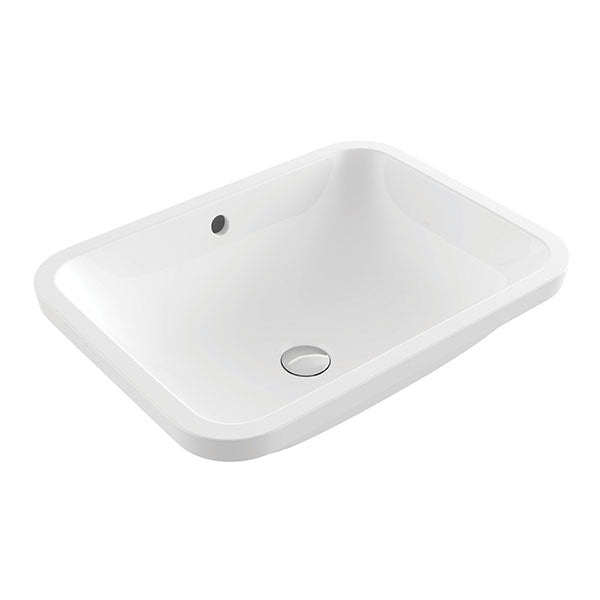
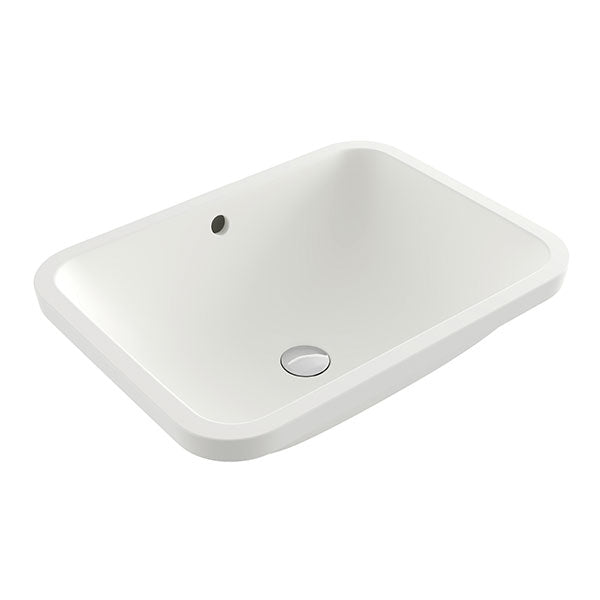
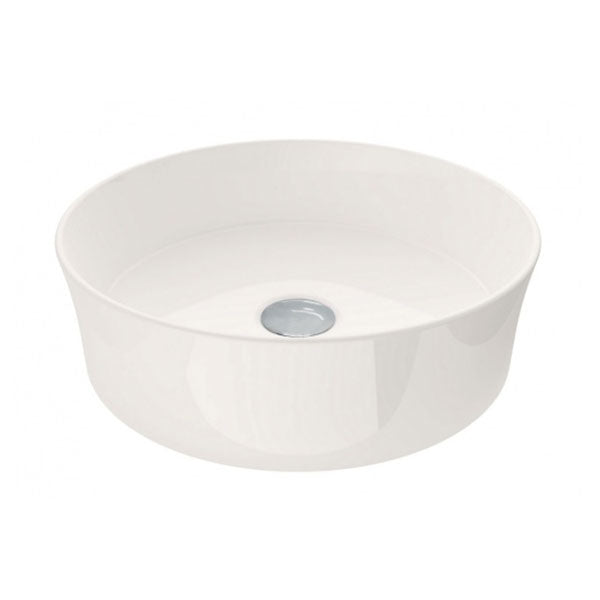
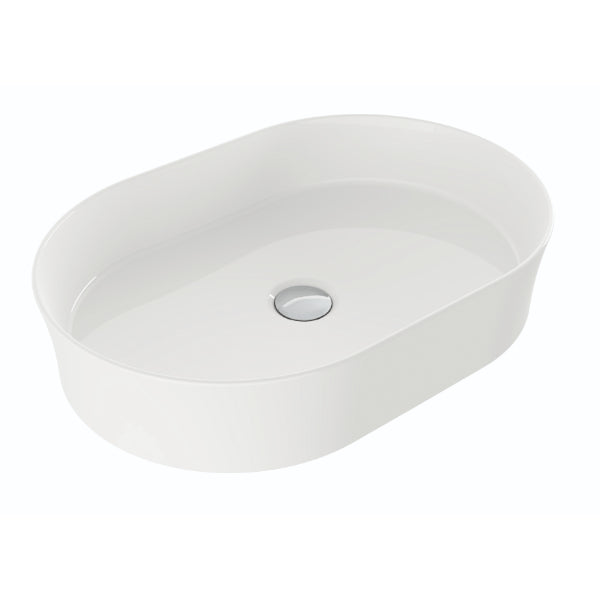
The Turner Hastings Fino is a fine fireclay basin with a thin rim and an organic shape. This page holds it in three forms: a 550mm under counter basin in gloss white and matte white, a 550mm counter top basin in gloss white, and a 382mm round above counter basin in gloss white. None has a tap hole, and every one is sold without a waste. The guide below covers what the range is made of, and each model with its size and capacity. It then explains why the overflow and waste lines need checking, how an under counter basin is fixed to a stone bench, what an above counter basin needs from the bench and the tap, and how to clean fireclay. Facts below are attributed to a listing, a spec sheet or a retailer page, and conflicts between sources are stated.
The listings describe the Fino as double glazed fine fireclay, chosen for durability and impact resistance, with a non-porous, stain and scratch resistant glaze, and say it is made in Europe. The above counter listing calls the 382mm basin a thin-rimmed Fino with an organic design to suit a modern coastal bathroom, and says it complements a custom vanity with a stone, marble or timber top. The under counter listing says the basin suits any bathroom style with a stone or marble benchtop. Retailer pages add that fireclay suits marble benches well and resists a dropped object better than porcelain, which are retailer claims with no test behind them.
A stockist guide describes fireclay as fired at very high temperatures for a strong, smooth finish, in the traditional style. Generic comparison pages say fireclay is the sturdier of the two common bathroom ceramics and that both are glazed and non-porous, and they are weak sources, so the materials are not ranked. The practical statement is the one on the spec sheet. Fireclay and ceramic are natural products, and the sheet says they may show a minor pimple, dimple or divot, which it treats as part of the natural beauty and not a fault.
The Fino 550 under counter basin is 550mm long, 410mm wide and 188mm high, with a depth of 120mm to the overflow and a capacity of 11 litres. It comes in gloss white and matte white, and the listing says matte black is also available. It has an overflow, and the spec sheet says it requires a 32mm waste with overflow. A retailer lists the matte white as having an overflow and requiring that waste, and says no waste is supplied.
The Fino 382 above counter basin is nominally 382mm square. Its listing gives the size as 369mm by 369mm by 115mm, with a depth of 92mm and a capacity of 10 litres. A retailer page lists it as 382 by 115 by 382, so the 382 is the nominal figure and the listing figure is the measured one, and the sheet's note on tolerance applies. The listing says it comes in gloss white, matte white and matte grey. The spec sheet says it requires a 32mm waste without overflow.
The Fino 550 counter top basin is 550mm by 380mm by 115mm, with a depth of 92mm to the overflow and a capacity of 9 litres, in gloss white, with matte white and matte grey also available. See undermount basins and above counter basins, and Turner Hastings basins for the wider brand range.
The overflow line is the one to check. The listing for the 550 counter top basin says overflow only, depth to the overflow and a 32mm waste with overflow. The spec sheet for the 55 by 38 above counter basin says it requires a 32mm waste without overflow, with the same size and the same finish. A basin has either an overflow or none, and it needs the matching waste, so the two documents cannot both be right for the same product. The sources do not say which applies, so confirm with the supplier before you buy the waste, and test-fit the waste to the basin when it arrives.
The other models are consistent. The under counter basin has an overflow and needs a 32mm waste with overflow, and the 382 round has no overflow and needs a 32mm waste without. A slotted waste is used with an overflow and an unslotted waste where there is none, per a stockist guide. Turner Hastings lists a range of plug and waste options, and the listings say the waste is sold separately. See basin wastes.
None of the Fino basins has a tap hole, and a retailer says the under counter basin suits wall-mounted or countertop mixers. For the under counter basin, the tap sits on the bench above the basin, and a renovation guide says the tap hole position must be confirmed with the fabricator before the bench is cut. For the above counter basins, one stockist says an above counter basin pairs best with wall taps or an extended basin mixer because of its height, and a mixer guide says tall mixers suit above counter basins.
A tap guide says the reach should match the distance from the tap fixing to the centre of the drain, and that the spout should clear the rim by about 100 to 150mm. Two tall mixers on the store give figures. The Kaya Tall has a spout height of 216mm and a reach of 170mm, and the Empire Slim Tall has a spout height of 244mm and a reach of 180mm. On the 369mm square basin the centre is about 185mm from the edge if the drain is central, so a 170mm reach from a tap at the very edge falls about 15mm short. The listings do not give the drain position, so measure on the basin you receive. See basin mixers.
An under counter basin is fixed beneath the bench, so the bench edge frames the bowl. A renovation guide says it needs a stone, engineered stone or solid composite bench, and that laminate and timber cannot support it. The Fino spec sheet gives the first rule: never cut out or construct the bench or cabinetry without the basin on site for measurements. It says fireclay and ceramic vary by plus or minus 2%. It also says the maker will not cover the cost of altering a bench or cabinetry that was cut without the basin measured.
A retailer guide for fireclay sinks gives more. Measure your specific sink before building the cabinet and the benchtop, and expect the benchtop to overhang the sink by about 1cm. Seal the junction between the sink and the benchtop with a flexible sealant such as kitchen silicone, which must stay flexible with stone because the sink and the stone expand and contract at different rates. The guide says rigid adhesive at that junction voids the maker's cover. That guide is written for fireclay kitchen sinks, so use it as general fireclay advice and check your basin's sheet.
The guides for fixing differ. A Reece-hosted technical guide for another under counter basin says to attach the basin to the stone with a suitable adhesive before the benchtop is installed, and that epoxy glues are not to be used, with timber lining or blocks for the clips. A stone installation guide recommends a stone-specific two-part epoxy and neutral cure silicone, and says to snug the clips in an alternating pattern and not over-tighten them. Those two conflict on epoxy. The Fino sheet does not name an adhesive, so ask the supplier and the stone fabricator which they use for this basin, and follow the maker's guidance if it says otherwise.
The under counter listing points the basin at stone and marble benches, so the bench material matters for the sealant. A US stone installer's guide, written in inches and for a different market, says to use 100% neutral cure silicone because acetoxy types release acetic acid that etches marble and limestone. It says to seal granite, marble and similar stones with a penetrating sealer before installation so the adhesive does not wick into the pores. Maker manuals for other basins specify acetic cured silicone instead, which is a different maker's rule for a different basin. The Fino sheet names neither, so ask the stone fabricator and the supplier which silicone is right for your stone and this basin before any is applied.
The same guide gives a standard reveal, where the stone overlaps the basin rim from underneath, of about 3 to 5mm, and says a wider reveal shows a gap from above while a tighter one removes the bonding surface. Its other points are general good practice. Dry-fit the basin from below with no adhesive and check the rim sits flush all round. Clean the rim and the stone underside and let them dry. Clips are tightened by hand and then a quarter turn, and over-tightening can crack the stone. The silicone needs about 24 hours to cure, with no water and no weight on the bench during that time, and plumbing waits until after the cure. A retailer guide for fireclay sinks quotes a bench overhang of about 1cm, and the two figures are for different sink styles, so use the template and the fabricator's measure for this basin.
The guide says most fabricators will not cut undermount openings in stone under 20mm thick, and calls 30mm the standard thickness. That is a US figure from one source, so check the thickness your fabricator needs. The Fino spec sheets do not give the basin weight, so ask the supplier before the bench is lifted onto the cabinet, and ask what the basin weighs when it is full.
An above counter basin sits on the bench with the rim resting on it, so the bench needs only a waste hole. The Fino 382 and the 550 counter top basin stand 115mm high. A renovation guide says a standard vanity is about 850mm, so on that bench the rim sits at about 965mm, and a stockist puts an accessible rim at 800 to 830mm, so a lower bench is the fix if the rim is too high. A UK guide offers 800 to 850mm to the rim as a starting point, and a vanity guide gives a vanity depth of 460 to 550mm.
Against that depth, the 380mm counter top basin leaves 80 to 170mm behind it on a 460 to 550mm vanity, and the 369mm round leaves 91 to 181mm. A bench-mounted tap has to fit there, or a wall tap avoids the problem. For sealing an above counter basin, maker guides for other basins say to fit the waste first with silicone around its rim, press the basin down and wipe off the surplus. They differ on silicone type, so follow the sheet for your basin. See small basins for compact shapes across makers.
The retailer guide for fireclay sinks gives a waste routine that applies to any glazed basin. Apply silicone between the waste flange and the glaze to stop water draining under the flange when the basin fills, and clean the surfaces first. Wipe away the excess silicone that squeezes out when the fitting is tightened, before it dries. Hand-tighten the fitting from underneath, and do not use excessive force on a screwdriver, because over-tightening can crack the basin and the guide says that damage is not covered by the maker's cover. The guide is for a kitchen sink and the same caution applies to a basin waste. The sheets list the waste each basin requires, which is why the overflow line matters.
The Fino comes in gloss white, matte white, and matte black or matte grey depending on the model. The listings give the finishes and do not say how they differ in care, and the spec sheets do not either, so treat all finishes the same and test any cream cleaner on a hidden area. A stockist's care text for another brand's matte basins gives a different routine, and the Fino sheets give none, so do not apply it here. See matte white basins, white basins and ceramic basins.
The Fino sheets do not give a cleaning routine, so the care comes from a vitreous china care sheet for glazed ceramic basins. It says that for day-to-day care all you need is water and a damp cloth. It names a proprietary bathroom cleaner for water marks, grease and soap scum, and household vinegar for limescale, with a vinegar-soaked piece of kitchen paper left on stubborn deposits for 30 minutes. It warns about substances containing fluoride, such as rust removers and toothpaste, because deposits left on the surface can stain it. It says cream cleaners can dull the surface if overused.
It gives bicarbonate of soda with white vinegar as a greener option, rinsed well so the rubber seals in the waste are not damaged. It says not to use harsh chemicals such as Domestos, which can destroy chrome and rubber seals, and never to mix cleaning products. Because the Fino is a fireclay, which is not identical to vitreous china, test a stronger product on a hidden area first.
Choose the under counter basin if you have a stone or marble bench and want the bench edge to frame the bowl, and plan the cut with the basin on site. Choose the 550 counter top basin if you want a long, shallow bowl on show and are happy with a bench that carries the basin on its top. Choose the 382 round for a small vanity or a powder room.
Then settle the overflow and the waste, because the documents conflict on the counter top basin. Choose the tap, because there is no hole, and measure the reach against the drain. Last, measure the basin you receive before any bench is cut. See bathroom vanities and bathroom basins for other options, and traditional basins for the other Turner Hastings shapes.
The sources leave some gaps. Search results held no page demand data for this collection, and the SERP tool returned nothing for two keywords. The spec sheets give materials, waste rules and tolerance but no dimensions, so the sizes come from the listings and retailers, and they differ on the 382 basin. The overflow lines conflict on the counter top basin. The Fino sheets give no installation steps and no cleaning routine, so the fixing and care sections use other makers' guides and a care sheet for vitreous china. No independent review of the Fino range turned up.
Before fitting: book a licensed plumber for the water connections, and check the plumbing positions against the product before it is fixed, as the maker sheets direct.


