
*View accurate shipping rates and availability






6 Items

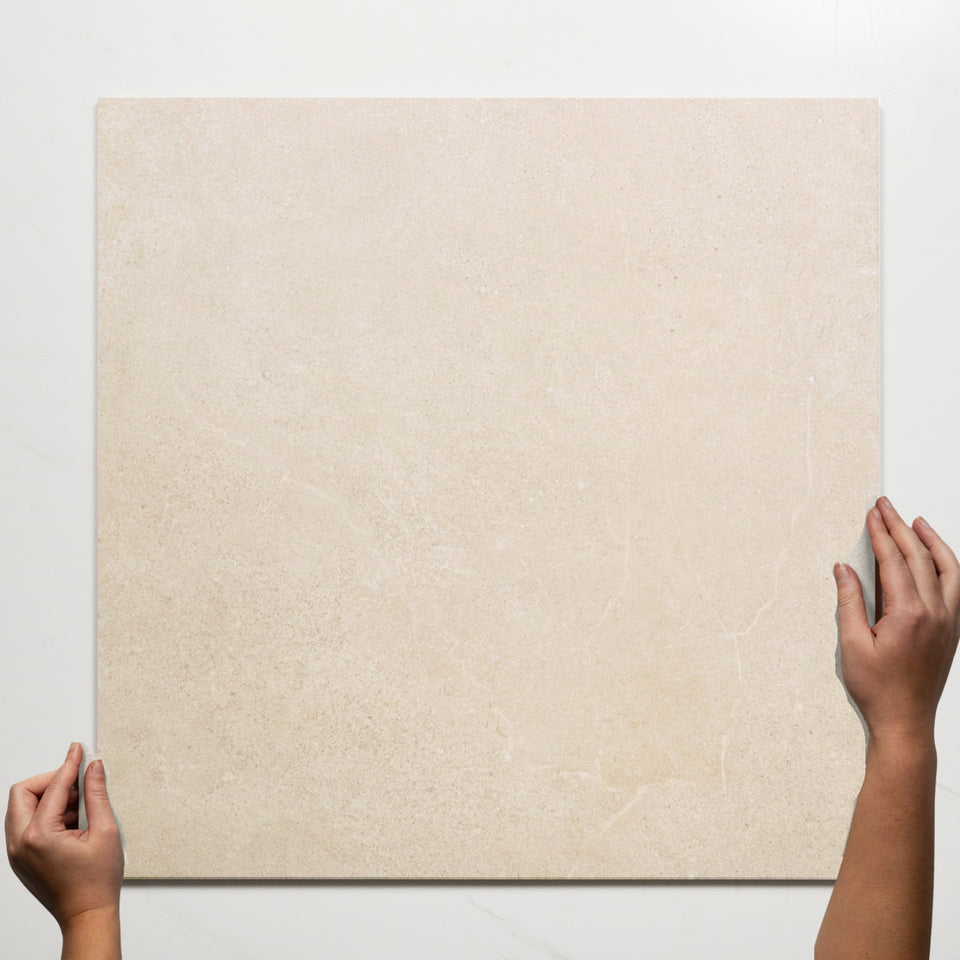


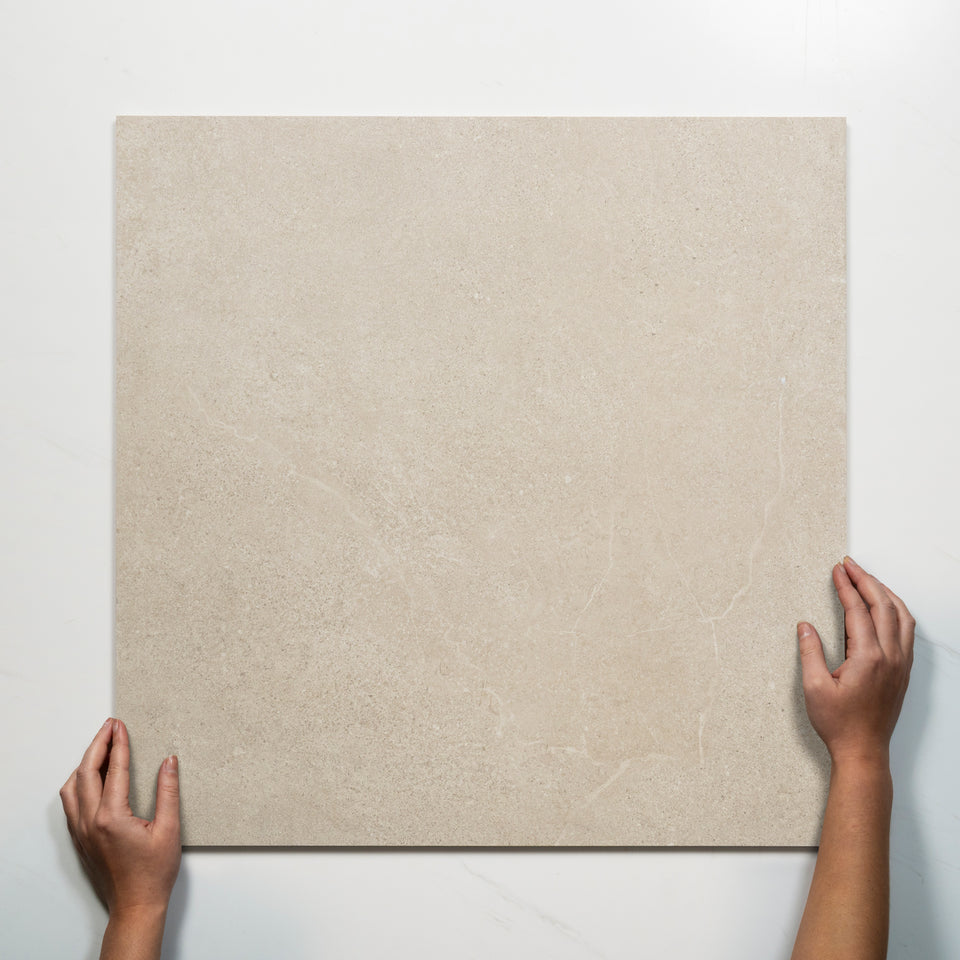

Ardenne is a travertine look porcelain. It draws on both cross-cut and vein-cut patterning, so the surface reads as natural stone and not as tile, and the 600 x 600mm tile has 24 unique faces, which keeps repetition out of sight. It comes in Beige, Grey and Ivory, in 300 x 600mm and 600 x 600mm, 9mm thick, with a rectified edge. All six tiles share the same finish, rating and area lines, so the choice within the range is colour and size.
The finish is a grip surface called Versa-Touch, smooth underfoot yet slip resistant wet or dry, and the slip line reads P4, low slip risk, rated to AS 4586-2013, suitable for wet areas and outdoor use. The sections below cover the colours, wet and covered outdoor use, sizes, grout and how to order.
Related pages cover the wider groups. The tiles hub links every category on the site, and travertine look tiles is the family page. Tuscan and Valerie are the other travertine look ranges, and Avedon and Cairnwell sit nearby as limestone and stone looks.
Search results for travertine tile are mostly real stone, so it helps to be plain about what Ardenne is. A look-alike porcelain is non-porous, so it needs no sealing, while real travertine should be sealed. Real travertine comes in finishes: polished or honed for high traffic and tumbled for lower traffic, with slip coming from a smooth finish. It is formed in mineral water and sold both as tiles and as much thicker pavers.
Ardenne takes the look without the stone's requirements. It is porcelain, easy to clean with standard household products, needs no sealing and has a non-porous surface. Real travertine is a stone with soft, natural variation and warm tones, and Ardenne's three colours, Beige, Grey and Ivory, sit in that same warm to neutral range.
For real stone, the natural stone tiles and tumbled natural stone tiles pages hold it.
Ardenne draws on two cuts. A cross cut shows the natural layers of stone, for a more organic, textured tile, and a vein cut travertine look carries a speck to copy the look of vein cut stone. Ardenne mixes the two on one face, which is why it reads as natural stone and not as a repeated tile.
The 24 unique faces apply to the 600 x 600mm tile. On a large floor, that is the reason to lay from several boxes at once. Colour, size and texture can vary from batch to batch, and the appearance of a tile with that many faces depends on mixing them. The 300 x 600mm tile is the narrow format, and the same patterning applies.
The three colours sit close together. Colour links to mood: light tones feel airy, deeper tones give a bathroom depth, and beige and cream suit a Mediterranean feel. Warm neutrals give warmth without a strong colour and pair with timber, stone and softer greys. Undertones such as creamy, mushroom, honeyed and greige each change a room, so hold a sample against the fixed finishes. The beige tiles, white tiles and grey tiles pages show the colour families across every use.
Grey sits between warm and cool palettes, and the Grey Ardenne is the cooler option in the range. Stone effect tiles pair with wood, wicker and rattan, which suits Beige and Ivory best. A sample of all three side by side is the fastest way to settle the colour.
A pairing for each colour. Beige suits a bathroom with a timber vanity and brushed brass tapware. Ivory suits a bright living area with white walls and natural fibres. Grey suits a laundry or a contemporary bathroom with matte black fittings. Because every face is different, set out the layout from several boxes at once so the patterns spread evenly across the floor.
The area line is the most specific line in the spec block. It reads Indoors, wet and dry, and covered outdoor areas, and the application line reads Walls, Floors and Covered Outdoor Areas. That puts Ardenne in bathrooms, kitchens, laundries and living areas, and in covered spaces such as a roofed alfresco or a verandah. Ardenne transitions between indoor living areas and outdoor spaces, and the area line limits the outdoor use to covered areas. A fully exposed pool surround or an uncovered patio needs a tile whose area line says uncovered outdoor areas, such as the P5 grip tiles on the Avedon and Cairnwell pages.
Certain tile materials can only be used in covered outdoor areas, while others can be used in completely exposed spaces. Matte and textured finishes cope with wet conditions better than polished ones, and slip rating matters in bathrooms and outdoors. The bathroom tiles, kitchen tiles and outdoor tiles pages hold the wider lists for those rooms.
All six tiles have a wear rating of 4, suitable for floors in normal use areas with low risk of scratching. That is the middle to upper line on the site, and it sits above the wear 3 light traffic line on some limestone looks. A hallway, kitchen or living area floor fits it. The tiles suit walls as well, so the 300 x 600mm tile also works as a bathroom or kitchen wall tile.
Pair the tiles with underfloor heating for a warmer, drier, mould-resistant bathroom, and order extra tiles over the exact quantity for breaks and offcuts. Keep spare tiles for future repairs.
The two sizes are 300 x 600mm and 600 x 600mm. Large format tiles mean fewer grout lines for a cleaner look. The 600 x 600mm tile gives the calmest floor, and the 300 x 600mm tile is the more flexible one for smaller rooms or for walls. A vertical lay makes a ceiling look higher and a horizontal lay makes a room look wider, which applies to a rectangular tile on a wall. The 600 x 600mm tiles and 300 x 600mm tiles pages show each format across every range.
All six tiles have a rectified edge, which allows a fine grout line. The usual recommended gap for rectified tiles is 1.5mm to 3mm.
Grout choice matters most on Beige and Ivory. A tone close to the tile reads as continuous, a warm light grey is subtle, a warm brown adds depth, charcoal is graphic, and bright white emphasises the joints. A cool grey grout can make a warm tile look more yellow. Vertical stack and herringbone are layouts that suit modern warm neutrals.
Rectified edges allow a fine joint. The usual recommended gap for rectified tiles is 1.5mm to 3mm. A narrow joint in a tone close to the tile keeps the stone look continuous across the floor, and a lighter or darker joint turns each tile into a grid. Ask your tiler to dry lay a few tiles before grouting, so you can see how the 24 faces fall.
With cross-cut and vein-cut patterning on every face, a tonal grout keeps the stone look continuous, and a contrasting one turns the layout into a grid. For Grey, a mid grey joint keeps the tone cool. Beige and Ivory pair with timber, woven textures and brass or chrome fittings, per the UK and Brisbane reads.
A bathroom floor can take either size, and the P4 rating is suitable for wet areas. A walk-in shower floor is a question for a licensed tiler, because slope, drainage and tile size affect the choice as well as the rating. A kitchen floor suits the 600 x 600mm tile for fewer joints. A laundry floor suits either size. A living area suits the 600 x 600mm tile, and the 24 faces mean a large floor still reads as natural. A feature wall behind a bath or vanity suits the 300 x 600mm tile, laid vertically or horizontally.
A worked example: a bathroom floor of 2.4m by 1.8m is 4.32 square metres. A 600 x 600mm tile covers 0.36 square metres, so the floor takes 12 tiles before cuts, and a box of four tiles covers 1.44 square metres, so three boxes cover it with a margin for the cuts around the vanity and the toilet. A 300 x 600mm tile covers 0.18 square metres, so the same floor takes 24 tiles. Run the same sum for your own room and order the whole quantity together so the batch matches.
A covered alfresco suits the 600 x 600mm tile, and the colour choice follows the garden. Grey reads cooler against green planting and white render, and Beige and Ivory read warmer against timber and sandstone.
Ardenne is easy to clean with standard household products, non-porous and stain resistant, with no sealing required. That answers the question people ask about travertine. For Ardenne, standard household products are all you need. A micro-textured surface holds a little more dust than a fully smooth one, so a regular mop is the practical routine.
Because the pattern depends on mixing faces, ordering extra over the measured area also helps the look, since it leaves spare tiles to choose from when laying. Keep a few spare tiles from the same order for later repairs, so a replacement matches the batch on the floor.
A kitchen floor 3.6m by 3.0m is 10.8 square metres. A 600 x 600mm tile covers 0.36 square metres, so the floor takes 30 tiles before cuts and 35 with 15 percent allowed. Because the 600 x 600mm tile has 24 unique faces, lay tiles from several boxes at once so the pattern spreads across the floor and no two neighbouring tiles repeat.
A travertine look changes with its light, so a sample laid in the room, checked in the morning and the evening, settles the colour and the pattern. The range pages linked above show each collection's other colours and formats, and the tiles hub shows every other range on the site.


