
*View accurate shipping rates and availability






46 Items
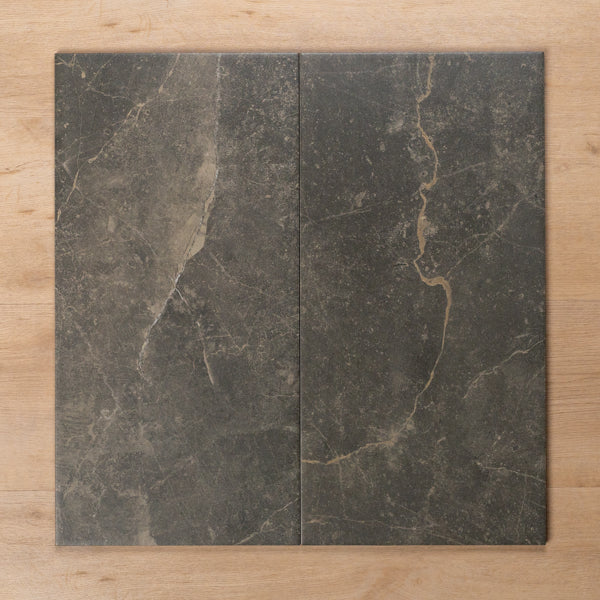
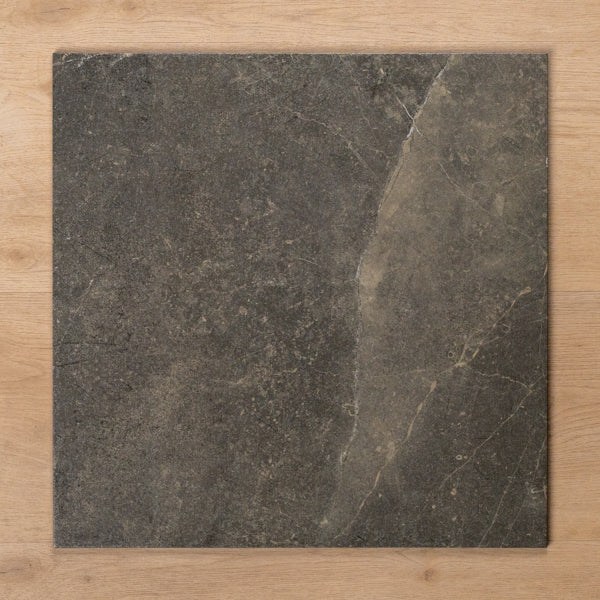
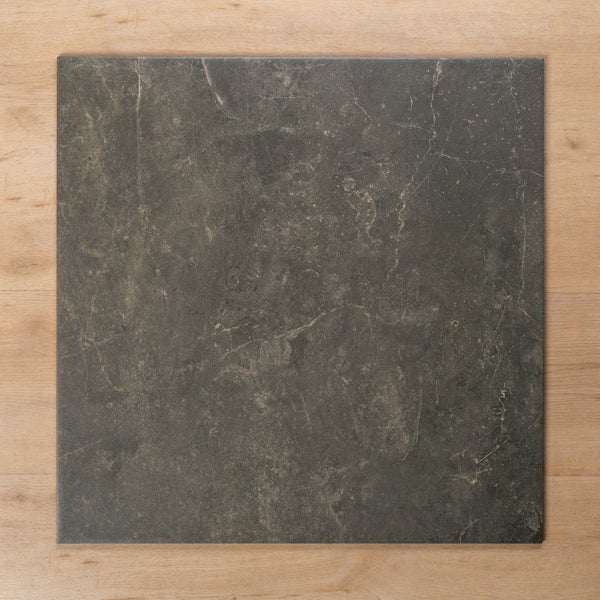
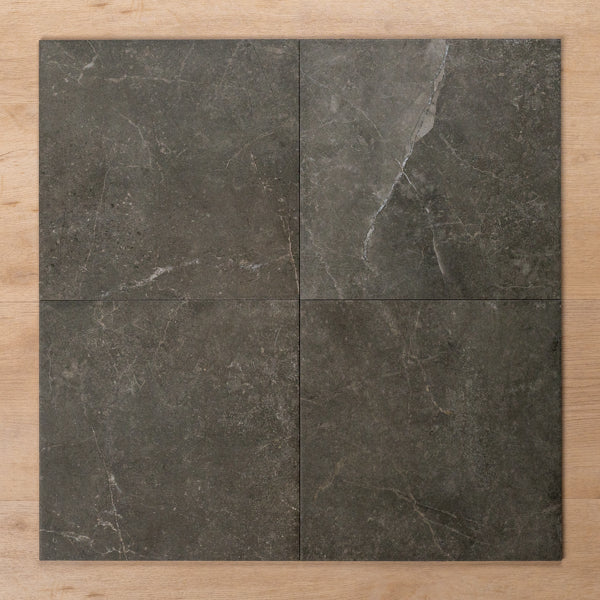
Spend over $800 and receive free gifts in your cart. Towels, accessories and full length mirrors!
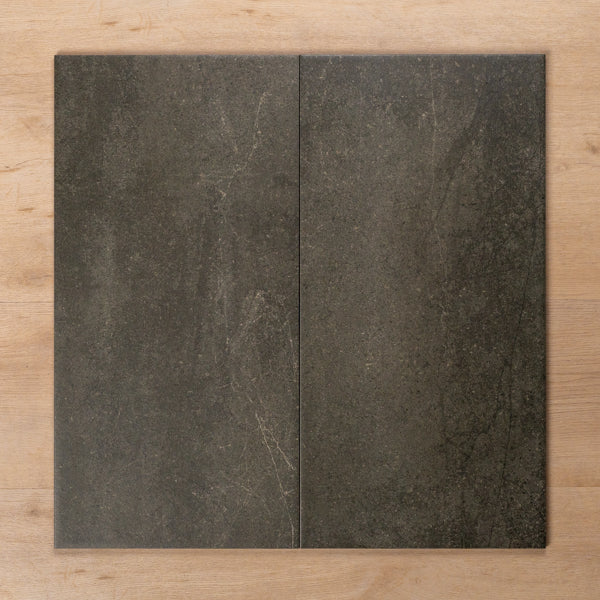
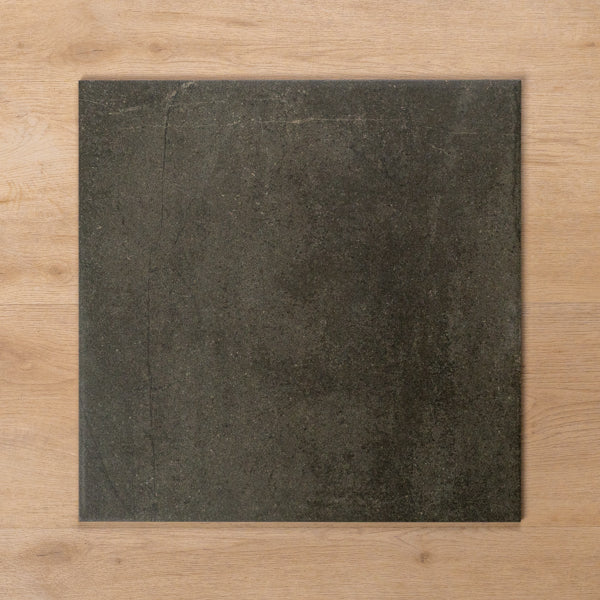
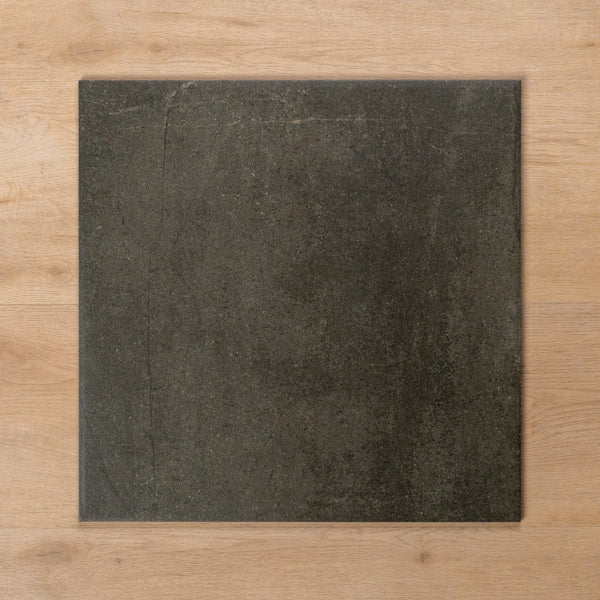
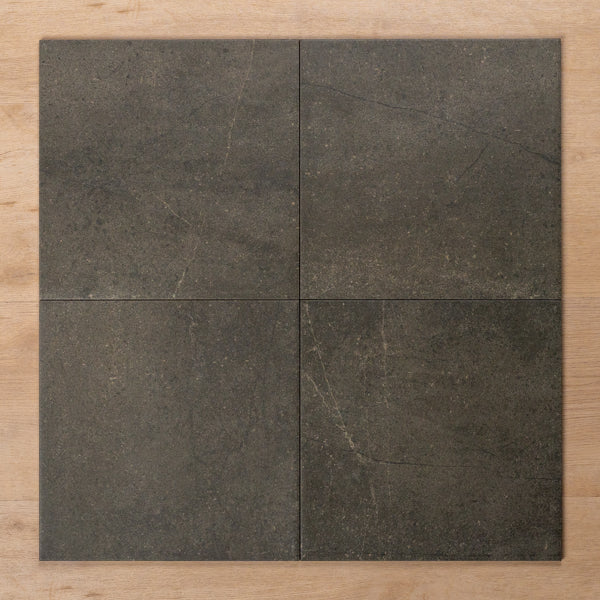


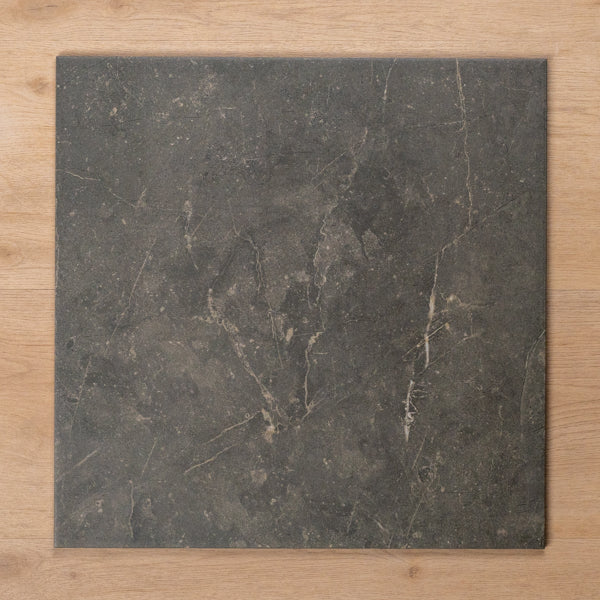
Black is unusual among tile colours in how much the finish changes its character: a matte black floor reads as understated and practical, while a gloss black feature wall reads as considerably more dramatic. Choosing between the two isn't just a style preference; it affects slip resistance, maintenance and how the tile actually performs in its intended location, which is why finish deserves as much attention here as colour itself.
Black tiles come in porcelain, ceramic, natural stone, and marble, each with different hardness, porosity, and maintenance requirements. Porcelain is the most common choice for floors and wet areas, since it's dense, low-porosity, and available in rectified formats. Ceramic is lighter and easier to cut, making it practical for wall applications. Natural stone tiles, slate, granite, and marble, carry genuine variation in tone and texture but require sealing.
Common formats include large-format rectified slabs (600x600mm, 600x1200mm), subway bricks (75x300mm, 100x200mm), mosaic and kit kat strips (typically 23x73mm or 48x198mm), and hexagonal tiles. The format chosen affects grout line width, installation time, and how the finished surface reads in a room.
Matte black tiles are better suited to floors, since they provide more slip resistance and don't show watermarks, footprints, or streaks as readily as gloss. Gloss black tiles amplify light reflection instead, suiting feature walls or splashbacks where that sheen is a deliberate design choice rather than a maintenance concern.
A lappato (semi-polished) or structured surface finish sits between matte and high-gloss, offering some sheen without the same maintenance burden as full gloss. For outdoor areas, always confirm the tile carries a slip resistance rating of P3 or above, tested to AS 4586.
Black wall tiles for bathrooms are most commonly used as a feature wall behind a freestanding bath, in a shower recess, or as a full-room dark tile treatment. Subway tiles in matte or gloss black are a practical choice, with the 75x300mm and 100x200mm formats widely available and straightforward to install. Finger tiles and kit kat strips add texture and suit niche or accent applications.
For kitchen splashbacks, a gloss black subway tile or large-format black porcelain panel is common. Black splashback tiles need less frequent regrouting than lighter alternatives where staining is visible, though the tile surface itself will show grease if not wiped regularly.
Dark grout, charcoal or near-black, minimises visible grout lines on a black tile field, giving a more continuous, monolithic surface appearance. White or light grout on black tiles creates a high-contrast grid pattern instead, accentuating tile size and format, an approach that works particularly well with a black-and-white bathroom scheme or a more geometric layout.
White tiles with black grout is a separate but related choice, where the grout itself becomes the visible design element. In that case, grout colour needs to stay consistent and properly sealed, since light-coloured tile bodies with dark grout lines are difficult to regrout later without full removal.
The most common black tile sizes stocked are 100x100mm mosaics, 75x300mm and 100x200mm subway formats, 300x600mm mid-format wall and floor tiles, and 600x600mm or 600x1200mm large-format floor tiles. Larger tiles make a small room feel less busy, since there are fewer grout lines, but they require a flatter substrate and a more experienced tiler. Small-format tiles and mosaics allow curved surfaces and niche work but come with significantly more grout to maintain.
For a standard Australian bathroom, around 6-9m², 600x600mm or 300x600mm tiles are the most practical floor choice. Wall tiles at 300x600mm or 100x200mm subway are common and allow efficient cutting with minimal waste.
Black tiles are easiest to select once the room's other fixtures are settled, since finish and format should complement the space rather than being chosen in isolation. Browse related collections including the full tiles range, bathroom vanities, bathtubs, and bathroom mirrors to bring the full room together.


