
*View accurate shipping rates and availability






5 Items
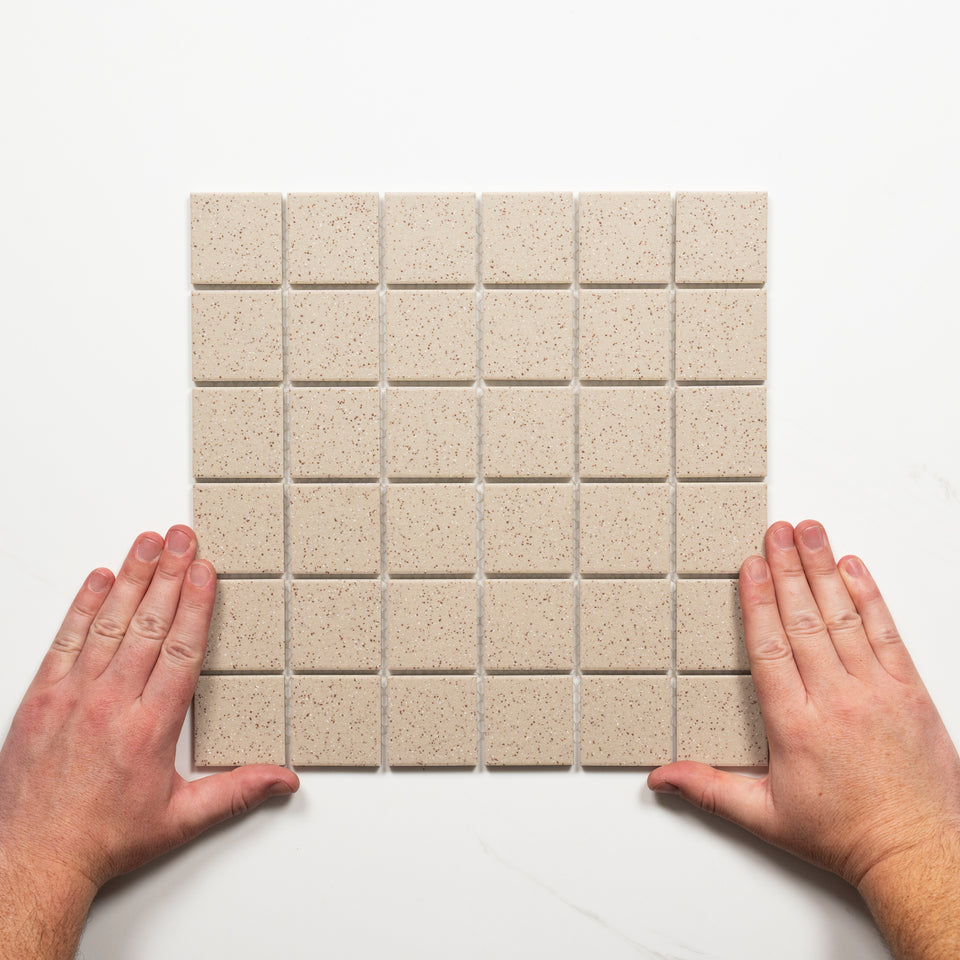
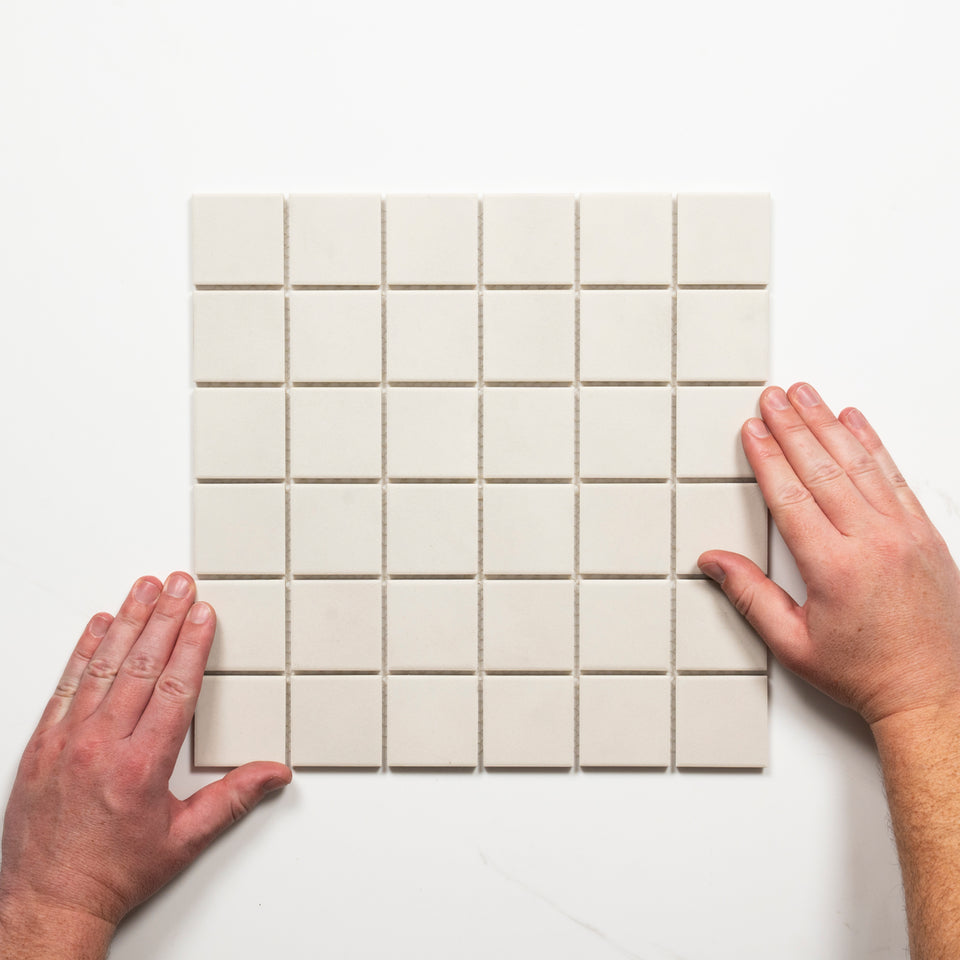


Briq is an unglazed porcelain mosaic. Each chip is 48 x 48mm, and the chips arrive on a 306 x 306mm sheet, which makes it a straightforward way to install. There are five colourways: Graphite, Sage, Milk, Terracotta and Flecked Linen. Every tile carries the same lines, so the choice within the range is colour, and the rest of this page reads those shared lines one at a time.
The matt surface is consistent through the body of the tile. With no glaze layer, the colour runs through the porcelain and is not an applied coat. The finish suits walls and benchtops, and the range suits everything from bathroom walls and shower recesses to kitchen splashbacks and feature walls, in both contemporary and warmer, more textured interiors.
Related pages cover the wider groups. The tiles hub links every category on the site, and mosaic tiles is the family page. Penny round tiles and kit kat tiles show other small formats, and bathroom tiles, kitchen tiles and floor tiles hold the wider lists for the rooms.
Unglazed porcelain shows the body material through the surface and keeps a consistent appearance through minor wear. Glazed porcelain offers wider colour and pattern choices, including stone-inspired surfaces, but the finish still needs to suit traffic and slip requirements. Porcelain is fired at a higher temperature than ceramic, which makes it denser and more durable, and ceramic mosaic can be glazed or unglazed.
Briq is the unglazed kind. The material is porcelain, an unglazed matt surface with natural porcelain texture, and full-body porcelain construction that resists moisture and staining. Porcelain mosaics are typically Group BIa, with water absorption of 0.5 percent or less, so the body takes in very little moisture.
The practical result is a surface where a chip or scuff shows the same colour underneath. That is the point of choosing an unglazed tile for a floor or benchtop, and the reason the copy stresses that the colour is not an applied layer.
The names describe the range: Graphite is the dark one and Milk the light one, Sage is a green, Terracotta a warm earth tone, and Flecked Linen a flecked neutral. The range works across contemporary interiors and warmer, more textured ones, and the five colours span both. A mosaic sheet in one colour gives a quiet surface, and a mixed layout of two colours gives a pattern.
Colours work best collected, not matched, so hold a sample against fixed finishes such as cabinetry, stone and paint. That applies to mosaic colours too. Milk beside white cabinetry reads as a soft contrast, Graphite beside timber reads as a strong one, and Terracotta beside a pale wall reads as a warm accent. Samples of two or three colours side by side, in the room's own light, show the combinations better than a photograph does.
The wider colour families are covered at green tiles, black tiles, beige tiles and white tiles, which show how a colour looks across other ranges and formats.
A mosaic is a small tile on a sheet, and the format makes a clear trade. Small pieces follow curves and changes in floor angle more easily than large tiles. They also create more grout joints, which can break up a wet surface and offer additional texture underfoot. Choose mosaics for the geometry and underfoot feel, and for the look of the small chip. A larger tile gives fewer grout lines and a cleaner visual field, which suits a broad, simple floor.
Small format and extra grout lines give grip and make mosaics popular in wet areas such as shower floors. Many mosaics suit floors, so the option should be one rated for floor use. Check the chip size, sheet dimensions, joint spacing and pattern repeat before ordering. For Briq, those are 48 x 48mm per chip and 306 x 306mm per sheet, with a non-rectified edge.
Sheet-mounted mosaics are the practical default. Pieces arrive fixed to a mesh or backing, which helps the tiler hold the spacing and speeds up placement. The sheets still need to be dry-laid, adjusted and blended between boxes, since a visible sheet edge can spoil an otherwise even result.
Briq has a wear rating of 3, suitable for floors in light traffic areas with normal shoes, with a medium risk of scratching. That line matters for any floor use, and the wear 3 figure points Briq at walls, splashbacks, niches, benchtops and light-traffic floors. Wet floors are specified using AS 4586 slip ratings, and a textured or matt finish at P3 to P4 is the usual target for a residential bathroom. Briq has the matt, unglazed finish, and the slip rating for a shower floor or any wet floor should be confirmed with us before it is specified.
The wear line limits floor use to light traffic. A bathroom floor, a shower recess or a bedroom suits that description. A busy entry or kitchen floor sits better with a tile that prints wear 4 or 5. The application line is wider: Walls, Floors and Benchtops. A wall, a splashback or a benchtop does not depend on the slip line, so those are the uses where Briq's printed lines are complete.
The area line reads Indoors, wet and dry areas, including shower recesses, bathrooms and kitchens. It does not list outdoor use, so an outdoor floor needs a different tile.
Wet-area floors should be specified using AS 4586 slip ratings. Residential bathrooms and laundries sit around P3 to P4, and external and pool-adjacent zones generally need higher resistance. A mosaic's grout lines may improve the sensation of grip but do not replace a certified rating, so choose a textured or matt product with the appropriate rating and accept that the extra joints need regular maintenance.
That is why the rating for the exact zone matters on a floor. The matt unglazed surface is the right kind of finish, and the grout lines add texture, but the certified rating is the test for the zone. Ask for the product data sheet and confirm the slip rating, the water absorption classification, the finish, the sheet layout, the batch consistency, how the mosaic meets trims, drains and skirtings, and the quantity to allow.
A plain decision rule helps. Use small-format porcelain mosaics on shower floors, curved surfaces, steps and carefully chosen feature areas. Choose a larger slip-rated tile where the floor is broad, drainage is simple, and reducing grout maintenance matters more than layout flexibility. Mosaics give the tiler more control around wastes, niches, benches and curved shower edges, but demand accurate preparation and consistent adhesive coverage, and the best design gives the mosaic one clear job.
Briq fits the first half of that rule: a shower recess, a niche, a bench, a splashback or a feature wall. On a straightforward floor, a larger tile that prints a slip rating gives fewer joints to clean. Mosaics come on a flexible mesh backing, which makes them simpler to lay over hard-to-tile areas such as built-in shower seats, curved surfaces and niches.
Mosaics suit bathrooms, kitchens, living areas, bedrooms, dining areas and laundries, with shower recesses, feature walls and splashbacks as the common mosaic jobs. Briq's copy lists bathroom floors, shower recesses, kitchen splashbacks and feature walls. Putting those together with the printed lines gives a short map.
A feature wall, a niche or a splashback is the safest use, because the slip rating does not apply to a wall. A kitchen benchtop suits the application line. A bathroom or laundry floor is possible within the light traffic limit, once the slip rating is confirmed. A shower recess suits the area line, and falls matter there. For a shower floor with multiple falls, a small porcelain mosaic can justify the extra grout and installation work. The small pieces follow the shape of the floor and give the tiler more control around wastes and edges.
On a broad, simple bathroom floor, a larger slip-rated tile gives a cleaner look with fewer joints and lower installation complexity. The 300 x 300mm tiles and 600 x 600mm tiles pages show larger formats across every range.
Briq is easy to clean with standard household products, with no sealing required. The full-body porcelain construction resists moisture and staining. Because the surface is unglazed and has a natural texture, a regular wipe or mop is the routine, with attention to the grout lines. A matt unglazed surface is the right kind of finish for a mosaic in a wet room.
Order extra tiles over the exact quantity required, to cover breaks and offcuts, because colour, size and texture can vary from batch to batch. Blend sheets between boxes. A single order for the whole area keeps the tone even, and spare sheets from the same order help with later repairs. The mosaic tiles page shows other mosaic options across the site.
A worked example: a shower recess wall 2.4m high and 0.9m wide is 2.16 square metres. A 306 x 306mm sheet covers 0.0936 square metres, so the wall takes 23.1 sheets before cuts, and with 10 percent for cuts and spares the order is 26 sheets. A niche 0.6m wide and 0.4m high is 0.24 square metres and takes 3 sheets with an allowance. A kitchen splashback 2.4m wide and 0.6m high is 1.44 square metres, which takes 15.4 sheets, so order 17.
Colour choices by room are simple. Graphite suits a shower recess with a pale wall around it, and Milk suits a bathroom with timber and white fittings. Sage works in a kitchen splashback against white cabinetry, Terracotta warms a niche in a pale shower, and Flecked Linen is the quiet neutral for a feature wall behind a vanity. Lay two sheets side by side in the room before ordering, so the colour and the grout joint read together.
A mosaic changes with its light and its grout, so a sample sheet laid in the room settles the colour and the pattern. The range page shows all five colourways, and the tiles hub shows every other range on the site.


