
*View accurate shipping rates and availability






20 Items
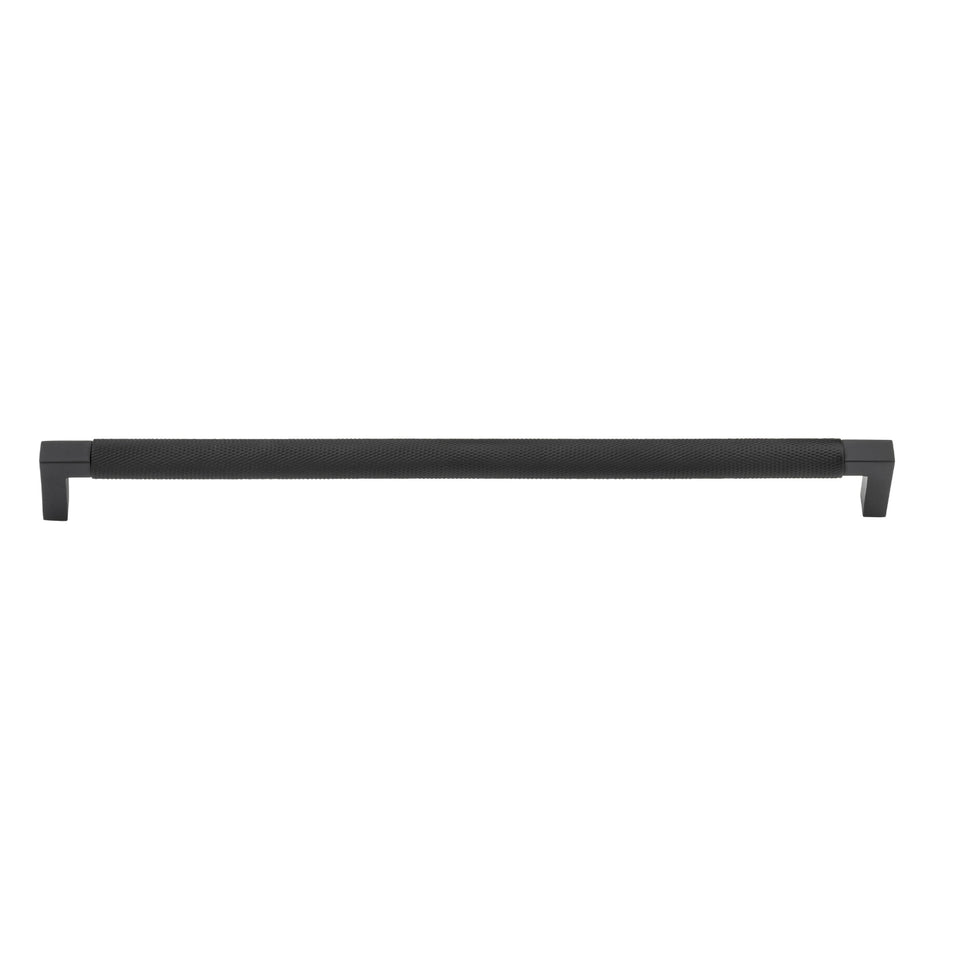
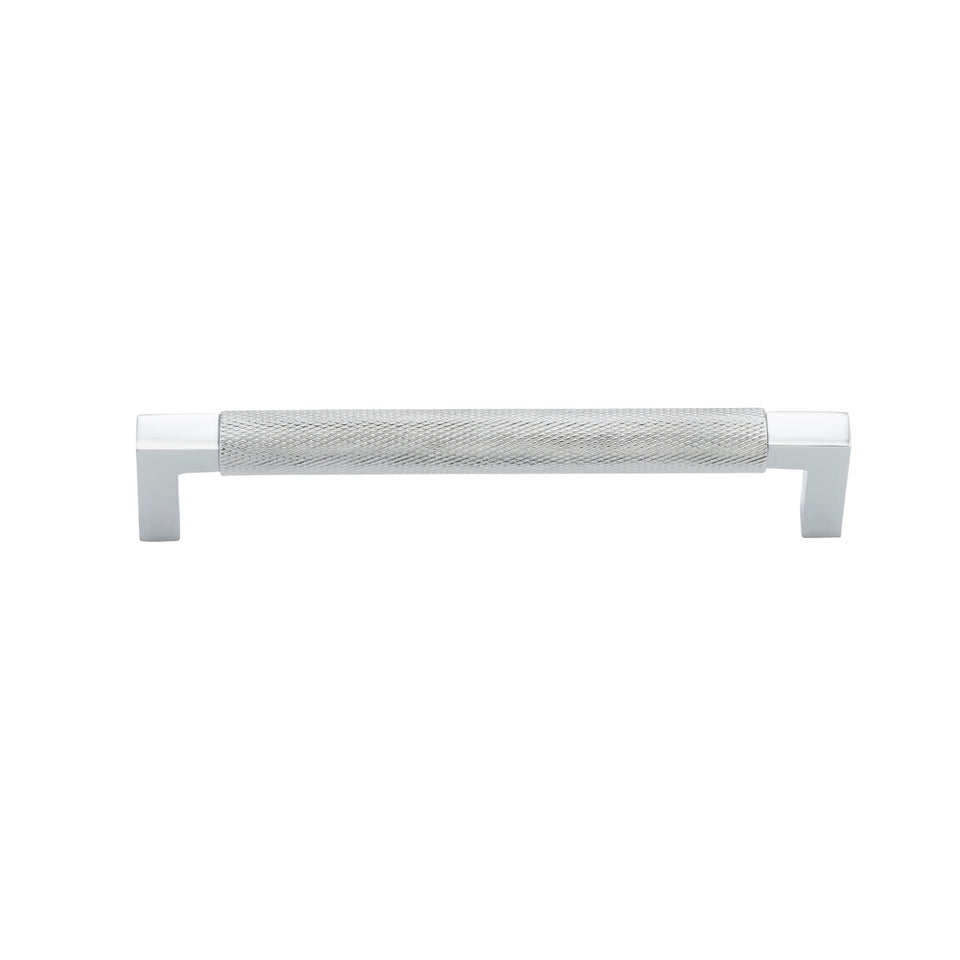
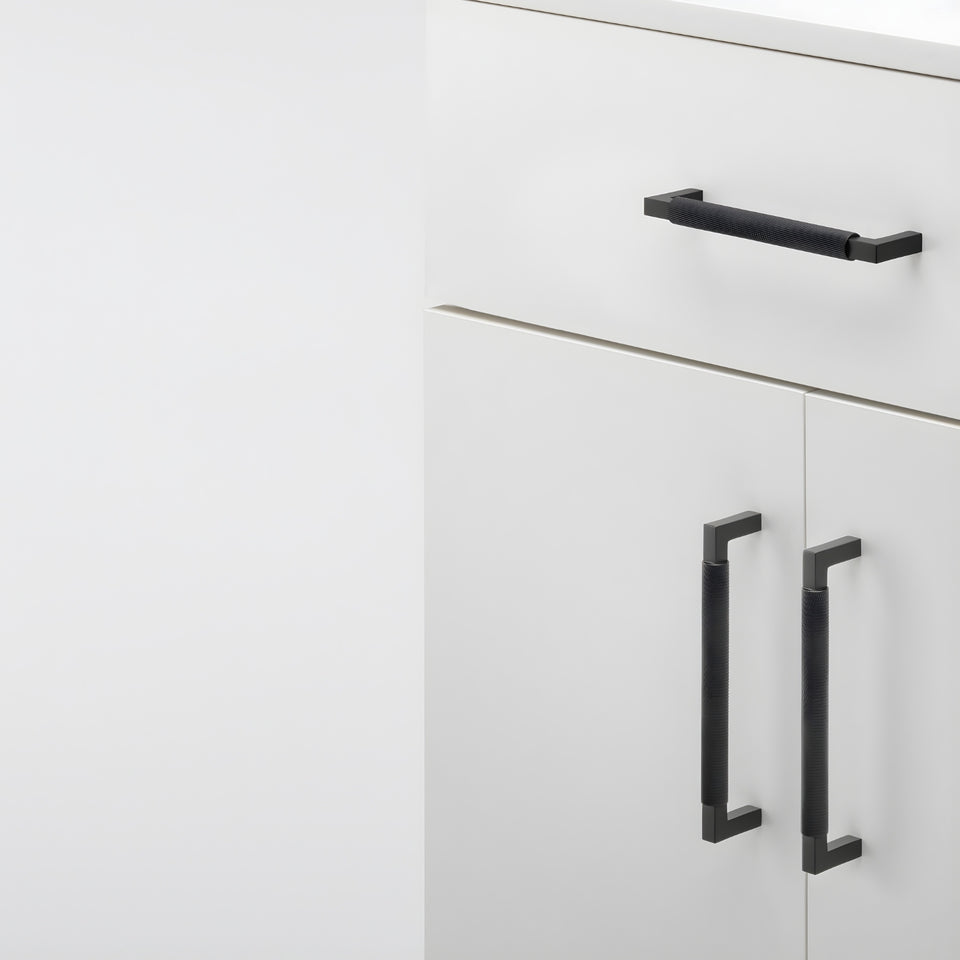
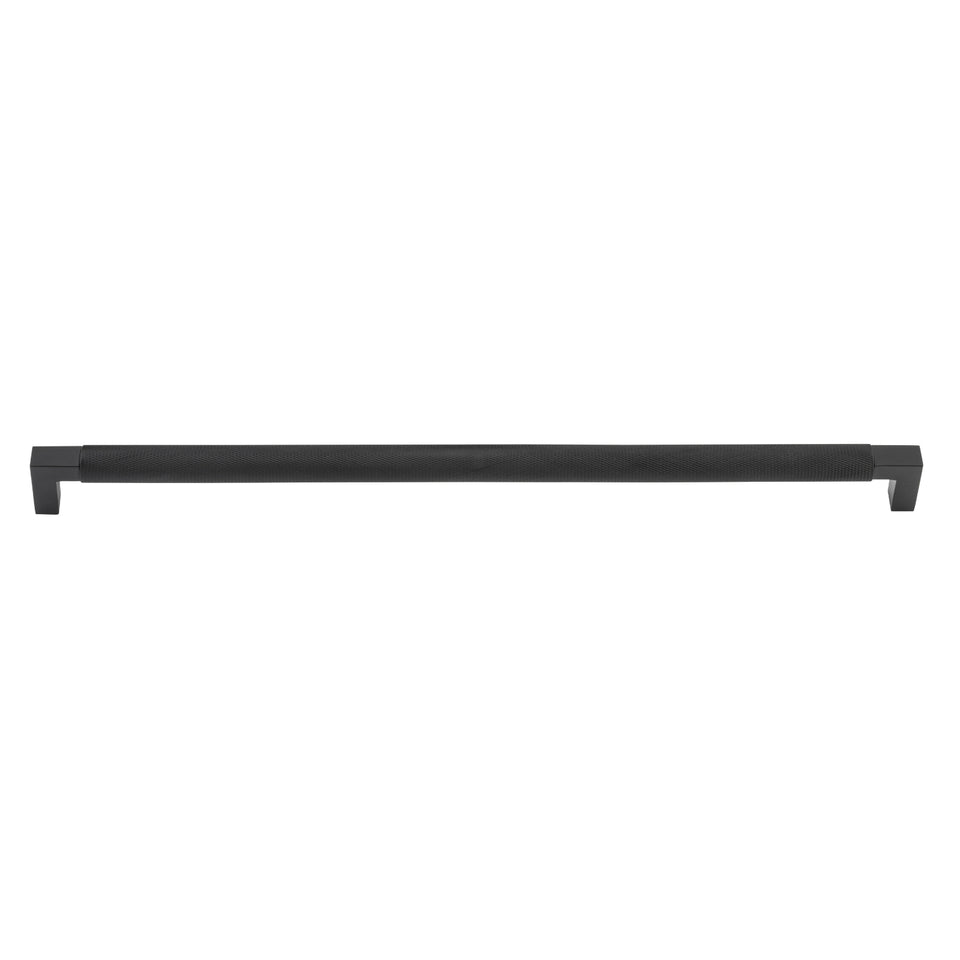
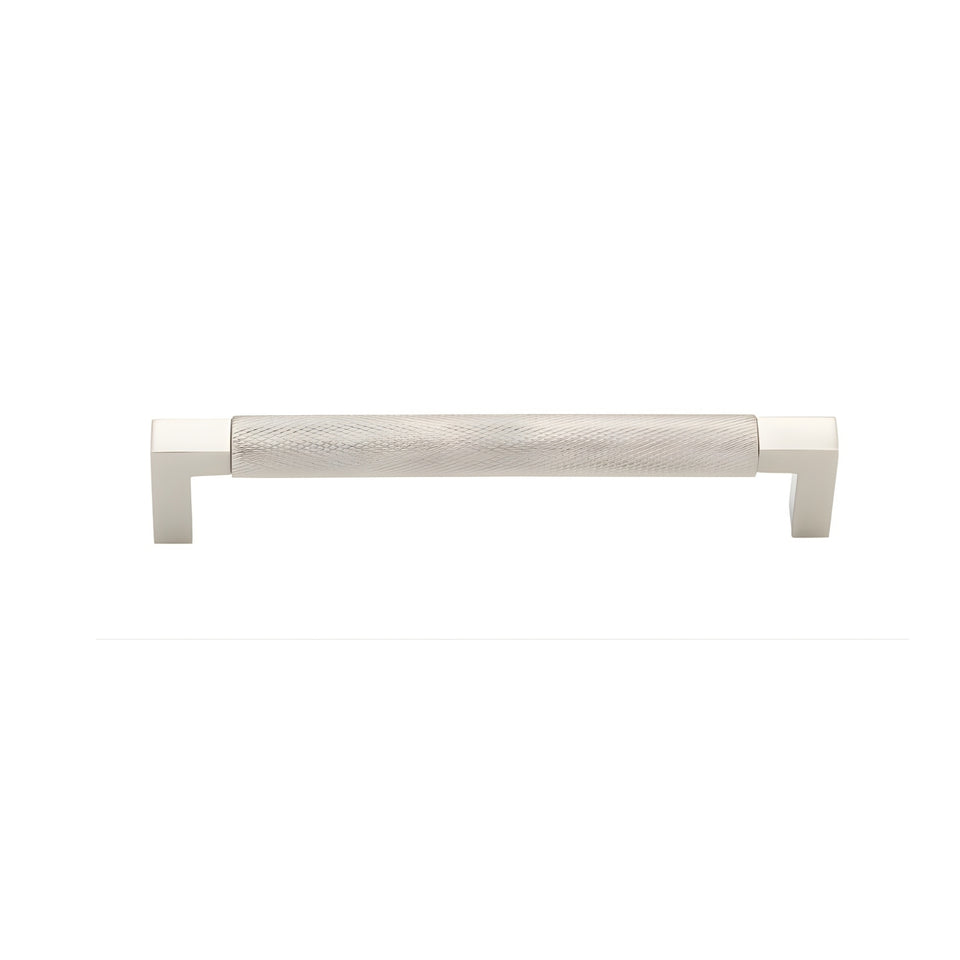
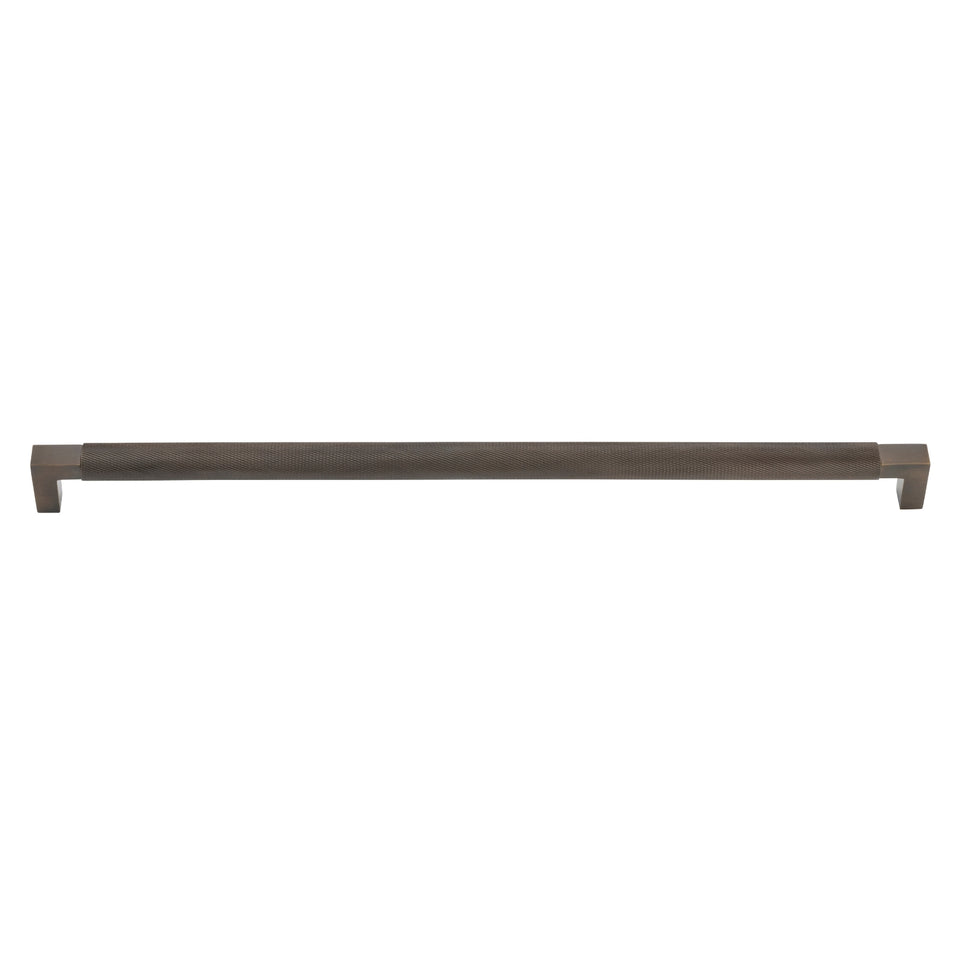
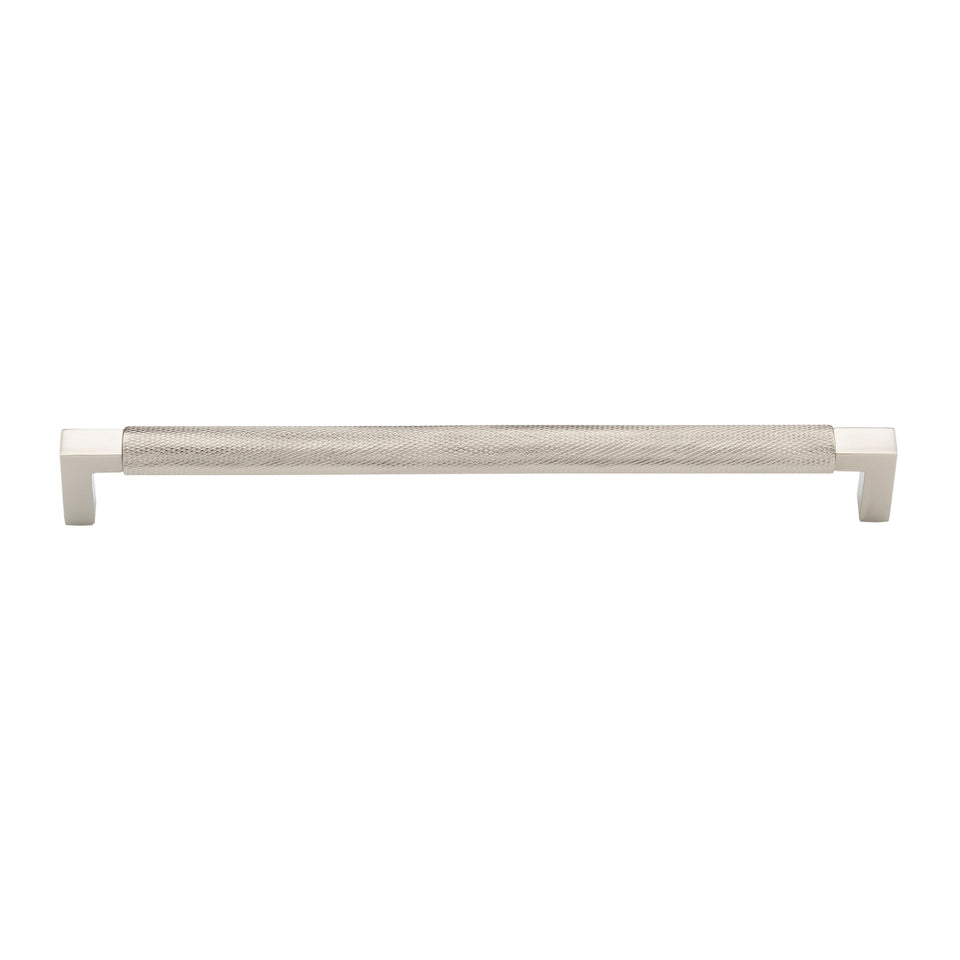
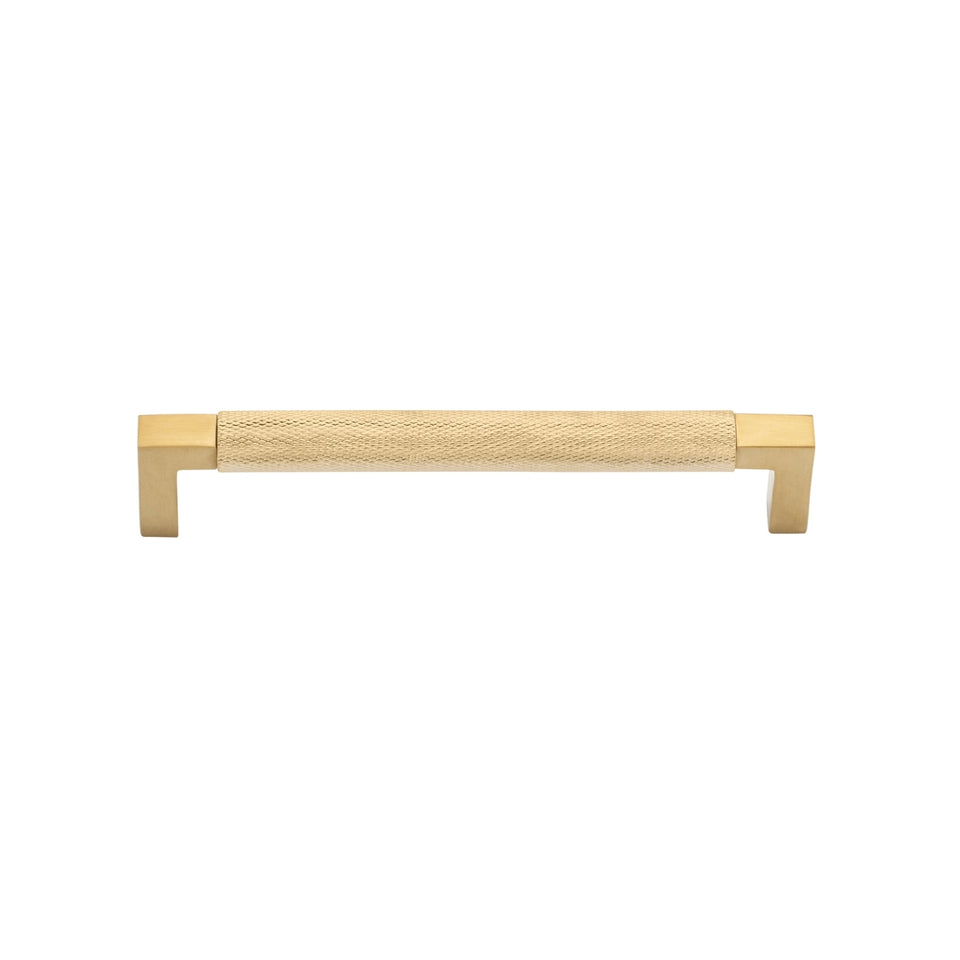
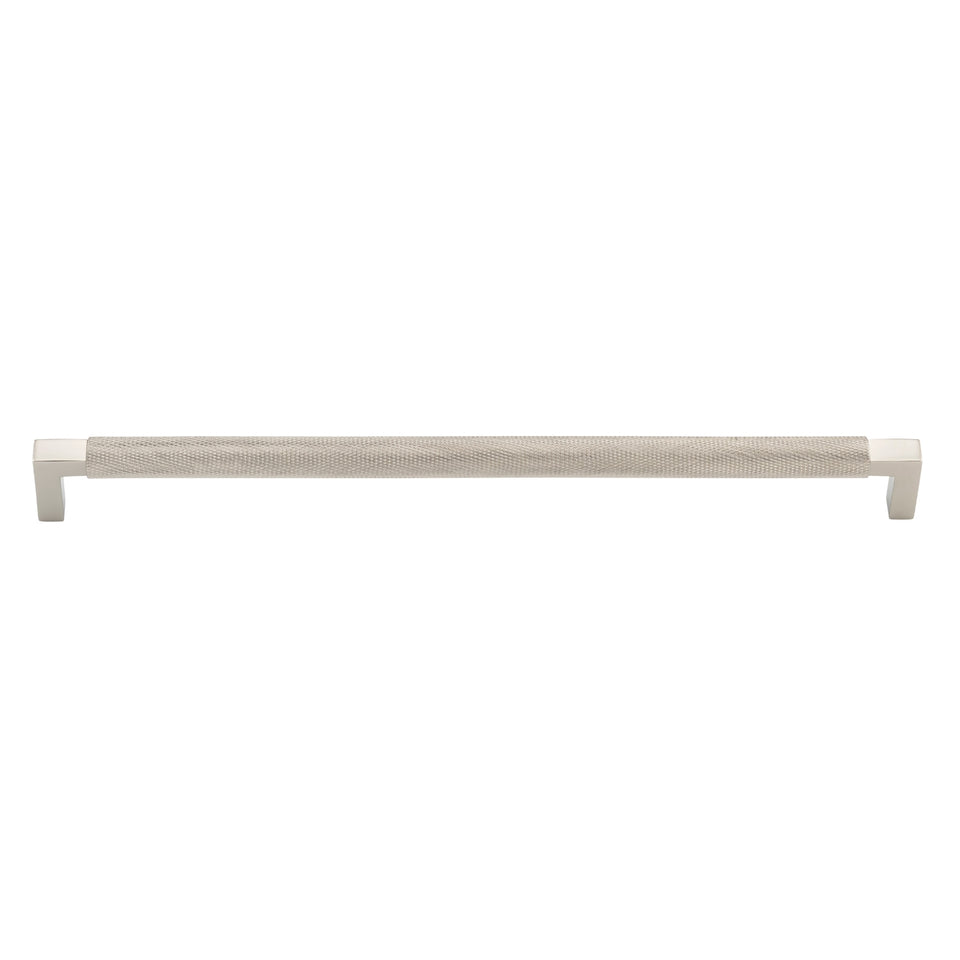
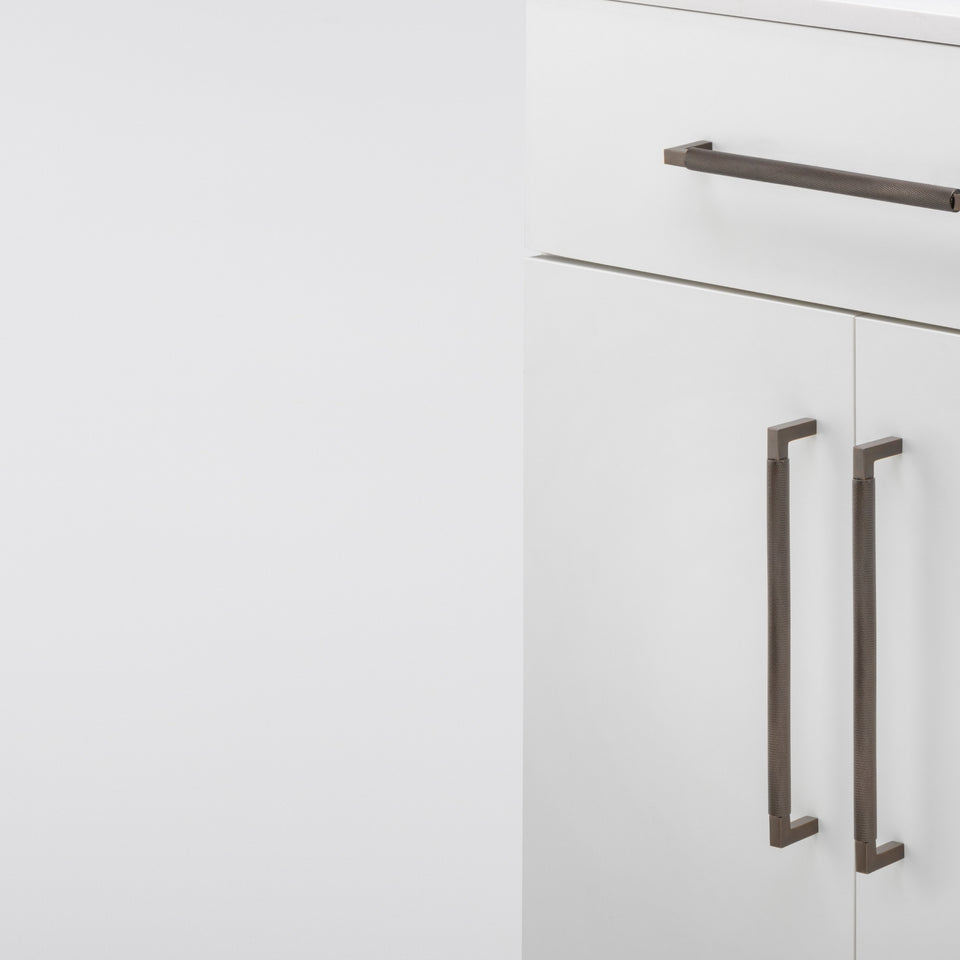
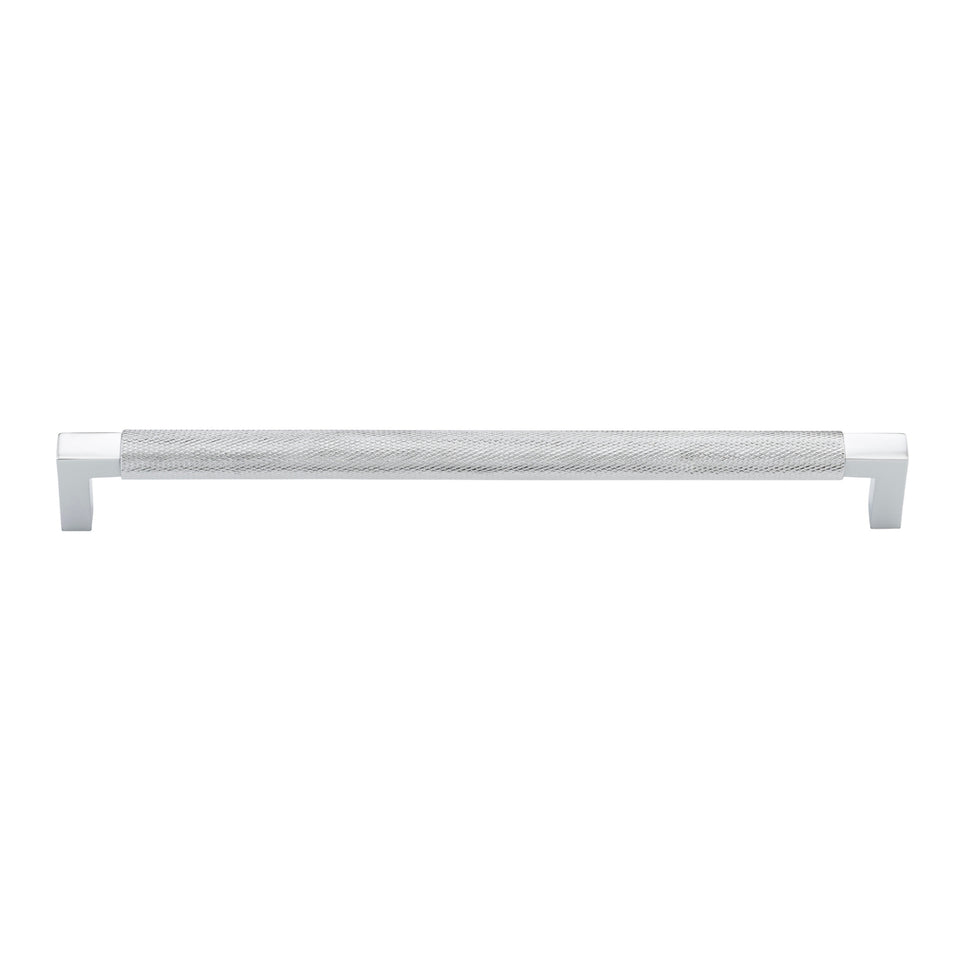
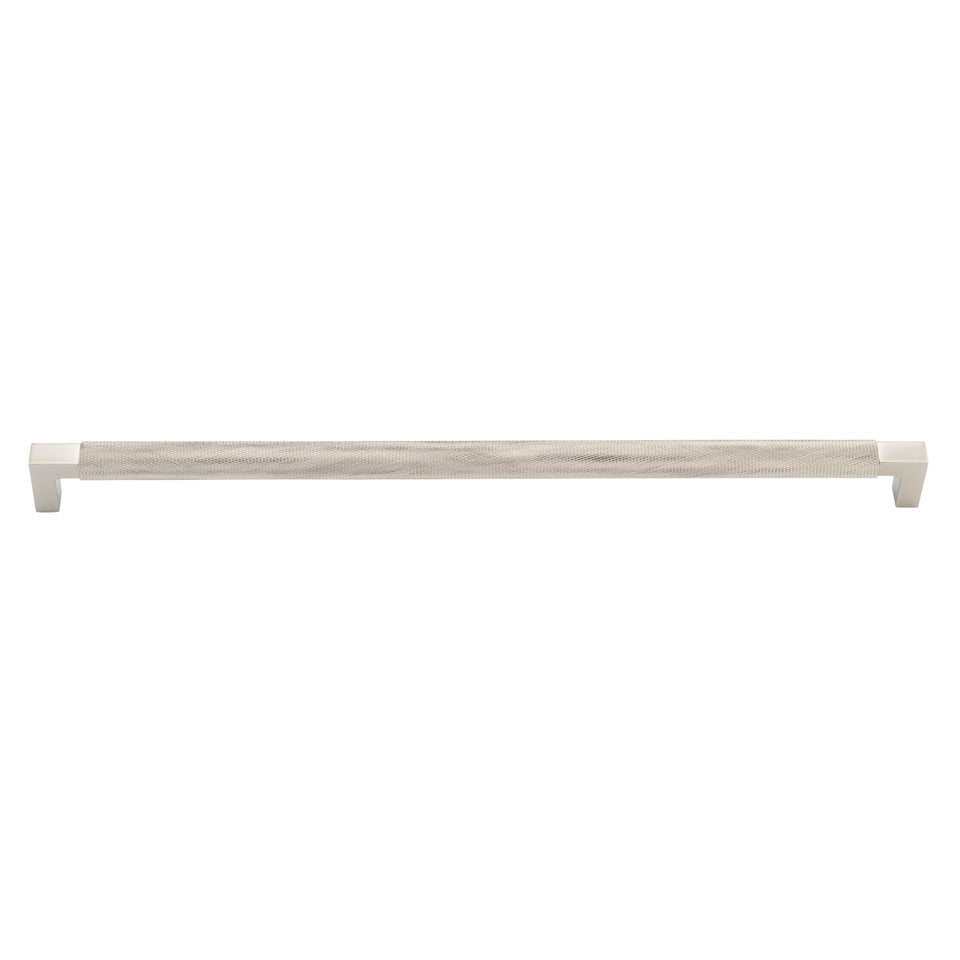
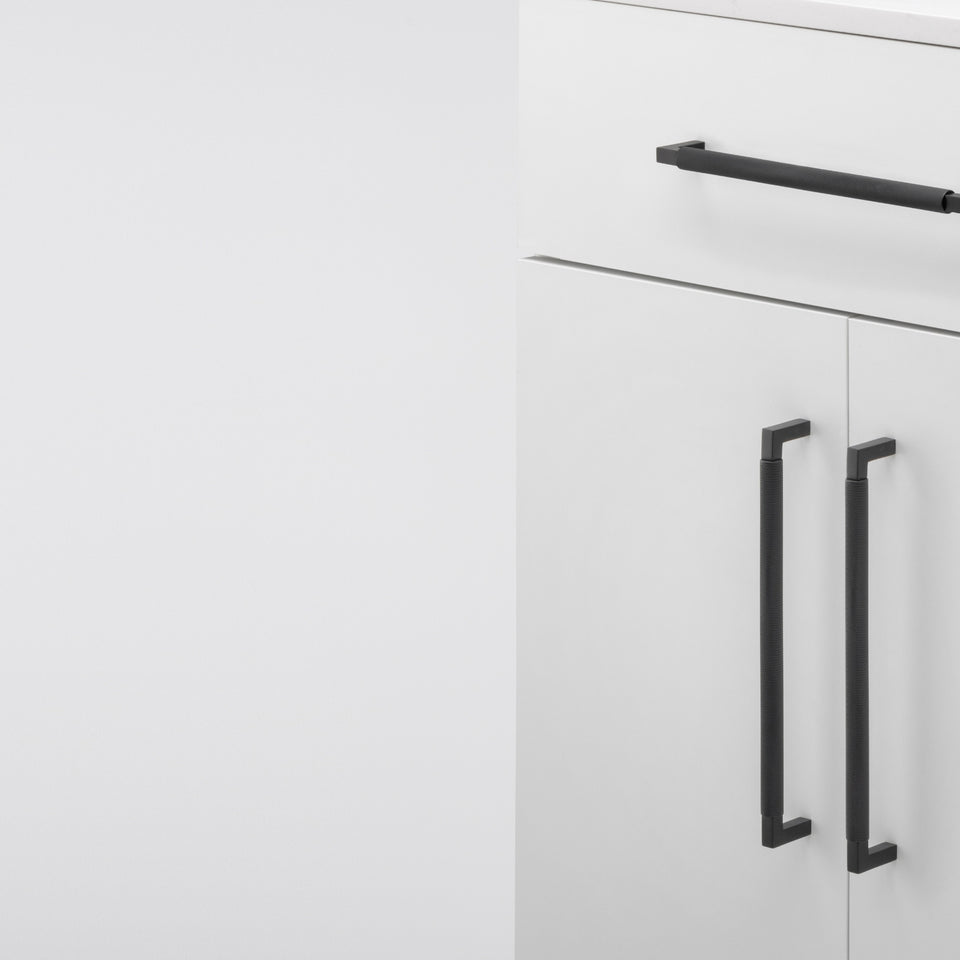
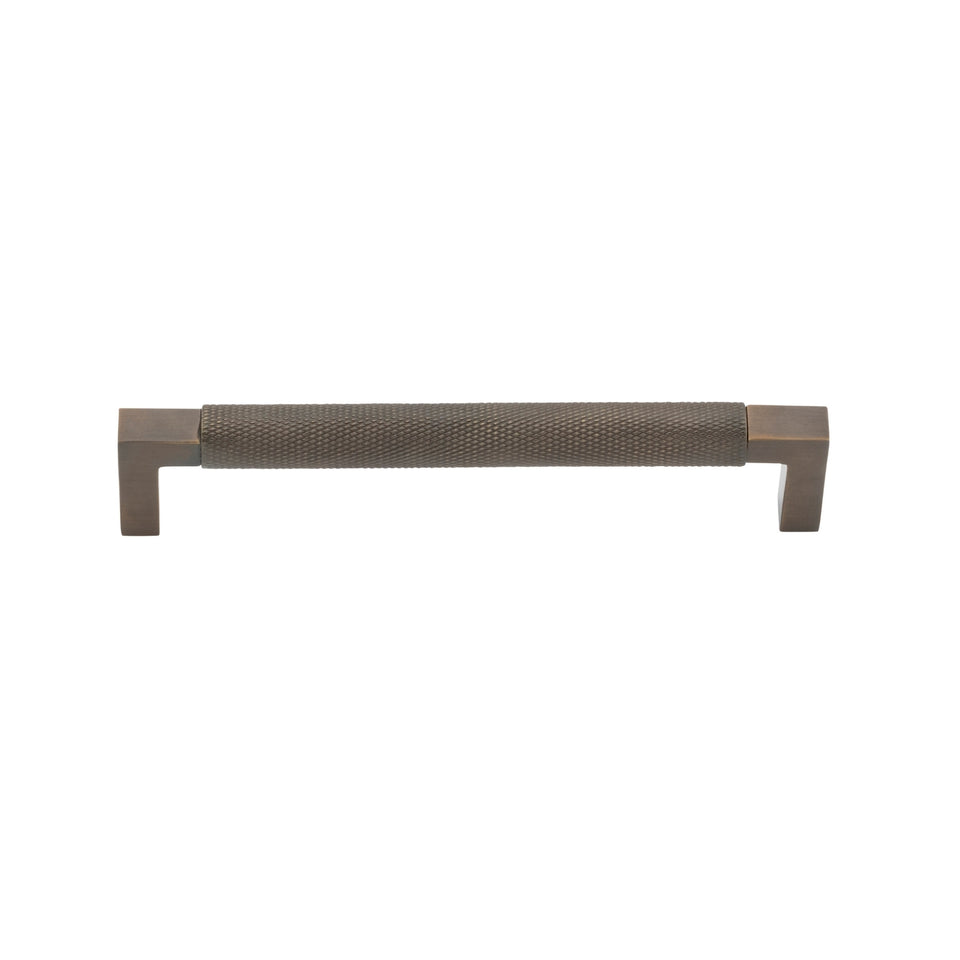
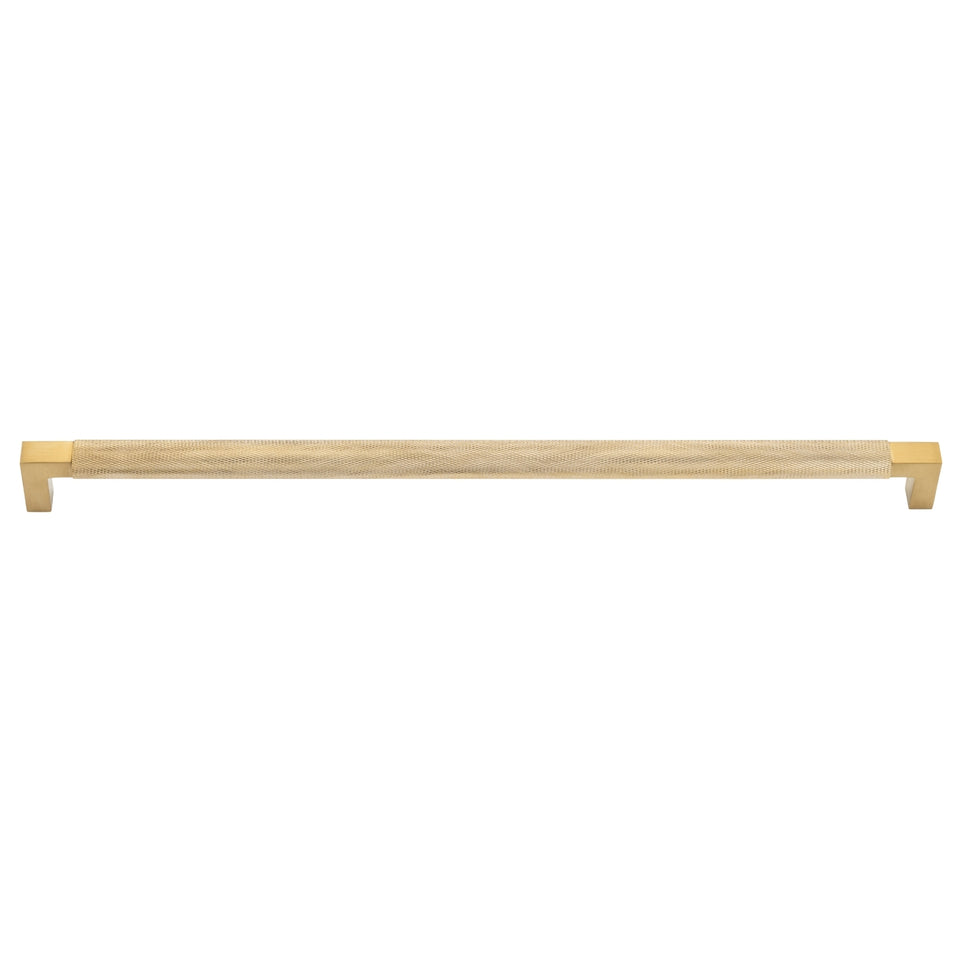
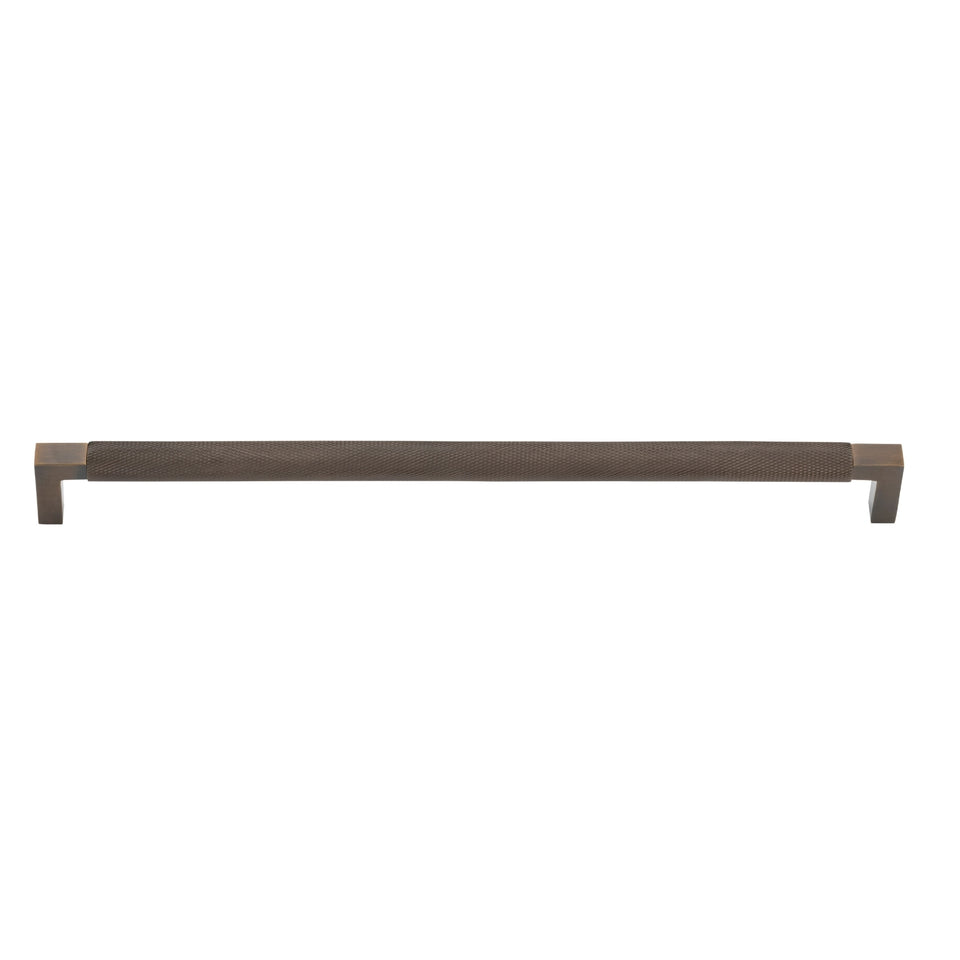
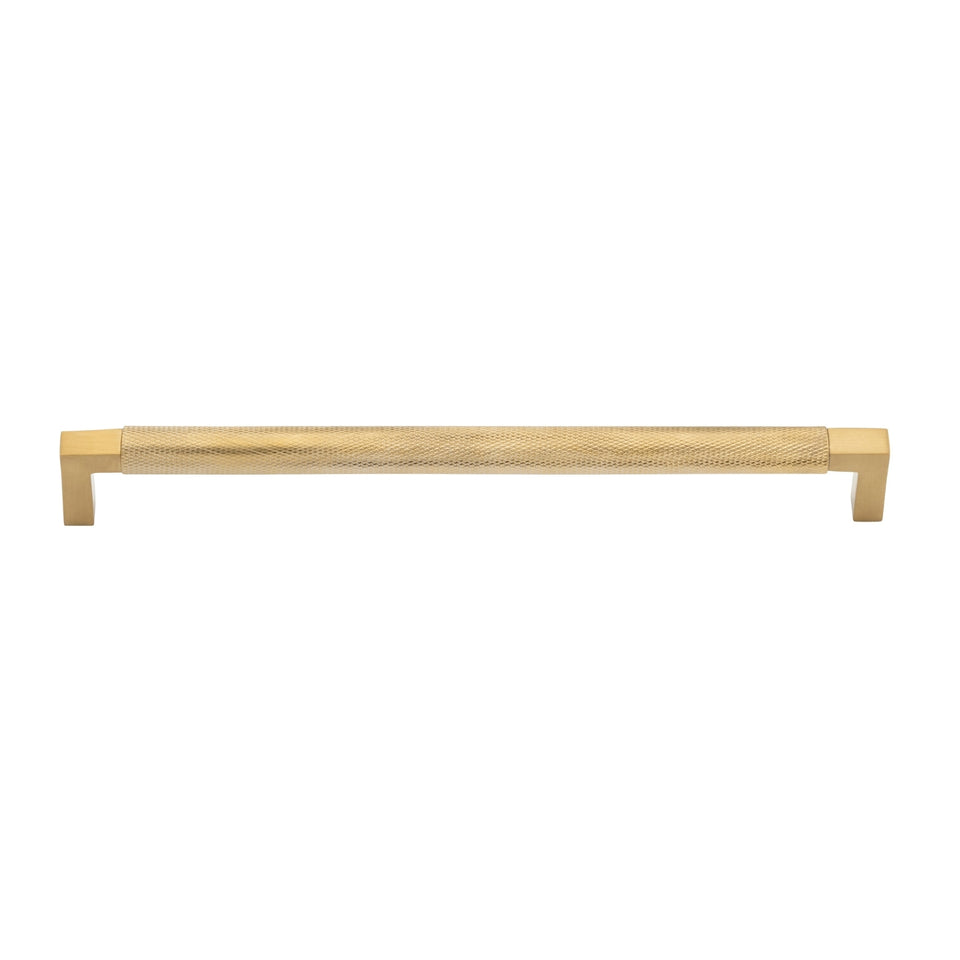
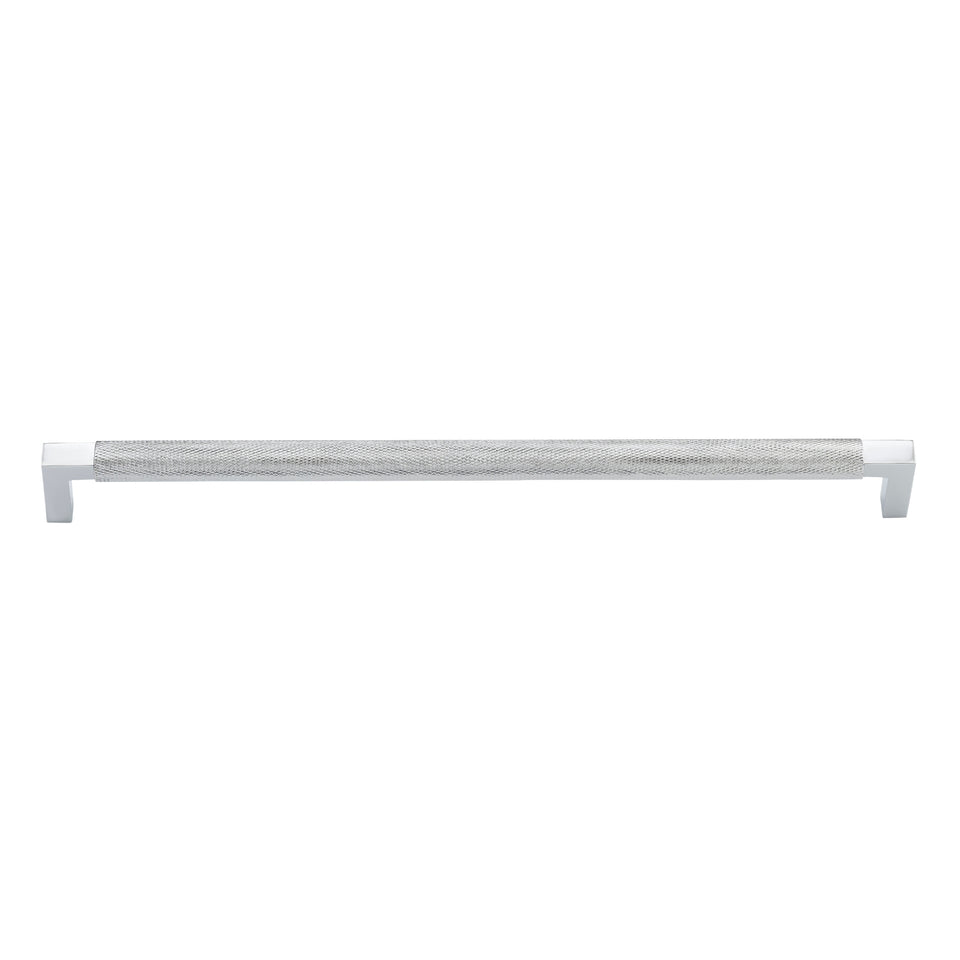
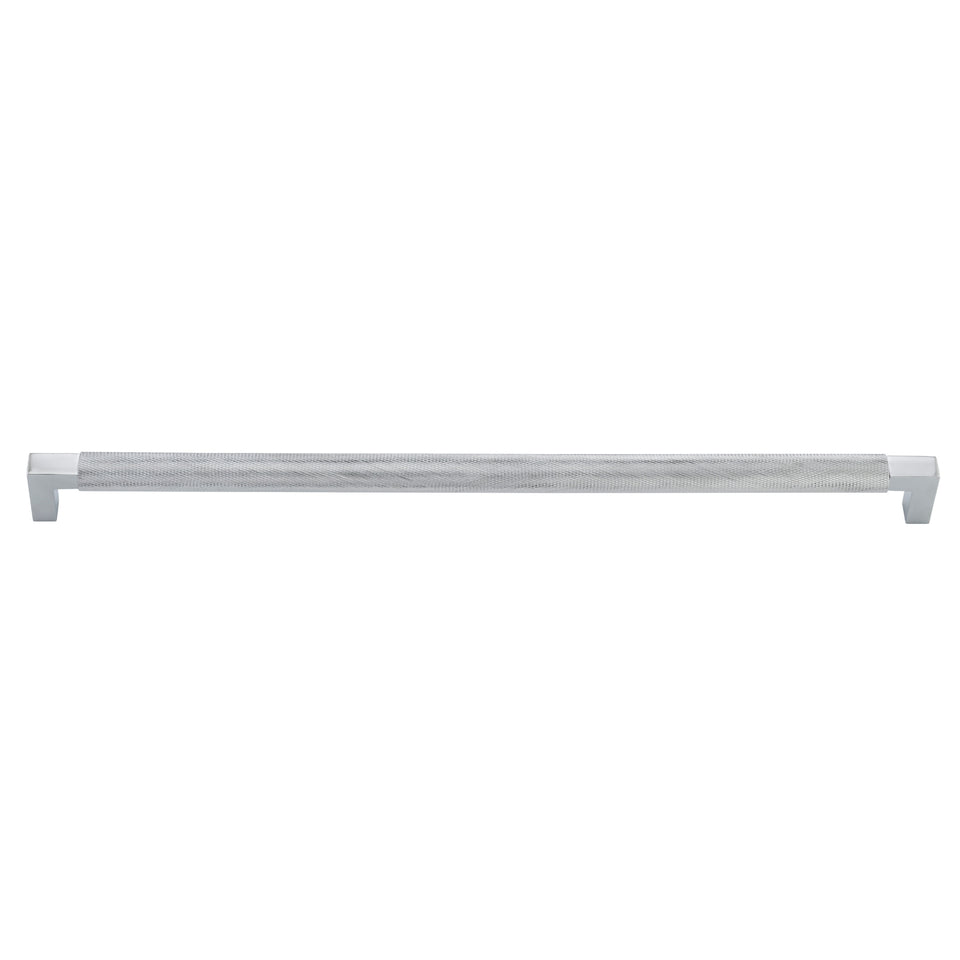
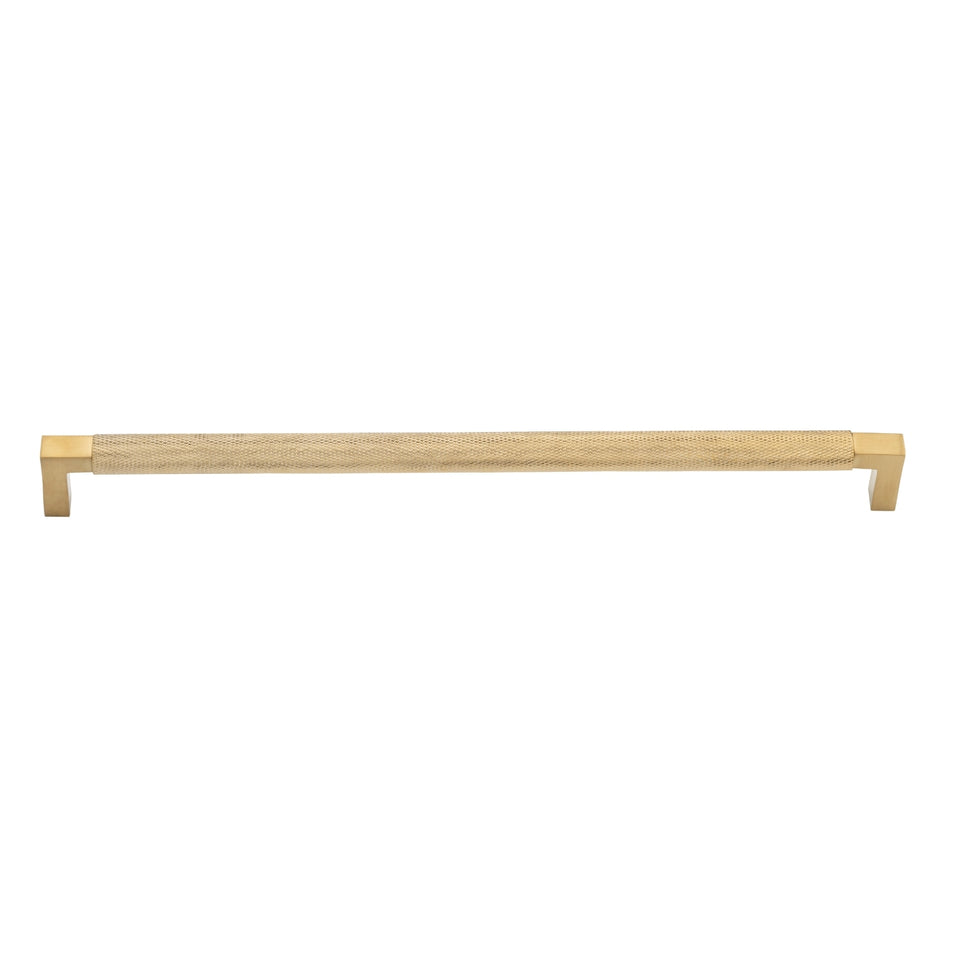
The Brunswick is a knurled solid brass pull from Iver in four lengths. It draws on Bauhaus design and features diamond-cut cross knurling across the collection, which gives it a distinctly tactile finish, and it suits contemporary and industrial interiors. It comes in Gold PVD, Signature Brass, Satin Nickel, Polished Chrome and Matte Black. The page covers what diamond-cut cross knurling is, what Bauhaus implies for a handle, what each length measures, and how to fit a long pull on a heavy door. The page also explains how to size and clean the range. For all of the brand's cabinet hardware, start at Iver cabinet hardware.
The Brunswick pull has four fixing distances: 160mm, 256mm, 320mm and 450mm. The overall lengths pair with them in order at 170mm, 266mm, 330mm and 463mm. Every size is 15mm wide and projects 40mm. The fixing distance is the gap between the two screw holes, measured from centre to centre, so the pull runs 10mm to 13mm longer than its holes. The ends are short, so the pull is close to the length of its centre. M4 x 25mm and M4 x 45mm bolts are included, so a range of panel thicknesses is covered. The steps between the four centres are uneven: 96mm from the first to the second, 64mm from the second to the third, and 130mm from the third to the fourth. The jump to the 450mm pull is the largest, so it is a different job from the other three and not just a slightly longer pull.
When you replace a handle, measure the distance between the screw holes and match it to the fixing distance, not to the length of the old handle. A 128mm handle will not fit 160mm holes without new holes, so a Brunswick pull only drops into holes spaced the same.
The 320mm fixing centre suits larger cabinet doors and integrated fridge or dishwasher panels where shorter pulls require awkward reaching. For heavy integrated applications, use a spring washer and a stainless screw for durability. The principle is simple: the screws carry the load every time the door opens, so use the longer M4 x 45mm bolts if the panel is thick. An appliance pull is usually larger and sturdier than a cabinet pull because it deals with frequent use, the weight of the door and the suction on built-in fridges and freezers, and appliance pulls are typically 600mm and above for fridge panels and full-height pantry doors. The Brunswick suits the integrated panels it fits, so choose an appliance pull if your door asks for one. See appliance pull handles.
Tall pantry doors suit long vertical pulls, which improve grip and weight balance. The 450mm Brunswick is the pull for that job in this range.
The Brunswick is solid brass, like every Iver range. Brass is generally two thirds copper and one third zinc, with a density of 8.4 to 8.73 g/cm3. Brass is heavier than zinc alloy or aluminium at the same size, and people notice the weight first: the common zinc alloy is about 6.7 g/cm3 and aluminium 2.70 g/cm3. See solid brass cabinet handles.
Brass also changes colour. Copper reacts with sulphur to form a brown layer, and slightly acidic water can turn it into a green-blue patina. Brass is not suitable for marine use unless tin is added, because the zinc reacts with salt water. An unlacquered finish is living and develops a patina, and a clear lacquer holds the colour as made.
The rule for mixing is to keep a room to two metals and repeat each at least twice so it reads as a decision. Choose the handle finish after the tapware and appliance finishes are settled.
A sizing table helps. A standard drawer 450mm to 600mm wide takes a 128mm to 160mm centre, and a wide drawer of 600mm to 900mm takes 256mm to 320mm, or two 128mm pulls. A tall pantry door of 600mm and above takes two 256mm pulls. 128mm is the most common centre in Australian kitchens. The one-third rule says a pull is about a third as long as the drawer front is wide, so near 200mm for a drawer 600mm across. The 170mm Brunswick on a 160mm centre is the nearer size for that drawer, the 266mm pull suits one of about 800mm, and the 330mm pull one of about 1000mm. The rule is a rule of thumb and not a strict rule. The Brunswick has no short centre below 160mm, so a vanity drawer that takes 96mm or 128mm centres needs a different range.
A pull sits 40mm to 60mm in from the edge that opens, near the bottom corner of an upper door and the top corner of a lower door. Pulls run horizontally on drawers and vertically on doors. To test a size before you buy, tape a strip cut to the handle's length onto the cabinet and live with it for a day.
Contemporary and minimalist kitchens pair with matte black or brushed nickel pulls, and industrial kitchens with gunmetal or matte black bar pulls with visible knurling. The Brunswick in Matte Black fits that industrial note, and in Satin Nickel it fits the contemporary note. The Brunswick suits contemporary and industrial interiors. Coordinate finishes across cabinet hardware, appliance pulls and fixtures such as taps and lighting without making every piece identical. These matches are guidance and not rules.
The Brunswick pairs with Brunswick levers, pull handles and a cabinet knob across the full collection, and Iver's whole-of-home idea carries one design through a house. The levers and door pieces are door hardware and are not on this page. If you plan to match cabinets to doors, compare the finish names on both products, since a finish called brushed nickel or brushed brass can differ between suppliers. Match finishes, keep sizes similar and commit to one aesthetic.
Screw length depends on the panel: 22mm for panels 16mm to 18mm thick, and 38mm for panels 32mm to 34mm thick. The Brunswick comes with M4 x 25mm and M4 x 45mm bolts, which cover both cases. The screw must bite into the handle and stop short of the door face. Tape a paper template to the door and mark the holes before you drill, and fit one handle before you do a whole kitchen so you can see the finish in the room's own light and feel the knurl in the hand.
When you swap handles, match the fixing distance. A new pull with the same distance drops into the old holes without drilling. Measure from the centre of one screw hole to the centre of the other. Common centres such as 96, 128, 160, 192, 224 and 320mm are multiples of 32mm, and that handles made to imperial sizes will not match holes drilled on that grid. Three of the four Brunswick centres sit on that grid, and the 450mm centre does not. If the old holes are on another centre, you will need to fill them or drill new ones, and a filled hole shows unless the door is repainted.
Bathroom fittings need wiping and drying more often than those elsewhere, because steam and moisture leave marks. Bathrooms are more humid than kitchens, and solid brass, stainless steel and quality PVD are sound choices. The Brunswick is brass, and one finish is PVD. The cabinets these handles fit are at bathroom vanities and furniture.
An unlacquered finish can be polished, but a lacquered one should not be, because brass polish strips the clear coat and leaves patches. Several Brunswick finishes are lacquered, so avoid brass polish. Put the cleaner on the cloth and not on the hardware, and dry the handle straight away so water marks do not form. For coated finishes, use a soft microfibre cloth with mild soap and warm water if needed, dried promptly, and keep abrasive pads, powdered cleansers, ammonia, bleach and alcohol-based disinfectants away. A coating wears first where the hand lands, so wipe the grip area more often than the rest of the handle.
A sample answers most of the remaining doubt. Hold the pull against the door, feel the cross knurling under the fingers, and check that the 40mm projection clears the neighbouring door when both open. Test the grip against the door and choose a grip that suits all users, including larger hands or arthritic fingers. Taping a strip cut to the handle's length onto the cabinet for a day also helps to judge scale, which works for the 170mm pull as well as for the 463mm one. If the finish matters, look at the sample in daylight and in the evening.
For the brand, see Iver cabinet hardware. For other types and materials, see cabinet handles, cabinet pull handles and solid brass cabinet handles.


