
*View accurate shipping rates and availability






9 Items


Up to 70% off across the store, plus free towels and mirrors up for grabs on orders over $800*


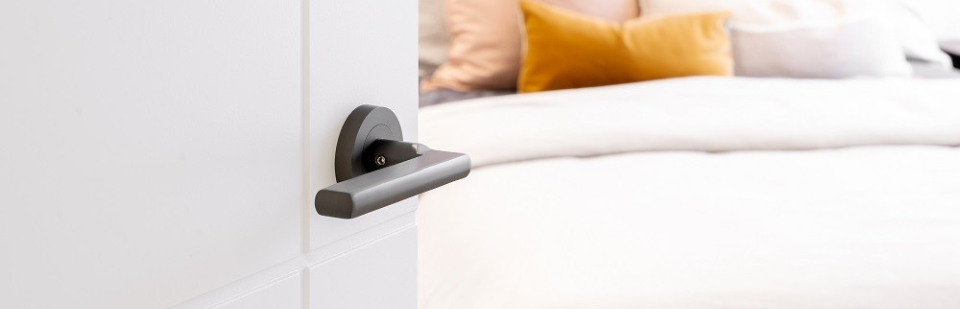
Every deadbolt in this collection is the Lockwood Paradigm 005 double cylinder deadbolt, sold with a round rose or a square rose and in several finishes. That narrows the choice to a few questions: which rose, which finish, if the door and frame suit a double cylinder lock, and if the lock replaces an existing deadbolt or goes into a door that has none. This guide covers what the 005 does, how its three modes work, what the spec sheets and the Lockwood catalogue say about fit, keys and standards, how a double cylinder behaves in an emergency, and what to check on the door before you order. The product facts come from the listings, the spec sheets for the round and square matte black versions, and the Lockwood deadbolts catalogue. The general points on locks come from locksmith and motoring body guides. For other deadbolts on the site, see deadbolts and Lane deadbolts.
Malvern Lock Service describes a deadlock bolt as a bolt that moves only with a key or a thumb turn and does not retract when the handle is pressed. A solid, square-ended bolt resists the card and shimming attacks that can push back a spring latch. Firewize draws the same line from the other side: a deadbolt is operated by hand, while a deadlatch locks by itself when the door closes. A deadbolt works alongside the handle and does not replace it. The RACV guide says knob or lever locks are not suitable as the primary door lock, and that the deadbolt is the part that extends into the frame. The lever sets that sit beside a deadbolt are on entry door lock sets, exterior door levers and Lockwood door levers.
The 005 is a multi-mode slimline deadbolt. A status indicator on the inside, called LockAlert, shows which of three modes the lock is in. In secure mode the door is locked from the inside and the outside, which the catalogue puts as the setting for when nobody is home. In safety mode it is locked from the outside and free to exit from the inside. In passage mode it is free to enter from the outside and free to exit from the inside.
The key controls the mode. A turn of the key gives safety mode, and turning it further selects secure mode, a feature called DualSelect. The catalogue also lists SafetyRelease, which it says automatically unlocks the internal knob when the door is entered by key from outside, and which minimises the risk of being locked in. Both features answer the usual objection to a double cylinder lock, covered next.
Malvern Lock Service calls the single cylinder lock, keyed outside with a thumb turn inside, the most common arrangement. A double cylinder needs a key on both sides, which suits a door with glass nearby, because someone who breaks the glass cannot reach a thumb turn. The Lock Shop sets out the trade-off. With a single cylinder you can leave quickly, but someone who breaks a nearby window can reach the turn. A double cylinder closes that gap, but in an emergency you need the key to get out. The page advises keeping a spare key near the door where an intruder cannot reach it, and it notes that some areas restrict double cylinders for fire safety, so local rules matter.
The 005 here is a double cylinder lock, and the modes are how it manages the exit problem. In safety mode the inside is free, so a household can leave the lock there while people are home. Secure mode is for an empty house, when the key trade-off applies. The RACV guide makes the same point about double-barrel deadbolts: they need a key on both sides, which is a fire risk on emergency exits, while a single barrel has an inside twist knob. Yale's Australian guide adds that a deadbolt is for use at night or when you are out, which matches how the 005's secure and safety modes divide. Single cylinder deadbolts are on deadbolts and Lane deadbolts.
Malvern explains that the Australian standard for locksets, AS 4145, tests cylinder security, bolt strength, lock body strength and key control, with grades from 1 to 4 and above. The catalogue lists four ratings for the 005 under AS 4145.2-2008: SL8 for security, D8 for durability, C6 for corrosion and K5 for key security. The listing shows them joined as SL8D8C6K5. Compare locks on those four figures, and ask a locksmith how they read for your door.
The catalogue describes the lock as bump and pick resistant, under the name Kinetic Defence. The cylinder is a 5 pin tumbler with a brass cylinder and brass barrel, and the bolt is a cut resistant stainless steel bolt. Malvern notes that the cylinder is the most targeted part of a lock, so those cylinder features are the ones to weigh. Neither the listings nor this page claim that the lock cannot be picked.
Each listing includes two keys. The catalogue says the lock is supplied individually keyed with 78,000 key combinations and can be keyed alike to other Lockwood door locks. It lists keyed alike, project keyed and restricted profile options, and the spec sheet says to contact customer service for keying options. The catalogue adds that Lockwood locks can be keyed to controlled or special systems, including legally protected keys that guard against unauthorised duplication and master key systems. If you want one key for several doors, ask about that before ordering.
The rating is a way to compare, and the right level depends on the door. Malvern Lock Service says Grade 2 or 3 suits most homes, which is its own view and not a rule. It also notes that some insurance policies specify minimum lock standards, so check yours before you choose. That grade scale and the SL, D, C and K figures on the 005 sheets are two different ways of rating a lock, and this page does not convert one into the other. The catalogue calls the Symmetry deadbolts standard security products, to be fitted with a key in knob or key in lever lockset, and calls the 005 the premium security solution in the range. Ask a locksmith which suits each door.
The 005 is designed to retrofit. The catalogue and the spec sheets say it replaces an existing deadbolt, fits a 54mm hole, has a 60 to 70mm adjustable backset and suits doors 32 to 48mm thick. Doors 32 to 36mm thick need a spacer ring, and it is included. The box includes a strike with a concealed crossgrain doorframe strengthening screw. The sheets also list a counterbalance bolt, which they say spreads the load between the door and the frame.
A new door needs more. The Lockwood deadbolts category page explains that a borelock deadbolt is installed by boring two holes into the door, set perpendicular to each other. Malvern adds that the bolt has to enter the frame fully and the screws have to reach solid timber. The RACV guide calls correct alignment and hinge notching difficult and recommends an accredited, licensed and insured locksmith for lock work, and it advises solid doors and steel frames for exterior locks. A thin frame or a hollow door limits what any lock can do, so check the frame before you spend on the lock.
The rose is the plate behind the knob and the key cylinder, and it is the part you see. The 005 comes with a round rose or a square rose, and the lock works the same way in both. The finish range differs. The catalogue lists satin chrome pearl, satin chrome brushed and chrome plate, with Everbrass and satin stainless steel for the round rose only. This collection also includes matte black on both roses. Match the rose to the other hardware on the door.
The body is high purity zinc alloy. The satin stainless steel version has a 304 grade satin stainless steel rose, turn knob and trim, according to the catalogue. The catalogue says the 005 passed a neutral salt spray test under AS 2332.3.1:2001, and the product page says the stainless steel version offers greater corrosion resistance. On finishes, Buildmat's guide notes that chrome shows fingerprints and water spots more readily than brushed finishes, and that matte black gives contrast on white doors but can look too dark in a low-light room. Buildmat also advises coordinating finishes with the rest of the hardware, and cleaning with a soft damp cloth, with no abrasive or acidic cleaners, wiping brushed finishes along the grain.
The finish pages for the door handles that sit beside a deadbolt are matte black, chrome, brass and stainless steel.
The catalogue sets the 005 beside several other products. The latching Paradigm 005 has a holdback function that keeps the latch retracted when required. The Symmetry deadbolts are described as general purpose, standard security products that should be fitted with a key in knob or key in lever lockset for added safety. The Symmetry 7106 is single cylinder and the 7107 is double cylinder, with a 31 to 45mm door range and left or right hand suitability stated on the sheet. The Symmetry 7107 is listed in the stainless steel collection on stainless steel door handles and hardware.
The Paradigm pull handle locksets take the 005 features into a pull handle. The catalogue lists 304 grade stainless steel pull handles with a 600mm external handle and a 500mm internal handle, 30mm wide, for doors 32 to 48mm thick, in a deadbolt version, a deadlatch version and a dummy handle for double doors. The deadbolt version includes door magnets to hold the door in passage mode. The deadlatch version is listed as tested up to 2 hours on fire assemblies under AS 1905.1-2005, with an SL7 security rating. Pull handle locksets are on entrance pull sets.
Are Lockwood deadbolts good? The listing and the catalogue give the facts to judge by: the AS 4145.2-2008 ratings above, a 5 pin tumbler cylinder, a cut resistant stainless steel bolt, a strike with a frame strengthening screw and a salt spray test. A rating is not the same as a promise of security, and the frame and door decide how much of it you get. Are they hard to pick? The catalogue calls the lock bump and pick resistant. This page makes no stronger claim, and the cylinder is the part that Malvern says is most targeted. Are they made in Australia? The listing says the 005 is designed in Australia, and nothing in the listings or the sheets says where it is made.
A secure entry door is a set of parts working together: the deadbolt, the handle or pull, the hinges and the frame. The RACV guide advises the same care on side, rear and garage doors as on the front. Buildmat suggests a door-by-door list of room, function and finish, with the extras each door needs. For a deadbolt door, the extras are the lever or pull, the hinges and a door stop, from door handles, hinges and door stops. If the door needs no lock, passage and privacy handles do that job, and for a keypad or app lock see smart door locks. The wider range is on door hardware.


