
*View accurate shipping rates and availability






7 Items


Up to 70% off across the store, plus free towels and mirrors up for grabs on orders over $800*
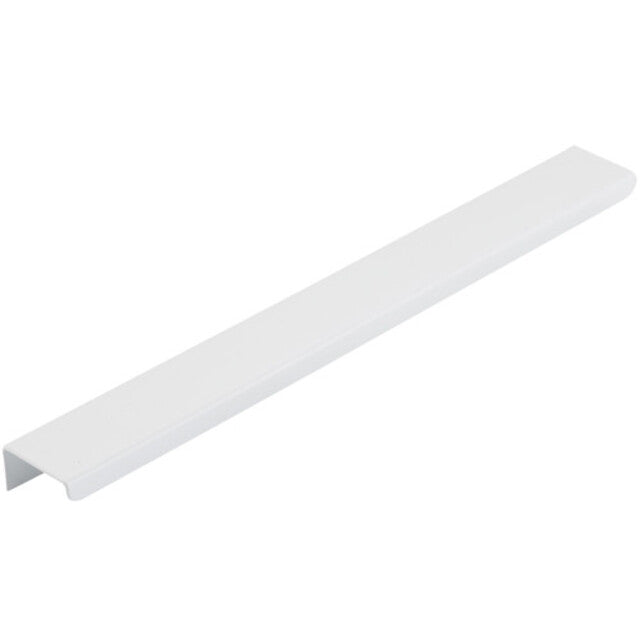

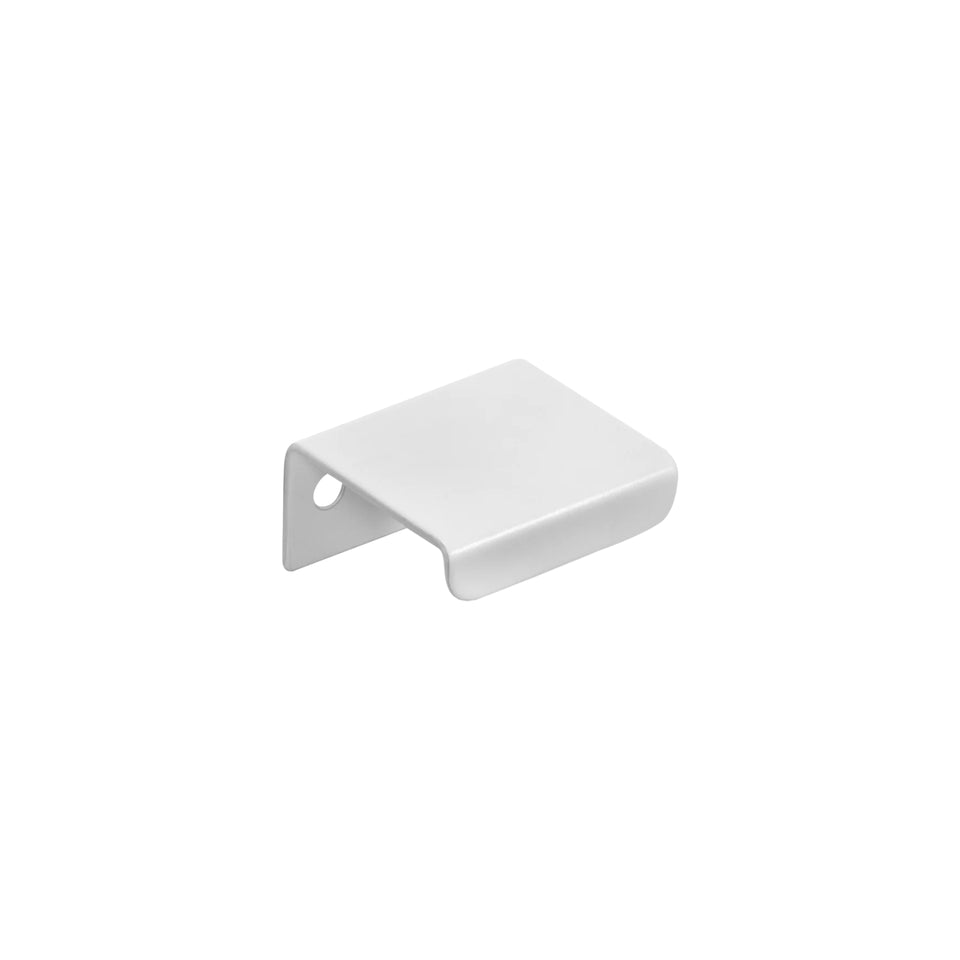
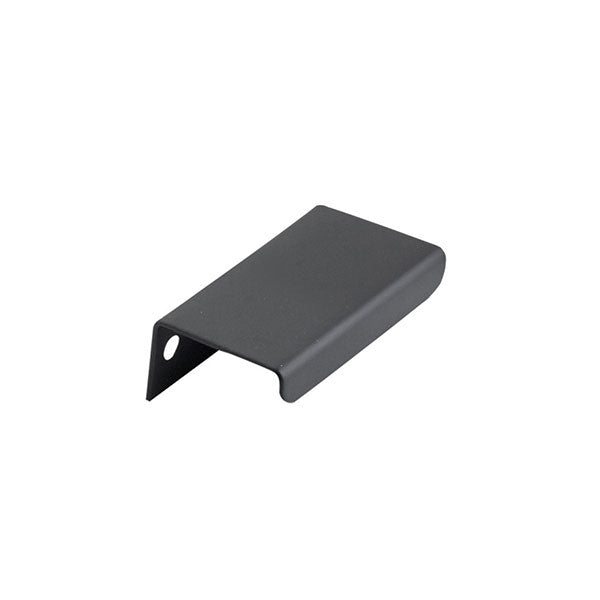
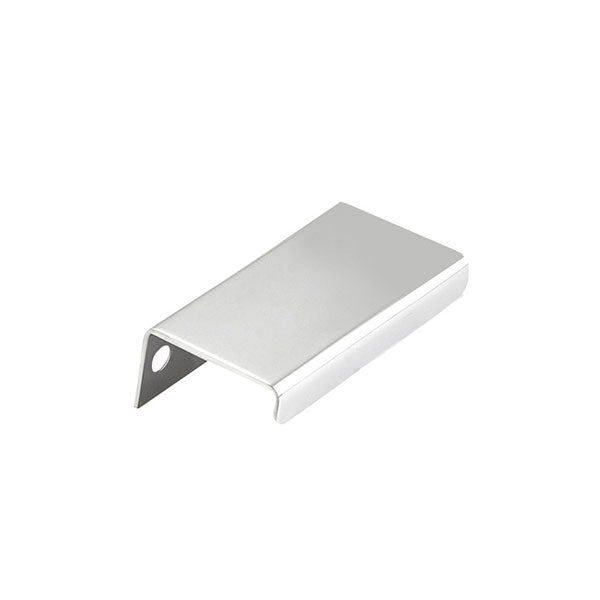
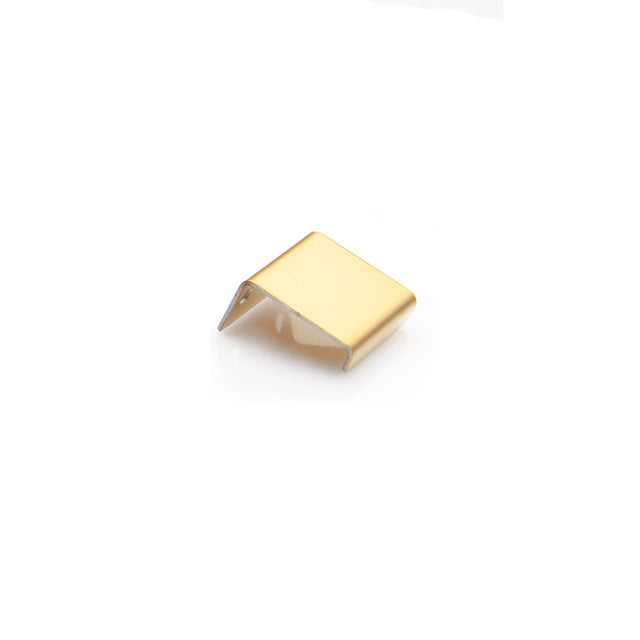
The Ferrara is a lip pull from Momo Handles, made from 304 stainless steel 1.5mm thick. It has a minimalist profile with straight, clean lines. It is cut for the rear of the cabinet, so from the front you see only the lip. Overall lengths run from 38mm to 500mm, in brushed and polished stainless, matt black, white and brushed brass. Below you will find what a lip pull is, how the Ferrara lengths and hole centres differ and what 304 stainless steel does in a handle. The page also covers how the finishes behave and how to size, fit and clean it. For every type of handle, start at cabinet handles. For the whole brand, see Momo cabinet handles.
A lip pull is a U-shaped handle fixed to the top or side of a door, with one side shorter than the other. The short side makes a small lip, and that lip is what your fingers hook under. It is also sold as a finger pull or an edge pull. The half moon type sits flush with the bottom edge of the door or drawer, and lip pulls suit handleless and near-handleless designs, such as fluted, Shaker and contemporary profiles.
A recessed finger pull is a different thing: a channel cut into the panel, which normally has to be routed during manufacture. The Ferrara is not that kind. It sits on the surface and screws on, so it can go onto existing joinery or onto a new run. For the whole family, see lip pull handles.
The Ferrara is 304 stainless steel, and the thickness is 1.5mm.
Steel counts as stainless when it holds at least 10.5 per cent chromium, and the chromium forms a thin film on the surface that repairs itself even after a scratch. Type 304 is the most widely used family and is often called 18/8 for its chromium and nickel content. The composition of 304 is 18 to 20 per cent chromium and 8 to 10.5 per cent nickel, with no molybdenum. The 316 grade adds 2 to 3 per cent molybdenum, which raises its resistance to pitting. Grades such as 304 are usually non-magnetic, so a magnet is not a reliable test of the grade.
One point matters in a bathroom. Stainless steel is easier to clean than copper or aluminium, close to glass. A surface that wipes clean is the reason it is common on wet-area hardware. See stainless steel cabinet handles for the other stainless ranges.
The Ferrara is 304. Indoors, even in a coastal house, that is a normal choice, and the care routine below deals with surface staining. For a handle that sits in a splash zone or outdoors by the sea, ask whether a 316 handle would suit better.
A lip pull is usually sold by overall length, but it is fixed by its hole centres, the gap between the two screw holes. Centre-to-centre is the key figure and not overall length, and ordering by overall length is the first mistake people make. The Ferrara lengths and centres are:
The pairing includes the 88mm and 500mm sizes in some finishes. The overall length is always longer than the centre, so a 128mm centre pull is 150mm long. When you replace an old handle, measure the distance between the screw holes and not the length of the handle itself. The standard centres are 32, 64, 96, 128, 160, 192, 256, 320, 384 and 448mm, with 128mm the most common in Australia. The Ferrara centres do not all match that list, so check the figure against your existing holes before you order.
A sizing table pairs drawer width with centre. A standard drawer 450mm to 600mm wide takes a pull on a 128mm to 160mm centre, and a wide drawer of 600mm to 900mm takes 256mm to 320mm, or two 128mm pulls. A standard door takes a 96mm to 128mm pull or a knob, and upper cabinet doors take a 96mm pull or a knob, since they are narrower. A tall pantry door of 600mm and above takes two 256mm pulls.
The one-third rule says a pull is about a third as long as the drawer front is wide, so near 200mm for a drawer 600mm across. On the Ferrara, that points to the 200mm length on a 160mm centre for a 600mm drawer, and the 300mm length on a 265mm centre for a wide one. The 38mm and 100mm lengths suit narrow doors, and a vanity door is the usual case. Vanity drawers usually take 96mm and 128mm centres, which sits close to the 88mm and 128mm Ferrara sizes. The 500mm length on a 430mm centre is a run for a wide drawer or a long door edge.
A rule gets you started and a hand test settles it. Tape a strip cut to the handle length onto the cabinet and live with it for a day. A short lip pull can look lost on a wide drawer, and the strip shows that before you buy.
The Ferrara fixes from the back, with 16mm countersunk screws whose heads are finished to match, screwed to the rear of the cabinetry. The lip lets the handle be discreetly mounted to the rear, which suits it to kitchens, bathrooms, wardrobes and bespoke joinery.
The supplied screws are 16mm, so check the thickness of your door or drawer panel against that length, and read the screw line for what is included. The width and the projection of the Ferrara are not given, so measure a sample against your door gap before you commit. Mark the holes with masking tape or a card template and look at it before you drill.
A lip pull works where the door face is flat and the hand can reach an edge. Lip pulls go on the top edge of base units and the side or bottom edge of wall units, so the hand meets the lip from the direction it already comes from. Wardrobes and bathroom vanities suit them as well. The face of the door stays clear, and nothing stands off the surface to catch a sleeve.
Grip is the point to plan for. A lip pull gives a smaller hold than a bar, and it can be less comfortable on a heavy drawer or a large door that is opened often. For a pan drawer or a pantry door, a bar from cabinet pull handles gives a firmer hold. If you want to keep the lip look, the 300mm or 500mm Ferrara is a better choice than a short one. For an appliance panel, an appliance pull is made for the job.
The Ferrara comes in brushed stainless steel, polished stainless steel, matt black, white and brushed brass. Here is what each finish does in daily use:
Bathrooms are more humid than kitchens. Solid brass, stainless steel or a quality PVD finish are sound choices, and thin electroplated zinc alloy can fail within a few years in a shower splash zone. A stainless steel lip pull is among the sound choices. Dry the handle after steam, as the cleaning routine below advises.
A simple routine suits stainless steel: warm water, a little mild dish soap and a soft cloth. Wipe with the grain of the brushed surface, rinse, and dry straight away so water marks do not form. Keep bleach, chloride products, acidic cleaners and steel wool away, since they can damage the surface film. If tea staining appears near the coast, wash it off regularly.
The lip catches dust along its length, so run a soft cloth or a soft brush along the underside. Avoid abrasive cloths, cleaners and chemicals on any handle.
A lip pull drops into old holes only when the centres match. A 128mm handle will not fit 160mm holes without new holes. Of the Ferrara centres, 88mm, 128mm and 160mm are the ones closest to common drawer sizes, while 25mm and 430mm sit at the two extremes. If the old handle was a bar on 96mm or 192mm centres, the Ferrara will not line up, and the panel needs filling or a new set of holes. Measure from the centre of one screw hole to the centre of the other, then match that number to the fixing distance.
The lip also changes where the hand lands. A bar handle is gripped on the face of the door, while a lip pull is hooked from the edge. If you swap one for the other on existing doors, check that the door edge has room for the lip and that the gap between doors is wide enough for your fingers to reach under it. A sample held against the door answers both questions before any drilling.
For other makers and shapes, see lip pull handles, cabinet pull handles and Momo cabinet handles.


