
*View accurate shipping rates and availability






11 Items

Up to 70% off across the store, plus free towels and mirrors up for grabs on orders over $800*
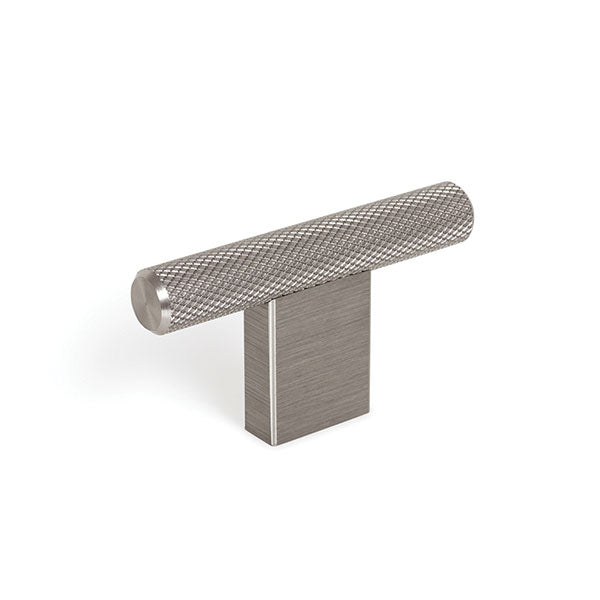





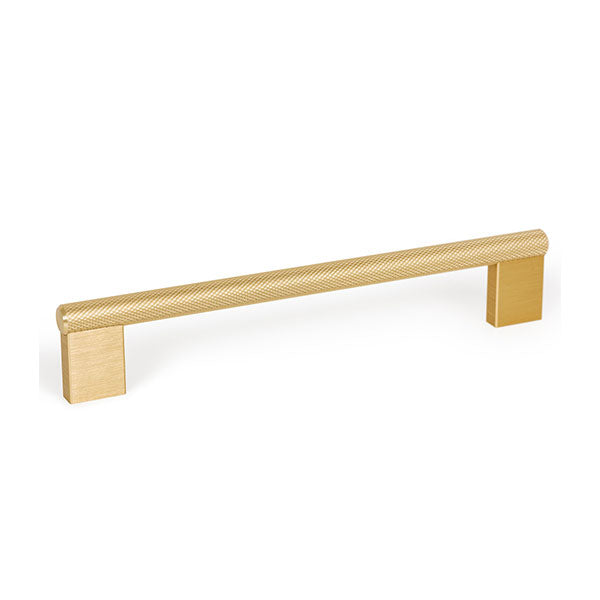
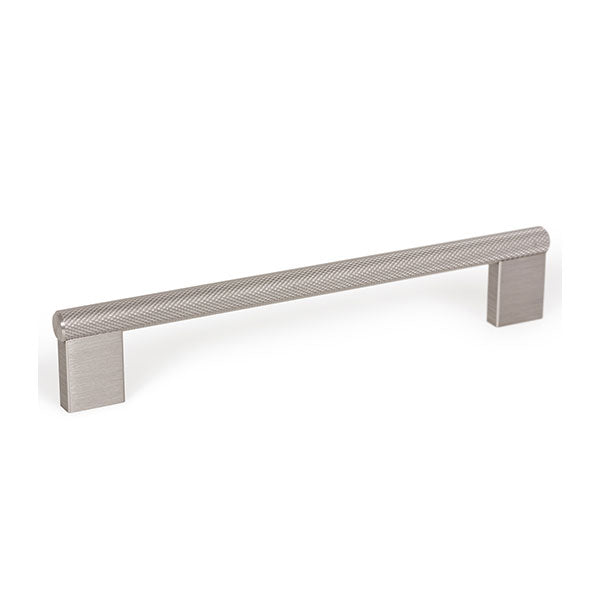
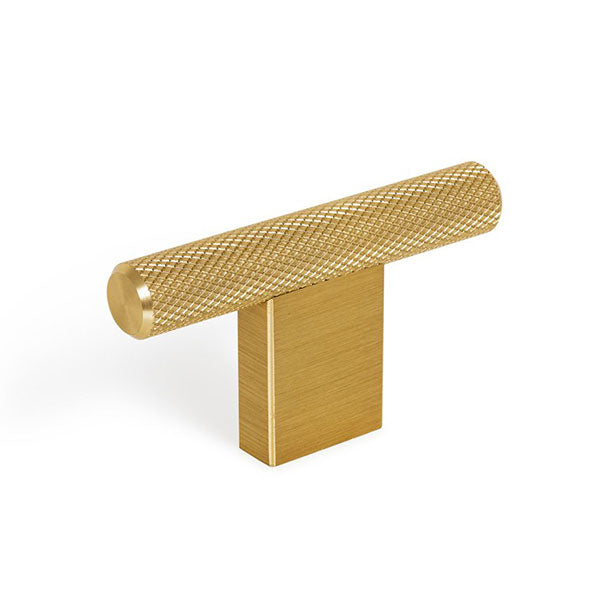
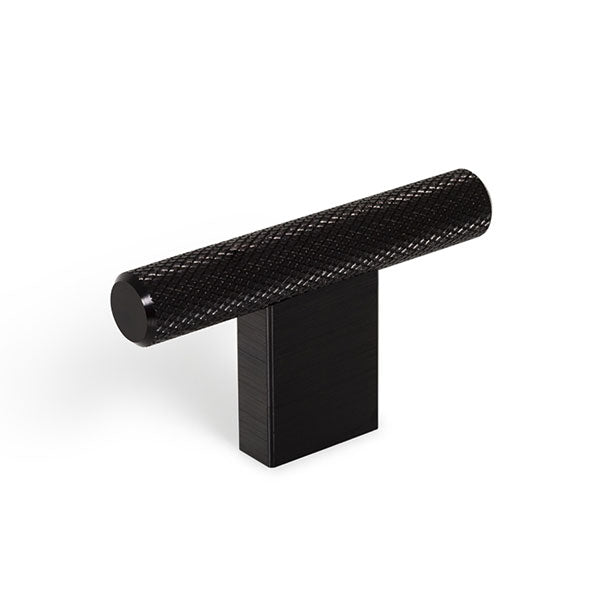
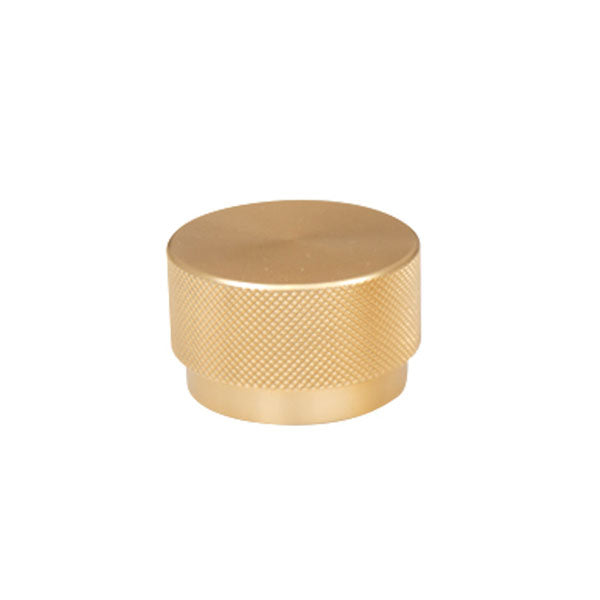
Momo Graf is a range of aluminium cabinet handles with a knurled, mesh textured surface and a modern industrial look. The texture gives a firm grip when you pull. The range comes in four styles, a D handle, a T knob, a round knob and a cylinder knob, in three finishes: brushed black, brushed dark brass and dull brushed nickel. It suits a bathroom vanity, a kitchen, a change room and a bedroom.
People search for it as Momo Graf and Graf cabinet handles. This page sets out each style with the sizes that decide fit, and how to choose and fit them. For other handles, see cabinet handles, D shaped cabinet handles, T knob cabinet handles and cabinet knobs.
| Style | Sizes | What to check |
|---|---|---|
| Knurled D handle | Hole centres 160mm, 256mm and 1178mm; lengths 183mm, 278mm and 1200mm | The distance between the two screw holes; the 1178mm size needs four screw holes |
| Knurled T knob | 60mm long, 8mm base width, 33mm projection, on a 10mm rail | One fixing hole in the door or drawer front |
| Round knob | 38mm or 50mm diameter, 30mm projection | One fixing hole; choose the diameter for the door size |
| Knurled cylinder knob | 10mm radius, 33mm projection | One fixing hole; a small, compact knob |
Knurling is a fine pattern cut into the metal, like a mesh, and it gives the hand something to hold. On a cabinet that is opened many times a day, the texture means the handle does not slip when the hand is wet or has soap on it, which matters on a vanity. It also gives the handle a crafted, industrial look that suits black or dark brass against a plain door and pairs well with timber, stone and matte surfaces.
| Finish | Look | Suits |
|---|---|---|
| Brushed black | Dark, flat and soft | Pale doors, black tapware and frames |
| Brushed dark brass | Deep warm metal that hides fingerprints | Timber, stone and warm tapware |
| Dull brushed nickel | Soft, quiet silver | Plain and neutral rooms; chrome or nickel tapware |
The finish should match the tapware and the other hardware in the room. A black handle beside brushed nickel taps looks like a near miss unless the contrast is intended, so choose the metal first and the handle after it. The brushed finish hides fingerprints, so the handles stay tidy between cleans.
The hole centre is the distance between the centres of the two fixing holes, and it is the measurement that must match the door. A 160mm centre handle is 183mm long and suits a standard drawer or a small door. A 256mm centre handle is 278mm long and suits a wider drawer or a pantry door. The 1178mm centre handle is 1200mm long and needs four screw holes, and it is a long pull for a full height door or a wide drawer front. Measure the door or the drawer width, and choose a handle about one third to one half of the drawer width, so it looks balanced.
| If the front is | Choose | Reason |
|---|---|---|
| A small drawer or a vanity door | 160mm D handle | 183mm long, balanced on a narrow front |
| A wide drawer or a pantry door | 256mm D handle | 278mm long, a firm pull on a wide front |
| A full height door or a tall panel | 1178mm D handle | 1200mm long with four fixings, a feature pull |
| A small door or a drawer in a compact room | Round knob or cylinder knob | Compact, one hole |
A knob needs only one hole, which makes it the simplest handle to fit and to change later. The T knob is 60mm long and sits on a 10mm rail, so it reads as a short bar and gives a more definite grip than a round knob. The round knob comes in 38mm and 50mm, with a 30mm projection, so the 38mm knob suits a small cupboard or a drawer and the 50mm knob suits a larger door or a feature cabinet. The cylinder knob is the smallest, with a 10mm radius and a 33mm projection, and it suits a small door where a larger knob would crowd the front.
The four styles share the same texture and finish, so they can be mixed without a clash. A common plan is a D handle on the drawers and a knob on the doors, which gives the drawers a firm pull and keeps the doors light. Keep the finish the same across all of them, and keep the knob size the same on every door in a room. A run of 38mm knobs on the doors and 160mm D handles on the drawers reads as one design, and it costs the same to fit as a single style.
Put the handle where the hand falls. On a base cabinet door, a knob or a short handle sits near the top corner on the side away from the hinge, so the door opens with a light pull. On an upper door, it sits near the bottom corner. On a drawer, a D handle is centred on the front, and on a wide drawer two handles spaced evenly give a better pull than one long one. Mark a line across the run of drawers so every handle is level, and check the gap between the handle and the edge, so the hand has room to grip.
Projection is how far the handle stands from the door. The Graf T knob and the cylinder knob project 33mm and the round knob 30mm, which is enough for a finger to curl behind the knob without catching a sleeve. A handle that projects further is easier to grip but catches more. In a narrow space, such as a galley kitchen or a small bathroom, the lower projection is easier to live with, and a flat handle on a drawer is safer where people pass close by.
The screw that comes with the handle is cut for a standard door thickness. If the door is thicker, such as a thick timber front or a panel with a thick edge, ask for a longer screw of the same thread before you fix the handle. A screw that is too short grips only a few threads and works loose, and a screw that is too long breaks through the face of the door. Test the fit with the handle in place before you tighten it.
Mark the hole position with a template or a strip of tape before you drill, and keep the line level with the next handle. Drill the door from the front with a sharp bit, on a scrap board behind the door so the back does not break away. Fit the screw from the back of the door into the handle and tighten it by hand, then a quarter turn, because aluminium is softer than steel and a screw driven too hard can strip the thread or crack the handle. Check that the handle projection does not catch the neighbouring door or a wall when the door opens.
To replace a handle, measure the distance between the centres of the two holes on the old handle, not the overall length. If the new D handle has the same hole centre, it fits the existing holes without drilling. If the old handle was a knob, a D handle needs a second hole, and the old hole is the first. For a T knob, a round knob or a cylinder knob, one hole is enough, so a knob can replace a handle that has two holes if you fill the second hole or place the knob over one.
A vanity door sits close to water, so keep the fixings tight and wipe the handle dry. Aluminium resists rust, but a damp bathroom still marks a finish that is left wet, so wipe the handles when you wipe the mirror. Choose the size for the drawer or the door, check that the handle does not clash with a towel rail or a hook beside the vanity, and use one style across the vanity so the doors and the drawers match.
Wipe the handles with a soft damp cloth and dry them. Keep abrasive pads, polishes and acidic or bleach based cleaners away from the finish, because they dull a brushed surface. The knurled pattern can hold dust, so brush it with a soft dry brush now and then. Tighten the fixings once a year, since a handle that moves wears the hole and the finish.
Choose the style from the cabinet, measure the hole centre for a D handle, and choose the finish to match the tapware. Order the whole set together so the finish matches from the first handle to the last, and check that the handle projection suits the door and the wall beside it. For other handles in aluminium, see aluminium cabinet handles.


