
*View accurate shipping rates and availability






4 Items


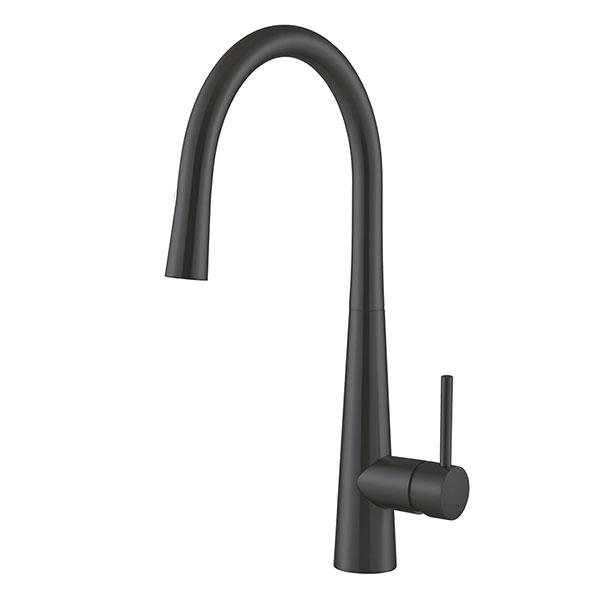
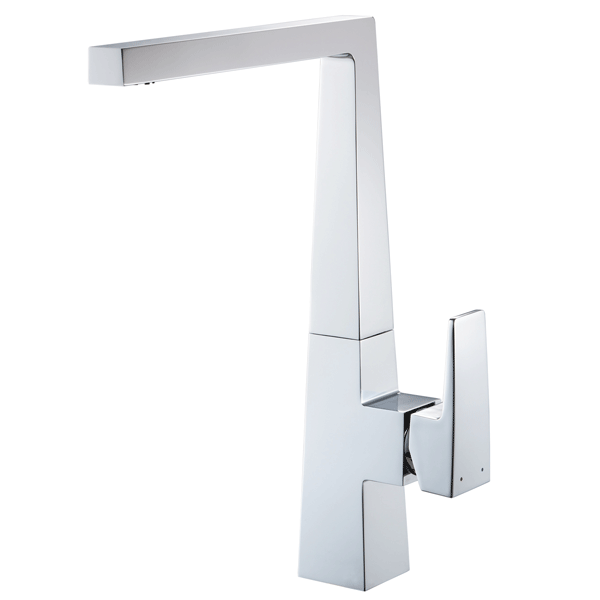
The Seima taps on this page are kitchen mixers from two Seima ranges: Paloma and Skala. All are hob mounted, all have a swivel spout, and all are made from brass. The Paloma mixers have a tall gooseneck and a tapering pin lever, and they come in chrome and in matte black, with one pull out version. The Skala mixer has a square, tapering body with softened edges, in chrome. The guide below explains how the two ranges differ, what a gooseneck and a swivel spout give you in a kitchen, what the sink and the bench have to provide, how the mixers are fixed, how to choose between chrome and black, and how to look after them.
The choice here is mostly a choice of shape. Paloma is round and organic, with a stem that tapers as it rises and a slim pin lever. It reads as a soft, sculptural line, and it suits a kitchen with curved details, timber or stone. Skala is square, with the same tapering idea carried into a squared body and corners that are softened rather than sharp. It suits a kitchen with straight lines, square tiles and flat fronted cabinets.
Pick the shape that matches the sink, the cabinet handles and the lighting in the room. A round tap beside a square sink, or the reverse, can still work, but the most settled result comes from keeping one idea running through the kitchen. For the Seima brand as a whole, see Seima and Seima kitchen sinks.
The Paloma mixers are tall and slim. They have a gooseneck spout, which is a spout that rises from the base and arches over the sink, and a swivel arm that turns from side to side. The control is a tapering pin lever, a slim lever shaped like a pin, that sets the temperature and the flow with one hand.
There are three Paloma mixers on this page. Two are standard swivel mixers, one in chrome and one in matte black, and the black one is a 220 with solid brass construction and a 35mm ceramic cartridge. The third is a pull out version in chrome, where the spout head draws out on a hose, so you can reach the corners of the sink and rinse large pots and trays.
The Skala is a chrome swivel kitchen mixer with a square tapering design and softened edges. The edges and corners are rounded off just enough to take the hardness out of a square form, so the mixer looks minimal without looking severe. It is a good match for a modern kitchen with a flat, clean benchtop and a rectangular sink. Check the spout reach and the height against your sink before you order.
A gooseneck spout rises high and arches over. The benefit is clearance. You can fill a tall pot, a jug or a vase under the spout without tilting it, and you can wash large trays in the sink without hitting the tap. The cost is that the spout needs headroom, so check the space between the top of the tap and any shelf, window sill or cupboard above the sink. A mixer that is too tall for the space is a nuisance every day.
See gooseneck sink mixers for the group from every brand, and pull out sink mixers for the pull out style.
A swivel spout turns from side to side, so one tap can serve a double bowl, or reach from the sink to a bench or a dish rack. Check the arc of the swing before you decide the position of the tap. The spout must be able to turn without hitting the splashback, a window frame or the edge of the sink. If the tap sits in a corner, the swing may be limited to a small arc, which may be all that is needed.
A tall swivel mixer needs a firm fixing, because it carries weight at the top. That is why the way the tap is fixed matters, and it is covered below.
A fixed spout is the simpler choice, with fewer moving parts. A pull out spout is more flexible, because the head draws out on a hose and returns to its place. It reaches the corners of a large sink and rinses vegetables and dishes, and it helps with filling a bucket on the floor. It does need room under the sink for the hose to run in a loop, so check that the cabinet below is not packed tight. See sink mixers and standard sink mixers for the fixed styles from every brand.
Every mixer on this page is hob mounted, so it stands on the sink or the bench through a single hole. For the Paloma 220 the tap hole is 35mm, so check that the hole in your sink or bench matches before you order. Check the thickness of the sink deck or the bench, because the fixing nut under the surface has to reach it. Check the position of the hole as well, so the spout reaches the centre of the bowl and not its edge.
The Paloma 220 stands about 415mm high. That is a tall tap, and it suits a deep sink. Measure the height against the shelf above, and allow room to lift a pot under the spout. See hob mixers for the style from every brand, and kitchen sinks for sinks to match.
For the Paloma 220, fix the mixer with silicone sealant. Do not use epoxy type adhesives. Verify the installation details against the actual product on the day, because the detail can differ between models. The mixer must be installed by a licensed plumber, who connects the hot and cold supply and tests the joints for leaks. The box holds the sink mixer, an installation kit and installation instructions, and those instructions are the reference for the fixings.
For the Paloma 220, the supply should run between 150 and 500kPa, and the water should be no hotter than 75 degrees Celsius. If the pressure at the sink is higher than that, a pressure limiting valve is the usual fix, and the plumber can advise. If the hot water system is set above the limit, adjust the setting before the mixer goes in. The ceramic cartridge inside is hard and smooth, and it keeps the lever moving evenly and the shut off tight over the years.
Chrome is the standard finish, bright and easy to match. It suits almost any sink, benchtop and cabinet colour, and it is the simplest to wipe clean. Matte black is bold and modern, and it is striking against white or pale stone and against timber. Black shows water spots and soap film more than chrome, so wipe it dry after use.
Choose one finish for the whole kitchen: the tap, the cabinet handles, the sink waste and any other metal. See chrome taps, black taps and black kitchen taps and mixers for matching pieces from other ranges.
Seima builds these mixers from brass, the standard metal for a tap, and the black Paloma 220 is solid brass. Brass takes a finish well, and it resists the wear of daily use. Inside is a ceramic cartridge, the part that opens and closes the water. A cartridge is the one working part that eventually wears, and it can be replaced without replacing the tap. If the mixer drips when it is shut, or the lever has become stiff, a plumber can renew the cartridge.
Start with the sink and the position of the tap hole, then check the height, the reach and the swing. Stand at the sink and imagine the spout: does it reach the centre of the bowl, does it clear the largest pot you own, and does it swing to where you want it? Mark the position of the tap on the bench with tape if the bench is not yet cut, and give the plumber and the bench maker the model name and the hole size.
Leave room in the cabinet below for the supply hoses, and for the hose of the pull out version to run freely. Keep the cabinet tidy, so cleaning products do not press on the hoses.
Clean the mixer with a damp cloth. Do not use abrasive cleaners, liquids or pastes, because they scratch the finish. Dry it with a soft cloth to prevent water marks. If the flow becomes uneven, the aerator at the end of the spout may be blocked with scale, and cleaning it restores the stream. Wipe splashes of cooking oil and food off the tap when they happen, and rinse soap off the lever.
For the taps from every brand, start at taps.


