
*View accurate shipping rates and availability






255 Items


Up to 70% off across the store, plus free towels and mirrors up for grabs on orders over $800*


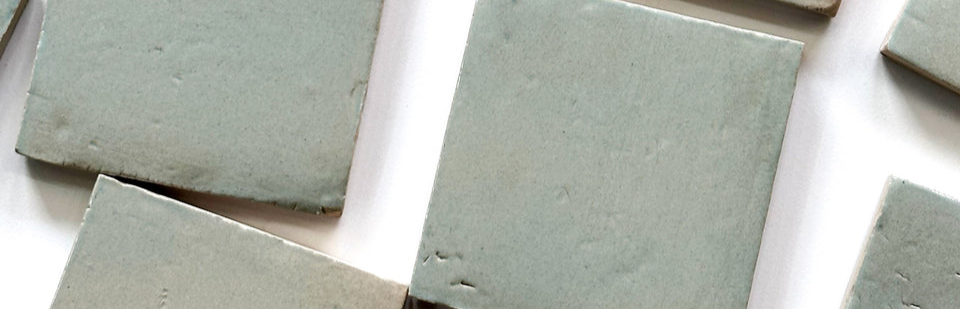

A square tile has four equal sides, and that single rule makes it the most adaptable shape in the store. This collection runs from 100 x 100mm handmade-look ceramics for walls to 600 x 600mm porcelain for floors, with 150, 200, 300 and 450mm formats between them. The ranges include Tilly Tundra stone-look, Avorio and Tuscan travertine looks, Southside terrazzo, Airlie and Tamarama patterns, Settlers cobble squares, and zellige-inspired Ella, Dianna and Evelyn.
The sections below explain why square works, how size changes the room, and what the product pages print for each range. Some square tiles are owned by neighbouring collections, so this page links to them where the decision is really about size or room: the small tiles collection, the large tiles collection, the floor tiles collection and the ceramic tiles collection. The tiles collection sits above them all.
Square tiles are one of the most adaptable tile shapes, because their classic simplicity allows a range of layouts and patterns, and they are often easier to work with than other shapes. The symmetry of a square brings order and structure to a room, and unlike more decorative or irregular shapes, squares do not dominate a space, they complement it.
Rectangles can feel directional, while square formats bring a sense of stillness. The consistent shape lets the depth and colour variation of a glaze be fully appreciated, which is why a square suits a handmade or high-variation tile so well. The shape itself stays quiet, so the surface does the talking.
Size follows room. Small squares at 100 x 100mm and 150 x 150mm suit bathroom feature walls, shower recesses and kitchen splashbacks. Medium squares at 200 x 200mm and 300 x 300mm suit bathroom floors, full wall tiling and laundries, and large squares at 600 x 600mm suit open-plan bathrooms and floor-to-wall designs. Small formats up to around 300 x 300mm suit compact areas, splashbacks, feature walls and bathrooms, medium formats work across kitchens, bathrooms, hallways and living spaces, and large formats create a modern, spacious feel with fewer grout lines.
A concrete example: a 100 x 100mm square suits a kitchen splashback or bathroom feature wall, while a 600 x 600mm square works as a flooring solution even in smaller spaces, because large format tiles can create the perception of a larger room. Large squares help open up a space by reducing grout lines, while small squares add detail and texture.
This collection covers each band. The 100 x 100mm squares are the handmade-look ceramics, the 150 x 150mm squares include Settlers and Soluna, 200 x 200mm is Airlie, 300 x 300mm includes Tamarama and Burleigh, 450 x 450mm includes Southside and Avalon, and 600 x 600mm is the large format.
The small squares are the handmade and handmade-look tiles. Evelyn is a handmade zellige in gloss, 100 x 100mm and 12mm thick, a ceramic wall tile. Ella is a 100 x 100mm Italian ceramic with a wavy, structured finish in a rich gloss glaze, and Dianna is a 100 x 100mm Spanish ceramic zellige tile made for walls. Luca is a 100 x 100mm handmade-look tile, 8mm thick, made for walls.
Walls is the operative word for most of them. Evelyn, Dianna and Luca read walls or wall tile, so this is the corner of the collection for feature walls, splashbacks and shower surrounds, not floors. The zellige tiles collection covers the same handmade look across other shapes, and the small tiles collection is the place for small formats generally.
Airlie is the pattern range in the middle size. The Airlie Light Grey is 200 x 200mm porcelain in a matte finish with a cushioned edge, a P3 moderate slip risk, and an Application line of wall and floor. Tamarama is the 300 x 300mm Australian-made encaustic-style porcelain in a matte finish with a cushioned edge, and Alicante is the 316 x 316mm federation-style range with six patterns and colour palettes. The patterned tiles collection covers the wider pattern range.
Burleigh and Avalon are the plain medium squares. Burleigh comes in 300 x 300mm and 450 x 450mm in white, grey, charcoal and latte, in matte porcelain with a cushioned edge. Avalon comes in 300 x 300mm, 450 x 450mm and 600 x 600mm, and the product titles show P2, P3 and external P5 versions, so the slip rating differs by size and colour.
Read the title and the Slip Rating line together. The same name can carry a P2 indoor tile and a P5 external tile, and the two are not interchangeable.
Southside is the Australian-made terrazzo range, and 450 x 450mm is its main size. It brings the classic Venetian terrazzo look into everyday homes, with each tile showing its own character. The matte tiles are glazed porcelain 7.5mm thick with a P2 rating and suit indoor dry and covered outdoor areas, and the external versions are a P5 grip finish with an outdoor, floors-only Application line.
That is a clear split. A P2 matte Southside belongs to a dry interior, and the P5 external version belongs outside. For the terrazzo look in other shapes and sizes, the terrazzo look tiles collection is the guide.
Most of the 600 x 600mm squares copy stone. Tilly Tundra is a stone-look tile in porcelain, 10mm thick, matte with a Tech Grip surface, P5 very low slip risk, made for walls and floors, indoors and outdoors. Avorio Cream is a travertine-look glazed porcelain with a matte finish, P5, walls and floors, indoors and outdoors. Josie cross cut and Pearl vein cut are travertine-look glazed porcelain with a grip finish and P5, made for walls and floors, indoors and outdoors.
Tuscan is the quieter travertine look, 9.5mm thick, matte, P3 moderate slip risk. Ardenne is a travertine-look porcelain, 9mm thick, with a grip finish, P4 low slip risk. Avedon is a limestone-look porcelain, 9mm thick, matte, P3, made for walls and floors, indoors in wet and dry areas. Sereno is a marble-grain glazed porcelain with a 3D finish, not slip rated, for walls and floors. Olivia, Frankie and Vela are plain matte glazed porcelain squares in neutral colours for walls and floors.
The travertine look tiles collection and the marble look tiles collection hold the same looks across other shapes.
Square tiles are used on bathroom walls, kitchen splashbacks, floors, feature walls and in living areas, and the material and finish determine whether they suit floors or wet areas. Squares work for bathroom walls, bathroom floors and kitchen splashbacks, with gloss for light and matt for a softer, rustic look.
This collection serves each of those rooms. The bathroom tiles collection and the kitchen tiles collection sit alongside it for the same decision made by room, and the floor tiles collection and wall tiles collection split it by surface.
Every product page prints spec lines that settle the questions the style names cannot. The Dimensions line gives the size and, usually, the thickness, which runs from 6.3mm to 12mm across the collection. The Application line says walls, floors or both. The Area line says indoors, outdoors or covered outdoor, and the Slip Rating line gives the P or R rating, or says not rated.
The Edge line says whether a tile is rectified, cut square to a tight size, non-rectified, tumbled or cushioned. The Appearance line gives the V rating for variation, where V2 means slight variation and V3 means moderate variation in colour and texture. The Wear Rating line, where printed, separates floor use. Read these lines before you read the range name, because two tiles with similar names can differ on any of them.
Order a little more than the exact measurements to allow for cuts, waste and any future repairs. The box quantity is in pieces, in square metres, or both, and the unit differs between ranges, so check the line before you convert the area into boxes.
Check the same page for the edge and the thickness if you plan to carry a tile into another room. A tile that is 6.3mm thick and one that is 10mm thick are different products even when the size matches, and a rectified edge and a cushioned edge look different once they are laid.
Size changes the order more than people expect. A bathroom floor of 2.4m by 1.8m is 4.32 square metres. In a 300 x 300mm tile, each tile covers 0.09 square metres, so the floor takes 48 tiles before cuts and 56 with 15 percent. A box of 22 covers 1.98 square metres, so the order is 3 boxes.
In a 200 x 200mm tile, each tile covers 0.04 square metres, so the same floor takes 108 tiles before cuts and 125 with the allowance. A box of 25 covers 1.00 square metre, so the order is 5 boxes. The floor looks different too, because the smaller tile puts far more joints across the room, which suits a pattern and asks more of the grout.
A diagonal layout needs a larger allowance than a straight lay, because every edge tile is cut at an angle. Add 10 to 15 percent on top of the usual figure, and check the layout against the room with a dry lay before the adhesive goes on.
Start with the surface. For a splashback or feature wall, choose a 100 x 100mm handmade-look ceramic. For a bathroom or laundry floor, choose a porcelain square and read the Slip Rating and Area lines first. For a large open floor, choose a 600 x 600mm porcelain and check the thickness and the Application line.
Then choose the layout. Straight lay is calm, offset adds movement, diagonal is traditional, and a checkerboard needs two colours. If the room is small, larger squares reduce grout lines and small ones add texture. The tiles collection sits above this one for the whole range.


