
*View accurate shipping rates and availability






80 Items


Up to 70% off across the store, plus free towels and mirrors up for grabs on orders over $800*





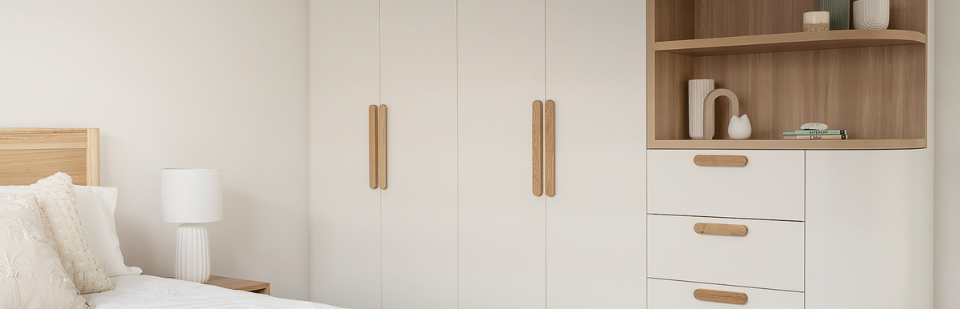


Zanda Duke is a soft-curved lever that comes as a whole suite: passage, privacy, dummy and entrance sets, pull handles for entry doors, and flush pulls and lock kits for sliding doors. That breadth is the reason to read before you order. The same lever name covers parts with different jobs, different materials and different fit numbers, and a few of them are sold in pieces. This guide sets out what each Duke part does, what is in the box, which numbers decide fit, and how the range sits beside the rest of Zanda door hardware.
The Duke lever sits on a 54mm screw-on rose with concealed fixing, and a 60mm backset. The rose can be upgraded to 65mm from a drop-down, sold as a pair, which helps when a larger rose is needed to cover an old bore. Through-door bolts fix the lever, and they keep the lever from twisting out of square. RapidFIT technology for faster installation.
There are two families of Duke sets in the product pages, and they differ on paper. The Duke passage, privacy and dummy sets list stainless steel, a lever length of 116mm on passage and privacy, and 35 to 45mm doors on the passage set. They come in 316 marine grade stainless steel and are sold as a back to back set, and they comply with AS 1428. The Duke entrance sets list zinc alloy and 35 to 53mm doors. The material changes by set, so read that line on the product page you are buying. The Duke data sheets were not opened for this page, so the figures here are product page figures.
A passage set has a latch and no lock. Passage handles go on hallways, living rooms, laundries and walk-in robes, and are usually the most common type in a home. The Duke passage product page agrees: connecting doors such as living rooms and laundry rooms where privacy is not required. The Duke passage set comes with its latch included, and the box holds a pair of levers, a fixing kit and instructions, so check that line on the finish you choose.
The Duke Return passage set comes with one lever in the box, so if you want a pair, check the quantity before you check out. The wider passage range is on passage door handles.
A privacy set adds a lock that is worked from inside. The usual arrangement is a turn snib or push button, on bathrooms, ensuites, toilets and bedrooms, and it is not security hardware. The Duke range gives you two ways to get it. The integrated privacy set builds the privacy function into the lever pair, with an integrated privacy latch that suits bathroom doors. There is also a separate privacy set, which comes with a latch and a separate privacy kit.
For a door with no existing privacy kit, the integrated set is the single-part choice. For a door that already has a privacy kit you want to keep, the separate version is the closer fit. The wider choice is on see privacy door handles and privacy door levers.
A dummy lever is fixed. It has no latch and no lock, and it gives a wardrobe, a pantry or the fixed leaf of a pair of French doors something to pull. The Duke dummy is a half leverset with a dummy fixing spindle, and only one handle is included, so you order two for one on each side. Duke Return dummy levers are non-handed, for wardrobes or linen cupboards or anywhere a latch is not needed. The dummy set is non-handed as well.
Because the dummy copies the shape of the working lever, it works as a matched partner on a pair of doors. The dummy on an inactive leaf should match the active leaf in height, backset and finish, and holding power comes from bolts, catches or magnets, not from the handle. The full guide is on dummy door handles.
Entrance sets are where the Duke range splits its parts most. The set is a Duke leverset pair, a 1143 E85 mortice lock, a matching pair of escutcheons and a cylinder. That is a euro mortice arrangement for 35 to 53mm doors, with a 60mm backset and keyed-different keys. The cylinder is either double (key/key) or single (key/turn), and the cylinder length is 70mm on the sets in this collection. There are also 60mm versions, so match the cylinder length to your door preparation before you choose.
Key/key or key/turn changes how the door behaves in an emergency. A single cylinder lock is keyed outside with a thumb turn inside, the most common arrangement. A double cylinder needs a key on both sides. The trade-off is simple: a double cylinder removes the weakness of a broken window near the turn, but in an emergency you need the key to get out. The page advises keeping a spare near the door where an intruder cannot reach it. It adds that some areas restrict double cylinders for fire safety. A single cylinder suits most house front doors, and a double cylinder suits a door with glass beside the lock, provided local rules allow it.
Knob or lever locks are not suitable as the primary door lock on their own, because the deadbolt does the securing work. A Duke entrance set can be paired with a separate deadbolt for that reason. See Zanda Duke entrance sets, entry door lock sets and deadbolts.
Where a door should have a pull and not a lever, the Duke pull handle comes in three sizes. The centres are 300, 600 and 900mm, with overall lengths of 330, 630 and 930mm, a 30 by 10mm profile and a 55mm projection. They come in 316 marine grade stainless steel and are sold as a back to back set, and they comply with AS 1428. Windsor Restorations adds that a pull handle for an entrance door is usually paired with a high security lock, and that a roller euro mortice lock is often bought alongside. Pairing the pull with a pull handle lock kit to complete the entry set, because the handle alone does not lock the door.
Pull handles suit big entries, glazed fronts and any door where a lever looks small. A pull handle on a hinged entry door usually needs separate compatible locking hardware. The Duke pulls have their own page at Zanda Duke pull handles, and the wider choice is on pull handles.
Duke also covers cavity and stacker doors. The Duke sliding door euro lock kit combines the flush pull and escutcheon in one assembly, and it sits flush with the door surface, which suits stacker doors and doors that slide fully into a cavity. The kit lists two Duke flush pulls with euro keyholes, a sliding mortice lock, a double cylinder and an edge pull. Sizes are 120 by 40mm and 250 by 40mm. The Duke flush pull kit is the same idea without the lock: two flush pulls and an edge pull, concealed fixing, and a 12mm depth. Single flush pulls are also sold on their own.
The lock kit is the part to look at for a bathroom or bedroom slider, since a privacy lock is built into it. Other sliding sets on the site cover different sizes and cavity types. For the sliding options see sliding door privacy sets, sliding door handles and flush pulls.
Fit comes down to door thickness, backset, the cross bore and the existing preparation. There is no standard size, only common sizes. The same checks apply: door thickness, backset, handing and existing preparation. For Duke, the numbers on the product pages are these. Backset is 60mm. The lever rose is 54mm, with a 65mm rose as an upgrade on the passage set. Door thickness is 35 to 45mm on the Duke passage set and 35 to 53mm on the Duke Return and entrance sets. Entrance cylinders are 70mm long on the sets listed here. Pull handles are 330, 630 or 930mm overall.
If you are replacing an older set, check that the new rose covers the old holes. The 65mm rose option exists for that reason. If you are fitting to a new door, wait until the handle arrives before you cut the hole, so you can follow the installation instructions.
Duke comes in brushed nickel, matte black, graphite nickel, satin brass, white and ember bronze, though not every finish is offered on every set. The 60mm entrance sets come in only three finishes, so check the finish on the exact set. Each finish behaves differently. Matte black gives contrast on white doors but can look too dark in a low-light room. Brushed nickel is a softer silver. Graphite nickel is darker without the weight of black. Brass varies between brands, so compare samples side by side. White suits a painted door and frame. Bronze sits between warm brass and black.
Finishes do not need to match exactly across the house, but they should coordinate with hinges, stops, cabinet handles and lighting. Each finish has its own page: matte black, brushed nickel, satin brass, white, bronze and gunmetal and graphite.
Duke is one range inside the larger Zanda family. When another shape or a different rose suits the house better, look at the neighbouring pages: Baxter, Oxford and Vienna. For multifunction entrance sets with a deadbolt and lever in one, see Zanda multifunction entrance sets. The wider choice by function is on door hardware.
List every door with its room, function and finish, plus the extras each one needs, such as a latch, a deadbolt, hinges or a door stop. For Duke, that list tells you which door takes a passage set, which takes an integrated privacy set, which needs a dummy and which needs an entrance set with a cylinder. Count the extras as well, because a set bought without its lock or cylinder needs the missing part ordered alongside it. Choose hinges and stops at the same time as the handles, from hinges and door stops.


