
*View accurate shipping rates and availability






69 Items


Up to 70% off across the store, plus free towels and mirrors up for grabs on orders over $800*


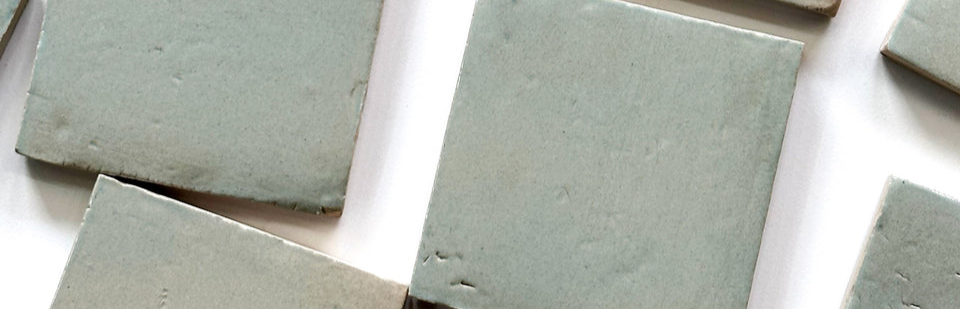
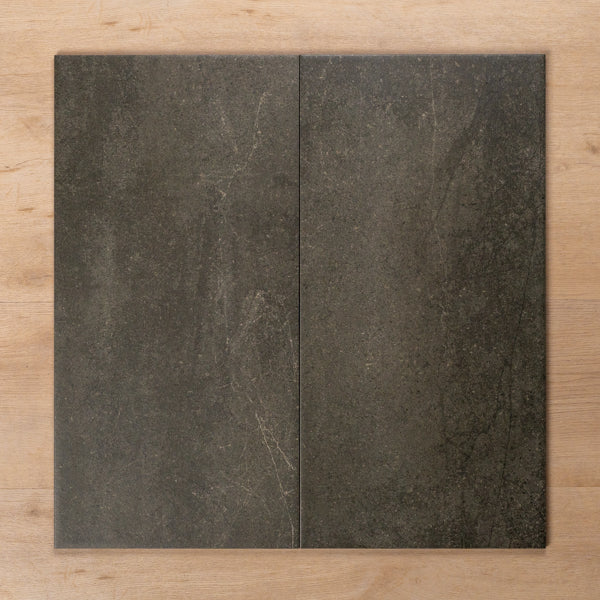
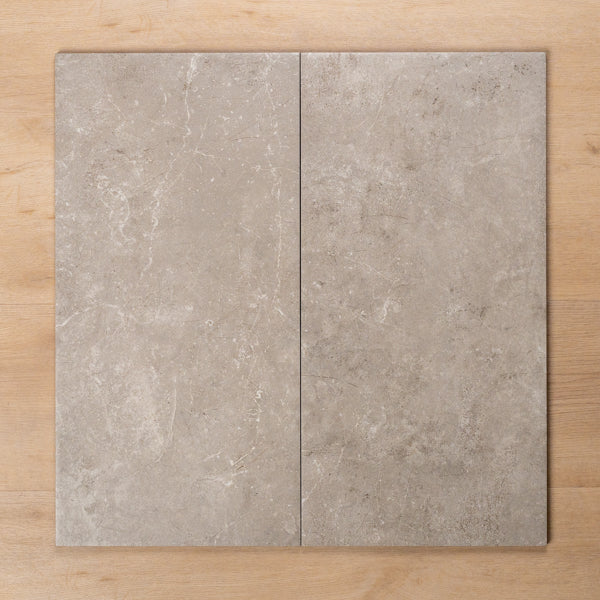

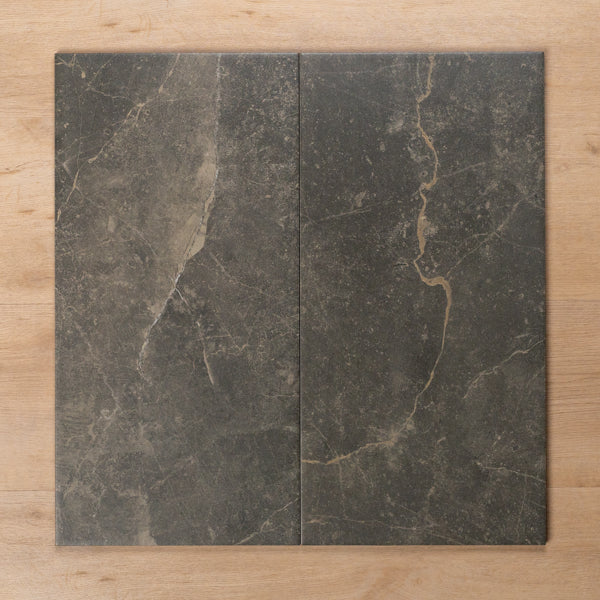


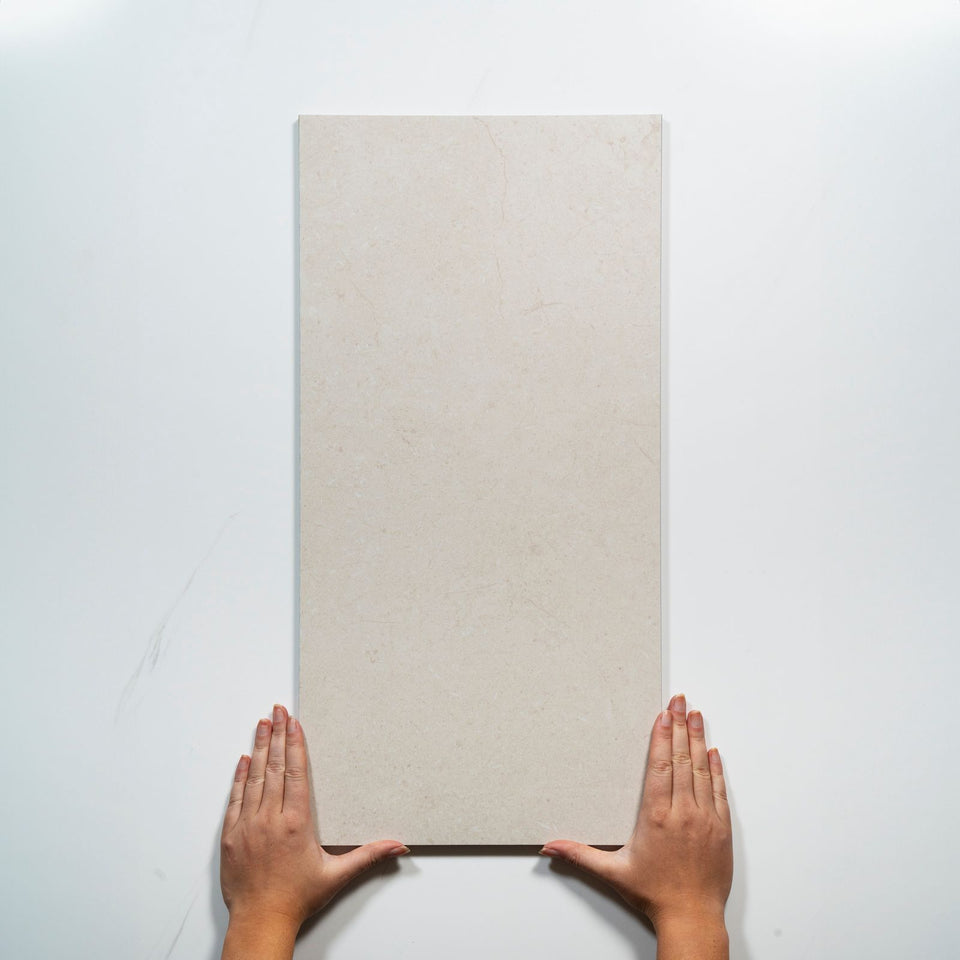


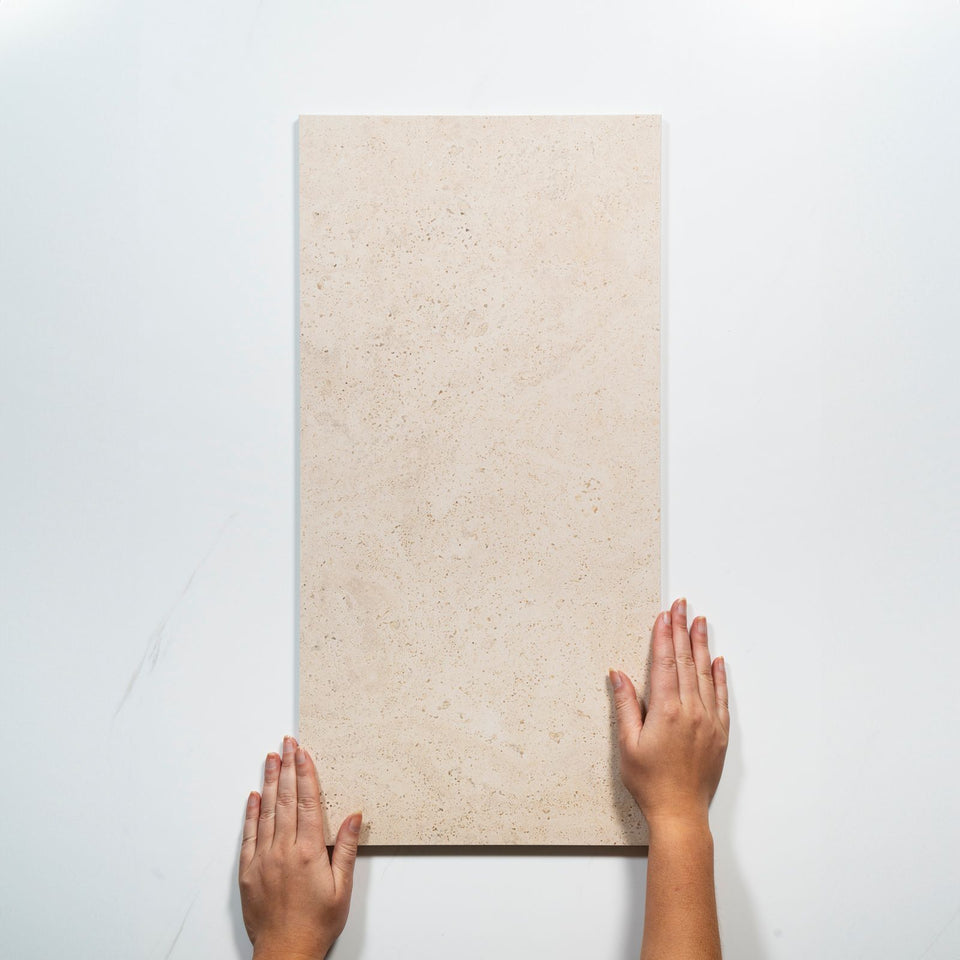




This is the catalogue's busiest size page. It holds porcelain and ceramic tiles in 300 x 600mm, also written 600 x 300, 300x600 and 600 by 300, across stone looks, travertine looks, terrazzo and concrete looks, marble looks, plain whites and a few decor tiles. Some are wall tiles only and many suit walls and floors, so the useful question is not which tile is best but which tile suits which job.
The page answers the questions people ask about the size before the questions about any one range: how many tiles make a square metre, how to order a little extra, and what each specification line means. After that it sorts the ranges into groups and links each to the page that covers it in depth. If you'd rather start wider, the main tiles collection sorts every tile by room, size, colour and material.
A 300 x 600mm tile covers 0.18m2. A square metre takes 5.6 tiles before grout lines and cuts, so 6 in practice. Measure the wall or floor, divide by 0.18, and then allow for cuts.
A worked example: a bathroom wall 2.4m high and 2.0m wide is 4.8 square metres. A 300 x 600mm tile covers 0.18 square metres, so the wall takes 27 tiles before cuts. Laid with the long side vertical, each tile is 600mm tall, so a 2.4m wall takes four courses with no cut at the top. Laid horizontally, each course is 300mm tall, so the same wall takes eight courses. Run the same sum for your own wall, then add the allowance for cuts around the niche, the window and the vanity.
The largest group is the stone and concrete looks, mostly in porcelain and mostly for walls and floors. They share a pattern: a matte or grip finish, a rectified edge and a slip and wear line that decides where each one goes.
Tilly Tundra is a stone look in one of the store's widest ranges, with a subtle gold flecked vein. The matte tech grip tiles carry P5, walls and floors, Indoors and outdoors and V3. Nimbus is a matte stone look with 24 unique faces, with P4, walls and floors, a wear rating of 4, Indoors and Outdoors and V2. Nuvira is a dark grey tile with a grip finish, P5 and V3.
Casuarina is a modern take on natural stone in matt and honed finishes. The matt tiles carry a wear rating of 4 and P4 in the title, and the honed tiles carry 3. Burleigh and Avalon are cushioned edge stone looks with wear ratings of 4, with Avalon in P2 matt. Perisher is a white marble flecked porcelain with Floor Category 4, V3 and a sharp edge that allows grout lines of 3mm or less.
Auralis is a honed porcelain with a 3D finish, soft reflective veining and low smooth contours. It is not slip rated, suits walls and floors, has a wear rating of 3 and is for indoors dry and covered outdoor areas. Drift is a coastal inspired honed tile with a 3D finish that is not slip rated and suits indoors. Both suit walls and floors but carry no slip rating, so ask before using them on a wet floor.
The 600mm x 600mm tiles collection and the 600mm x 1200mm tiles collection show the same ranges in larger sizes, and the rectangle tiles collection covers the shape in every size.
Frankie combines terrazzo and polished concrete in a fine grain fleck. The 300 x 600mm matte tiles print P3. Island is a subtle small chip terrazzo look that prints P4 and a wear rating of 4. Clio is a large grain terrazzo with a grip finish that prints P4, and Southside is the classic Venetian terrazzo look with a non-rectified edge.
The Clio terrazzo look tiles and Southside terrazzo tiles pages cover those two ranges in full. Chip size is the biggest style decision in terrazzo. Fine chips read almost as plain stone, and big bold chips turn a floor or wall into the feature.
Four ranges copy travertine. Avorio is a cream travertine look with P5, walls and floors and V3. Valerie comes in ivory and grey with 24 faces and mica speck, carries P4 in a matte finish with a tech grip anti-slip surface, and suits pool waterline use. Josie is a cross cut travertine look with a grip finish and P5, and Ivy is a vein cut look with P5.
The travertine look tiles collection and the Avorio travertine look tiles page cover the full ranges and the cuts. Natural travertine is porous and needs sealing, while the porcelain travertine looks in this collection clean easily and need no sealing.
The Myra limestone tile in this size prints a grip finish and P4, and is covered on the Myra limestone tiles collection.
Paradise is a Calacatta look ceramic, and Kings Marble is a Carrara look ceramic. Both carry Wall Category 0, so both are for walls. Perisher is the marble look for floors. Gemma is a plain white ceramic in gloss and matt, rectified, 9mm and V1, for walls only with a wear rating of 0. The marble look tiles collection and the white tiles collection cover the wider range.
Most wall tiles are designed for vertical surfaces only, and they lack the slip resistance and strength that foot traffic needs. Ceramic is generally used for walls because it is lightweight and easy to install, while porcelain suits floors or areas that need extra durability.
The material line decides where a tile can go. Ceramic and porcelain share raw materials and differ in the firing, with porcelain baked at higher temperatures and for longer, and ceramic at lower temperatures for less time, which gives a softer, more lightweight tile. Ceramic tiles are typically used on walls only, while porcelain suits floors and walls, and stone can be used in either location depending on thickness, finish and suitability.
Many 300 x 600 tiles are wet area suitable, which makes them an option for bathrooms, laundries and outdoor areas, but check the specification for suitability before you buy. The Application line decides, and the gloss ceramics in this collection that carry Wall Category 0 are wall tiles.
The ceramic tiles collection and the porcelain tiles collection cover each material across the catalogue. The wall tiles collection sorts every wall tile, which helps when you are matching a wall ceramic with a floor porcelain in the same size.
Grey is the largest colour group in this collection, followed by white and beige, with black and brown in smaller numbers. The greys come from the concrete, terrazzo and stone looks, the whites from Gemma, Burleigh, Perisher and the marble looks, and the beiges from the travertine, limestone and stone ranges.
The colour pages cover each tone across the catalogue: grey tiles, white tiles and beige tiles. If you plan to use the same colour on a wall and a floor, a 300 x 600mm tile in a stone look gives you a floor and a wall option that share the same veining.
AS 4586 classifies the slip resistance of new pedestrian surface materials, and its wet pendulum test uses ratings from P0 to P5. The rating applies to floors people walk on, and it does not matter for a feature wall. P5 is the top of that scale.
Across this collection Frankie matte is P3, Nimbus, Casuarina matt, Island, Clio, Valerie, Southside and Myra are P4, and Tundra, Nuvira, Avorio, Josie and Ivy are P5. Avalon matt is P2. The honed Auralis and Drift tiles are not rated, and the wall-only tiles carry no rating. The wear lines read in words: 5 for high traffic floors, 4 for normal use floors with a low risk of scratching, 3 for light traffic floors, and Wall Category 0 for walls only.
Kitchen floors need options with appropriate grip or structured surface finishes. The tiles in this size follow that pattern: the grip and matte P4 and P5 tiles are the floor tiles, and the gloss ceramics are the wall tiles.
300 x 600 bathroom tiles are often used to create clean vertical or horizontal lines, making the room feel more open, with ceramic on walls and porcelain on floors where more durability is needed. For kitchens, the format fits neatly between benchtops and overhead cabinetry, and suits stacked or brick pattern layouts.
For a bathroom floor, read the slip rating and the Application line, and look at the P4 and P5 tiles first. For outdoors, the suitable ranges are Tundra, Nimbus, Josie, Ivy, Valerie and Nuvira, and porcelain is the preferred outdoor material where a slip-resistant finish is available. The bathroom tiles collection, the kitchen tiles collection, the floor tiles collection and the outdoor tiles collection sort the catalogue by room.
Three smaller sizes sit beside this one. The 300x450mm tiles collection holds two white ceramic wall tiles, the 75mm x 300mm tiles collection holds a honed stone look, and the 100x300mm tiles collection holds two white ceramic wall tiles. The 450mm x 450mm tiles collection is the square next door.
With this many ranges, the specification block is the guide. Check these before you order.
Pick the job first, then the range, then the colour and layout. The linked pages cover each range in depth, and this page is the starting point for the size.


