
*View accurate shipping rates and availability






24 Items


Up to 70% off across the store, plus free towels and mirrors up for grabs on orders over $800*


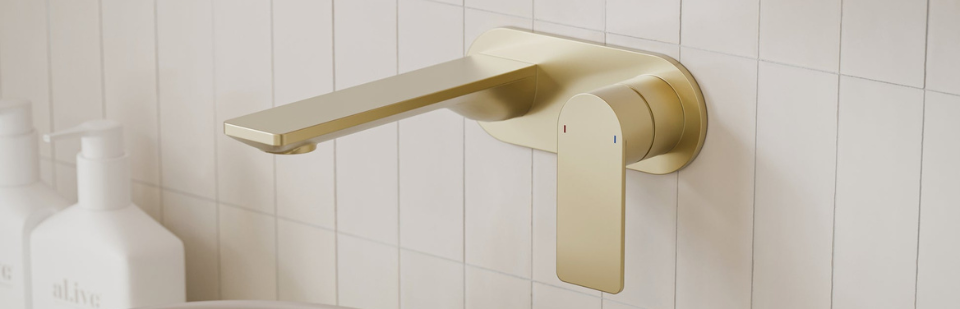


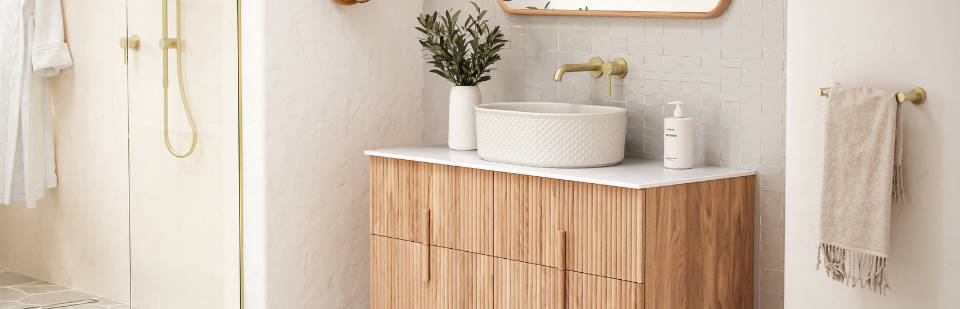

A counter top basin sits on top of the vanity surface, and the bowl shows above the bench. It is also sold as a countertop basin, a benchtop basin, a vessel basin and a bench mount basin. This page holds counter top basins from Timberline, ADP, Fienza and Caroma, all in ceramic. Most are round and under 400mm across, with ovals, pills and rectangles, a few inset and semi-inset basins, and one Caroma utility basin made for laundries. The guide below covers what a counter top basin is, whether it is a good idea, the models and sizes on this page, how one is fitted, and the tap clearance, overflow and waste lines to plan.
Counter top basins sit on the vanity surface and not below or inside it. They are also called above counter basins, in contrast to under counter options, and vessel sinks or counter top bowls, so these names describe the same product. The bench itself is the benchtop or countertop, and the basin that sits on it is the counter top, above counter or vessel basin. For the page that covers the same basin under the name above counter, see above counter basins.
The benefits and drawbacks are both practical. On the benefit side, a counter top basin has strong visual impact, keeps storage space beneath the counter, comes in durable materials that resist chipping and scratching, has a smooth non-porous surface that is easy to clean, and is simpler to install than an undermount or inset basin. It does not protrude below the benchtop, so it keeps the storage space in the vanity.
On the drawback side, the limits are these. The basin rises above the bench, so the tap has to be tall enough to clear the rim. Grime can collect around the edges if the basin is not well maintained, certain parts can be hard to clean in tight layouts, and these basins may not suit small rooms with limited counter space. Most countertop basins need at least 400mm to 500mm of vanity depth to sit comfortably and clear the splashback, and to leave room for accessories and tapware. If the vanity is shallower than that, choose a smaller or slim-profile basin, or a different mounting type. See inset and semi-recessed basins.
Most of this page is the Timberline range, and the Allure is its core model. The Allure is a round above counter basin with a thin rim. It measures 360mm by 360mm and 120mm high, about 8.5 litres, with a 32mm waste and no overflow. It comes in gloss white and matte white, and in black, grey, light grey, anthracite, pink, blue and mint finishes here. The Raked has a textured outside with a brushed finish and a white gloss interior, which makes it easy to clean. The Allure Arrow has a chevron textured finish round the outer edge. The coloured Allure basins have a matching Allure basin waste in the same colour, which is worth adding to the order. See Timberline basins, and black, grey, green, pink and matte white basins for the colours.
The Gem is a round basin of 305mm diameter and 110mm high that tapers slightly towards the bottom, and it suits smaller vanity designs. The Rose is a classic round of 320mm across and 140mm high in white gloss for easy cleaning, suited to heritage bathrooms. The Diamond is a 360mm round, 120mm high, with a textured pattern outside and a tapered bowl, in gloss or matte white. The Myrtle is a large pill shape of 550mm by 360mm with a thin rim, in white or matte black. The Feather is an oval with a shallow bowl in gloss white, matte white or matte black. The Bloom and the Enchant are above counter rectangles, and the Elite is a round with a thin edge. The Radius is an inset round and the Arcade is a 400mm square inset basin with a centre waste. Each Timberline basin pairs with a Timberline custom made vanity. See round, oval, rectangular, square, pill shape and fluted basins.
The ADP Flume is a 400mm by 400mm basin with a low profile and a unique dip in the middle, in matte white, with a shallow bowl, and it can also be installed as a semi-recessed basin. The Fienza Reba is a classic round semi-inset basin with a thin edge in fully vitrified gloss white ceramic, with no tap hole and no overflow. The Caroma Liano vanity basin is 415mm long, with a distinctive tapware platform that gives extra storage space, one tap hole only, and an overflow and a flush fitting white plug and waste as standard. The Caroma Metro 35 on this page is a different product. It is a 35 litre vitreous china utility basin for a laundry, with an overflow as standard, a 50mm stainless steel plug and waste and a choice of no tap hole or one. See ADP, Fienza and Caroma basins.
Shape links to the room. Round basins suit most layouts, and round or oval basins can maximise counter space in a compact vanity. Pill shapes give a softer, fluid look for modern bathrooms with rounded mirrors and curved vanity edges. Fluted basins add vertical grooves that play with light, and rectangular basins give sharp definition and suit double vanities. Oval basins soften the edges and straight lines of countertops and tiles. For handwashing a small basin is enough, and for varied use a larger one is needed, so base the size on the counter space and leave room for soap, tissue and accessories.
The sizes here run from the 305mm Gem to the 550mm Myrtle. Most of the page is under 400mm across, which suits an ensuite or a small vanity. See small above counter basins and small hand basins.
The basin adds its height to the height of the bench. A recommended wall basin height is 850mm from the finished floor, and floor-mounted vanities run at 850mm to 900mm. For a counter top basin, the bench height and the height of the bowl above it together set the rim height. Measure the bench to the rim and add a margin to find the outlet height you need, and confirm the actual figures against the mixer maker's drawing. The Timberline basins here stand from 110mm to 140mm above the bench, and the Fienza and Caroma basins add their own heights.
A basin can have no tap hole, one, two or three. Two or three holes allow separate hot and cold taps. Most basins here have no tap hole, so the mixer sits on the bench behind the bowl or on the wall. The Caroma Liano vanity basin has one tap hole only, and the Caroma Metro 35 comes with none or one.
The tap has to clear the rim. Choose a tap tall enough to clear the basin rim comfortably, confirm the tap suits the basin's depth, and consider the spout design and reach to reduce splashback. The Kaya tall basin mixer has a spout height of 216mm and a reach of 170mm, and the Empire Slim tall basin mixer has a spout height of 244mm and a reach of 180mm, which clear the 110mm to 140mm basins here. Tower height suits above counter basins, and a mid tower suits smaller above counter basins. Tall mixers are intended for above counter basins and vessel bowls, with extra height and extended spout clearance to reach over higher rims and reduce splashing, and short mixers suit under counter and semi-recessed basins. A spout that is too short makes the water miss the centre of the basin while one that is too long looks unbalanced. A poorly positioned spout can cause splashing, and deck-mounted mixers need enough space on the vanity top behind the basin. Check the bench depth, the gap to the splashback, and that a tall mixer will not crowd a mirror or a shelf. A wall mixer avoids the clearance question but needs in-wall plumbing planned early, with the spout set precisely in height and alignment with the basin. For a stone, concrete or timber top, confirm the hole position early to avoid a costly retrofit. Choose the tapware before the bench is drilled. See basin mixers.
The Timberline Allure has no overflow and takes a 32mm waste. The Fienza Reba has no overflow and needs a 32mm waste, which is sold separately. The Caroma Liano vanity basin has an overflow as standard and comes with a flush fitting white plug and chrome waste. Timberline, ADP and Fienza basins are sold with the plug and waste separate, and the Timberline Allure pairs with its matching waste in a matching colour. Check the overflow on each basin, because a basin with an overflow needs a waste made for one. A ceramic basin's waste is tightened by hand only, with a foam washer, sealed with neutral cure silicone. See basin wastes.
Every basin on this page is ceramic. Ceramic is glossy, smooth, hard-wearing and easy to clean, and stainless steel, natural stone and cast stone are other materials for counter top basins. See ceramic, concrete and stone basins for the other materials.
For ceramic, wipe regularly with a soft cloth and mild soap and avoid abrasive cleaners, which can dull the finish or scratch the surface. Clean vitreous china with a soft cloth and a mild household detergent or warm, soapy water. Cream cleaners can dull the surface of ceramic if overused, and harsh chemicals such as Domestos destroy the chrome on overflow caps and can damage waste seals. A scratch in glazed ceramic cannot be repaired. Wipe around the base of a counter top basin, where grime collects.
See bathroom vanities for the cabinets to pair with, and bathroom basins for every other basin type, shape and colour.


