
*View accurate shipping rates and availability






150 Items


Up to 70% off storewide, free metro shipping over $500, and free gifts from $800. Spend more to unlock luxury towels and mirrors.*


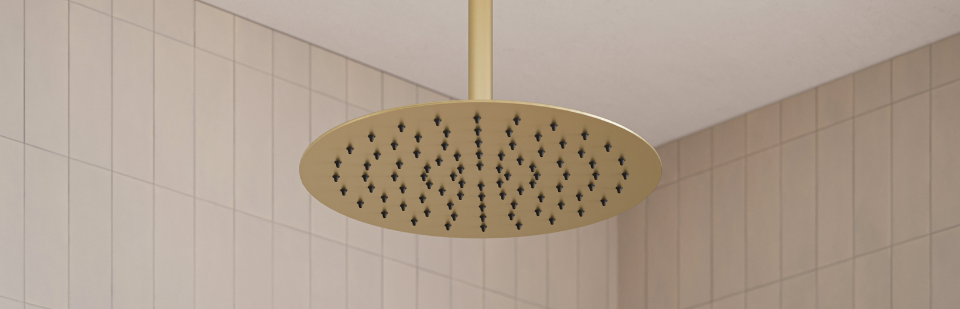

Gunmetal is a dark metallic grey, closer to charcoal than to silver. It is a dark metallic charcoal grey with subtle blue-black undertones and a soft sheen that catches light, unlike flat matte black. It sits between chrome and matte black, resembling dark chrome but more understated than black. This collection holds shower products in the finish across heads, hand showers, rails, twin sets and arms.
The name changes by maker, and that matters when you build a set. The name is Gun Metal at Nero Tapware and Fienza, with a darker Graphite at Nero. It is Gunmetal at Caroma, Brushed Carbon at Phoenix and Shadow at Meir. They are the same family of dark grey, but the tones differ, and Shadow has brownish-bronze undertones that come alive under warm-white lighting and look sleek and minimal under cool white lighting. So match by maker and name, not by the word gunmetal. The full range sits in showers.
The quickest way to understand gunmetal is to compare it with its neighbours.
Two dark greys are worth separating. Brushed gunmetal is a dark grey with a cool edge and a slightly brighter charcoal, with fine directional brushing. Antique slate is a deeper, softer, muted grey with soft black undertones, produced by tumbling for an organic, artisan look. Choose gunmetal when you want black's weight with more softness, and nickel when you want to stay silver.
The answer depends on the surface. Brushed gunmetal hides fingerprints, and its brushed texture helps minimise fingerprints and water spots, while a dark surface still shows dried water streaks and white limescale more than a light one. Brush lines scatter light, which is why brushed surfaces hide marks. Dark and scratch-resistant, gunmetal suits hard water households best when it is brushed or matte, not polished. A quick wipe after use keeps any dark finish looking even. If your water is hard, choose brushed over smooth and keep a cloth in the bathroom.
Premium gunmetal is usually finished with PVD, a coating applied in a vacuum chamber, not paint. PVD electro-colouring improves resistance to tarnishing, corrosion and daily wear, and PVD is significantly harder and more durable than traditional plating.
Two checks apply. The hardness of a PVD finish depends on the maker, so do not assume every coloured fitting in a brand is PVD. Confirm the process for the exact product, and check accessories separately, since they may use a different coating. Most gunmetal pieces in this collection are PVD, and a few are Brushed Carbon or electroplated, so go by the process, not the colour name.
PVD resists tarnishing and corrosion, so a properly coated piece should not tarnish in a shower. For scratches, handle matte and dark coated finishes with a little care. Do not clean gunmetal with anything abrasive, and do not drag a metal razor or a loofah across a rail. Brushed texture also makes small marks less obvious.
Care is simple. Wipe with a soft microfibre cloth and warm water with mild soap, then rinse and dry to reduce water spots. Keep abrasive scourers, steel wool, bleach, acid-based cleaners and harsh chemicals away from the finish. Near the sea, salty air calls for extra care, so rinse the fittings now and then. For a PVD gunmetal use warm soapy water, and use a descaler only if the maker approves it.
Gunmetal pairs with white tiles, timber such as oak and walnut, natural stone including marble and travertine, concrete-look and terrazzo surfaces and large-format porcelain. Brushed gunmetal suits warm timbers, white stone, matte tiles, crisp whites, black tiles, terracotta and engineered stone. White and grey tones give a modern look, with timber and brick adding warmth.
Caroma lists gunmetal as a PVD finish across the Urbane II, Contura II and Liano II ranges. The Urbane II rail shower in gunmetal is the darkest finish in the range and a deliberate choice rather than a default, with a 300 mm overhead drencher, a VJet handset and a diverter. See Caroma showers.
Nero lists Gun Metal and Graphite across Serenity, Mecca, Zen and other ranges. The Serenity ceiling head in Gun Metal is a 295 mm round head. For coastal areas the Zen range is the Nero choice, because Zen is marine grade stainless steel and is available in all colours. See Nero Tapware showers.
The Phoenix dark grey is Brushed Carbon, mostly in PVD. The Vivid 230 mm rose in Brushed Carbon is brass, rated 3 star at 8.5 litres per minute, and the finish runs across the Oxley, Wiltern, Vivid Slimline and other ranges. See Phoenix showers.
At Meir it is Shadow. The round rose in Shadow is 200 mm across and only 10 mm thick, in full brass. Fienza offers Gun Metal across the Kaya range, including the round head, the arm sets and the ceiling dropper sets. See Meir showers and Fienza showers.
The base metal decides how a gunmetal piece copes with salt. Salty coastal air calls for extra care, and 316 stainless steel is the grade for coastal or marine settings, with washing every 3 to 6 months by the coast. Most pieces here are brass. The Zen range is marine grade stainless steel and available in all colours, including gunmetal. For a bathroom by the sea or a shower outside, choose a 316 stainless piece, and see stainless steel showers.
A dark finish shows limescale as a pale crust, which is the same reason it shows dried water streaks. The remedy is routine, not a product. Dry fittings after use, especially in hard water areas, and wipe taps frequently with a soft cloth. For a deeper clean of a shower head, tie a bag of warm water with a few drops of mild dishwashing liquid over the head for 30 to 60 minutes, then use a soft toothbrush on the nozzles. Scale shows up as spray going sideways, weaker pressure and a pale crust on the face. Use warm soapy water on PVD gunmetal, and check the maker before using any acid.
Gunmetal is a good main metal and a good second metal. Use one main finish with at most two in a room, and keep a single finish across the tapware, shower, towel rails and accessories. As a second metal, gunmetal sits easily beside brushed brass or bronze for warmth, and beside chrome or white for contrast. Match gunmetal fixtures throughout the room and choose accessories from the same maker. See brushed brass showers and bronze showers for the warm neighbours.
The hand shower is the piece that takes the most daily handling, so a finish that hides marks matters most there. A handset on a hose has more joints and more potential leak points, and hoses wear over time, so inspect the hose and its connections now and then. A gunmetal hose in a matching colour keeps the set looking like one piece, and the rail, the handset and the hose should come from the same finish name.
Size the head to the shower zone. Round fixed heads run at 200 to 300 mm, with 150 to 200 mm for low-pressure systems and 250 or 300 mm for rain heads, and heads over 250 mm suit good pressure unless a pump is fitted. Because a larger face divides the same flow between more nozzles, the spray feels softer, not stronger.
These pieces are rated for an operating pressure of 150 to 500 kPa. A simple check at home is the bucket test. A 10 litre bucket that fills in under 60 seconds under the shower points to good pressure, and large overhead rain heads suit supplies above about 200 kPa. Flow ratings run from 3 to 5 star. Moving from 9 to 7.5 litres per minute saves thousands of litres of water a year, and some instantaneous gas hot water systems need a higher flow to fire, so check yours before choosing a lower-flow head. For a twin set, check both outlets.
Set a fixed wall head at 2000 to 2100 mm above the finished floor to the centre of the arm outlet, and 2100 to 2200 mm for a tall household. The top of a rail sits at about 1800 to 1900 mm, and a wall mixer goes at 1000 to 1100 mm. Wall arms project 300 to 400 mm. A rain head on a ceiling arm sits at 2100 to 2200 mm, depending on the ceiling, with at least 20 cm between the head and the user's head. Confirm the heights at rough-in, before tiling.
Most pieces are made for replacement. They have top inlets that fit existing half inch plumbing, adjustable pillars and retrofit brackets. A like-for-like head swap is a simple job. Moving an outlet, adding a diverter or changing the arm is not, and it needs a licensed plumber. Rules on what an owner may do themselves differ by state, so check yours before you start.


