
*View accurate shipping rates and availability






99 Items


Up to 70% off across the store, plus free towels and mirrors up for grabs on orders over $800*


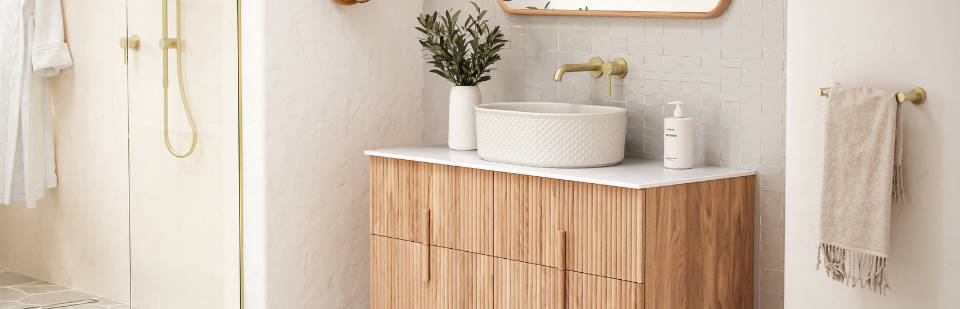


A shower rose is the shower head: the fitting with the nozzles that the water leaves through. In Australia it is the everyday word for a fixed head on a wall or ceiling arm, usually round or square, with a wide face that sprays water downward. The shower arm is the pipe that connects the rose to the wall. A hand shower sits on a hose or a rail and moves with you, while a rose stays where it is fixed, although some roses tilt on a joint.
The range here is wall mounted shower roses and arm and rose sets. If you want a hand shower, see hand held shower heads. If you want the rose on a sliding bar, see shower rails. For a rose that hangs from the ceiling, see ceiling showers. For the largest, flattest faces, see rain showers. The full range sits in showers.
Five checks decide a shower rose: the size against the water pressure, the height of the outlet, the arm, the finish and its care, and the connection to what is in the wall. Do them in that order, because each one narrows the next.
Fixed heads fall into three groups that behave differently, and the name of a product does not always tell you which one you are getting.
A fixed wall rose sits on the wall or on a short arm, and it is the most common type in Australian bathrooms. It has few moving parts, so it is easy to clean and easy to replace. The trade-off is that height and angle barely adjust. It suits compact bathrooms and minimalist spaces, and the main design decision is matching its shape, round or square, to the mixer.
A rain or overhead rose has a large, often circular plate and gives a gentle overhead cascade. The coverage is broad and the look is clean. A very wide plate feels soft on a low-pressure supply, and the wide spray throws more water outside the recess, so plan the enclosure and the drainage around it. Most rain roses suit a larger shower with room for a longer arm.
A high-pressure style rose needs a careful read. These heads cannot boost mains pressure. They change the nozzle design and spray pattern so that a low-pressure shower feels stronger, and if the real cause of a weak shower is the plumbing, no head will fix it. Smaller nozzles also scale faster in hard water areas, and where flow is limited a model with pressure-compensating technology is the better choice.
Round fixed roses run from 200 to 300 mm across, and square heads are common as well. Rain style roses run at 250 or 300 mm. Low-pressure supplies do better with smaller faces of 150 to 200 mm, and anything over 250 mm is a poor match for low pressure unless a pump is fitted.
You can test your own supply without tools. Hold a 10 litre bucket under the shower outlet with the shower running. If it fills in under 60 seconds, the pressure is good. Large rain style heads feel like a gentle drizzle below about 200 kPa. The roses in this collection are rated for an operating pressure of 150 to 500 kPa, so the combination to avoid is a large face on a supply near the bottom of that range.
Fit the outlet 2000 to 2100 mm above the finished floor, measured to the centre of the arm outlet. That suits most adults. For a tall household the figure goes up to 2100 to 2200 mm, which is comfortable for anyone over 190 cm. A ceiling arm rain head sits at 2100 to 2200 mm as well, depending on the ceiling height.
Timing is the one fixed point. The outlet position is set when the pipework goes in, before tiling, and changing your mind after that means cutting into finished tile. Decide the height at rough-in with the plumber and write it down.
Choose a shower rose that carries a WELS rating and WaterMark approval. The WELS label shows a star rating and a tested flow in litres a minute. The flow at each level is on the label: 3 star is 9 litres a minute, 4 star 7.5 and 5 star 6. The roses in this collection are rated 3 and 4 star, with flow rates of about 7 to 9 litres a minute, and each model has its own figure.
A shower rose connects to the wall through an arm. Most roses in this collection come with a shower arm in the box, so you buy the pair together, and a few are sold as a rose on its own. Check the box contents before you order, because it tells you whether a second purchase is needed. If you are replacing only the arm, shower arms has the stand-alone options.
The main arm types do different jobs. A short wall arm holds the rose close to the wall, which suits a compact recess but gives less overhead feel. A long or gooseneck arm pushes a rain head outward and needs clearance from the glass. A ceiling arm drops the head from above and is the most involved to install. Arm length is how far the rose sits out from the wall. Arms here fall into under 300 mm, 300 to 399 mm and 400 to 499 mm, and a typical wall arm projects 300 to 400 mm.
Round and square are the common shapes, and both are on offer here, alongside a smaller number of rectangular roses. Pick the shape that matches the tapware and the rest of the bathroom.
Finish matters more than shape for long-term care. The roses in this collection span chrome, matte black, brushed nickel, gold, bronze, brass, gunmetal and white, and the construction is brass, stainless steel or ABS depending on the model. The Vivid Slimline in 316 stainless steel suits outdoor kitchens, laundries and coastal homes because of its corrosion resistance. Stainless steel and solid brass resist corrosion better than ABS plastic, which matters most in humid bathrooms.
For finish-led browsing, start from chrome showers, black showers, brushed nickel showers, brushed brass showers, gold showers, bronze showers or gunmetal showers. Match the finish to your tapware and the rest of the shower, and keep to one finish family across the room.
Limescale is the main cause of weak or uneven spray. A white crust on the face, jets that spray sideways and a drop in pressure are the usual signs. The schedule depends on water hardness: clean monthly in hard water areas and every two to three months in soft water areas, with a quick wipe of the face after showering to slow the buildup. Rubbing the rubber nozzles with your fingers each week also dislodges early deposits.
The finish decides what you can use. On chrome, mild soapy water is a safe start. On matte black, brushed gold, brushed nickel, gunmetal and other PVD or special finishes, avoid vinegar, baking soda, acid descalers, abrasive pastes and scouring pads, because acid can corrode the coating and cause discolouration or peeling. Acetic acid, hydrochloric acid and chlorine bleach are the agents to keep away from these finishes, and a mild citric-acid cleaner is the safer choice. Never mix cleaning agents, apply the cleaner to a cloth rather than spraying it onto the fixture, and keep steam cleaners and abrasive tools away from it. Use warm soapy water as the default.
A like-for-like swap, where the new rose fits the same thread and the same arm, is a simple job. Most heads and arms use a 1/2 inch BSP connection, but imported products can differ, so confirm the thread before you buy. Each rose has a rubber washer that seats inside the threaded opening and makes the joint watertight, so check it is in place.
The steps are short. Unscrew the old rose, turning it counterclockwise, and if it is stuck, wrap a cloth around the fitting and use a wrench or pliers. Peel off the old tape and clean the thread. Wrap fresh thread seal tape three or four times around the arm thread, starting at the bottom and wrapping clockwise so it does not unwind as you tighten. Seat the washer and hand-tighten the new rose. Use a wrench only if the fittings are metal, because plastic fittings are hand-tightened only. Turn the water on and check the joint. If it drips, remove the rose, reapply the tape and check the washer.
Changing the arm, the mixer or the plumbing points is different. That needs a licensed plumber, and so does anything that moves the outlet or changes the pipework in the wall. Avoid low-quality connectors and hoses, because a slow failure puts moisture behind the wall and shows up later as paint bubbling and darkened grout. If you are replacing the whole shower and not just the rose, plan the mixer and the rose together, because they have to suit each other. Shower mixers covers the controls that sit on the wall.
Before you buy, check that the product carries WaterMark approval and a WELS rating. Every rose in this collection has both.
A fixed rose gives one position and one spray. If you want more than that, the neighbouring collections are the next step.
Settle the size against the pressure first, the arm against the recess second and the finish last. Pressure is the one thing a different model cannot change.


