Skip to content

Settlers Cobble Stone Tiles

4 Items

  • Beige Settlers Cobble Stone 150 x 150mm Porcelain
    Best Selling Tiles

    Beige Settlers Cobble Stone 150 x 150mm Porcelain

    Checking delivery...
    $115 per sqm
    $0 (-0%) off RRP of $93
  • Bone Settlers Cobble Stone 150 x 150mm Porcelain

    Bone Settlers Cobble Stone 150 x 150mm Porcelain

    Checking delivery...
    $115 per sqm
    $0 (-0%) off RRP of $93
  • Light Grey Settlers Cobble Stone 150 x 150mm Porcelain

    Light Grey Settlers Cobble Stone 150 x 150mm Porcelain

    Checking delivery...
    $115 per sqm
    $0 (-0%) off RRP of $93
  • Grey Settlers Cobble Stone 150 x 150mm Porcelain

    Grey Settlers Cobble Stone 150 x 150mm Porcelain

    Checking delivery...
    $115 per sqm
    $0 (-0%) off RRP of $93

Settlers Cobble Stone Tiles Buying Guide


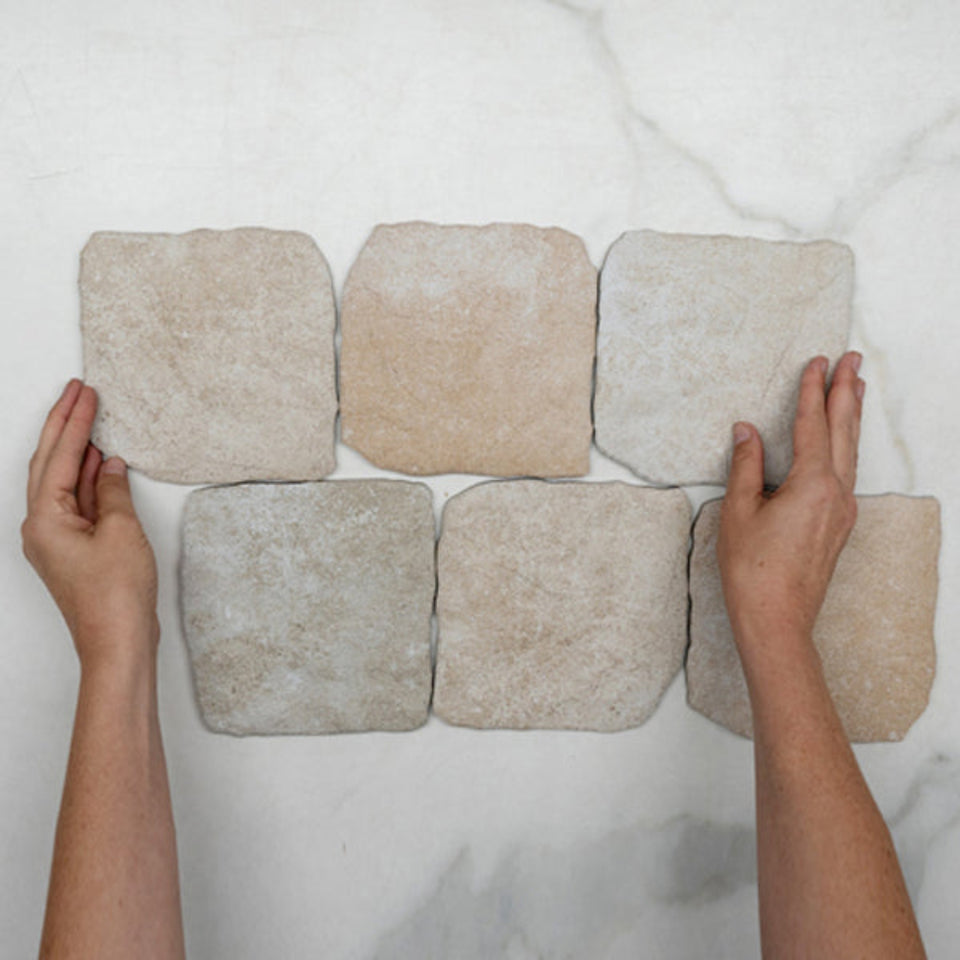
Settlers is a glazed porcelain tile made in Spain that recreates the look of old cobblestones. Each tile is 150 x 150mm and 11mm thick, with a highly textured grip surface, in Beige, Bone, Light Grey and Grey. It suits garden paths, courtyards, patios, pool surrounds and indoor-outdoor entries where you want the character of cobbled stone with the durability of porcelain.

Are Settlers cobble tiles real stone?

No. Settlers is porcelain, printed and textured to look like natural cobblestone. That gives you the look of a cobbled surface without the weight, cost or uneven laying of quarried stone. Porcelain also does not need sealing like natural stone does. Each tile is printed with natural-looking variations, and the range carries a V3 appearance rating, meaning moderate variation in colour and texture from tile to tile.

Can Settlers tiles be used around a pool?

Yes. Settlers is listed for walls and floors, indoors and outdoors, wet or dry, including pool surrounds. It has a slip rating of P5 / R12, described as low to very low slip risk and a strong choice for outdoor areas. P5 is the highest rating on the AS 4586 wet pendulum scale. Keep wet surfaces clear of algae, leaf litter and soap film, which can reduce grip over time.

Which colour should I choose?

Beige and Bone are the warm tones, pairing well with timber decking, rendered walls, sandstone and garden planting. Light Grey and Grey are the cool tones, suiting concrete, dark cladding, metal and contemporary architecture. Order a sample and view it in the light of your outdoor space, as textured tiles catch light differently to flat ones.

Can I use cobblestone tiles indoors?

Yes, but the rough texture takes more effort to clean indoors. Settlers suits mudrooms, entries, laundries, covered verandahs and indoor-outdoor transitions well. It is not recommended for kitchen splashbacks, because grease and splatter cling to the textured surface. In bathrooms, it gives excellent grip underfoot but needs regular scrubbing.

How many Settlers tiles do I need?

A box holds 36 tiles and covers 0.81 square metres. Measure your area, divide by 0.81 and round up to whole boxes, then add extra for cuts and breakages, especially on curved paths. The small 150 x 150mm size follows curves and awkward edges with fewer large cuts than big-format tiles.

How should Settlers tiles be laid?

Settlers has a non-rectified edge, so it is laid with a wider grout joint than rectified tiles. Ask your tiler to confirm the joint width and to use adhesive and grout suited to outdoor use. Blend tiles from several boxes as you lay them so the colour variation spreads evenly. With a wear rating of 4, it handles normal foot traffic well. Clean with a stiff brush and a neutral cleaner.

Completing the room

Compare more outdoor tiles, crazy pave tiles and French pattern tiles, or browse 150mm x 150mm tiles and natural stone tiles at The Blue Space.

Frequently Asked Questions

What is the best tile finish for a bathroom, matte or gloss?

Matte tiles are trending strongly in Australian bathrooms for their contemporary look and practical ability to hide water spots and fingerprints. Gloss tiles reflect light and can make a bathroom feel brighter and larger, but show water marks and smudges more readily. For shower recesses and wet floors, matte or satin finishes with good slip resistance are generally preferred.

How many tiles do I need to order for my bathroom?

Measure your total wall and floor surface area in square metres, then add a 10–15% wastage allowance for cuts, breakages, and future repairs. For complex layouts with diagonal patterns or feature inserts, increase the wastage to 15–20%. Always order all tiles from the same batch (check the shade lot/batch number) as tiles from different batches can vary slightly in colour.

How do I choose between floor tiles and wall tiles?

Floor tiles must have an adequate slip resistance rating (P3 minimum for domestic bathrooms) and be durable enough for foot traffic. Wall tiles can be glazed ceramic, porcelain, or natural stone, they don't need to carry load but should be moisture-resistant. Many Australian renovators choose matching or coordinating floor and wall tiles from the same range for a cohesive look.

What tile size is best for a small bathroom in Australia?

For small bathrooms, tiles between 300 x 300mm and 600 x 300mm often work well on both walls and floors. Smaller mosaic or subway tiles (75 x 150mm or 100 x 200mm) are a classic choice for shower walls. While large format tiles can also work in small spaces, they require a very level substrate and expert installation. Avoid tiles that are too small on floors (like 50 x 50mm mosaics) in large quantities, as the increased grout lines can make a space feel busier.

How do I incorporate feature tiles without over-designing the bathroom?

The most effective approach is to choose one feature zone and use your feature tile there, a full-height shower wall, the bath surround wall, or the vanity splashback area. Keep the remaining surfaces in a neutral or complementary field tile. This creates impact without visual clutter. Limit your palette to two or three complementary materials for a cohesive result.

What is the slip resistance rating I need for bathroom floor tiles?

Australian Standards (AS 4586) require bathroom floor tiles to have a minimum slip resistance rating of P3 for domestic bathrooms and P4 or P5 for wet areas like shower recesses. The Blue Space recommends checking the slip resistance rating of any tile you're considering for floor use, particularly in the shower. Matte and textured porcelain tiles generally offer better slip resistance than polished or gloss finishes.

What is the difference between ceramic and porcelain tiles?

Porcelain tiles are fired at higher temperatures and are denser, less porous, and harder than ceramic tiles. This makes porcelain more water-resistant, more durable, and suitable for both indoor and outdoor applications, including high-traffic floors. Ceramic tiles are lighter and easier to cut, making them a practical choice for bathroom walls and splashbacks. For bathroom floors and wet areas, porcelain is generally the preferred option in Australia.