
*View accurate shipping rates and availability






54 Items



Up to 70% off across the store, plus free towels and mirrors up for grabs on orders over $800*
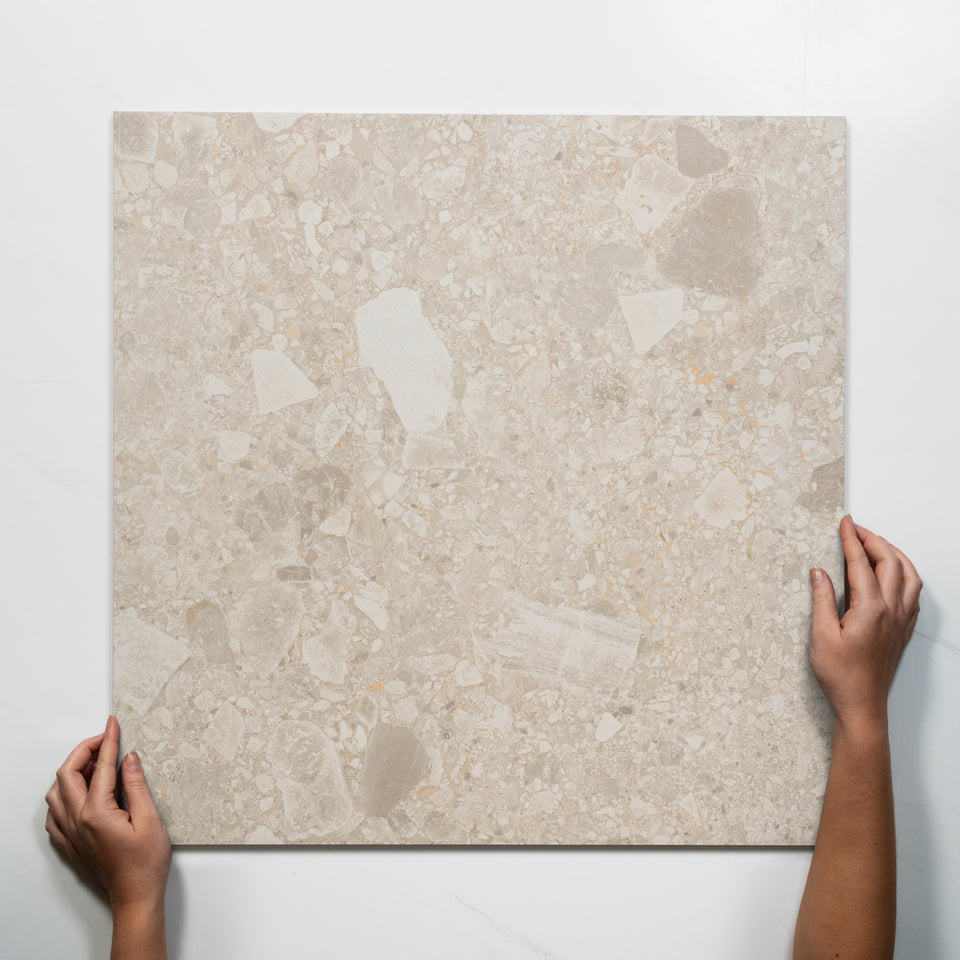
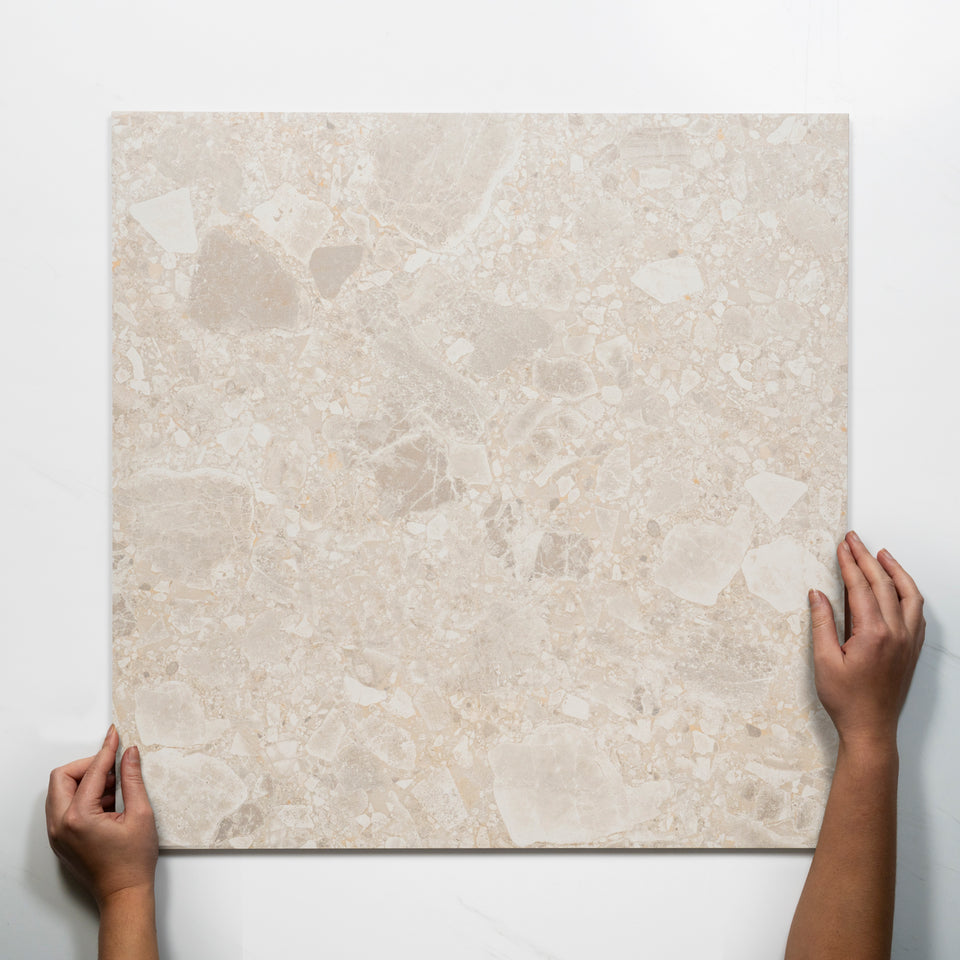




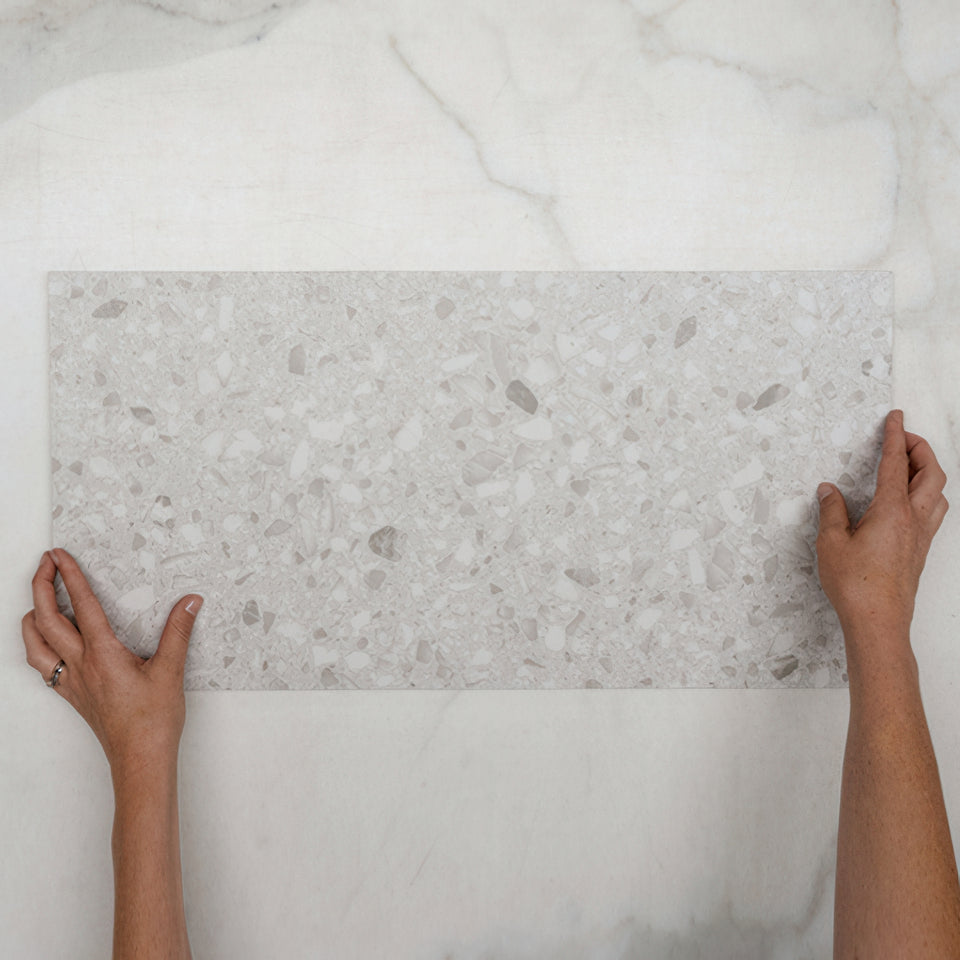


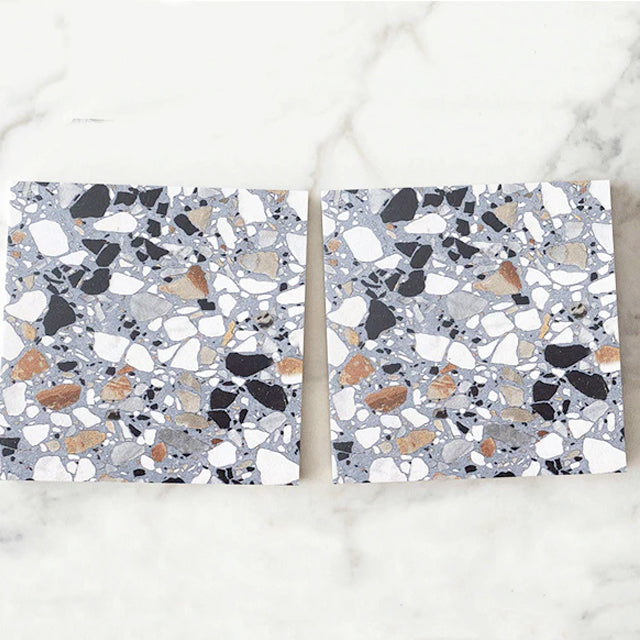
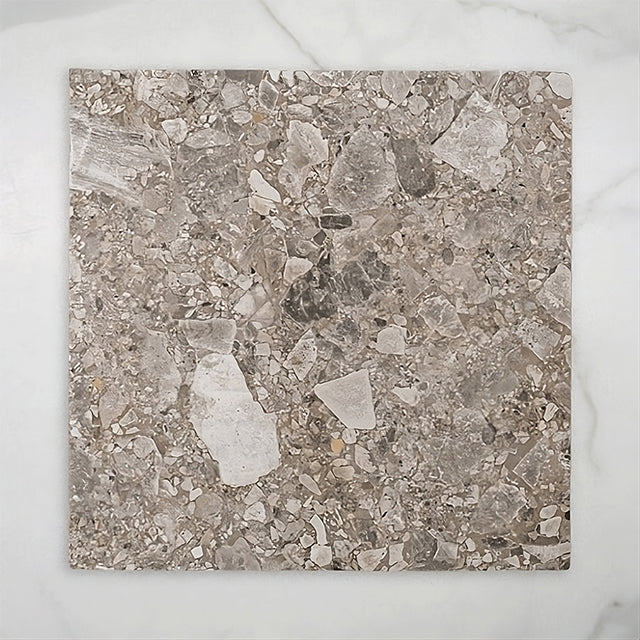

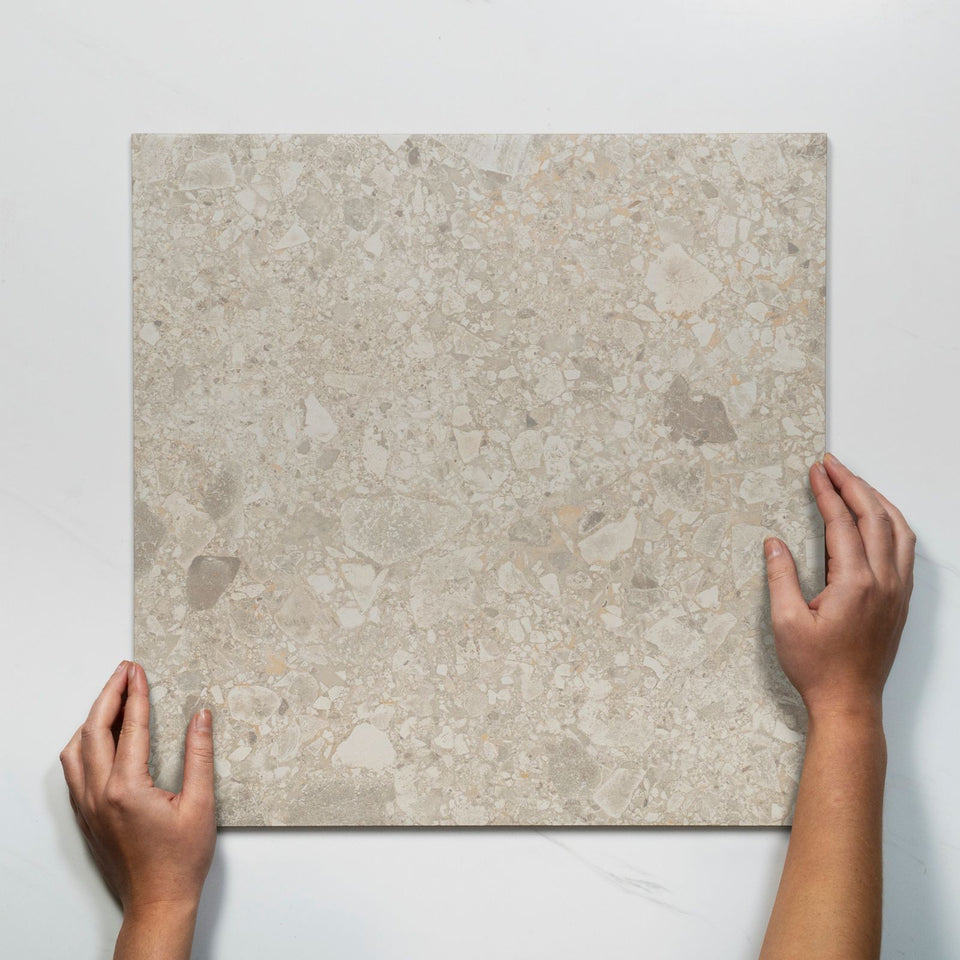


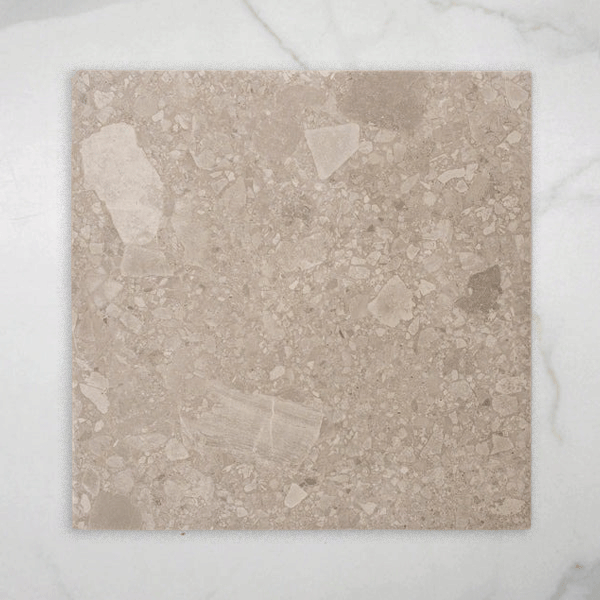

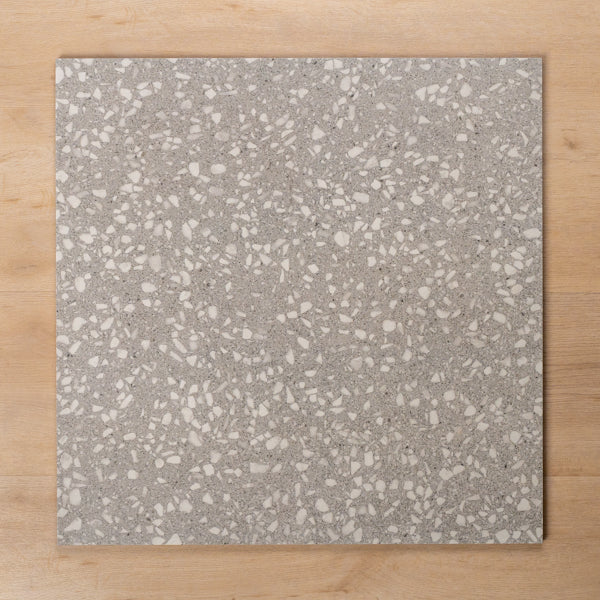


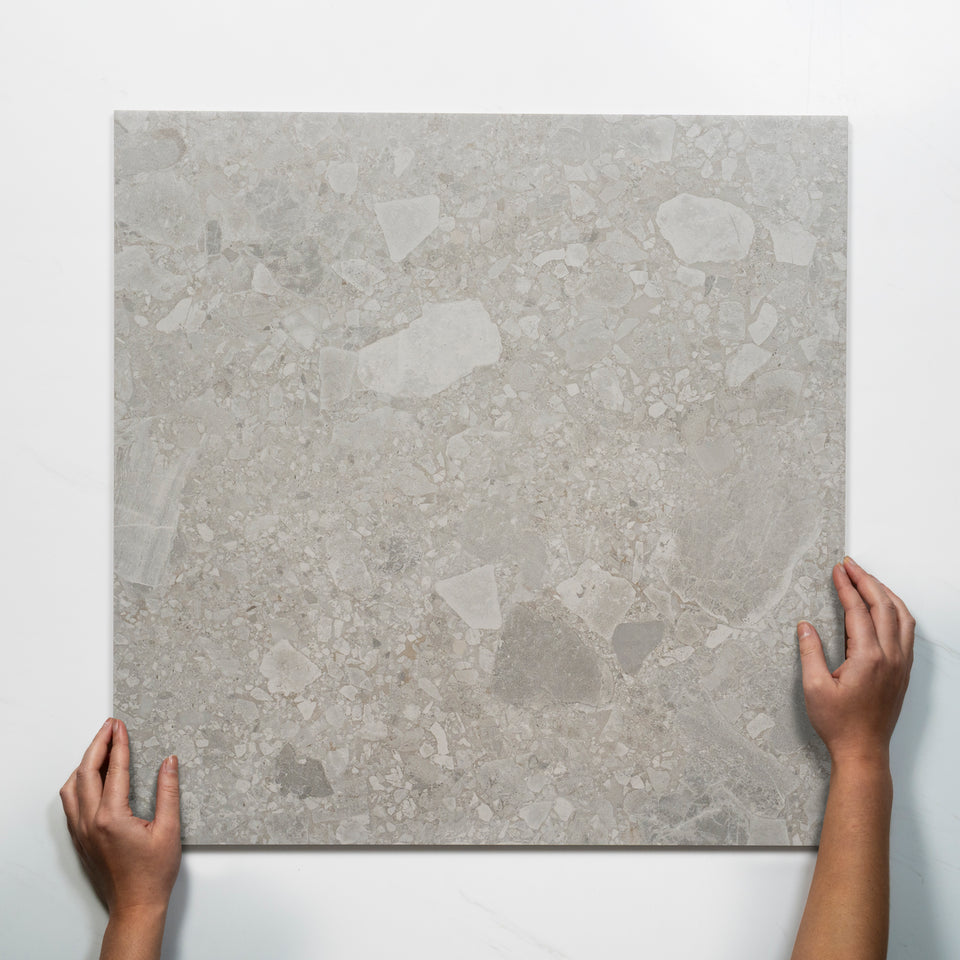
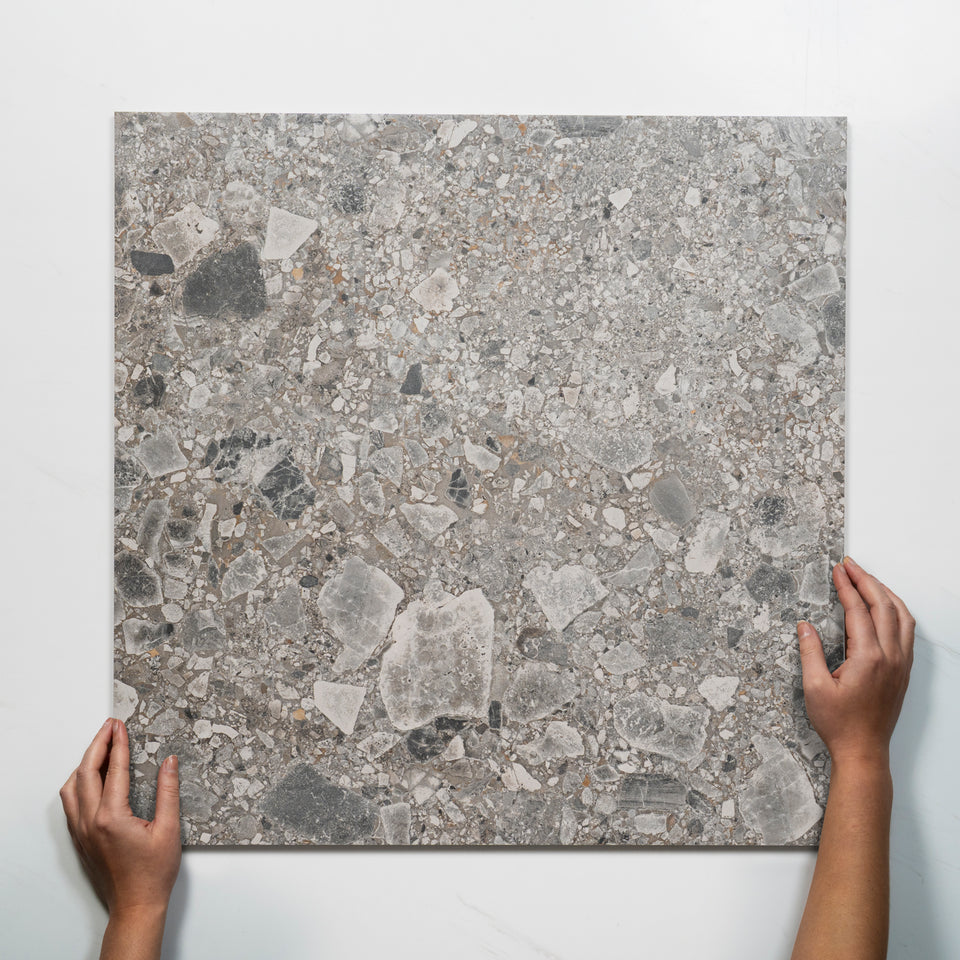


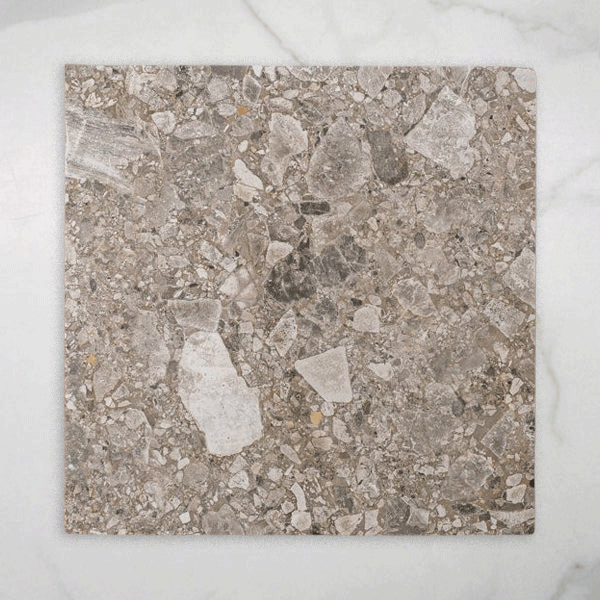
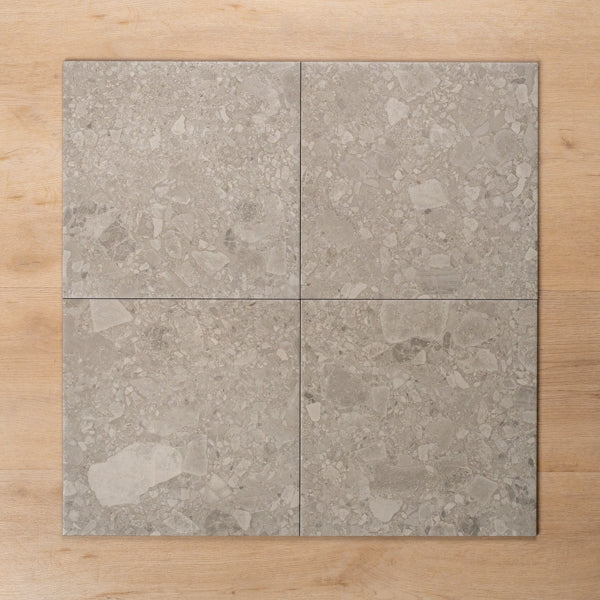
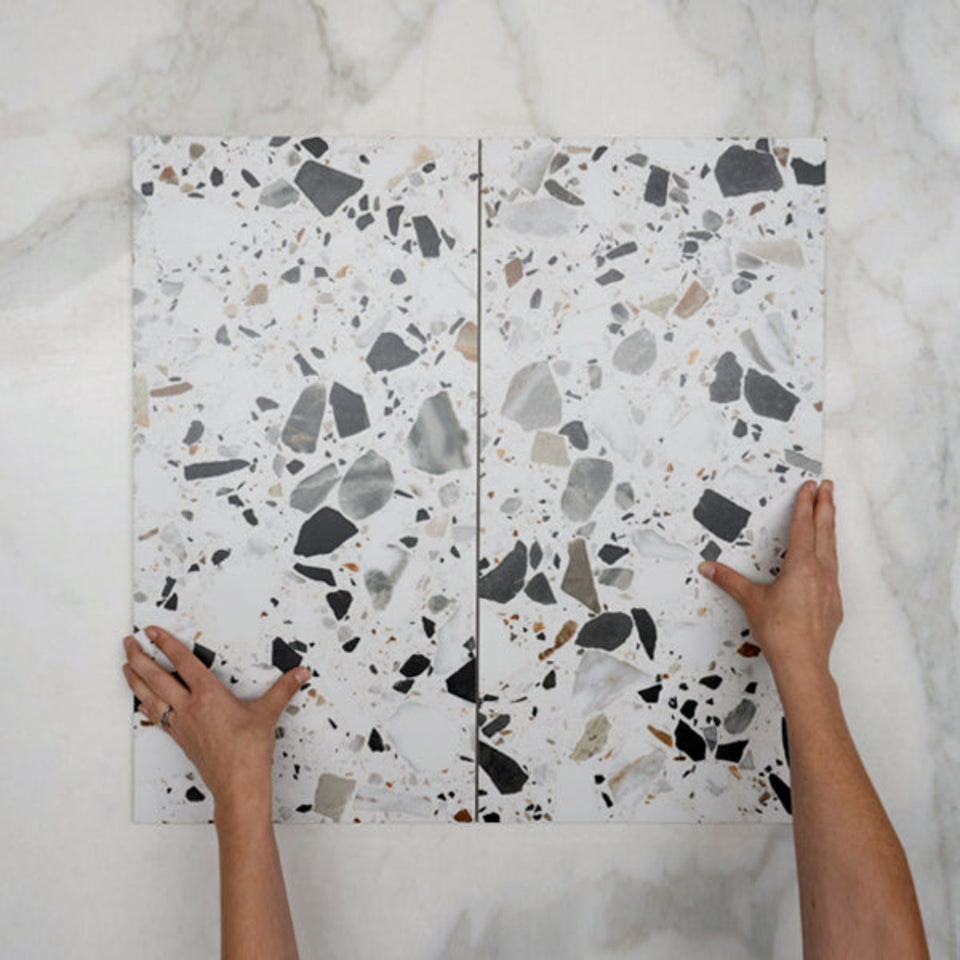
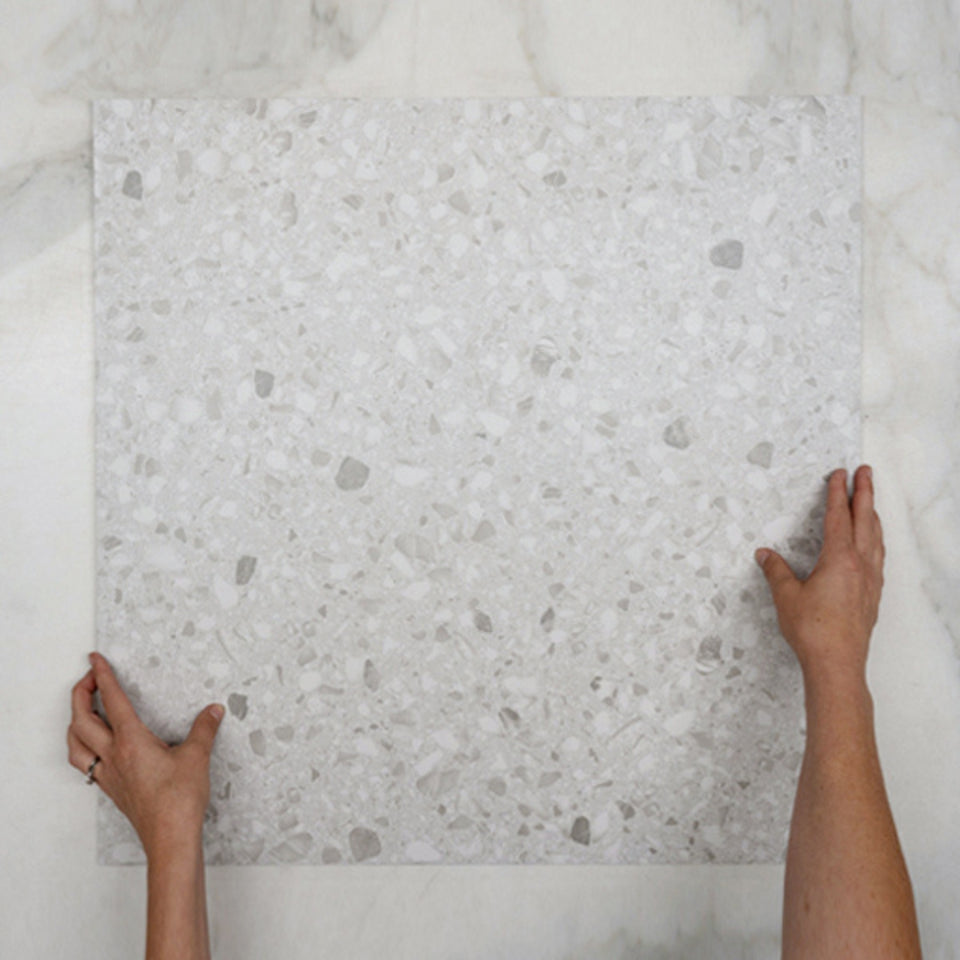
Terrazzo is the speckled surface made from chips of marble, quartz or glass set in cement and polished flat. Nearly all the terrazzo tiles sold today are porcelain reproductions of that look, and that is what this collection holds: porcelain tiles in fine-chip, large-grain and concrete-and-fleck designs, in matte and grip finishes, with a few lappato options for walls.
The sections below set out how look-alike terrazzo differs from the real thing, why chip size is the main style decision, how the slip lines vary, and where each range belongs. For rooms, see the bathroom tiles collection and the kitchen tiles collection.
The difference is plain. Traditional terrazzo is marble, quartz or glass chips set in cement and polished flat. Real terrazzo is poured or laid as cement tiles, and it needs sealing on day one and periodically afterwards, and it marks if lemon juice or wine sits on it. Porcelain terrazzo is fired, dense and effectively stain-proof, so it copes with kitchens, bathrooms and laundries. Up close, the difference shows only in the surface: real terrazzo has microscopic pits where the chips meet the cement, while porcelain is uniform. From standing height, a good porcelain terrazzo reads as the real thing.
Look tiles capture the character of traditional terrazzo, with chips of stone, marble or colour set in a smooth base, without the extra maintenance real terrazzo requires. They offer the look without the sealing and polishing that real terrazzo typically needs. Every tile on these pages is porcelain, and the Material line shows it. Real terrazzo gives a surface with character and depth that improves with age, which is the case for choosing it. The case for the look-alike is a consistent finish and simpler upkeep.
The scale of the speckle changes a room more than the colour does. Fine, salt-and-pepper chips read almost as plain stone from a distance and suit floors that should stay calm, while big, bold chips in contrasting colours are unmistakably terrazzo and turn a floor or wall into the feature. Judge a tile at room scale and not close up, because a tile that looks busy in a swatch often settles down across a whole floor.
The ranges here cover the spread. Island is a subtle, small-chip terrazzo look in three neutral matte colours. Frankie is a fine grain fleck, a combination of terrazzo and polished concrete, in warm and cool hues from light to dark. Southside is a classic Venetian terrazzo look, made in Australia, with each tile showing its own character. Clio is a large-grain terrazzo, bold, exciting and full of personality, and Theo is a contrasting-grain terrazzo in a smooth matte finish.
White and warm grey bases with neutral chips are the safe, lasting picks, and they pair with almost any cabinetry. Blush, green and black bases make a stronger statement and date faster, so many renovators keep the bold terrazzo to a laundry, a powder room or a splashback where replacing it later is simple. The colours in this collection run from grey, beige and white to black, pink and blue, with grey the largest group.
Terrazzo looks go well with timber, stone, concrete and soft neutral palettes, in modern and retro-inspired homes alike. For single colours across the store, see the grey tiles collection, the beige tiles collection and the white tiles collection.
Terrazzo suits floors first. The pattern hides crumbs, dust and footprints better than a plain tile, which is why real terrazzo ran through schools and airports for decades. Bathroom floors are the other natural home, where the speckle disguises water marks between cleans. In living rooms and hallways, large-format terrazzo-look tiles bring movement without overwhelming the space, with fine-chip styles feeling modern and minimal and chunkier chips adding character to open-plan areas.
Large formats keep grout lines from interrupting the speckle, which is why 600 x 600mm is common. Random chip patterns do not need pattern matching either, which makes terrazzo one of the easier tiles to lay and to cut around vanities. The floor tiles collection explains slip and wear lines in more detail.
For a bathroom floor, choose a matt or textured terrazzo with a proper slip rating, and keep polished-look surfaces for dry areas. The slip lines in this collection vary, and they matter. The Island tiles are P4, low slip risk, with P4 or greater best for outdoor areas. The Clio tiles with a Tech Grip finish are P4. The Southside tiles are P2, P3, P4 or P5 depending on the version, and the P2 matte version is a high slip risk and not recommended for wet areas.
The Frankie vanilla matte tiles print P3, and the external version prints P5. The Theo tiles print P1, the lowest rating on the P scale in this collection, so read the Application and Area lines together before choosing them for anything other than a dry wall or floor. The same family name can carry different ratings: Southside and Frankie both include a matte version and an external version, so the rating belongs to the product page and not to the range name.
On walls, a terrazzo splashback or shower feature adds pattern without a repeating motif. Small feature spots such as fireplaces, entryways or behind vanities also work, where the pattern adds interest without needing a large colour palette. Finishes come in matte, satin and occasionally polished, with matte common for floors and wet rooms and satin suiting walls and splashbacks.
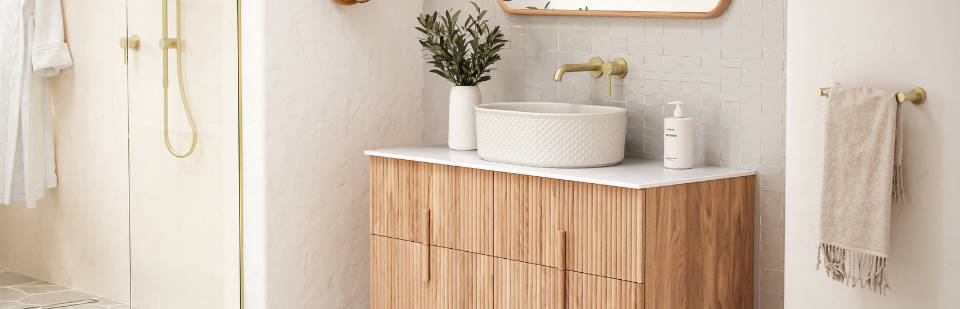
In bathrooms, soft fine-chip designs create a calm base for vanities and showers, while larger chip patterns work as a feature on one wall or the floor. Lighter tones help a bathroom feel open, and deeper colours add contrast. In kitchens, neutral terrazzo pairs with timber or white cabinetry, and bolder looks lift a simple design. The Theo terrazzo pairs with the Theo textured subway on the walls. The wall tiles collection sorts the full range of wall formats, and the subway tiles collection holds the subway shape in every colour.
Some terrazzo-look tiles suit patios and outdoor entertaining areas when the finish and rating match the environment. The tiles here show where that is true. The Southside external tiles are P5 and Outdoors, floors only. The Clio 300 x 600mm tiles are Indoors and Outdoors, and the Frankie vanilla tiles are Indoors and Outdoors for the matte and external versions. Soft grey and beige terrazzo looks create a relaxed outdoor setting.
Read the Area line, not the style name. The outdoor tiles collection is the place to compare patios and paths.
The Dimensions lines run from 200 x 200mm and 300 x 300mm through 300 x 600mm and 450 x 450mm to 600 x 600mm, with thicknesses from 6.3mm to 10mm. Standard square and rectangular formats are the most popular, because they let the terrazzo pattern flow evenly, and smaller mosaics can be used for decorative areas or shower floors. The mosaic tiles collection covers the small formats.
The finishes here are matte in most cases, grip or Tech Grip in a smaller group, and lappato in a few. Lappato is a semi-polished finish, and the Frankie lappato tiles are made for walls.
Slip rating is about grip, and the wear rating is about scratching. Most terrazzo looks here are 4, suitable for floors in normal use areas with a low risk of scratching. A small group is 2, suitable for light traffic with soft-soled shoes and carrying a high risk of scratching, and one tile suits walls or floors in dry residential and covered outdoor areas. Where a tile is 2, place it in a bedroom or a low-traffic room, not an entry or a kitchen.
The Edge line shows most of the collection is rectified, with a smaller group non-rectified. The large tiles collection gathers the bigger formats.
Order more than the measured area to allow for cuts. Add 10 percent for cuts and spares, or 10 to 15 percent, rising to 20 percent for large formats. Rooms with more cuts need more again, so confirm the quantity with your builder or tiler before ordering.
The product pages print the full details for each range. These show the spread.
Southside is the Australian made range in 300 x 300mm, 300 x 600mm, 450 x 450mm and 600 x 600mm, in white, beige, natural and grey. Island is the small-chip look in three neutral matte colours, at 600 x 600mm and 300 x 600mm among its sizes. Clio is the large-grain Tech Grip terrazzo in mixed and grey. Theo is the 200 x 200mm contrasting-grain terrazzo in white, pink, blue and charcoal. Frankie is the terrazzo and polished concrete combination in a fine fleck. For the ranges on their own, see the Southside terrazzo tiles collection, the Clio terrazzo look tiles collection, the Island terrazzo look porcelain tiles collection and the concrete tiles collection.
A worked example shows how the formats pack. A kitchen floor 3.6m by 3.0m is 10.8 square metres, which becomes 12.42 square metres with 15 percent for cuts. In the 300 x 600mm and 600 x 600mm tiles, a box covers 1.44 square metres, so the order is 9 boxes: 72 tiles in the first size and 36 in the second.
Start with the room and the chip size. For a calm floor, choose a fine chip. For a feature wall or a statement floor, choose a large grain. Then read the slip line, the Application line and the Area line before the colour: a bathroom floor needs a matte or grip tile with a rating that suits wet feet, and an outdoor tile needs a P5 external line.
View the tile in the room's light, order extra for cuts, and keep bold bases for places that are simple to change. The tiles collection sits above this one for the whole range.


