
*View accurate shipping rates and availability






416 Items


Up to 70% off across the store, plus free towels and mirrors up for grabs on orders over $800*


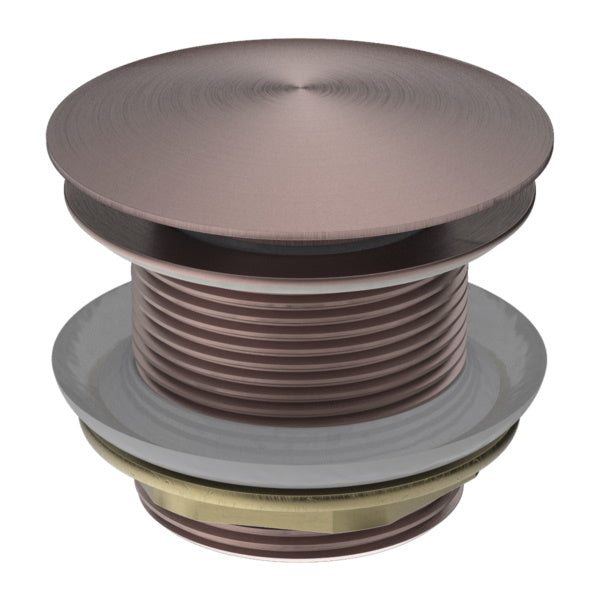


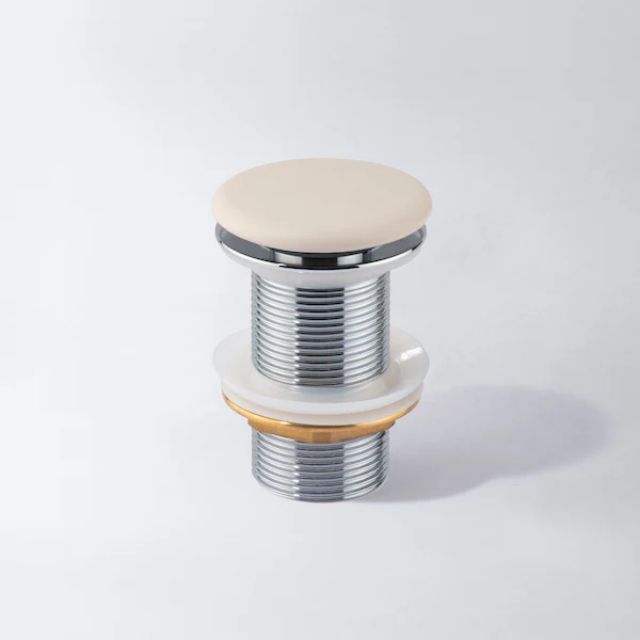


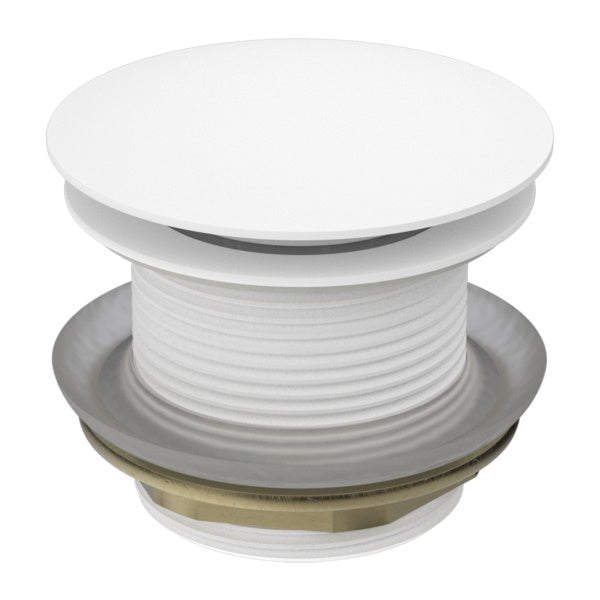


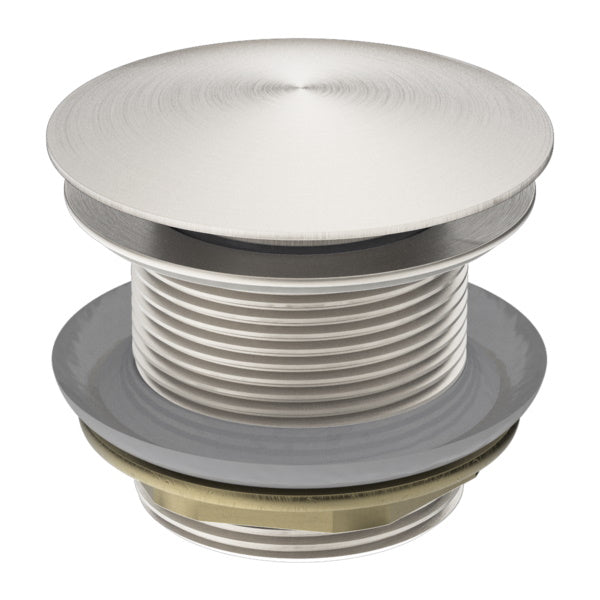


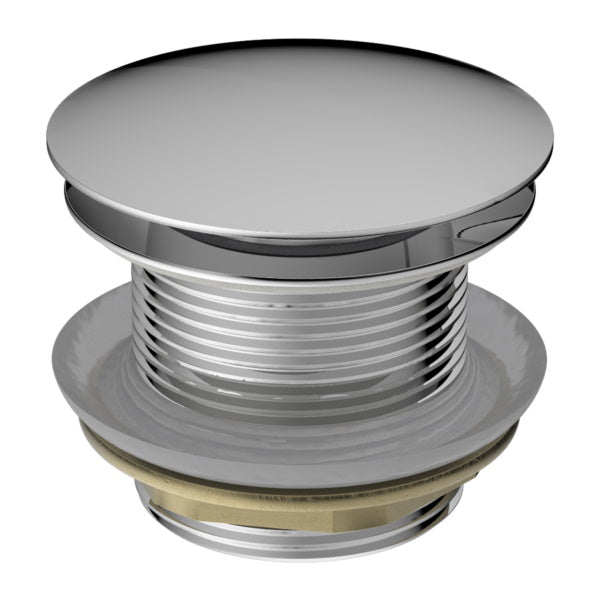
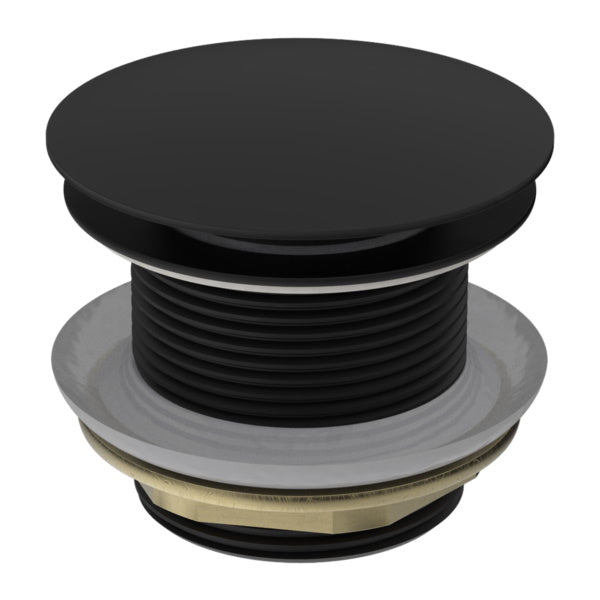
A waste is the part that lets water leave a fixture or a floor. A trap is the part below it that holds a little water to block sewer gas. A grate is the cover you see. This page holds all three for the bathroom and the laundry: shower wastes and floor grates, linear channels, basin and bath wastes, bottle traps and kitchen sink wastes, in brass, stainless steel and a few other materials, in finishes that match tapware. Shower waste is the term most shoppers search for. It means the drain that carries water away from a shower or bathroom floor, and it is also sold as a bathroom floor waste, a shower drain or a shower trap. Each type links to its own collection.
Every drain follows the same path. Water goes through the waste, then through a trap, then into the pipe. The waste is the outlet fitted to the fixture or the floor, and the trap is the bend or chamber that keeps a water seal. The trap is a curved section of pipe that holds a small amount of water, and that water stops sewer gas and odours rising through the drain. The seal can break through evaporation, a blockage or poor design, and that is how smells and backflow start.
A floor waste differs from a basin or bath waste in one respect. A basin waste or a bath waste connects to one fixture, while a floor waste sits in the floor and serves the room. AS/NZS 3500.0 defines a floor waste gully as a gully inside a building that takes a floor waste grating or a waste outlet on a riser pipe and provides connections for fixture waste pipes. The job is simple: a shower drain removes water, keeps sewer odours out of the bathroom and stops water seeping under the floor.
In Australia the terms shower waste and shower trap mean the same thing. A shower waste is also called a bathroom floor waste, the drain that carries water away from a shower or bathroom floor, and designs run from the classic round point drain to the newer tile insert square drain. Whatever the name, the visible part is a grate or a tile insert, and the part below is the body with its outlet.
Shower wastes sort into three types. A point drain is a square or round waste in the centre or a corner. It is the simplest to install, and it needs floor falls from several directions. A linear waste is a long channel instead of a central point. It suits walk-in showers and large-format tiles, and it simplifies the grading of the floor. A tile insert waste has a cover that holds a matching tile and leaves the floor close to flush, and it needs precise installation. Square and round point drains and tile inserts have their own page at floor wastes, and long channels are at channel wastes and grates.
The common shapes are round, square and invisible, in materials that run from aluminium, cast iron and stainless steel to bronze and plastic. Square suits bathrooms with square edges, such as square rain showers and chunky square tapware. Round is smaller and suits curved designs such as rounded tapware and curved screens, and it also suits laundries. Some square grates have a hinged grate and a removable strainer basket, and some round ones come with or without a bucket trap, a removable basket that stops small items being lost down the drain. The invisible grate is the tile insert, a square tray with a narrow drain around each edge about the width of a grout line.
Confirm these measurements: overall length and width, channel depth, and the outlet diameter and position. For a tile insert, also check the permitted tile thickness and the insert dimensions, and review the installation instructions for the model with your installer. A point drain and a linear channel differ in installation depth, outlet position and floor design, so compare those before the product.
Yes. The trap holds a small amount of water that blocks sewer gases, which often smell bad, from coming up through the drain. Without one, sewer gas can enter the bathroom. Many Australian units are S-shaped, and a little water stays in the trap as a seal. If a shower drain smells, the seal is the first thing to check, and the care section below covers it.
The National Construction Code covers the floor side of the same question. Under the Housing Provisions deemed-to-satisfy rules, a floor waste is required in shower areas, and where one is installed the floor must fall to it under Clause 10.2.12. A continuous fall of between 1 in 80 and 1 in 50 toward the waste is the range builders work to. Confirm the detail for your build and your state with a certifier or licensed plumber. The full treatment is on the floor wastes page.
The number describes the pipe, not the waste. 32mm and 40mm are the internal diameter of the pipe the waste connects to. A 32mm waste suits a standard basin and uses a 1 1/4 inch BSPP thread, about 41mm across the outside. A 40mm waste suits a bath or a larger basin and uses a 1 1/2 inch thread, about 48mm across. BSPP stands for British Standard Pipe Parallel, a straight, non-tapered thread common in plumbing. An adaptor converts a 1 1/2 inch waste to a 1 1/4 inch connection.
The store uses two terms for the push-button mechanisms, and they are not the same. A pop up waste sits proud of the surface when open, with a slightly domed cap. A pop down waste sits flush when open, with no raised cap. A pop down waste stays open in its resting position and closes when pressed. It looks less intrusive and helps stop small items such as jewellery falling into the trap, and the mechanism comes out fully for cleaning. The trade-off is a limited range of finishes. Basic wastes use a rubber or plastic plug. The two mechanisms have their own pages at pop up basin wastes and pop down basin wastes.
Basin wastes are at basin wastes. Some are made to fit one basin family. The Caroma plug and waste in the Liano II, Urbane II and Contura II sets is designed specifically to fit those basins, and the Clark basin waste is for wall hung, under counter, semi-recessed and semi-inset basins only. The Fienza universal pop-up and pull-out waste in concrete finishes is designed for basins only, with a concrete cap sealed with a food-grade nano sealant, and the top section pulls out for cleaning and draining.
A bottle trap sits under a wall hung basin where the pipework shows. The Phoenix trap hides the plumbing pipes, adjusts vertically and horizontally, has a removable cap for easy cleaning and suits 40mm pipework. Some bottle traps arrive with a 32 x 40mm bush and a rubber key seal connector, such as the Turner Hastings brass bottle S trap, so a 32mm waste and a 40mm pipe can meet. The Nero Project pop up waste is a universal design for basins with or without an overflow and fits basin waste holes from 42mm to 58mm. The choice of finish matters more under a wall hung basin than anywhere else, since the trap is in plain sight. See bottle traps.
Bath wastes are 40mm, with or without an overflow, and are at bath wastes and pop down bath wastes. The Turner Hastings safety pull-out pop-up bath waste has a pull-out feature and a strong mechanism to prevent accidental unplugging. It has a high flow rate and a solid brass body, with a removable cartridge for servicing and cleaning, and a clear channel design lets a plumber service the drainage pipe. The Decina bath pop-up plug has a removable waste, a hair catcher and a jewellery-friendly basket, and the Caroma bath pop-up is designed specifically for bath applications.
Kitchen sinks use a basket waste, a different part again. The Nero kitchen sink basket waste is 304 stainless steel in a PVD finish, uses a G2 inch thread, has a surface diameter of 118.5mm and suits sinks up to 30mm thick. See sink wastes.
Brass, stainless steel and a few specialty materials appear here. The Nero floor wastes and channel grates are 304 stainless steel, and a few ART Australia, Radiant and Phoenix products are 316. The difference is about 2 to 3% molybdenum, which strongly improves 316's resistance to pitting and crevice corrosion where chlorides are present, and 304 is enough for freshwater and architectural use with minimal chloride exposure. Use 316 marine-grade stainless for coastal homes. Stainless steel is corrosion resistant and long lasting, and plastic is lighter.
Check the finish process, because a colour name does not tell you the process. PVD is a vacuum process that bonds the colour to the metal at a molecular level, and it is much harder than traditional plating. Chrome is electroplated, which is hard, easy to clean and tolerant of strong cleaners. Powder coating is paint-based, so it is uncommon on tapware and mostly seen on accessories. Brass pieces are collected at brass wastes.
Each brand has its own page for drains: Nero wastes and traps, Caroma wastes and traps, Meir wastes and traps, Phoenix wastes and traps, ADP wastes and traps, Turner Hastings wastes and traps and Clark wastes and traps. ART Australia, previously known as Bounty Brassware, is at Bounty Brassware, and Fienza's bath wastes are at Fienza bath wastes.


