
*View accurate shipping rates and availability






148 Items


Up to 70% off across the store, plus free towels and mirrors up for grabs on orders over $800*


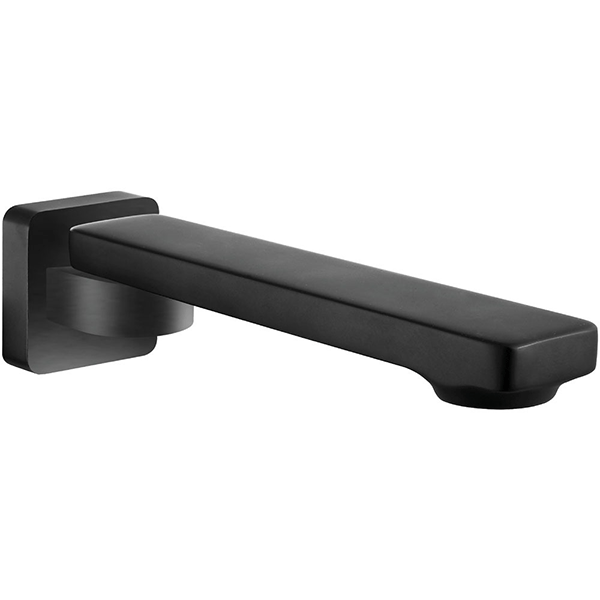


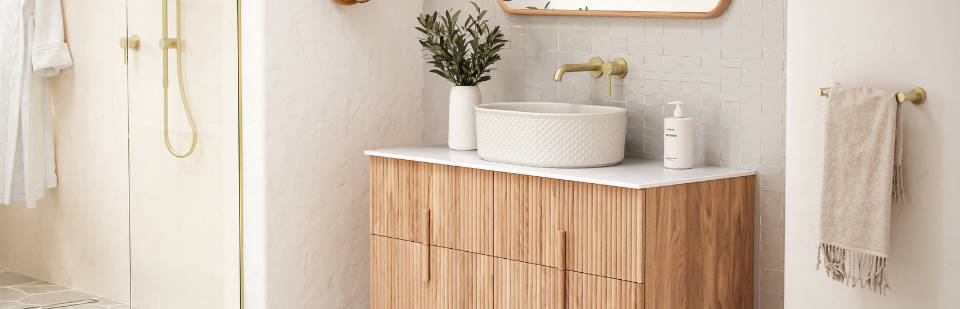


A bath spout is the outlet that fills the bath. It is also called a bathtub spout, a tub spout or a bath outlet, and it is the part you see on the wall or the deck above the rim. This page holds bath spouts from Caroma, Nero, Phoenix, Fienza, Clark and Meir, wall mounted, floor mounted and hob mounted, fixed and swivelling, in chrome, black, brushed nickel, gunmetal, brass, gold and bronze. The guide below explains how a spout works with the mixer, how to choose the length and the height, which mounting suits your bath, and how to look after the finish.
A bath spout delivers the water. It does not control it. The control is a separate mixer or a pair of taps, on the wall or on the bath, and the spout is the outlet that the water runs from. Some spouts are paired with a wall mixer on the same plate, and some are a single outlet fed by a mixer further along the wall. If you are choosing the mixer and the spout together, see wall basin and bath mixer sets, where the mixer and the spout are chosen as a pair.
A spout that sits on a wall serves a bath against a wall. A spout on the bath deck, which is called a hob spout, serves a bath with a wide rim. A spout on the floor serves a freestanding bath, and it is fed by pipes that come up through the floor. For a complete freestanding set, see freestanding bath mixers, and for fillers made for the bath as a group see bath fillers.
The wall mounted spout is the most common choice. It comes out of the wall above the rim of the bath, and it needs one pipe outlet at the right height in the wall. That puts the plumbing work in the wall before the tiles go on, so the position of the spout has to be settled early. A wall spout keeps the bath rim clear, which makes the bath easier to clean.
The floor mounted spout stands on the floor beside a freestanding bath, and it reaches over the rim. It is fixed to the floor, so the position of the bath has to be settled before the plumbing is roughed in. A hob mounted spout is fixed to the bath deck or the surround, and it needs a hole and the supply pipes below the deck. Check that the bath you have chosen can take the mounting you want before you order.
A fixed outlet points one way, and it suits a bath where the water always falls into the same place. A swivel outlet turns on its base, which is useful where the spout serves a bath and a basin, or where a bath sits next to a vanity. See swivel bath spouts for those. A progressive outlet and a waterfall outlet are less common styles, and they change the shape of the stream and the look of the spout.
Some spouts are marked as a basin and bath outlet. These are made to serve a basin or a bath from the same wall, usually with a shorter reach. See basin spouts for those, and spouts for the full group of spouts for the bath, the basin and the shower.
The length of the spout is how far it reaches from the wall. The right length lands the water in the middle of the bath, over the plug area, not on the sloping side or on the rim. A short spout over a wide bath drops the water onto the side, and a long spout over a narrow bath sends water over the far edge. Measure the bath from the wall to the centre of the bath floor, and choose a spout that reaches about that far.
Common lengths run from about 110mm for a short spout on a narrow bath, to 150mm and 180mm for an average bath, and longer for a wider bath or a bath with a deep rim. Confirm the exact length of the model you choose and do not guess it. The short and 300mm bath spouts here suit a bath that sits a little away from the wall, or one with a wide deck. Check the length against the width of the bath and the thickness of the rim.
A wall spout sits above the rim, with enough gap for the water to drop into the bath without splashing and enough room to put a hand under it. A gap of around 100mm to 150mm above the rim is a common guide. The gap needs to be larger if you fill a bucket in the bath or want room for a large jug. Set the height before the tiles go on, and measure it from the finished rim of the bath, not from the floor.
The spout connects to a pipe outlet in the wall, and the outlet has to be at the right height and position. Some spouts are fixed to a single outlet through a wall plate, and some use two fixings. Give your plumber the connection details for the model you choose before the wall is closed. Plumbing work has to be done by a licensed plumber, who will position the spout, seal it to the wall and test it before the tiles are finished.
Caroma makes the largest group here, in ranges such as Urbane II, Liano II, Luna II and Riviere, and they suit a bathroom where the basin, the toilet and the tapware are chosen from one maker. See Caroma spouts and Caroma taps. Nero has ranges such as Mecca, Bianca, Dolce, Ecco and the Pure stainless steel collection, and see Nero taps.
Phoenix includes the Designer, Vivid, Teel, Mekko and Rush ranges, and it is a good fit where the bath outlet has to match a Phoenix mixer and shower. See Phoenix spouts. Fienza, Clark and Meir are smaller groups, with their own spout pages at Fienza spouts, Clark spouts and Meir spouts.
The spout and the mixer do not have to come from the same range, but they look best when they do. The handle, the plate and the spout share a shape in the same range, and the finish matches exactly. If you mix ranges, pick the same finish and a similar shape, round with round and square with square. Check the finish name too, because brushed gold, brushed brass and brushed bronze are different colours across makers.
Chrome is the easiest to match and the simplest to keep clean. Brushed nickel is a soft silver that hides water marks. Matte black is a bold choice against white tiles, and it shows water spots, so plan for a regular wipe. Gunmetal is a deep grey that sits between nickel and black. Brass, gold and bronze are warm metals that suit timber, stone and warm tile tones.
Most spouts here are lead free brass or brass. A smaller group is 316 stainless steel, which is the grade made for places that are wet most of the time or near the coast. A bath spout is in constant contact with water, so a surface that resists corrosion matters. Check the sheet for the material and the compliance marks on the model you choose.
The spout is rated by the mixer or the supply that feeds it, so the flow rate depends on the pressure in your house and on the pipe size to the bath. A low pressure supply fills a bath slowly with any spout. If the bath takes too long to fill, check the supply first, since the spout rarely causes it. A wide outlet or a high flow outlet gives a quicker fill only when the supply can deliver it.
The wall must be ready before the spout goes on. The pipe outlet is fixed to a solid backing, so the spout does not move when it is knocked or leaned on. The plate is sealed to the tile, and the spout is tested for leaks before the bath is used. The work belongs to a licensed plumber, and the installation sheet that comes with the spout is the reference for the connection and the fixings.
Wipe the spout with a soft, damp cloth and mild soap, and dry it with a soft cloth to prevent water marks. Do not use abrasive pads, bleach or strong bathroom cleaners, because they can damage brushed, black and coloured finishes. Bath oils and bubble bath leave a film around the outlet, so rinse the spout after the bath. Hard water leaves scale on the end of the spout, and a soak in a mild cleaner will clear it.
For other bath outlets and mixers, see swivel bath spouts, bath fillers and shower and bath taps. For a tap from any brand, start at taps.


