
*View accurate shipping rates and availability






398 Items


Up to 70% off across the store, plus free towels and mirrors up for grabs on orders over $800*


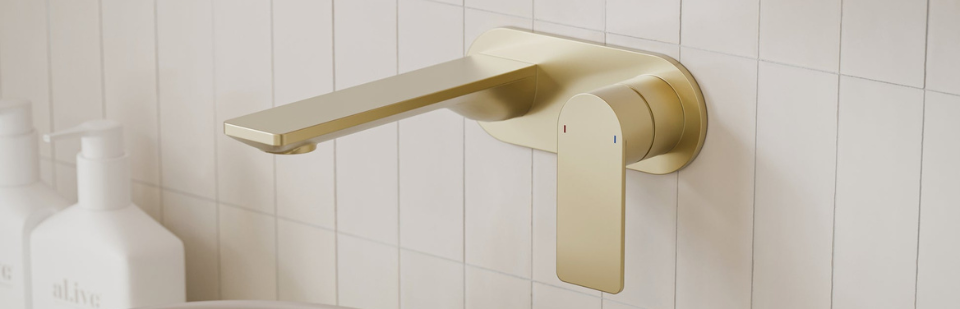


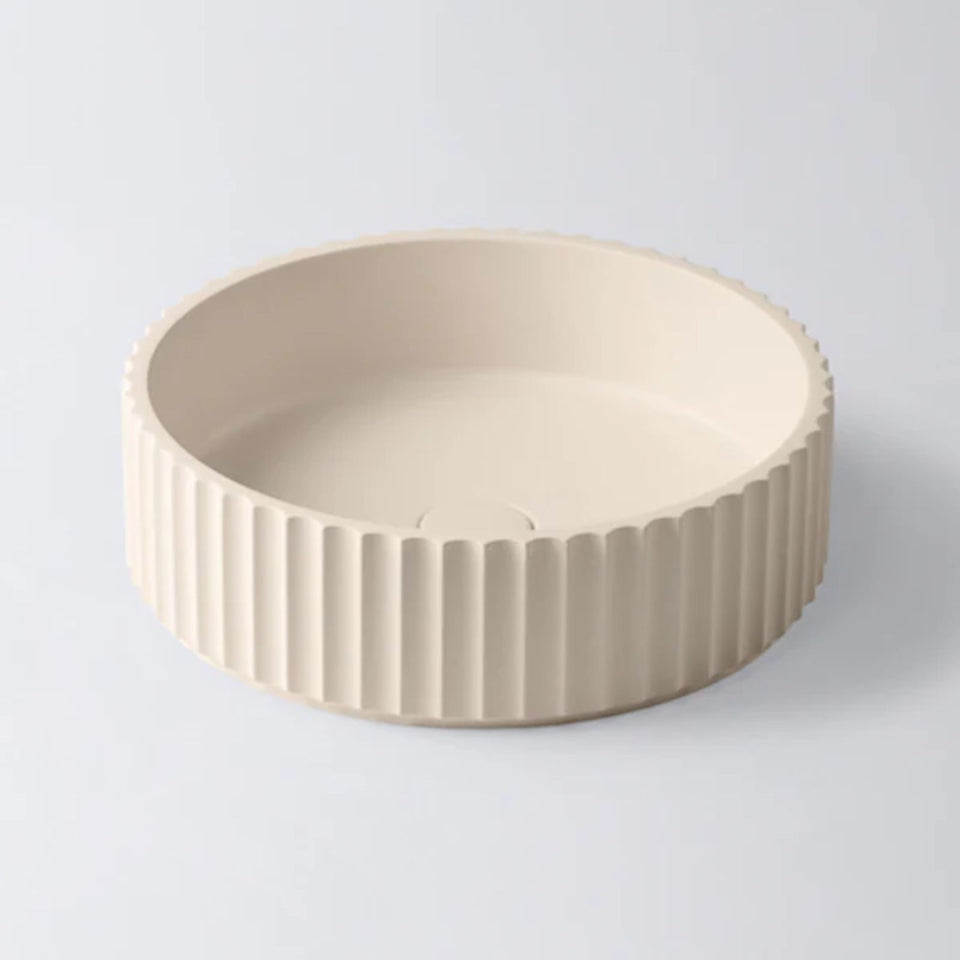

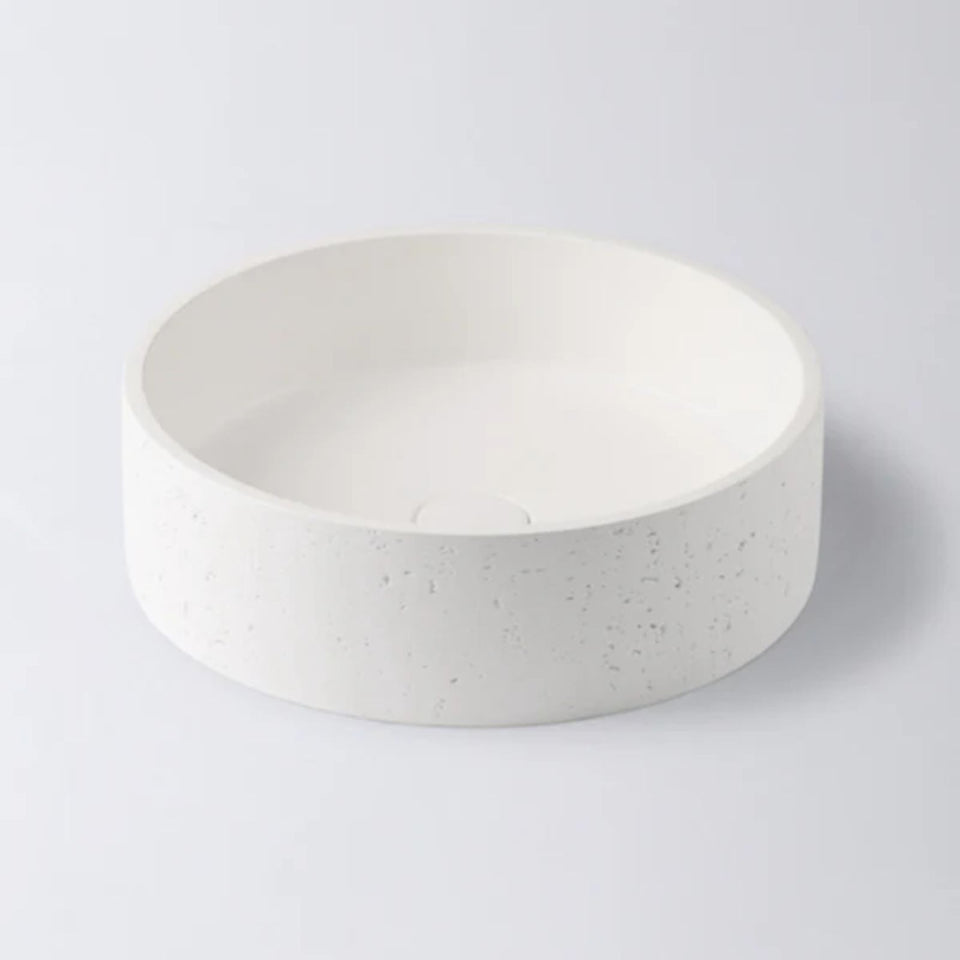


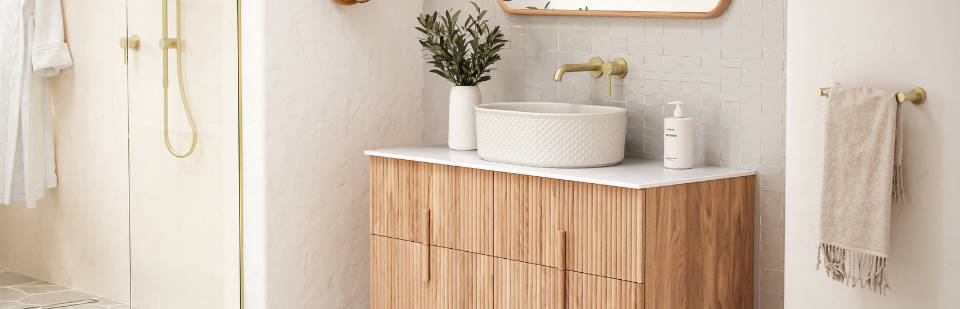


A bathroom basin is the fixture you wash at, and the choice has three parts that depend on each other: how it mounts, where the tap goes, and what it is made from. This page holds basins in ceramic, fine fire clay, concrete, stone composite and solid surface, in round, oval, rectangular, square, pill and arch shapes, for above counter, inset, semi-recessed, undermount, wall hung and freestanding fitting. The guide below follows the order most people decide in: the mounting type first, then the tap holes and the waste, then shape, material, size and finish. Each fact is attributed to a product listing or an installation guide, and where listings differ the page names the line to read.
Yes. In Australia the fixture in the bathroom is usually called a basin, "sink" is the general word and "washbasin" is the formal one. The vanity is the whole unit: the cabinet, the top and the basin together. Listings use the words interchangeably, so a search for either finds the same products, and the type names below (above counter, inset, undermount) describe how the basin meets the bench rather than what it is called.
The mounting type decides how the bench or wall is prepared, so it is the first choice to settle. The six types here sit differently in the room and ask different things of the vanity.
Above counter basins sit on top of the bench, so the whole bowl is visible and the bench does not need a cut-out. They suit a bench that is already finished or a top that cannot be cut, and they make the basin the feature of the vanity. The trade-off is height: the bowl adds to the bench height, so a bathroom guide pairs them with tall mixers that clear the rim. The listings agree with that pairing, since the above counter basins on this page have no tap hole and the tapware mounts on the bench behind the bowl or on the wall.
Inset basins drop into a cut-out in the bench and rest on a rim, so the bench stays level with the bowl edge. An inset basin is easier to install, than an undermount and suits more bench materials. Tap holes vary: the inset listings include basins with no tap hole, with one tap hole for a basin mixer and with three for a three-piece set.
Semi-recessed basins sit partly into the vanity and project past the front edge of the bench. Stockists say they save space and give more usable bench area, because the part that overhangs the vanity is bowl, not bench. Check the listing for the basin's width and depth before you check the cabinet depth.
Undermount basins are fixed beneath the bench, so the bench surface runs unbroken and leaves more usable counter. One stockist suits them to a stone or timber bench, and another says the sides are protected from impact because they sit under the top. The listings show no tap hole on undermount basins and say they suit bench mounted or wall mounted tapware.
Wall hung basins fix to the wall and leave the floor clear below, which suits a compact powder room or ensuite. A stockist guide adds that they give more room to reach the basin and the mirror, which helps wheelchair users, and the assisted living basins page covers that need. Wall hung listings come both ways on tap holes: some show none and suit wall mounted tapware, others show one for a mixer on the basin, and the Luna shelf wall basin is listed as available with none or one. A wall hung basin hangs its weight on the wall, so the wall needs support, which the installation section below covers.
Freestanding basins stand on the floor and do not need a vanity. The Caroma Contura II freestanding basin is listed at 900mm high, 530mm long and 380mm out from the wall, which is the figure to compare with the space you have.
The tap hole count is on every listing, and it decides which tapware fits. A basin with no tap hole takes a mixer fixed to the bench or a wall mounted spout. A basin with one tap hole takes a basin mixer on the bowl. A basin with three takes a three-piece set, which a stockist guide notes is the older arrangement. One tap hole needs a basin mixer; three tap holes take conventional taps. Because most above counter and undermount basins here have no tap hole at all, the tap position is set by the bench or the wall, not the basin, so decide the tapware before the bench is cut or the wall is lined.
Spout height and reach matter as much as the hole. A guide to choosing basins notes that spout height and reach should match the basin type to prevent splashing, and an above counter bowl raises the rim, so it takes a taller mixer than an inset basin does. See basin mixers, bathroom basin taps and three-piece bathroom taps once the basin is chosen.
Each listing states whether the basin has an overflow. Some say "non-overflow only", which means a plain waste with no overflow hole in the bowl, and others say "overflow included". The ADP Miranda under counter basin is listed with an overflow, the Bao Pill above counter basin is listed as non-overflow only, and the Clark basins list an integrated overflow. The overflow is a feature of the basin, so it cannot be added later, and the plug and waste has to match it.
The plug and waste is where listings differ most. The Caroma listings say a plug and waste is supplied, in flush fitting chrome or colour matched ceramic pop-up form. The Clark listings include a chrome pop-up plug and waste. The ADP, Fienza, Bao, Otti, Eight Quarters and Kaskade listings usually say the plug and waste is sold separately, which lets you match the finish to the tapware but adds a second item to the order. Waste sizes are on the spec lines, with 32mm on several concrete and stone basins and 40mm on the Caroma Contura II basins, so a replacement waste has to match the figure on the listing. Read the plug and waste line on every basin before you order, because the same shape can come either way.
Maker installation sheets give a few fitting details worth knowing. A ceramic basin uses a thin foam washer under the waste neck sealed with neutral cure silicone, and the waste is tightened by hand only, because over-tightening stresses the basin. A removable plug has a rubber seal and an O-ring that must be in place, and a waste that will not hold water is usually debris, a plug that is not locked in, or silicone missing under the waste rim. See basin wastes for the matching fittings.
Shape sets how the basin reads on the vanity and how much bench it takes, and the listed sizes show the difference. Round basins are listed from 390mm across, such as the Eight Quarters concrete circle. Oval basins and pill shaped basins, which are an elongated oval, run longer and narrower: the Bao Pill is 500mm long and 370mm wide, the Kaskade oval stone basin is 500mm by 350mm and the Fienza Jada pill is 600mm by 280mm. Rectangular basins and square basins have straight edges that line up with a straight-edged vanity. The range also has fluted and arch shaped basins. Choose the shape the bench can carry with room left for the mixer.
Ceramic is the material most basins here use, and the Caroma listings describe the glazed surface as smooth and stain resistant. Ceramic basins include fine fire clay, which the Caroma Liano II listings describe as more resistant to impact. Manufacturer care text says a scratch in glazed ceramic cannot be repaired or removed. Concrete basins have a textured surface, and concrete needs sealing from time to time, according to a stockist. Solid surface basins and stone basins are listed in solid surface, stone and stone composite, and the same guide calls solid surface and stone resin durable. For care, maker guides advise to wipe ceramic with a soft cloth and a weak non-abrasive detergent, and to dry spills. Solid surface takes a soft damp cloth and mild detergent, with a non-abrasive polish for gloss finishes and a scourer pad for matte ones.
The spec line gives the length, width, overall height and, for an above counter basin, the height above the bench. These figures show how basin shapes use space. The Eight Quarters 390mm concrete circle is 125mm high and holds 10.2 litres. The Fienza Jada concrete pill is 600mm long and 280mm wide, 120mm high and holds 12.3 litres. The Caroma Contura II above counter basin is 530mm long and 360mm wide, 175mm high and holds 9.2 litres. A bathroom guide cautions that a basin that is too large overwhelms the space and one that is too small is not functional, so measure the bench, leave room for the mixer and consider the bowl depth for a shared family bathroom. For small rooms, the small hand basins page lists the compact sizes.
White is the base of the range, in gloss and in matte. A stockist guide names matte finishes, organic shapes and earthy tones as the current direction, and the range includes matte white, black, grey and green basins, with sage and blush in concrete. A guide to choosing basins advises keeping the basin finish consistent with the tapware and accessories, so settle the basin colour before the metal finish of the mixer.
The basins come from several makers, and the listings differ on what is in the box. Caroma basins mostly include a plug and waste. ADP basins cover ceramic, concrete, stone composite and solid surface in many shapes. Fienza basins are mostly concrete, and Otti basins include fluted forms. Timberline basins and Turner Hastings basins are ceramic, Clark basins are ceramic in round and square shapes with an integrated overflow, Kaskade stone basins are stone composite, and Eight Quarters basins are concrete, terrazzo and ceramic. The Bao basins are ceramic.
Installation sets out what has to be ready before the basin arrives. The makers' installation sheets say wall hung furniture and basins need fixing to a support beam fitted between the studs, with support noggins added before the wall is sheeted, and the total width of the noggin should exceed the width of the unit. They also say the wall should be plumb and the floor level, and that bathroom furniture should be kept at least 300mm from wet areas. Water connections need a licensed plumber, and the same sheets say the plumbing positions must line up with the product before it is fixed. They say to seal the edge where a top or cabinet meets the wall with neutral cure silicone.
People ask which basin is best for a bathroom, and the sources answer by use and not by a single winner. A retailer's comparison of three types says undermount basins suit family and main bathrooms where practicality matters, because the benchtop runs continuously into the basin opening and there is no rim for water to collect on. The same comparison says an above counter basin works as a design feature in a powder room or a feature ensuite. It needs a tall basin mixer to clear the rim, and works best on an open or floating vanity where the bowl can be seen from all angles. It suggests a semi-inset basin if you want usable depth without the height of an above counter basin, or if your vanity is shallow.
A second buying guide adds the maintenance side. It says an inset basin has no ledges or rims and is easy to clean. A semi-recessed basin is harder to clean around the edges, and a semi-inset basin sits slightly higher with a rim that can collect dust and grime. An undermount basin gives a flat, unbroken surface but may be harder for some users to reach. It says a wall hung basin makes floor cleaning easier, offers little counter space so extra storage may be needed, and needs proper wall support because of weight limits. Neither source gives a test, and the two do not list every type in the same way, so treat them as the usual trade-offs and not as measured results.
One older guide adds a point about who uses the room. It says two or more people getting ready at once suit a double basin, and that vanity or inset basins may be more comfortable for children or a shared family bathroom. It also says to choose a style, whether organic, classic, soft-edged or contemporary, and commit to it. The guide is dated 2016, so only the points not tied to products are used.
People also ask how to replace a bathroom sink. The guides are mostly UK, and none covers Australian licensing, so this is the order of work and not a method to follow without a plumber. One installation guide says to work in this order: fittings first, then securing the basin, then the plumbing connections. It fits the tap and waste to the basin while it is off the cabinet and sets the basin on a bead of silicone. It then connects the supply to the isolation valves, fits the trap and runs a final bead of silicone where the basin meets the wall or upstand. Another source says to isolate the water, collect residual water, disconnect the trap and loosen the waste backnut before lifting an old waste out.
Both give the same cautions. Do not over-tighten the waste nut or the flexible tap tails, because that can crush the washer and cause leaks or damage the basin, and do not stress the pipework when aligning the trap. After the silicone has cured, open the isolation valves slowly, run water and fill and empty the basin several times while you watch the joints for drips. The Australian points are the ones these guides leave out: the work needs a licensed plumber in most states, installation must meet the plumbing standard AS/NZS 3500, and a compliance certificate may be required. Confirm the rules with your state regulator, and see basin wastes for the fittings.
Three questions come up on the search results for this keyword. The first is the difference between a bathroom sink and a bathroom basin, which the section above answers: the words are used interchangeably. The second is the name of the sink in the bathroom, which is a basin, a washbasin or a hand basin depending on the maker and the size. The third is the most popular type, and none of the sources gives sales data, so no type is named. A stockist guide lists the current direction in finishes as matte, organic shapes and earthy tones, and that is a style note and not a sales figure.
The basin is easiest to choose once the vanity and tapware direction are set. See bathroom vanities for the cabinet and bench, and basin mixers and basin wastes for the fittings that complete the basin.


