
*View accurate shipping rates and availability






70 Items


Up to 70% off across the store, plus free towels and mirrors up for grabs on orders over $800*





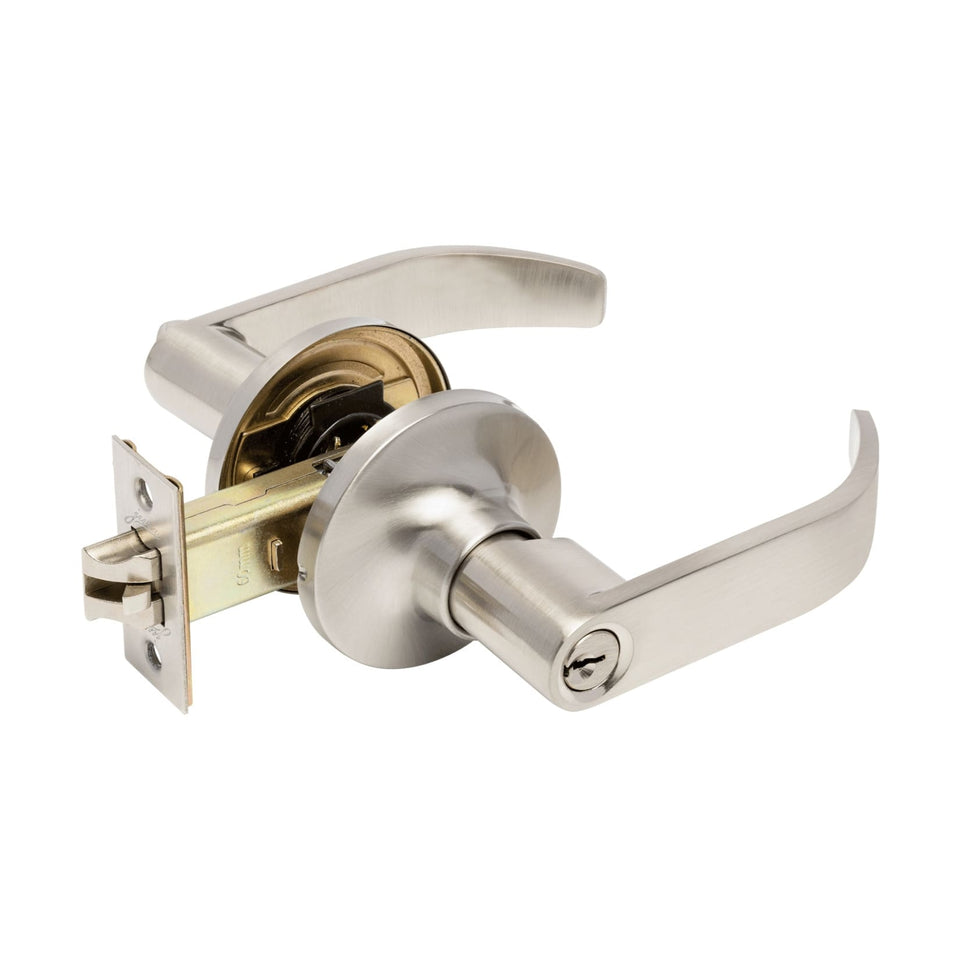
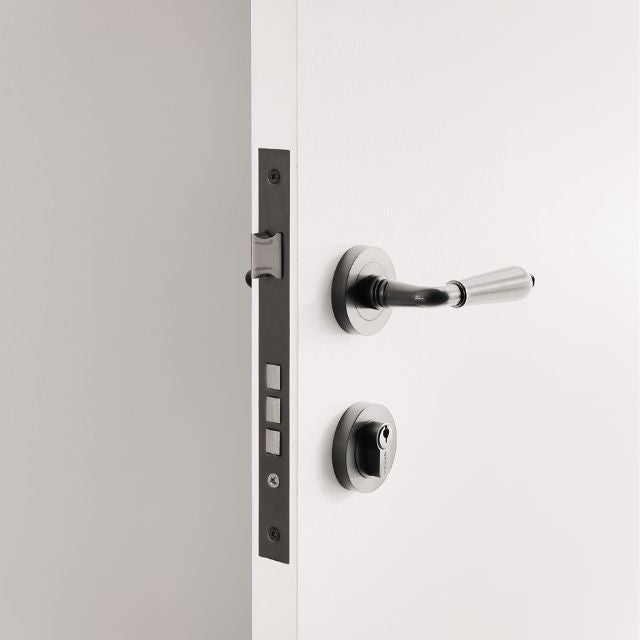

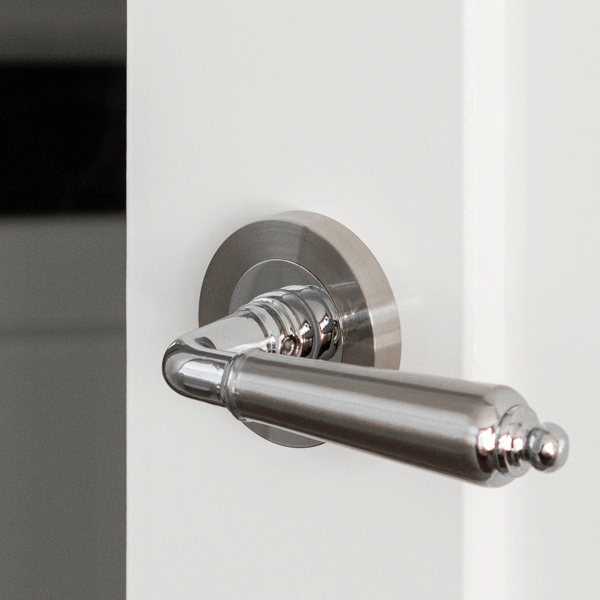


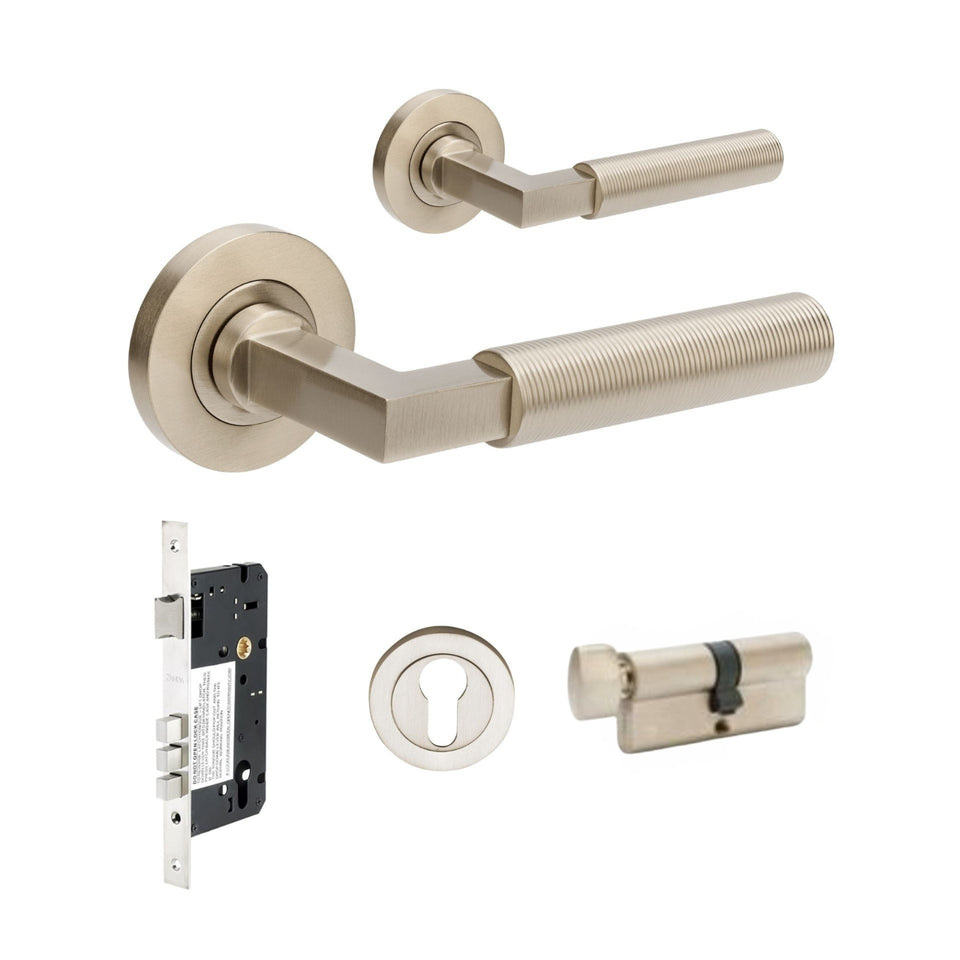
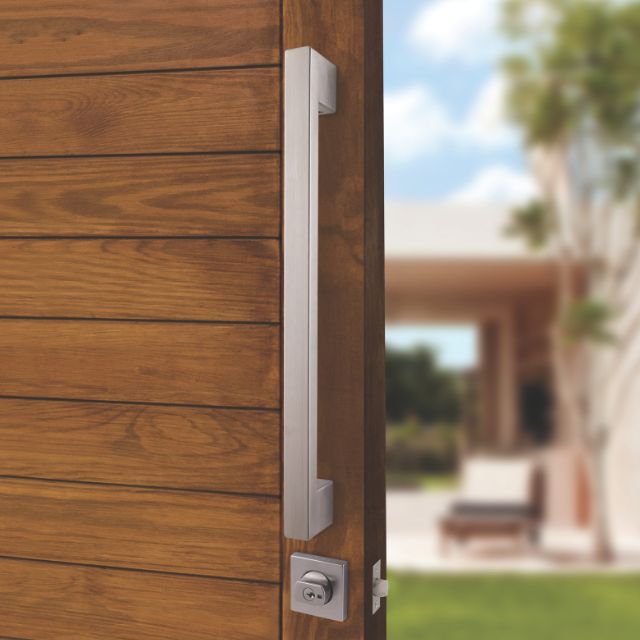
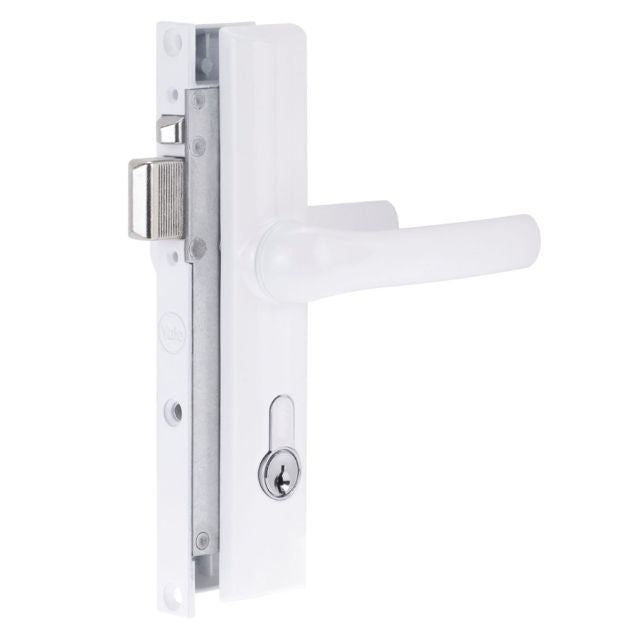

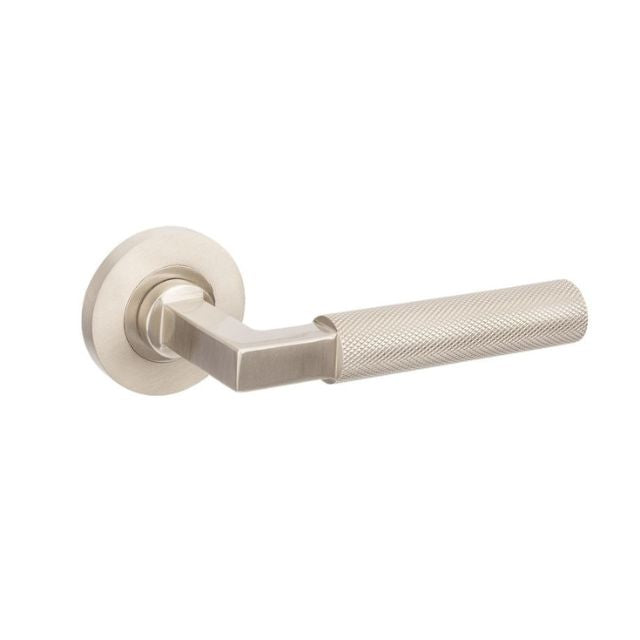
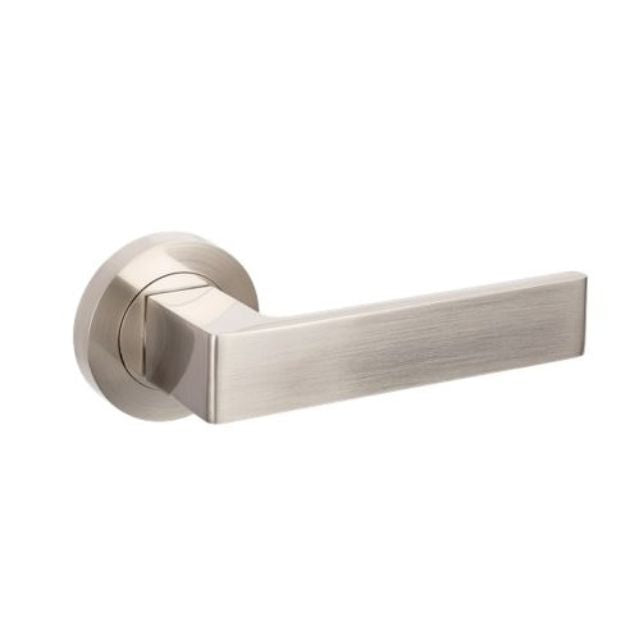


An entry door lock set pairs a handle or knob with a lock, so the door can be opened by hand and secured with a key. This collection holds lever and pull-handle entrance sets with Euro mortice locks, multi-function sets that add a deadbolt and a privacy snib, deadbolt sets, a smart mortice lock, and a lock for a hinged security screen door. This guide sets out how the lock types differ, what key/key and key/turn mean, what each set includes, and which measurements to check before ordering. For handles without a lock, see exterior door handles and hardware and exterior door levers.
A keyed lock in a knob or lever is the simplest type. A safety guide for front doors advises against relying on it as the primary lock, because a knob can be broken off and a lever can be opened by downward pressure from inside. A deadbolt, or deadlock, is a solid metal cylinder that extends into the door frame. It has no springs, so it is harder to pry open and slower to pick, and it is the type most often used on exterior doors. A mortice lock sits in a pocket cut in the edge of the door and works with a Euro cylinder, and most of the sets here use one. A smart lock opens with a PIN, a fingerprint or a phone, is usually battery powered, and should keep a mechanical backup for power or internet failures.
A deadbolt is fitted through two holes bored perpendicular to one another in the door, while a rimlock attaches to the door surface with no boring. That difference decides whether a replacement can reuse the existing holes, so check which type is on the door now. See deadbolts for deadbolts on their own.
The three names are used loosely, so it helps to separate them. A deadbolt sits separately from the handle, usually above it, and its bolt extends into the striker plate in the frame. A Euro lock works like a deadbolt with a cylinder but sits behind the handle and includes a latch, so one body handles both latching and locking. It is slightly easier to break than a deadbolt. A traditional mortice lock also sits behind the handle and includes a latch, uses a large skeleton key and has no inside thumbturn.
A deadbolt is not needed on every door. An external door should have some kind of lock, but it does not have to be a deadbolt, and a deadbolt is sufficient on its own, so a keyed door knob is not needed alongside it. Pairing a deadbolt with a Euro or mortice lock adds security but is generally unnecessary. If you want one lock to do everything, the Euro mortice sets in this collection do. If you want the strongest single locking point, choose a deadbolt.
The cylinder decides how the door is locked from inside. A single cylinder, called key/turn, takes a key on the outside and has a turn on the inside, so you can leave without a key. A double cylinder, called key/key, needs a key on both sides. A double-barrel lock can be a fire risk, because the key must be found to leave in an emergency. For most family homes a key/turn cylinder is the practical choice, with the reason that you can always leave without hunting for a key. One caution applies to the turn. A thumbturn is not advised on doors with glass panes, since someone could break the glass and reach the turn from outside, so a door with glass beside the lock suits a key/key cylinder. The trade-off is the fire risk above, so keep a key where everyone in the house can find it.
The Zanda entrance sets in this collection come in both. The Duke, Boston, Oxford, Cambridge and Zurich sets come in key/turn and key/key versions, with 60mm or 70mm cylinders depending on the range. The cylinder length is the length of the Euro cylinder, so confirm the thickness of the door and any escutcheon before choosing between the two.
The Zanda Duke, Oxford, Boston and Cambridge entrance sets include the leverset pair, a Euro mortice lock, a matching escutcheon pair and a cylinder. The product page for the Duke names the lock as a 1143 E85 mortice lock with a 70mm cylinder. The specification gives a 60mm backset, a door thickness of 35 to 53mm, a tubular and bolt latch, and keyed-different keying. The 54mm rose is screw-on with a concealed fixing, and through-door bolts keep the handle square.
The Zanda Zurich fluted and hammered lever sets are a different build. They have a mortice lock with a 70mm backset and a 150mm lever, and the box contains the lever set, instructions, a cylinder and an escutcheon. Check the backset on your door against the product page, because 60mm and 70mm both occur in this collection.
The Zanda Kent Knox and Epic Knox sets put three modes in one lockset. A key-operated double cylinder deadbolt with a 20mm throw gives extra protection when the home is empty. A privacy snib lets someone inside lock the door for peace of mind. Leaving everything unlocked makes the set work as a passage set, with free access in and out. Both have a 60mm backset and suit doors 35 to 53mm thick. For these sets, see Zanda multifunction entrance sets.
The Lockwood Paradigm pull handle lockset has two key modes. Turning the key selects safety mode, and turning it further selects secure mode. It includes door magnets that hold the doors in position in passage mode. The Lane Corvan entrance sets use a single cylinder deadbolt, key outside and turn inside, and supply three keys. The Zanda Zenith key-in-handle set uses a deadbolt and takes doors 32 to 50mm thick.
A pull handle suits a wide or heavy entry door. The Nidus ATZ entrance pull handle set pairs an external thumblatch with an internal lever and a single cylinder deadbolt, with a key outside and a snib inside. The Zanda Omega kit pairs a 600mm back-to-back pull handle in 316 stainless steel with a double turn lock kit, and the box includes three keys and a floor-mounted door stop. The Lockwood Paradigm pull handle lockset is surface-mounted and needs one 54mm hole, one 16mm hole and a 25mm side bolt hole, and it takes doors 32 to 48mm thick with an adjustable 60 to 70mm backset. See entrance pull sets and pull handles.
The Zanda Stealth is a smart mortice lock that unlocks by fingerprint, PIN code or Bluetooth through a phone. A Wi-Fi bridge adds remote access, and the lock has auto-lock, a passage mode and a key override. It suits retrofit on timber and aluminium doors, takes doors 35 to 65mm thick and has a 60mm backset. Keep a mechanical backup on any smart lock, which the key override provides. See smart door locks and digital smart entrance sets.
A hinged security screen door has its own lock. The Yale Quattro lock suits left-hand or right-hand opening screen doors and retrofits in place of the Tasman MK3 lockset, so it works with MK3 accessories. It suits a standard 20mm door and has a 28mm backset, and the box contains the furniture for both sides, the mortise lock body, a standard strike, a cylinder and two keys. See screen door locks.
A longplate set pairs a lever with a long backplate. The Nidus Knurled Domici longplate entry set suits mortice locks with 85mm hole centres from the handle to the Euro cylinder, and the longplate is handed and has no privacy snib on the inside. Check the hand of the door, and confirm the hole centres, before ordering.
Match the finish to the hinges, door stop and other handles on the door. The finishes in this collection run through brushed nickel, gold, brass, gunmetal, black, stainless steel and chrome. Use hinges and door stops to complete the door, and see door handles for the full range.
Each brand has its own cylinder lengths, backsets and keys. See Zanda door hardware, Zanda Duke entrance sets, Lockwood deadbolts, Yale door handles and Lane door levers.
Start with the door and the frame, then the lock type. Choose a deadbolt or a multi-function set for the main entry, a key/turn cylinder unless the door has glass beside it, and a smart lock only with a mechanical key backup. Check the backset, the door thickness and the hole preparation against the product page, and have a locksmith fit a mortice lock. That order avoids the usual problems: a lock that does not fit the existing holes, a double cylinder that is hard to leave by in an emergency, and a strong lock in a weak door.
A like-for-like swap is a job many people do themselves, while a mortice lock usually needs a locksmith. Use a professional for fitting, because correct alignment and notching the hinges are difficult. Ask the locksmith which lock to use and why. Measure the existing set first, so the new lock matches the door preparation.
A key/turn, or single cylinder, lock needs a key outside and a turn inside, so you can leave without a key. A key/key, or double cylinder, lock needs a key on both sides, which is a fire risk on an emergency exit. The Zanda Duke, Oxford and Vertex entrance sets come in both versions with a 70mm cylinder.
A deadbolt is fitted through two holes bored perpendicular to one another, one through the face of the door and one in the edge. A rimlock attaches to the surface and needs no boring. Pick the type by how much work the door can take.


