
*View accurate shipping rates and availability






113 Items


Up to 70% off across the store, plus free towels and mirrors up for grabs on orders over $800*
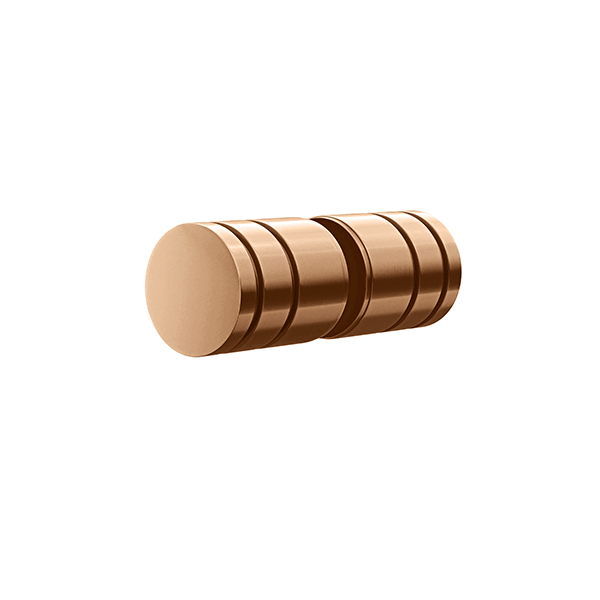


A frameless shower screen is held up by a handful of small metal parts, and each one has a narrow job. Hinges carry the door. Brackets hold the fixed panels to the wall and floor. A knob or handle gives you something to pull. Over panel fittings tie a glass lid to a side panel. The parts are sold separately, they only suit certain glass thicknesses, and some need holes drilled in the glass. This guide sets out what each part does, the glass thickness and door weight figures for the parts in this collection, how to check the walls and backing before you buy, and how to look after the finish. The doors this hardware hangs on are covered separately on door hardware.
A frameless screen has no surrounding frame, so the hardware does the structural work. The hinge joins the door glass to a fixed glass panel or to the wall. The bracket, often a U or F shape, holds a fixed panel to the wall or floor. The knob or handle sits on the door. An over panel fitting joins a glass lid to a side or return panel. Towel bars that mount on glass are in the collection too.
The collection holds Nero, Caroma and Meir parts in finishes that match each brand's tapware. Within a single screen, try to use one brand's hinges, brackets and handles, because glass thickness ranges, hole sizes and finishes differ between brands and lines.
Every shower screen part is made for a range of glass thickness, and the range is the first thing to check. The usual pairings are 10mm toughened glass for frameless screens, 8mm for semi-frameless and 6mm for framed. The parts here follow the same pattern, so a frameless screen with this hardware normally means 10mm glass.
The Caroma hinges, brackets, knobs and levers suit 8 to 12mm glass. The Meir hinges, U brackets and round handles suit 8mm and 10mm glass. The Nero hinges, U-shaped, F-shaped and wall brackets, over panel fittings and towel bars suit 10mm glass. The Nero round knob suits 8, 10 and 12mm glass, the Nero square handle suits 6, 8 and 10mm and 12mm or thicker, and the Nero square knob handle suits 10mm glass only. If the glass is already cut, read the thickness on the glazier's order and match the product to it before you add anything to the cart.
Then there is the compliance side. Glass in a shower screen must be toughened safety glass at least 6mm thick where a panel or door edge is exposed, tested to AS/NZS 2208, and each panel needs a permanent etched mark or non-reusable label. Check the current requirements with your glazier or certifier, since the hardware does not change them.
The hardware in this collection is made for frameless screens. There are three types. A frameless screen uses brackets and hinges with no surrounding frame, and it is the most demanding on backing and wall tolerance, because of the weight of 10mm glass. A semi-frameless screen uses a channel at the top or bottom and minimal hardware on the door edge, and it absorbs some wall tolerance. A framed screen has a full aluminium frame around every panel and hides the most wall movement.
Door style follows thickness too: pivot doors are usually 8 to 10mm and sliding doors 6 to 10mm. A pivot door swings on a central or offset hinge, a sliding door runs on a top or bottom track, and a fixed panel is a single sheet of glass with no door. Only the pivot and fixed types use the hinges and brackets in this collection. If your screen slides, the parts you need are track and roller parts that this page does not carry.
Hinges come in two types by what they join. A glass to glass hinge connects the door to a fixed glass panel. A glass to wall hinge connects the door to the wall, with a plate on the wall side. Both let the door swing, and whether the swing is one way or both.
The Caroma glass to glass hinge is a 180 degree connection that swivels inwards and outwards and comes with a black plastic insert to protect the glass. The Caroma glass to wall hinge also suits 8 to 12mm glass. The Meir glass to wall hinge is solid brass with a 9mm mounting plate and a 64 by 90 by 50mm body. The Nero 180 degree glass to glass hinge and the Nero 90 degree glass to wall hinge suit 10mm glass, open inwards and outwards, and self-close from about 30 degrees. The Nero hinges carry a maximum door weight of 35kg with two hinges or 52.5kg with three, and a maximum door width of 800mm. The 180 degree hinge leaves a 4mm gap between the glass panels. The 90 degree glass to wall hinge has a single side mount plate with three wall fixing holes and is supplied with 50mm wall fix screws.
Check the door weight and width against these limits before you order. There are separate weight figures for two hinges and for three, so if your door is close to the limit, the third hinge changes the answer.
A bracket holds a fixed panel to the wall or floor. There are three shapes. The U bracket takes the edge of the glass in a channel. The Caroma U bracket is designed to mount to floor or wall and needs no holes. It comes with a plastic insert to protect the glass, and packers are supplied by the glazier if required. The Meir U bracket measures 50 by 21 by 22.15mm in solid brass with 2mm material. The Nero U-shaped bracket is a friction fix that gives a 90 degree connection of glass to floor or wall.
The Nero F-shaped bracket has a horizontal fixing leg, which suits places where the fixing point needs to sit away from the glass edge. The Nero 90 degree glass to wall bracket is a precision mechanical fixing. The Nero over panel glass to glass fitting fastens a 10mm glass lid to a side or return panel at 90 degrees. Nero's towel bar is a 500mm D-shaped bar, 25mm in diameter, fixed to 10mm glass.
The wall has to carry what the bracket holds. Frameless brackets need a solid timber stud or noggin behind the tile, not only plasterboard anchors, so find the framing before tiling starts. If the tiling is already done, find out what is behind the wall before you choose a bracket and not after.
The handle decides how many holes the glass needs. The Caroma round knob and lever are two back to back pieces with either a divot or a lever for grip, and plastic washers sit between the handle and the glass for secure installation. Those washers between the handle and the glass hold the parts securely and protect the glass during installation, so keep them in place when you fit the handle.
The Meir round handle has a 25mm diameter. The Nero round knob has a 25mm profile with grooves and needs one 12mm hole in the glass. The Nero square handle is an oblong 70 by 50mm set and needs double 12mm holes. The Nero square knob handle also needs double 12mm holes and suits 10mm glass only. If you are choosing hardware for new glass, tell the glazier the hole size and spacing from the product's specification sheet. If you are replacing a handle on existing glass, match the existing hole count and size, since a handle that needs two holes will not fit glass drilled for one.
Most of the parts have a PVD finish, with chrome, matte black and brushed nickel, brushed brass, bronze and gunmetal across the range. The Caroma finishes are chosen to complement its tapware, showers and accessories. Meir lists champagne, tiger bronze, shadow and brushed nickel. Nero lists brushed gold, brushed bronze, gun metal, chrome, brushed nickel and matte black.
Match the hardware finish to the tapware and the other bathroom fittings, not to the hinge alone. Door hardware elsewhere in the house has its own finish pages: brushed nickel, matte black, chrome, brushed brass, gold, bronze and gunmetal.
Chrome and brass hardware can lose their finish if cleaned with abrasive or acidic products. The routine for the screen is simple: squeegee the glass after every shower, wipe weekly with a mild bathroom cleaner, and avoid scouring pads and acidic products. Re-seal silicone joins every few years, or sooner if they discolour or lift at the edge.
Each brand has its own range in the collection. The Nero parts sit with Nero showers. The Caroma parts are on Caroma shower screen hardware, with the wider range on Caroma showers. The Meir parts are on Meir shower door handles and screen brackets, with the wider range on Meir showers. For hinges on ordinary doors, see hinges, and for the knobs and handles used on room doors, see door handles and door knobs.
A frameless screen uses a small set of parts. Hinges join the door to a fixed panel or to the wall. Brackets hold fixed panels to the wall or floor. A handle or knob opens the door, and some screens add a fitting that joins a glass lid to a side panel or a towel bar on the glass. Wall fixings are usually clips or a U section, with clips the standard choice.
A door can hinge off a fixed panel of at least 150mm. For a narrower panel, a glass to wall hinge is the other option. A 180 degree hinged door gives wide access, and the 180 degree glass to glass hinges from Caroma and Nero suit that layout.


