
*View accurate shipping rates and availability






40 Items



Up to 70% off across the store, plus free towels and mirrors up for grabs on orders over $800*


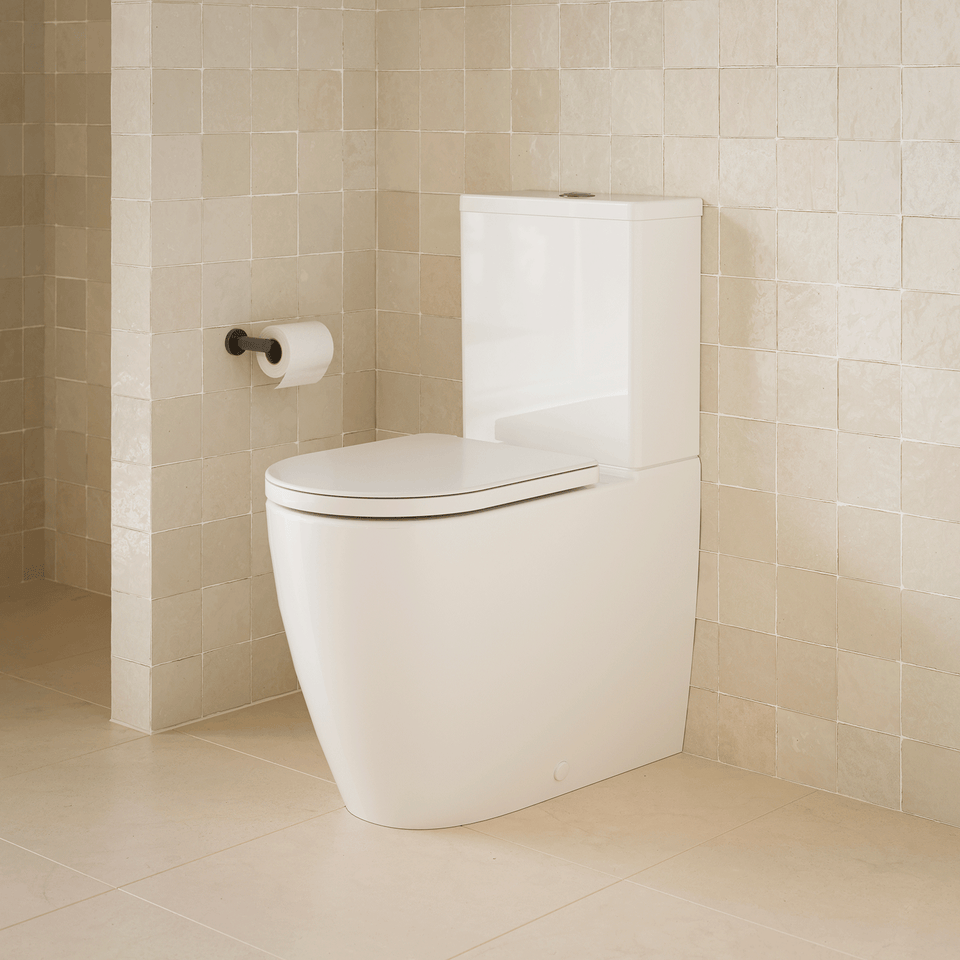


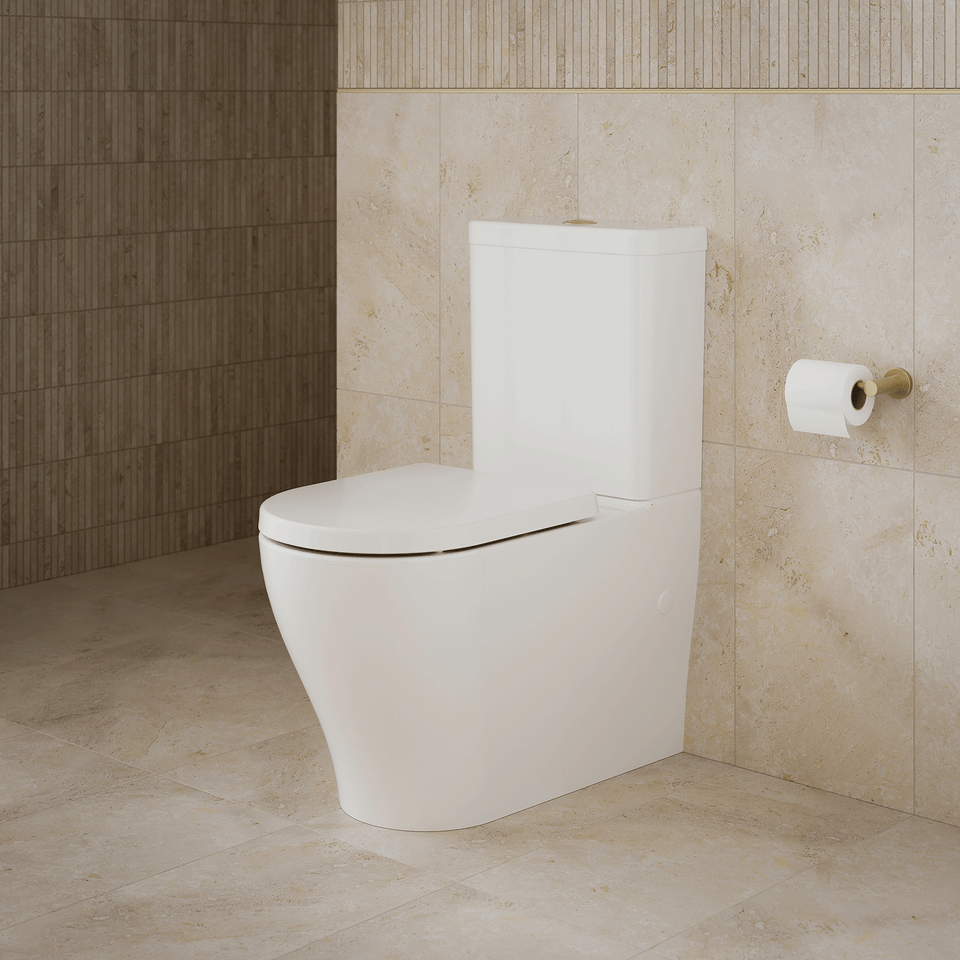




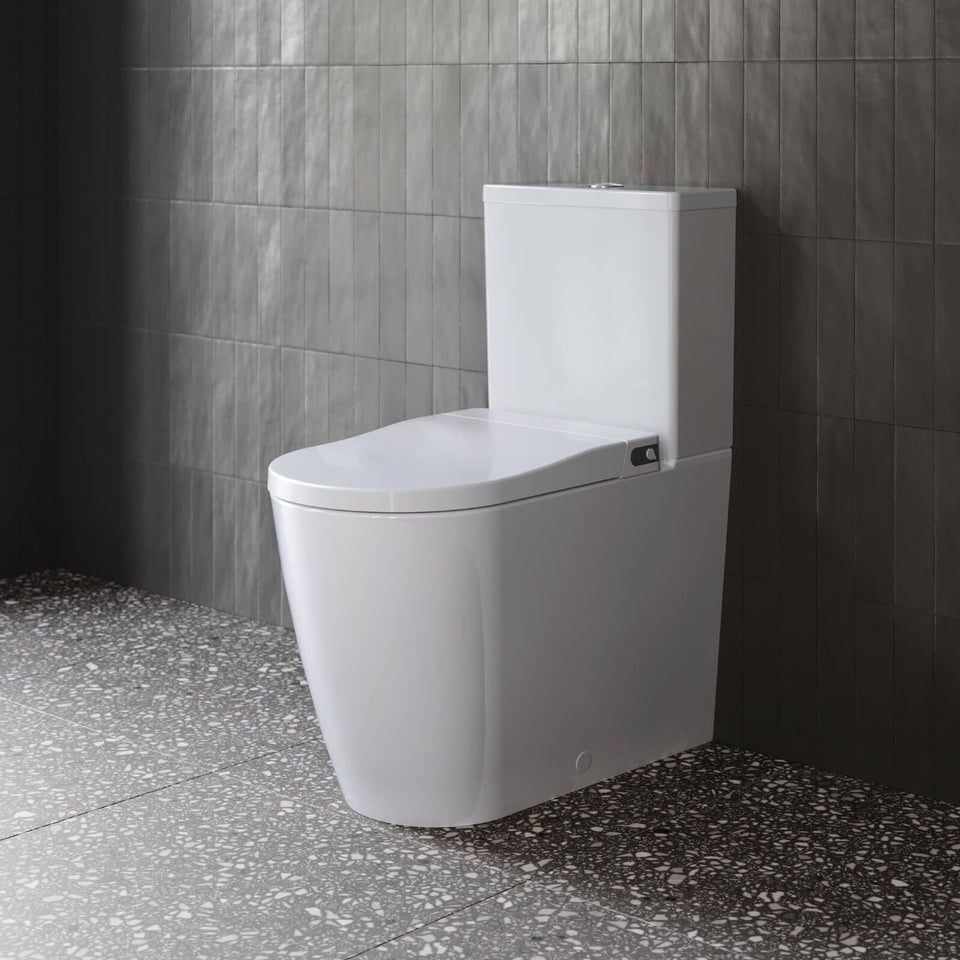
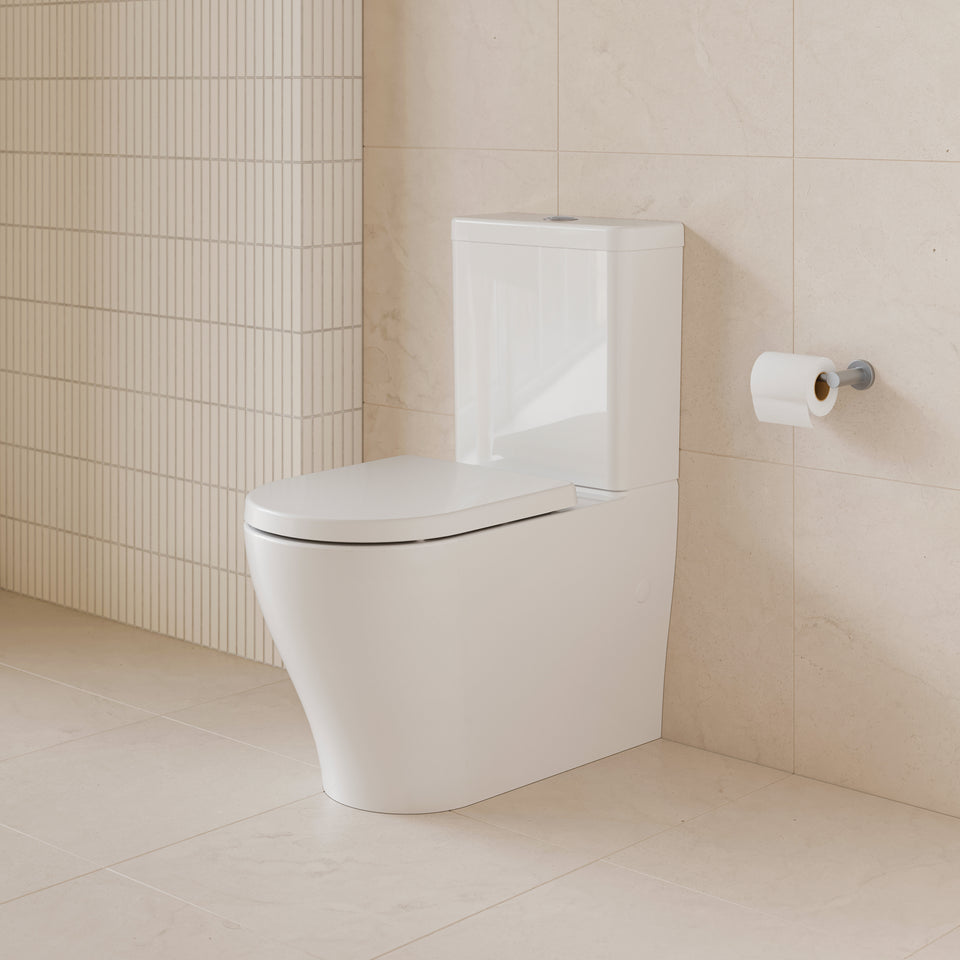
A back to wall toilet, also called a wall faced toilet, has a pan that sits flush against the wall and a cistern that is hidden, either in the wall cavity or inside a furniture unit. The pan is fixed to the floor. The pan meets the wall with no gap, so there is nowhere behind it for dust to collect, and with no cistern on top there is nothing to clean around.
It is easy to confuse with its neighbours. On a close coupled suite the cistern sits on the pan. On an in-wall concealed system the cistern is built into the wall, and on a wall hung pan the bowl hangs off the wall instead of standing on the floor. The suites on this page are the floor mounted kind with a hidden cistern, with a few close coupled suites that sit hard against the wall. The toilets page covers the measurements every toilet shares.
The cistern sits in a stud wall or in a vanity or furniture cavity, and a plumber connects the waste in the floor. The pan is floor mounted, so no structural wall frame is needed, which is the main reason a back to wall toilet is easier to retrofit than a wall hung one. A wall hung toilet needs a steel in-wall frame installed during construction or a full renovation.
Plan the access before the wall is sheeted and tiled. The cistern is reached through the flush plate or an access panel, and a plumber should be able to service it from there. The concealed toilet buttons and flush plates are chosen separately from the toilet on many concealed cistern models, so choose the plate with the access in mind.
Each format solves a different problem. A link or connector suite joins the cistern and pan with a pipe, so the pan can move forward or back to suit an unusual set out, which is why it is common in replacements; see connector linked toilets. A close coupled suite puts the cistern directly on the pan, which looks neater than a link suite but leaves almost no set out flexibility. A back to wall suite hides the cistern, leaves no gap behind the pan and keeps the pan on the floor. A wall hung pan goes further and lifts the pan off the floor, but wall hung pans only suit a P trap set out and need the wall built for them.
The practical rule follows from that. If the existing waste is an S trap in an awkward position, a link suite is the most forgiving. If you are rebuilding the wall anyway, a concealed cistern or wall hung pan becomes possible. If the wall stays as it is, a back to wall suite with the cistern in a vanity or a cavity is the tidy middle path.
A back to wall pan has to match the existing waste and water. The set out is the distance from the finished wall to the centre of the waste outlet on an S trap. The suites here differ. The Fienza Lillian suites are S trap only, with a set out of 90 to 160mm. The Fienza Koko suite with a Geberit cistern is P trap only. The Turner Hastings Fino has a universal trap with a variable set out of 100 to 190mm, and the Caroma Luna has S trap set outs of 60 to 185mm and a P trap set out of 185mm. Check the set out of any suite against your measurement before anything else.
The water inlet comes next. The Indigo Cali handles back entry or bottom inlet, left or right, in an S or P trap set out. The Fienza Lillian takes a universal back or bottom inlet. The Studio Bagno Milady has a back entry cistern only, so it needs a concealed supply behind the cistern. If you are replacing a toilet, the new one needs to match wherever the water already comes in.
Pan heights on this page run from 350mm on the Turner Hastings Stafford to 450mm on the Indigo Cali II raised height, measured without the seat. The Bao Elegant raised height suite is 440mm, the Indigo Cali is 410mm and the Fienza Lillian is 400mm. Projection from the wall runs from 570mm to 700mm, with the Stafford at 590mm, the Indigo Cali at 620mm and the Bao Elegant raised height at 670mm. Check projection against doors and shower screens, because it is hard to correct after the toilet is in. For a taller pan chosen for mobility, see accessible toilets.
The Indigo Cali is 820mm high with a 410mm pan height, a 620mm projection and a 375mm width, with a set out of 100 to 200mm. The Indigo Ridge is 835mm high with a 410mm pan height, a 665mm projection and a 365mm width. The Indigo Cali II raised height is 870mm high with a 450mm pan height, a 675mm projection and a set out of 150 to 200mm. The Bao Elegant universal rimless suite is 820mm high with a 410mm pan height, a 640mm projection and a 378mm width, and the raised height version is 850mm high with a 440mm pan height, a 670mm projection and a 360mm width.
The Fienza Lillian is 815mm high with a 400mm pan height, a 680mm projection and a 360mm width, as an S trap with a set out of 90 to 160mm. The Fienza Koko P trap suite with a Geberit cistern is 850mm high with a 425mm pan height, a 660mm projection and a 385mm width. The Turner Hastings Fino suites are 855mm high with a 440mm pan height, a 680mm projection and a 360mm width, with a set out of 100 to 190mm. The Turner Hastings Stafford is 850mm high with a 350mm pan height, a 590mm projection and a 375mm width. The Fienza Tono is 885mm high with a 455mm pan height, a 660mm projection and a 360mm width, as a P trap. For the Studio Bagno Milady, ask us for its specification.
The gap between the shortest and the longest projection is about 90mm on these back to wall suites, from 590mm on the Stafford to 680mm on the Lillian and Fino. That is enough to decide whether a door, a vanity or a shower screen clears, so compare the projection with the room before you fall for a shape.
Layout figures apply to any back to wall suite: at least 450mm clear in front of the pan, and at least 400mm from the pan centre to a side wall or obstruction. A standard projection is about 680 to 750mm from the finished wall to the front of the seat, and a short projection is 620mm or less for small bathrooms. A comfort rim height is about 430 to 480mm, against a standard 380 to 400mm. Accessible bathrooms under the National Construction Code need wider clearances.
Watch for red flags before you commit: a set out outside the range a connector can cover, a skew trap that cannot be rerouted without breaking concrete, and a wall structure that cannot carry the load. For a back to wall suite with a concealed cistern, the wall cavity typically needs to be at least 120 to 150mm deep and an access panel must be built into the tiling. Ask your plumber whether the set out can support the suite, where the access panel will go, and whether a compliance certificate is needed.
Not every back to wall pan is rimless. The Caroma Luna wall faced suite has a glazed box rim and trap, and the Luna Cleanflush is the rimless version in that range. Rimless pans are collected on the rimless toilets page, and the tornado flush models, including the Fienza Lillian and Koko suites, sit on tornado flush toilets. The Turner Hastings Fino WhisperFlush has a tornado-style action that rinses the whole bowl with minimal noise, with a choice of standard or Geberit valves. The Studio Bagno Milady is rimless, with a recessed skirt that makes the pan look as if it floats and an anti-bacterial surface glaze.
The flush fit against the wall makes the outside quick to wipe, and a rimless bowl removes the rim where residue collects. Rimless bowls let you clean the whole surface with a sponge and use less cleaner. Use a mild, non-abrasive bowl cleaner and a soft brush. Scouring pads, steel wool and wire brushes can dull the glaze. Scale can block rim holes and the trapway on a pan that has them, so treat it early with a cleaner made for hard water deposits. Keep in-tank cleaners out of any cistern you can reach, because they can damage the flush valve. Where the cistern is concealed, the flush plate and the access panel behind it are the parts you will touch, so wipe them with a damp cloth and keep cleaner splashes off the plated finish.
Most suites here include a soft close seat with quick release. The Indigo Cali box holds the pan, cistern, seat and chrome buttons. The Fienza Lillian box holds a ceramic cistern, a ceramic pan, an S trap connector and a seat, and comes with a slim or a thick seat. The Studio Bagno Milady comes with an S trap connector, chrome flush buttons and a soft close seat. Box contents differ by suite, so confirm what is in the box for the one you want. For a replacement seat later, see toilet seats.
The range runs from plain to heritage. The Turner Hastings Stafford, made in Italy, pairs a traditional look with a back to wall design that hides the pipework, and has a universal S or P trap with a 90 degree adjustable swan neck pan bend. More heritage styles are on the traditional toilets page. For a softer finish, the matte white toilets are collected separately, and the Fino, Bao Elegant and Studio Bagno ranges are made in matte as well as gloss.
If you already know the make, go to its toilets page: Caroma toilets, Turner Hastings toilets, Fienza toilets, Bao toilet suites, Indigo toilets and Studio Bagno toilets.


