
*View accurate shipping rates and availability






188 Items


Up to 70% off across the store, plus free towels and mirrors up for grabs on orders over $800*


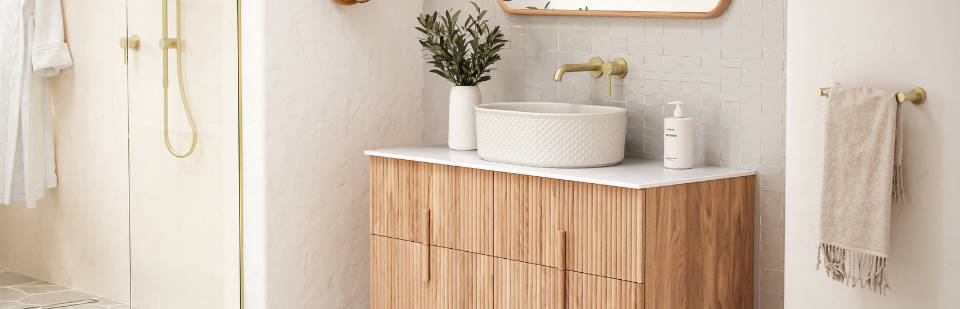


Brushed nickel tapware is a soft silver finish with a visible brushed grain and a slightly warm tone. It sits between cool chrome and the warmer metals such as brushed brass and brushed gold, and it is the safe choice for a bathroom or kitchen you want to live with for years. This page holds brushed nickel taps for the basin, bath, shower, kitchen and laundry, from several brands. This guide explains what the finish is, how it is made, how it compares with chrome, how to look after it, and what to check about the tap itself before you order.
Brushed nickel is a satin finish. The surface carries a fine brushed texture that reduces shine, and the colour is soft and slightly golden compared with stainless steel or chrome. That warmth is what keeps it from feeling clinical. A polishing process creates the brushed lines, and on good tapware a PVD coating (physical vapour deposition) is then applied over the top. The coating is what protects the finish. Nickel is softer than chromium, so the coating is essential, and unprotected nickel can tarnish or develop a milky patina over many years. Modern PVD brushed nickel is highly resistant under normal conditions and does not rust more easily than chrome. When you compare two taps, check the finish process on each product page, and prefer a PVD coating.
Many buyers search for warm brushed nickel tapware. It sits between stainless steel and brushed brass, with gentle warm undertones and a champagne-like look. It is less bold than brass and less cool than traditional nickel. The colour shifts with light: it can look different in warm and cool light, and in some lighting it can look very similar to brushed chrome. Tone and brushing vary by manufacturer, so a full suite from one brand matches more closely than a mix of makers. If you are buying tapware, shower and accessories from different ranges, look at them together in natural light before you commit, or ask for a sample of the finish.
Yes, for most households, and the reasons are practical. The brushed grain hides fingerprints, smudges and water spots, which suits busy family bathrooms and kitchens. Buying guides also say it is forgiving in hard water areas: limescale shows as bright white spots on polished chrome, but calcium deposits are much less visible against a brushed surface. Scratches behave the same way, because a mark from a sponge blends into the grain instead of showing as a bright line. The trade-off is look. If you want a bright, mirror-like shine, brushed nickel will read as soft and quiet, and chrome will suit you better.
Plumbing suppliers frame the decision around four things.
Coordinate the tap with the appliances, lighting and cabinet handles in the same room. The brushed nickel bathroom accessories, brushed nickel showers, heated towel rails, cabinet handles and door handles are in the same finish. In the kitchen, brushed nickel kitchen sinks match the tap.
The rule is restraint. Limit a room to two finishes, let one lead and use the other as an accent. Mixing two warm finishes or two cool ones is easier than mixing warm with cool, and matt and polished versions of one colour family can work together. Avoid mixing chrome with brushed nickel because their undertones clash, and use matte black or dark bronze as the contrast instead. See black taps, bronze taps and gunmetal tapware. If the room is warm, with timber and cream, a warmer metal such as gold taps can take the lead, and cool-toned rooms usually suit nickel or chrome better. For a coordinated wet area, keep to one finish through the basin, shower, bath and towel rail.
For everyday care, wipe the tap with a soft, damp cloth, especially around the lever and spout, to remove dust and grime. For a deeper clean, use warm water with a little mild dish soap, rinse and dry. Avoid hard scrubbing, abrasive cleaners and scourers. Bleach and ammonia based cleaners can strip the finish and leave it dull, so choose a gentle, pH neutral cleaner instead. You can use a soft toothbrush on the grain, and you should avoid wax based polishes because they fill the texture. Keep bleach, ammonia and hydrochloric acid away from the finish.
Water spots are the most common problem. Dry the tap with a soft cloth after each use, which is the most effective way to extend the life of any finish, particularly in hard water areas. For spots that have already formed, use equal parts water and white vinegar on a soft cloth, rinse off thoroughly and dry, and use the vinegar sparingly. Soap scum comes off with a mild soap solution and a non-abrasive sponge, then a rinse and a dry. Polish only occasionally, using a polish made for nickel, sparingly, in the direction of the grain, roughly once every few months or when the finish looks dull. If the finish tarnishes, clean it gently with a cleaner suited to nickel, and if that does not restore it, ask a professional about restoration. Good ventilation reduces the humidity that can cause corrosion over time, and a quick check for loose parts and leaks lets you fix a small fault before it becomes damage. A scratched or stripped coating loses its protection, so a gentle routine matters more than a strong one.
Chrome is the universal standard and is easy to match across brands. Brushed nickel is less predictable. Each brand's tone and brushing vary, so you often end up staying with one manufacturer, and you should check that the accessories you want are available in the finish before you choose nickel. A common approach is to keep all the plumbing, meaning the taps and the shower, in one finish, and to use another metal for lights or cabinet handles. Coordinate the basin and wall mixers, shower fittings, towel rails, toilet roll holders and robe hooks. The brushed nickel bathroom accessories and heated towel rails make that check easier.
Basin mixers are the main choice: one lever sets both temperature and flow. Run this short checklist before you order:
Brushed nickel is sold across basin mixers, three piece sets and wall mounted sets in this collection. Three piece sets split the controls into two handles and a central spout, a classic look that needs more bench space. A wall mounted set needs the pipe centres to match, and the typical spacing is 150mm. Some wall sets are sold as the trim only, some as a spout only, and some as a complete set, so check what comes in the box. See wall basin and bath mixer sets.
For a shower mixer, choose a round or square plate and check its size: 60mm, 80mm or a separate back plate. If the finish is the point, the same finish should run through the shower arm, the head and the plate. See shower mixers and brushed nickel showers.
Brushed nickel is a common kitchen finish because a kitchen tap is touched with wet, greasy hands all day, and a brushed surface hides the marks. The usual forms are these. A gooseneck sink mixer has a tall arched spout, and a pull out sink mixer has a hose that draws out of the spout. A pot filler mounts on the wall behind the cooktop. See all sink mixers and kitchen taps. For the laundry, use laundry taps for the trough and washing machine sets for the machine.
We recommend a solid brass body and a ceramic disc cartridge. A ceramic disc cartridge uses two ceramic plates to control the water, and it is smoother, holds its shut-off better over time and is less prone to dripping than older designs. Check that a local plumber can source replacement cartridges, aerators and handle parts for the model you choose. For drinking water, only products that contact it need to be lead-free, which is why the kitchen and basin taps are the ones to check, and our lead-free taps are grouped together. WELS is the Australian water efficiency label: a higher star rating means the tap uses less water. Treat the rating as a screening tool, because it does not tell you whether the tap suits your basin, your pressure or your daily use. Check WaterMark approval, as it affects legal installation in Australia, and have a licensed plumber fit the tap.


