
*View accurate shipping rates and availability






15 Items




Up to 70% off across the store, plus free towels and mirrors up for grabs on orders over $800*

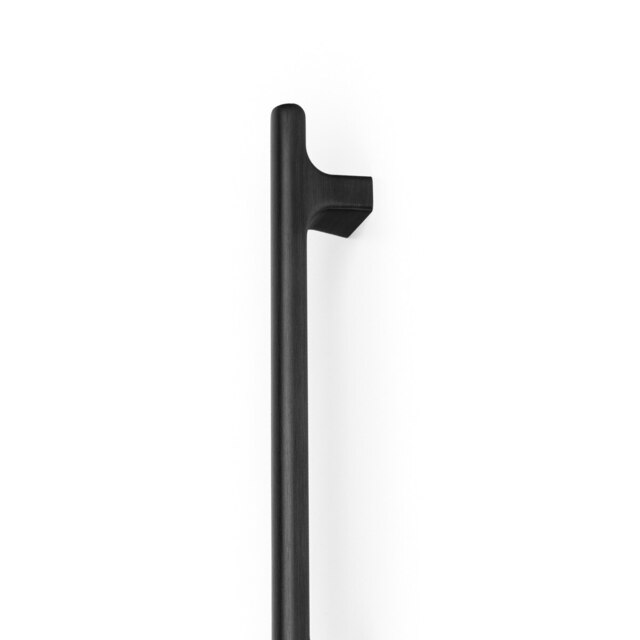



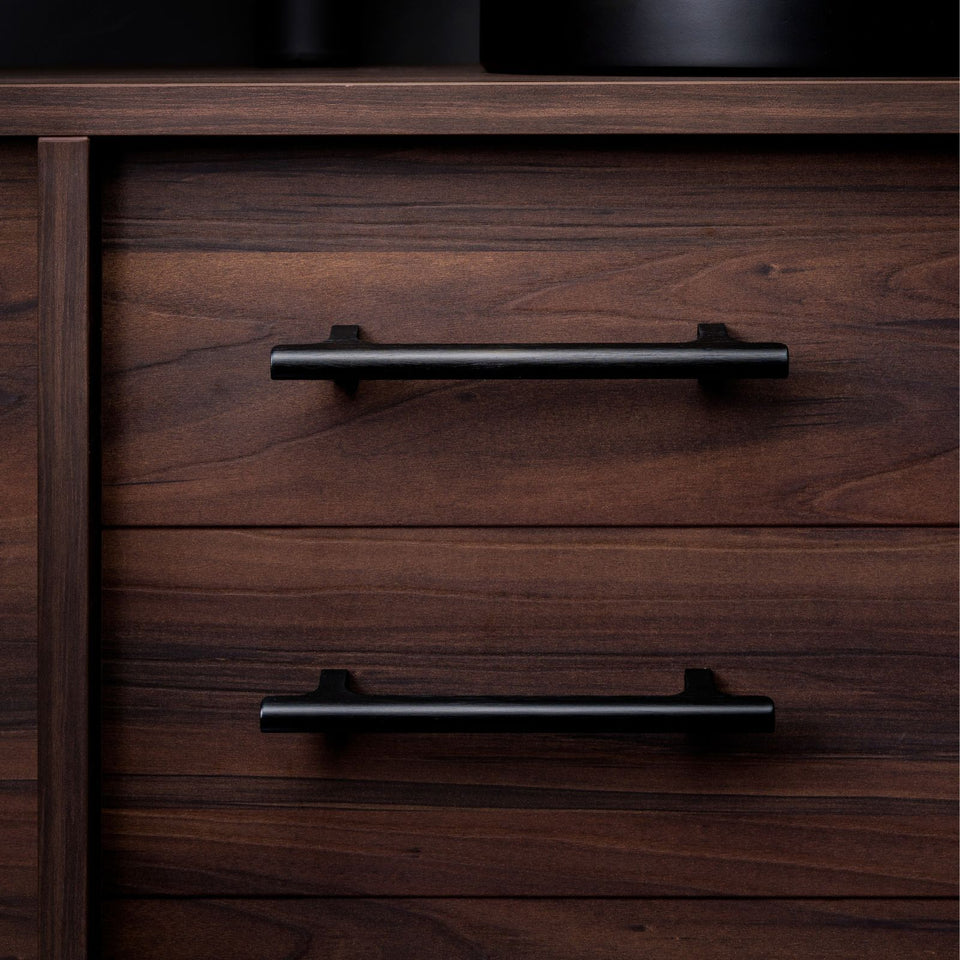

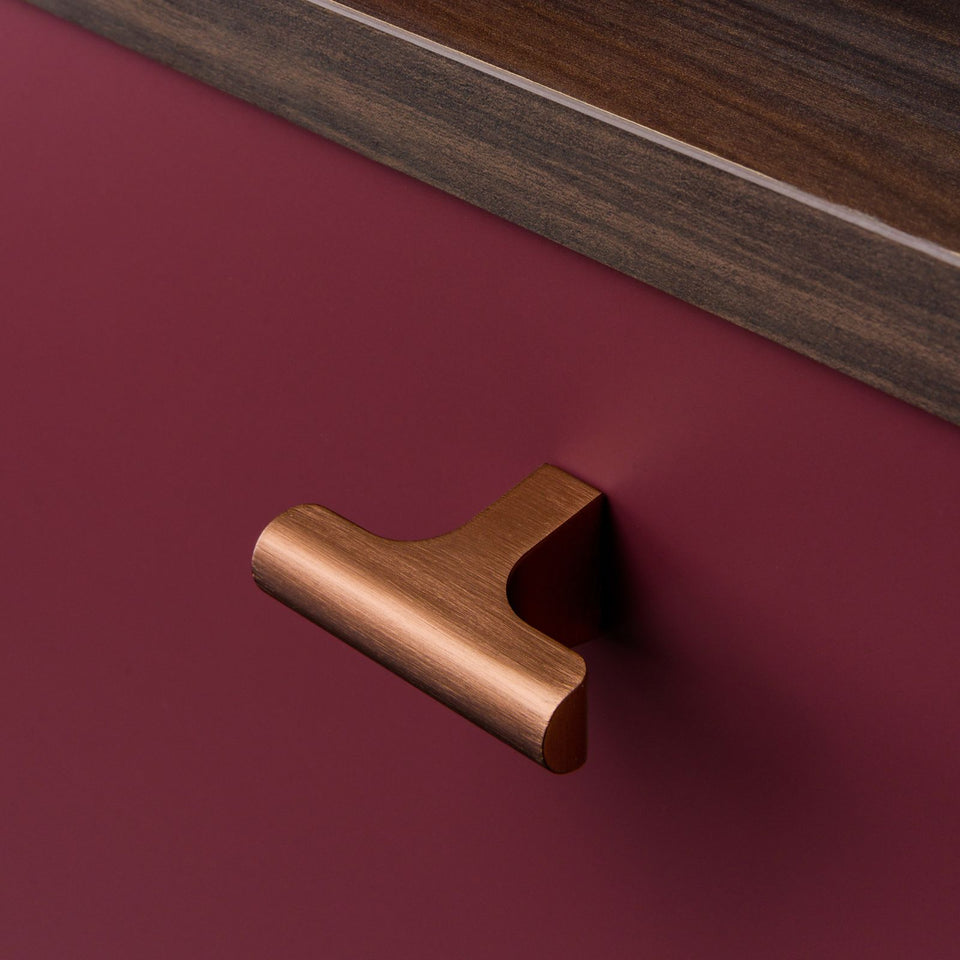
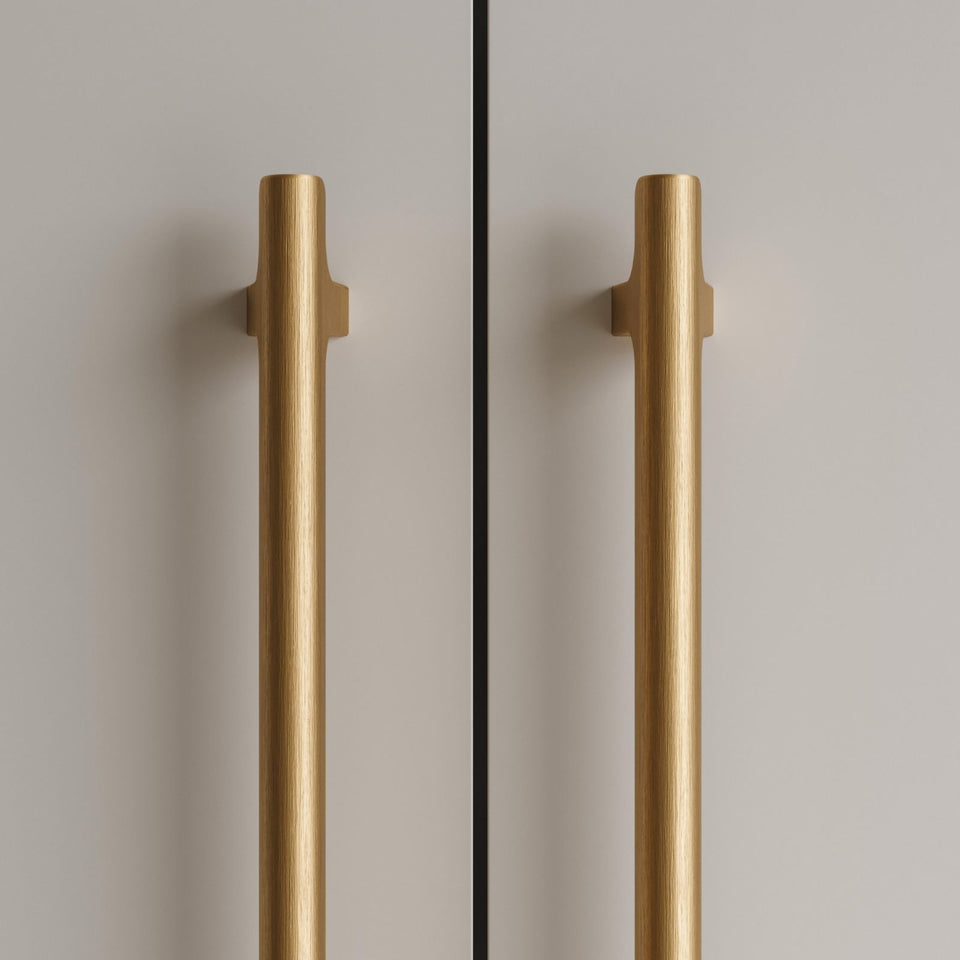
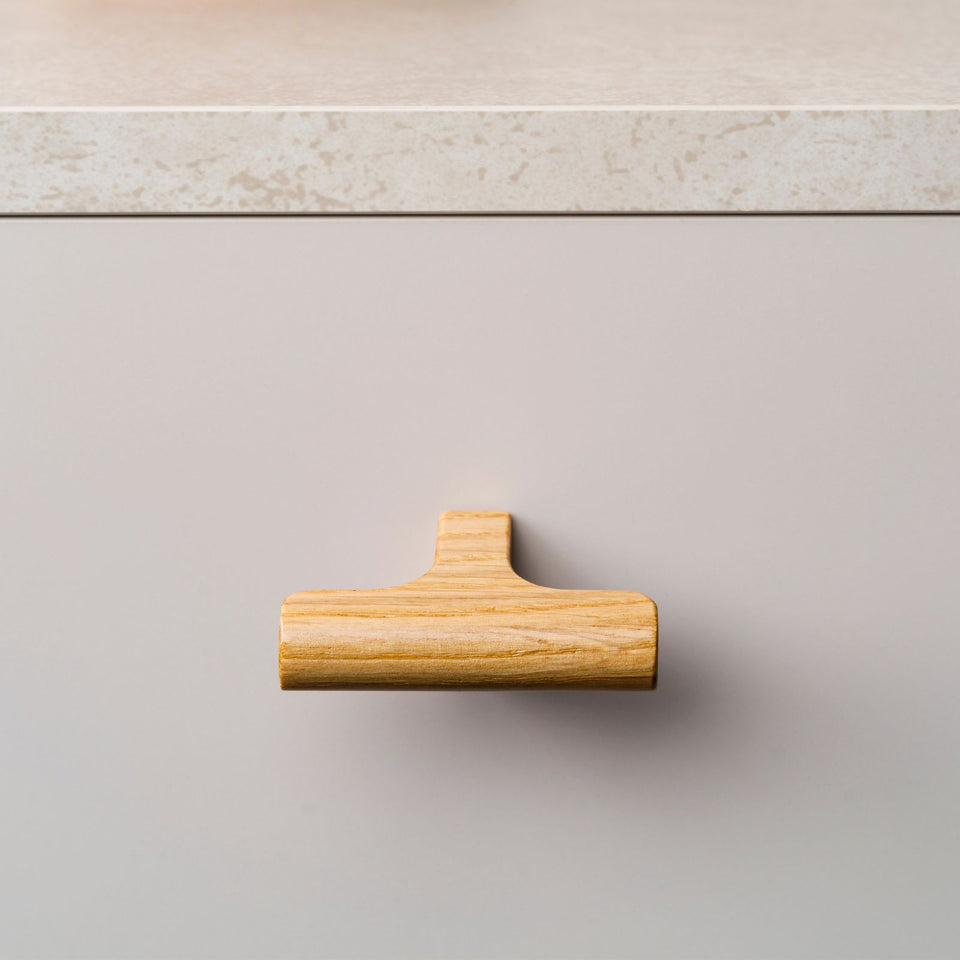

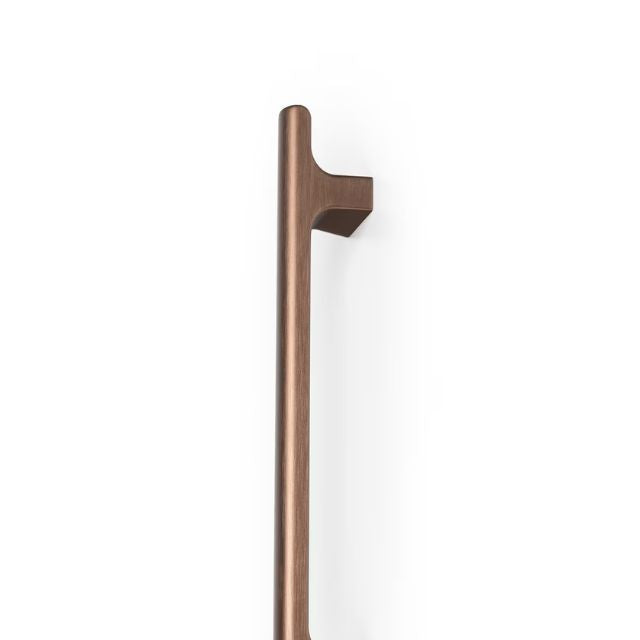
Hinoki is a range from Momo Handles with a gently arced profile, in three shapes: a D handle, a T knob and a very long Big Handle. Each shape comes in plated aluminium (Brushed Bronze, Brushed Black and Brushed Dark Brass) and in lacquered timber (Oak and Walnut). The sections below explain each shape with its measurements and what aluminium and a lacquered timber finish mean in a handle. They cover what the Big Handle is for and how to choose a size. They also cover the fitting detail, since screws are not included with these handles, and how to look after each material. For the whole brand, start at Momo Handles kitchen and bathroom handles, and for handles of every maker and material, cabinet handles.
The Hinoki collection has a gently arced profile, a form that reads as architectural detail and not as mere hardware. The range sits in a Japanese-minimalist-inspired style, suited to flat-front and Shaker-adjacent cabinetry. The metal variants are die-cast aluminium and the timber variants are solid oak and walnut with a natural lacquer, and grain variation is inherent in the timber.
The fixing distance is the gap between the two screw holes, overall length is the full length of the handle, and projection is how far it stands off the door.
Each shape suits a handle thickness of 16mm to 25mm, and screws are not included. The aluminium versions are plated, and the timber versions lacquered. The D handle and the T knob share the same width and projection, and the D handle is 220mm overall on a 160mm fixing distance, so it runs 60mm longer than its centres. The Big Handle comes in two lengths, 500mm and 916mm, and it is the only piece with a projection of 51mm.
All three shapes come in both materials. The aluminium versions come in Brushed Bronze, Brushed Black and Brushed Dark Brass, and the timber versions come in Oak and Walnut. The oak and walnut species are not named, so check the technical sheet if species matters to you.
Aluminium is the lightest of the common handle metals, significantly lighter than brass and zamac. It is practical and versatile, with good corrosion resistance, and suited to designs where reduced weight improves usability. Aluminium forms a thin oxide layer that protects it from further corrosion by oxygen, water and dilute acid, and its density of 2.70 g/cm3 is about one third that of steel.
A coating on aluminium can wear where the hand touches most, so a handle used many times a day shows the base metal or a change of sheen at the grip first. That is normal wear and not a fault. On coastal use, aluminium's oxide layer lets it be used outdoors in many conditions, and it is highly resistant to rust in damp settings, yet aluminium handles can pit near water or in windy, humid areas, where brass or 316 stainless is the choice. The call: aluminium is fine in a normal bathroom or kitchen, and in a salt-air or splash-zone setting a brass or stainless handle is the safer choice.
The Brushed Black finish is plated, so treat all three aluminium finishes as a plated surface. PVD colour is bonded to the base at a molecular level in a vacuum chamber and is significantly harder than traditional plating, while electroplating deposits a metal layer onto the base.
The timber versions are solid oak or walnut with a lacquer finish. American oak is a hardwood that is light to medium brown with a straight grain, with a seasoned density of about 750 kg/m3. American black walnut has a golden to rich chocolate brown heartwood and a fine grain, with a seasoned density of 615 kg/m3, and it is only moderately hard. Janka hardness is 6 kN for American oak and 4.9 kN for walnut, and both are fine for furniture. The species are not named, so these are the common cabinet timbers and not a statement about the exact wood in a Hinoki handle.
The Big Handle is the unusual piece in the range. At 500mm and 916mm it is a very long handle, with a projection of 51mm that leaves room for the whole hand. The 916mm size has two pairs of fixings, each pair 416mm apart, so it is fixed at four points.
For appliance doors, standard cabinet pulls are not right for integrated appliances because they usually lack the strength and thickness. The Big Handle is not rated for appliances, so for a fridge or dishwasher panel use a pull made for the job. See appliance pull handles.
The D handle at 220mm on a 160mm fixing distance is a mid-size pull. The one-third rule says a pull is about one third the width of the drawer front, so a drawer about 600mm wide takes a pull of about 200mm. That puts the D handle in the right range. The 160mm fixing distance is among the most commonly sold, so the D handle often fits an existing pair of holes. See D shaped cabinet handles.
The T knob is 60mm long and 35mm wide, and no fixing distance is given. Knobs are gripped with the fingers and take a single screw, and they suit small to medium doors and drawers and light use. Check the technical sheet for the fixing before you plan the holes. See cabinet knobs.
Finishes sort by style. Warm metals such as brushed brass suit traditional and transitional rooms, black is bold and modern, and nickel is cool and neutral. The Hinoki metals sit across that range.
Bathroom vanities suit the 160mm D handle and the T knob. Wipe and dry bathroom fittings more often, because steam and moisture leave marks on hardware, and ventilate steam to protect timber. See bathroom vanities and furniture for the cabinets they fit. Kitchens suit the D handle on drawers and the Big Handle on a pantry door, and wardrobes suit the Big Handle on tall doors and the T knob on small ones. Those are matches and not rules, and the best test is a sample held against the door.
A widely used rule: a pull is about one third the width of the drawer front. For fronts between roughly 450mm and 700mm wide, 128mm, 160mm or 224mm centres suit, and beyond that, 256mm or 320mm centres, or two pulls, suit better. Undersized pieces feel disconnected and oversized hardware dominates unnecessarily, and a drawer 30 inches wide or more takes one long pull or two standard pulls.
The placement rule is simple. A pull sits 40mm to 60mm from the edge that opens, near the bottom corner of upper doors and the top corner of lower doors. Pulls sit horizontally on drawers and vertically on doors. A projection of 36mm to 51mm leaves room for the hand, but check clearance wherever two doors open close together.
Screws are not included, so buy screws with the handles. No screw size is given. Screw length follows panel thickness: a 22mm screw for panels 16mm to 18mm thick, and a 38mm screw for panels 32mm to 34mm thick. A screw needs to bite into the handle and stop short of the door face, so measure the door and check the thread size against the handle before you buy. For the 916mm Big Handle, plan four fixings and mark them with a template.
If you are replacing existing handles, match the fixing distance. A new pull with the same distance goes into the old holes without drilling. Measure from the centre of one screw hole to the centre of the other, not from the edge of the handle. A 128mm handle will not fit 160mm holes without new holes.
Aluminium handles must only be cleaned with lukewarm water and a mild detergent, then dried. Put the cleaner on the cloth and not on the hardware, and dry the handle immediately to prevent water marks. Wipe the grip area more often than the rest of the handle, since a coating wears first where the hand touches.
For timber, dust with a microfibre cloth, and for high-touch areas use mild dish soap in warm water, keeping bleach, ammonia, steel wool and scouring pads away. Cleaner should go on the cloth and not directly on the timber. Wipe up spills at once, do not hang wet towels on timber doors, ventilate steam and keep humidity steady, and limit strong sunlight. Because the Hinoki timber is lacquered, use the maker's recommended product for the finish and avoid silicone sprays.
For the full brand, see Momo Handles kitchen and bathroom handles. For other types and materials, see cabinet handles, aluminium cabinet handles, timber cabinet handles and cabinet pull handles.


