
*View accurate shipping rates and availability






24 Items



Up to 70% off across the store, plus free towels and mirrors up for grabs on orders over $800*


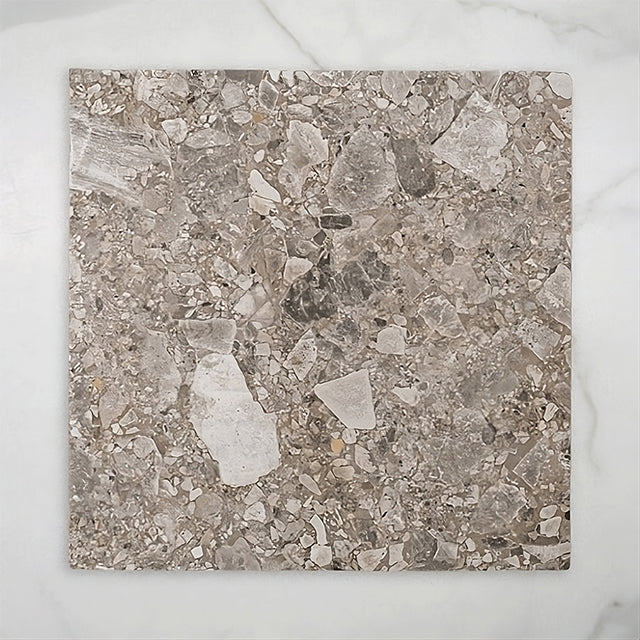
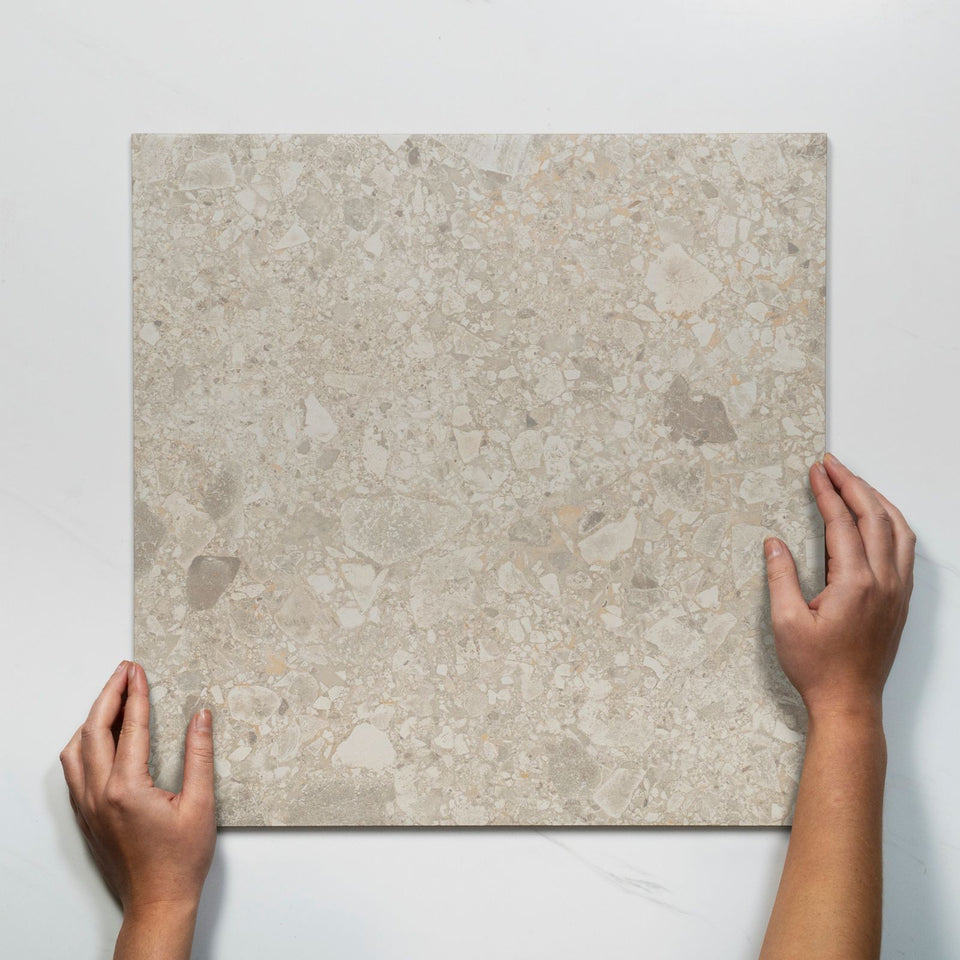
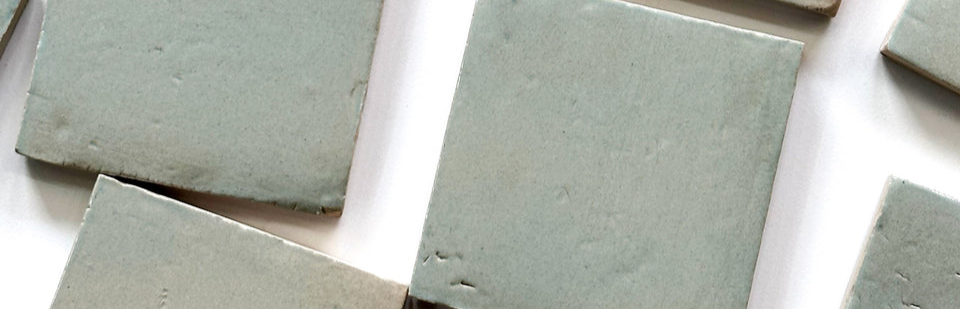

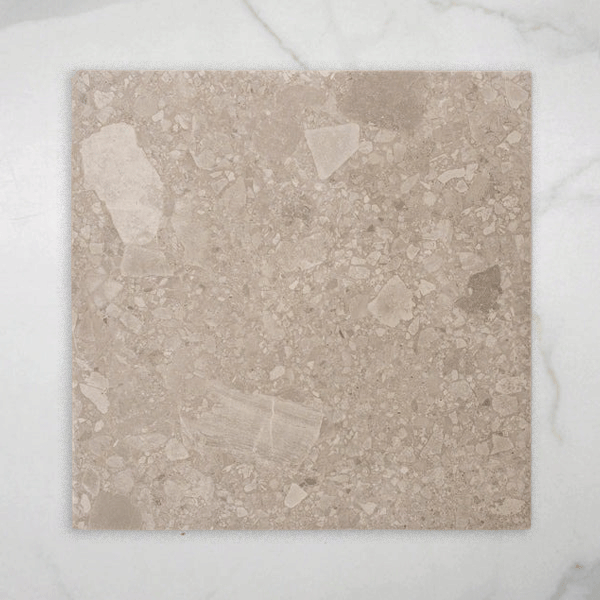



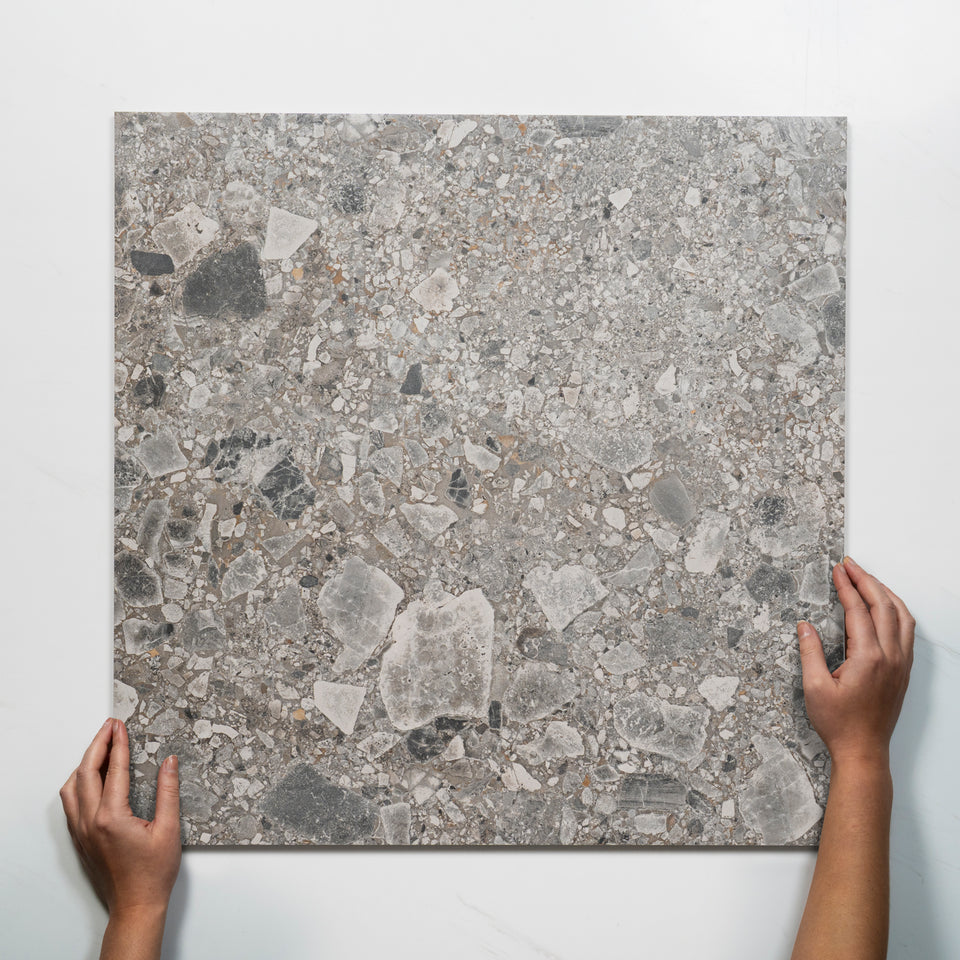
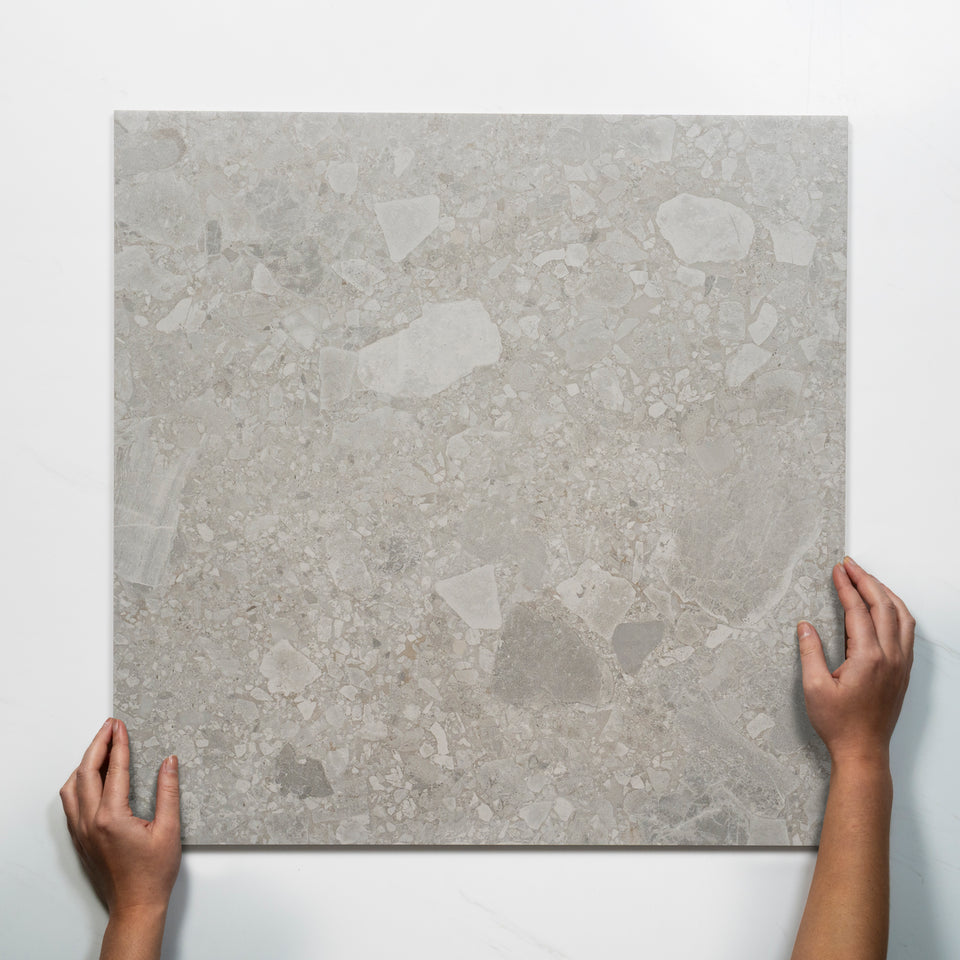

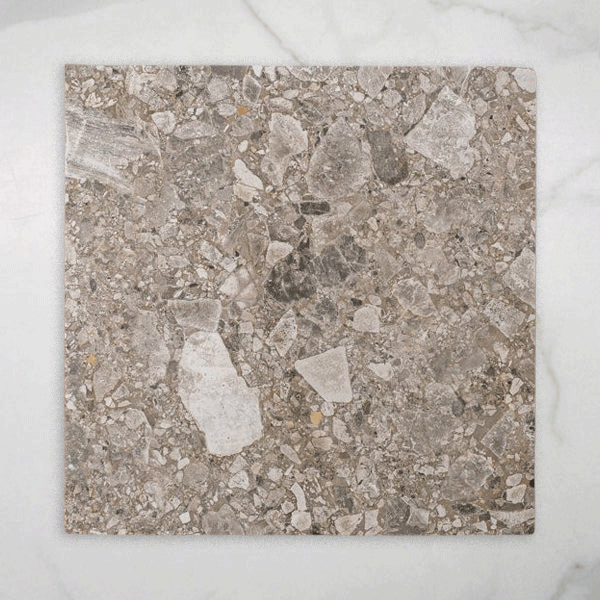
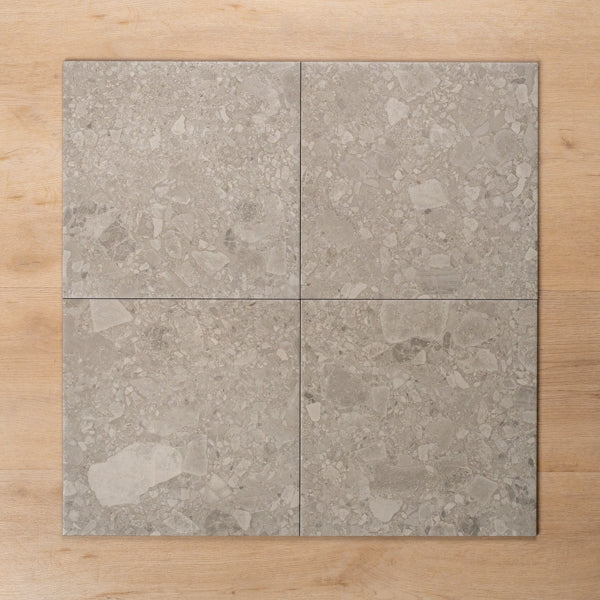
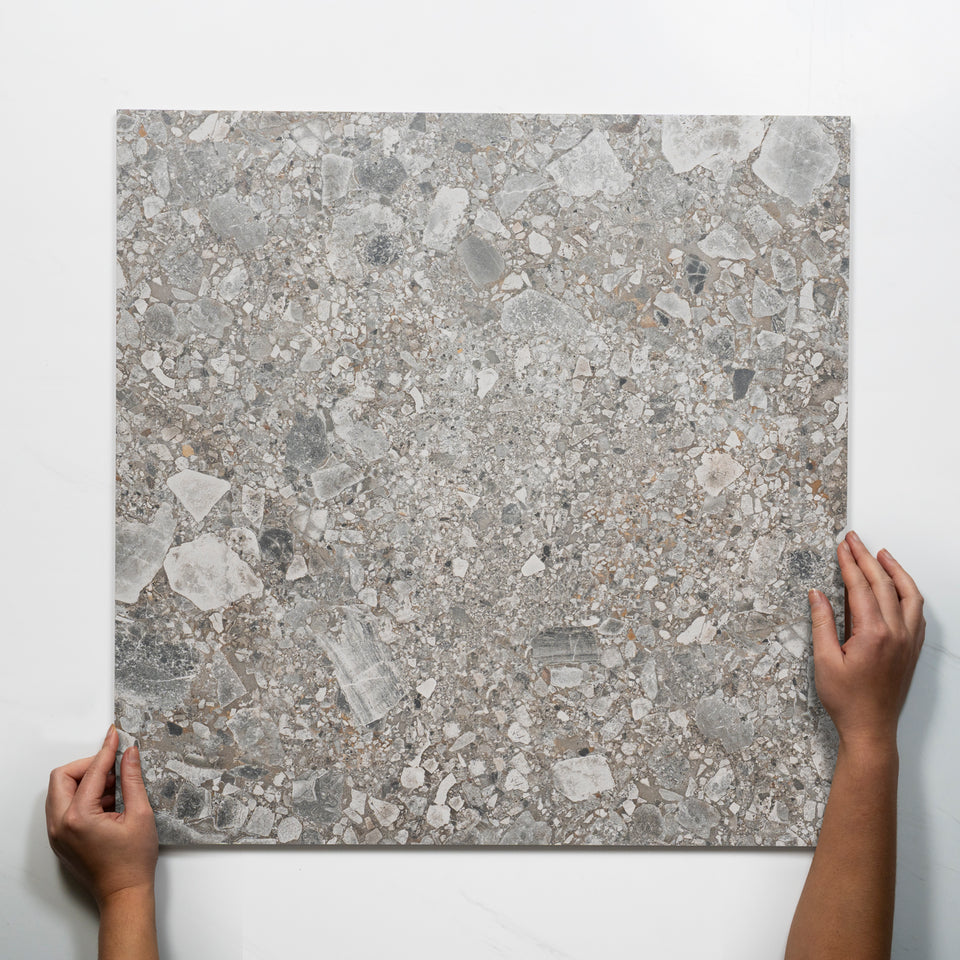



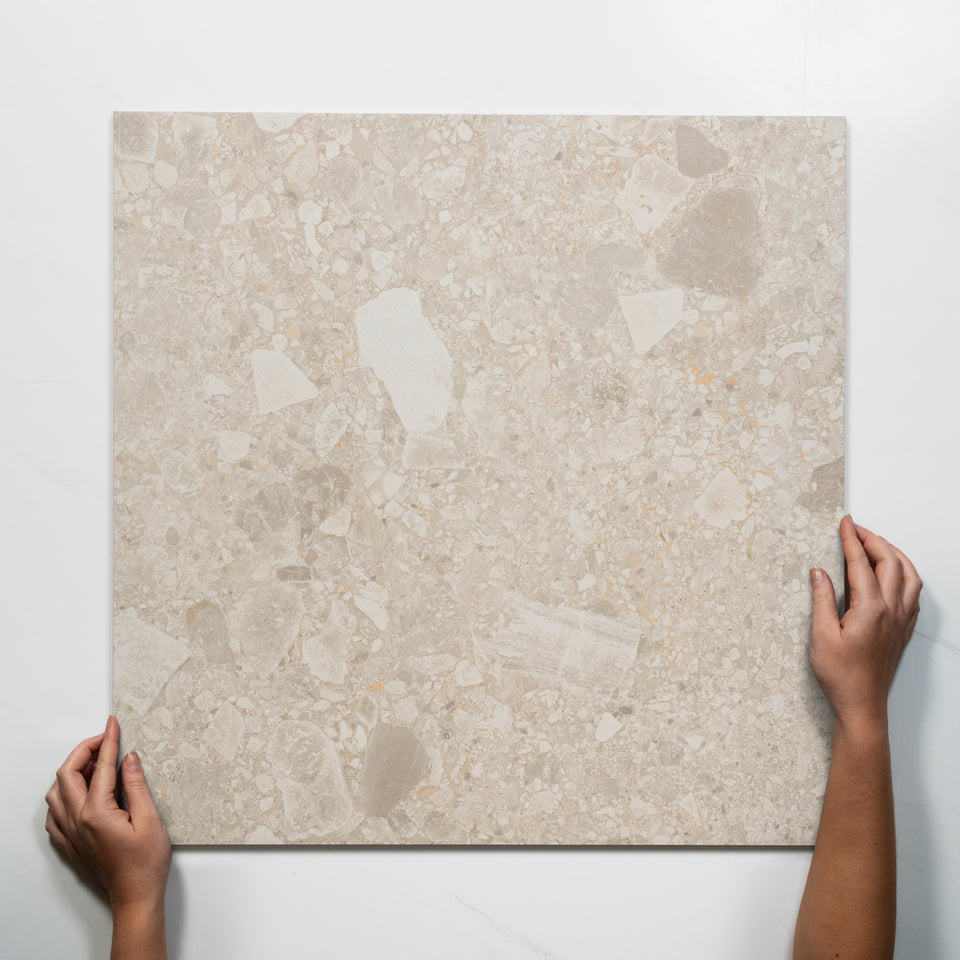
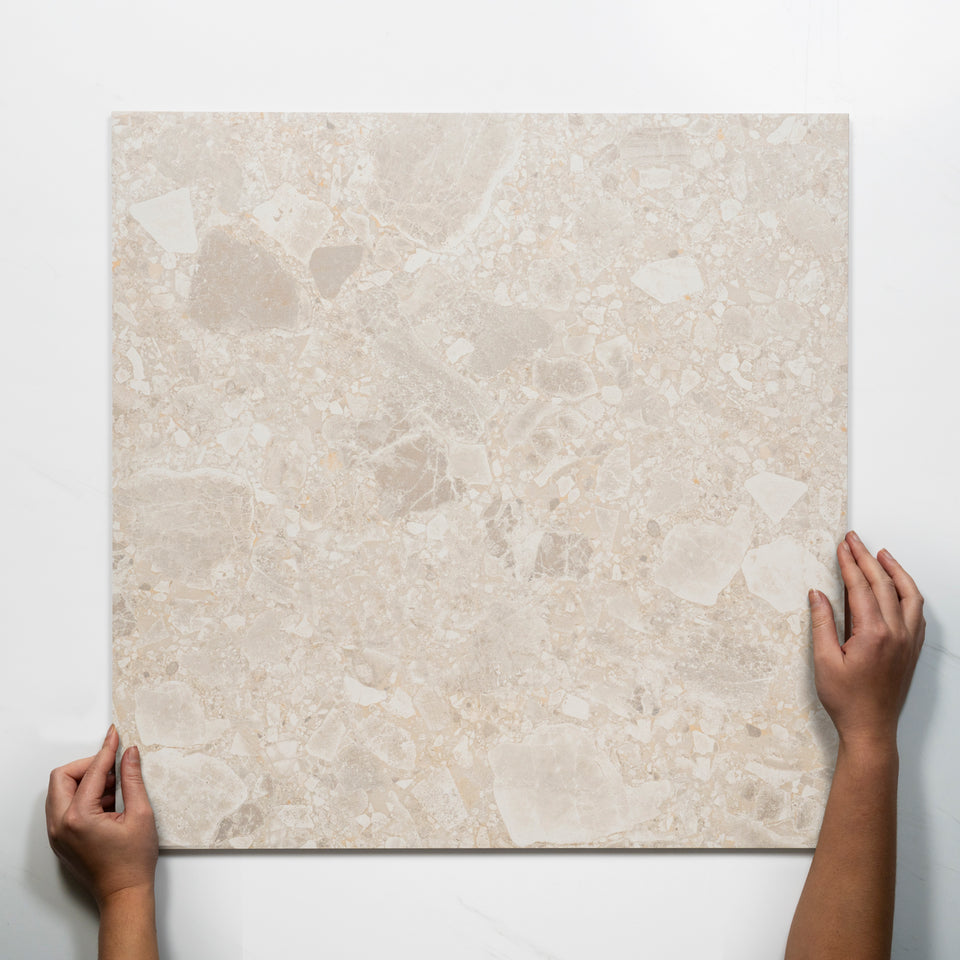
Southside is a porcelain tile that copies terrazzo. The listings describe it as a classic Venetian terrazzo look, with each tile showing its own character, and as made in Australia. Nothing here is poured or cast terrazzo, so the care, the surface and the installation follow porcelain, not the stone and cement composite it imitates.
The range is one design in four colours and several sizes, and the finishes and slip ratings change with the size. That is the part worth reading closely. A Southside tile that suits a dry hallway is not the same listing as one that suits a covered patio, and the page below explains how to tell them apart.
You'll find what the stone is and how the look-alike differs, how the colours, sizes and finishes are listed, what each slip rating line means for a floor, and what to check before ordering. If you'd rather start wider, the main tiles collection sorts every tile by room, size, colour and material.
An Australian terrazzo flooring specialist explains the origin. Venetian workers used marble scraps to make flooring for terraces, and the word terrazzo means terrace in Italian. The method set marble pieces in clay and polished the surface smooth, and over time it moved to cement, glass and other materials.
Modern terrazzo, the same guide says, is a composite of marble, quartz, granite or glass chips in a cement or epoxy binder. It also separates the types. Cementitious terrazzo, made with cement, is porous and requires sealing to protect against stains. Epoxy terrazzo is non-porous, and precast terrazzo tiles install like regular tiles.
Southside is porcelain, and every listing prints the material that way: porcelain or glazed porcelain. A tile supplier's terrazzo guide makes the contrast: real terrazzo needs sealing on day one and again later, and marks if lemon or wine sits on it, while porcelain terrazzo is fired and dense. Another supplier describes look tiles as capturing the character of traditional terrazzo without the sealing and polishing real terrazzo needs.
The Southside listings say easy to clean, and the description says the floor is practical and built to last without worrying about upkeep. That is the retailer's wording for a porcelain surface. It doesn't describe poured terrazzo, which is a different product with its own maintenance.
The broader terrazzo look tiles collection compares every terrazzo design in the catalogue, including the larger grain Clio terrazzo look tiles and the Island terrazzo look porcelain tiles.
Southside comes in four colours: white, beige, natural and grey. The listings name each one in the title and treat all four the same way in the spec lines, so the colour choice is visual and nothing else on the listing changes with it.
A tile supplier says white and warm grey bases with neutral chips are the safe, lasting choices, since they pair with almost any cabinetry. Another lists the materials terrazzo looks go well with: timber, stone, concrete and soft neutral palettes, in modern and retro inspired homes alike. Southside's colours sit in that quiet group, and the pattern does the work.
The colour pages cover each tone across the catalogue: white tiles, beige tiles and grey tiles.
The scale of the speckle changes a room more than the colour does. A supplier says fine chips read almost as plain stone from a distance, while large bold chips turn a floor or wall into the feature. The Southside listings describe a classic terrazzo with its own character in each tile, which puts it between a plain stone look and a bold large grain design.
The supplier also advises judging a tile at room scale and not close up, because a tile that looks busy in a swatch often settles across a whole floor. If chip size matters to your decision, compare Southside with the Clio and Island ranges linked above before you choose.
The description says the range comes in three sizes, but the current listings show four: 300 x 300mm, 300 x 600mm, 450 x 450mm and 600 x 600mm. The listings are the reference, because the description does not match the product lines. The size pages cover each format across the catalogue: 300mm x 300mm tiles, 300mm x 600mm tiles, 450mm x 450mm tiles and 600mm x 600mm tiles.
The box lines change with the size. The 450 x 450mm listings print 7 pieces and 1.42m2 per box. The 600 x 600mm listings print 4 pieces and 1.44m2. The 300 x 600mm listings print 8 pieces and 1.44m2, and the Beige 300 x 300mm listing prints 22 pieces and 1.98m2.
Thickness is mostly 7.5mm. The exceptions are the Beige 300 x 300mm listing at 6.3mm and the Beige 300 x 600mm listing at 8.5mm. If you plan to mix sizes in one room, check the thickness lines and ask your installer what the difference means for the layout.
The edge line splits the range in two. The 600 x 600mm tiles and most 300 x 600mm tiles print rectified. The 450 x 450mm tiles and the 300 x 300mm tiles print non-rectified, and so does the Beige 300 x 600mm listing.
The recommended gap follows the edge. Rectified listings print 1.5mm to 3mm, and non-rectified listings print over 3mm. Your installer works to the gap on the listing, so confirm it before you finalise a layout, especially if you mix a rectified and a non-rectified size in one room.
Southside is sold in two finishes. The Matte listings print a flat, smooth finish or a low, flat texture. The External listings print a grip finish, and the 600 x 600mm External listings add a flat, grip finish texture and name floors only. The External tiles are the ones intended for open outdoor areas.
A Sydney retailer's buying guide says matte and textured finishes generally cope with wet conditions better than a polished surface, and a Perth retailer's coastal guide describes a matt and textured finish as keeping its grip when wet. Both statements are general. The slip rating on the listing is the figure to follow for your tile.
A Sydney retailer's guide sets out the choice. Matte terrazzo suits bathrooms, kitchens and busy areas, it says, because the surface is more forgiving of footprints and water marks and offers better slip resistance. Polished terrazzo suits living rooms and feature walls, where the aim is to show off the chips and the colour variation.
Southside answers that choice for you. Every listing is matte or grip, with no polished version, so the range sits on the matte side of the guide's split. If you want a reflective terrazzo for a feature wall, the terrazzo look tiles collection is the page to open.
The four sizes do different jobs. The 600 x 600mm tile has the fewest joints across a floor and is listed in matte P3 and in the External P5 finish. The 300 x 600mm tile prints P4 and a rectified edge on most listings, which puts it between the two in slip rating.
The 450 x 450mm tile is the one to read most carefully, because its matt listings print P2. The 300 x 300mm tile is the smallest and prints P3 in its title, and it carries the largest box coverage of the range on the Beige listing. Which one is right depends on the room, and the rating line decides whether the room is a wet one.
The same guide says porcelain terrazzo has become the go-to for renovations because it is easy to install, low maintenance, resistant to moisture and stains, and consistent in colour and finish across a floor. Those points describe porcelain terrazzo in general, and they are the case for Southside over a poured or cement tile terrazzo.
AS 4586 classifies the slip resistance of new pedestrian surface materials, and its wet pendulum test uses ratings from P0 to P5. The rating applies to floors people walk on, and it does not matter for a feature wall. P5 is the top of that scale.
Across Southside the ratings step up with the size and the finish. The 450 x 450mm matt listings print P2, with the wording high slip risk, not recommended for wet areas. The 300 x 300mm and 600 x 600mm matt listings print P3, and the 600 x 600mm wording is moderate to high slip risk. The 300 x 600mm listings print P4, and the Beige 300 x 600mm listing adds low slip risk, with a note that P4 or greater is best for outdoor areas. The External tiles print P5.
The P2 wording is plain: those 450 x 450mm tiles are not recommended for wet areas. They suit a dry hallway or living area. For a bathroom floor, a shower base or a pool surround, read the listing for a higher rating, and keep the P5 External tiles for the outdoor areas they name.
A supplier's terrazzo guide advises a matt or textured terrazzo with a proper slip rating for a bathroom floor, and says polished looking surfaces are for dry areas. Southside has no polished listings, so the question is the number on the listing. The bathroom tiles collection shows what else the catalogue offers for wet rooms.
The area lines separate the range into three uses. The 450 x 450mm P2 listings print indoors dry and covered outdoor areas. The 300 x 600mm and 600 x 600mm matt listings print indoors and covered outdoor areas. The 600 x 600mm External listings print outdoors and floors only.
The description adds that Southside works just as well outside as it does indoors, which fits the External finish and nothing else. For an outdoor floor, choose an External listing, and compare options on the outdoor tiles collection.
Some 300 x 300mm and 450 x 450mm External listings print no spec block at all, only the rating in the title. For those, ask before you rely on the area, edge or gap lines.
Every Southside listing that prints a wear rating prints the same line: 4, suitable for floors in normal use areas, with a low risk of scratching. That is the wear line for the whole range, so the difference between listings is slip, finish and edge, not durability.
A terrazzo supplier says the busy pattern hides crumbs, dust and footprints better than a plain tile, which is the reason real terrazzo ran through schools and airports for decades. The floor tiles collection and the square tiles collection list other floor and square formats if you want to compare.
The pattern suits floors first, and the supplier guidance agrees: bathroom floors, kitchens and living areas are the usual homes, with large formats keeping grout lines from interrupting the speckle. A supplier adds that in a bathroom the speckle disguises water marks between cleans.
For a kitchen or laundry, check the slip line for the size, and see the kitchen tiles collection for other options.
The care line on the listings reads easy to clean, and some add easy to clean and maintain. A porcelain surface is dense, so there's no sealing step in the listing. Real cementitious terrazzo, by comparison, is porous and requires sealing, according to the specialist guide, which is the difference this range is designed around.
Ordinary cleaning still applies. A matt or grip surface and a pattern that hides dust don't remove the need to mop a bathroom floor or sweep a patio, and the listings give no cleaning method beyond easy to clean.
Each Southside listing ends with the same note: pair the tiles with underfloor heating for a warmer, drier, mould resistant bathroom. The underfloor heating collection lists the kits the listing refers to.
The listings also recommend ordering extra tiles over the exact quantity, to cover breaks and offcuts, and they warn that colour, size and texture can vary from batch to batch. The advice matters for a speckled tile. Each Southside tile has its own pattern, so a later order from a different batch may not match, and a spare from the first batch is the closest match you will have.
The listings carry tags that place Southside in a few style and layout groups. The style tags are coastal, industrial, mid century modern and minimalist, and the layout tags are diamond and vertical stack. The tags describe how the tile is filed, and the listings do not prescribe a layout, so treat them as design directions.
For a coastal room, the coastal tiles collection groups the tiles filed that way. For layout, the vertical stack tiles collection and the diamond tiles collection show how each layout looks across the catalogue. A US tile retailer says a vertical stack can make walls appear taller, which is worth remembering on a wall in a small bathroom.
A Sydney retailer's terrazzo guide says lighter shades reflect natural light and make rooms feel more open, while deeper tones create contrast and visual depth. Southside's four colours are all on the lighter and mid side, so the choice between white, beige, natural and grey is about warmth more than depth.
The same guide says terrazzo works with minimalist interiors, coastal homes and modern renovations, particularly when it is paired with neutral tones and simple finishes. It also says large terrazzo tiles in living and dining areas create visual continuity across an open plan layout.
A tile supplier warns that chip colours shift more than plain tiles under warm lighting, and advises viewing a sample flat on the floor in daylight. The advice fits a speckled tile in any colour, so check the tone in the room where it will be laid.
The description says Southside is made in Australia, and the listings carry an Australian Made tag. The Australian made tiles collection groups the tiles whose listings carry that claim, so you can compare Southside with the other ranges in it.
Southside's four sizes and two finishes share one design, so the spec lines are what separate the listings.
Pick the size and the finish for the space first, then the colour. The listing for the exact tile is the reference, and the linked collections show how Southside sits beside the other terrazzo looks in the catalogue.


