
*View accurate shipping rates and availability






93 Items


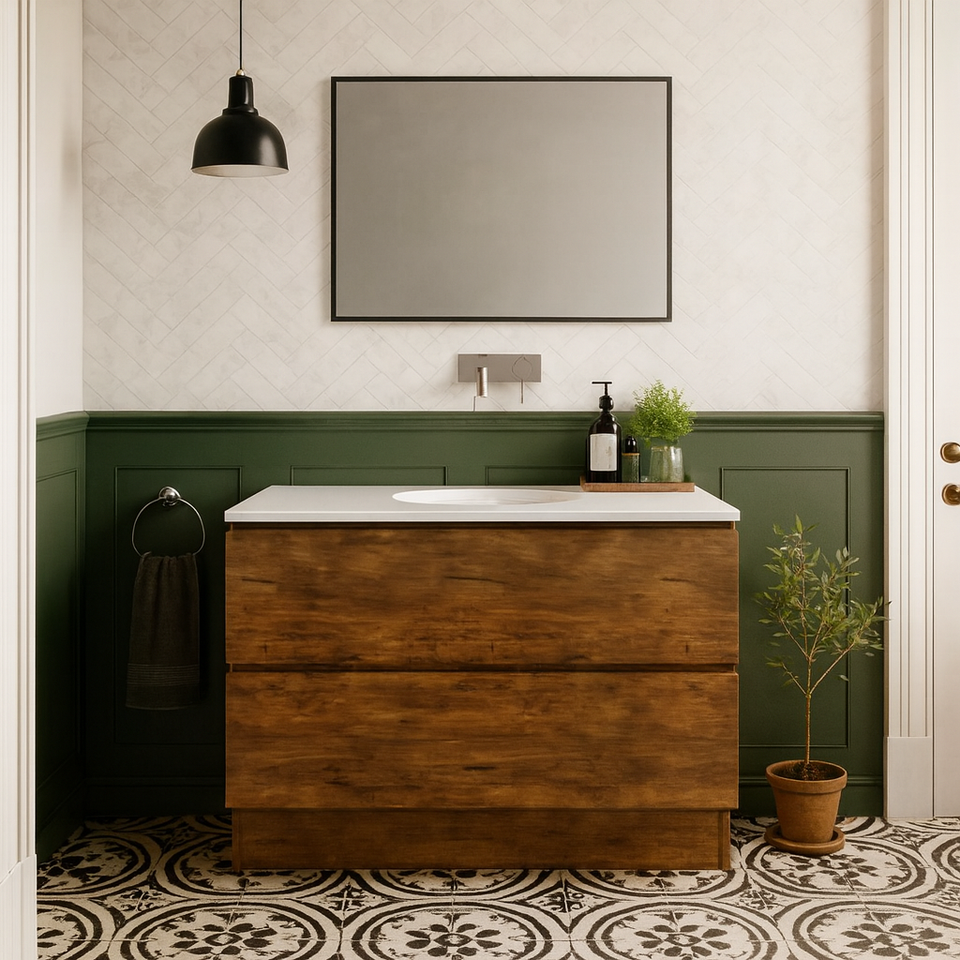
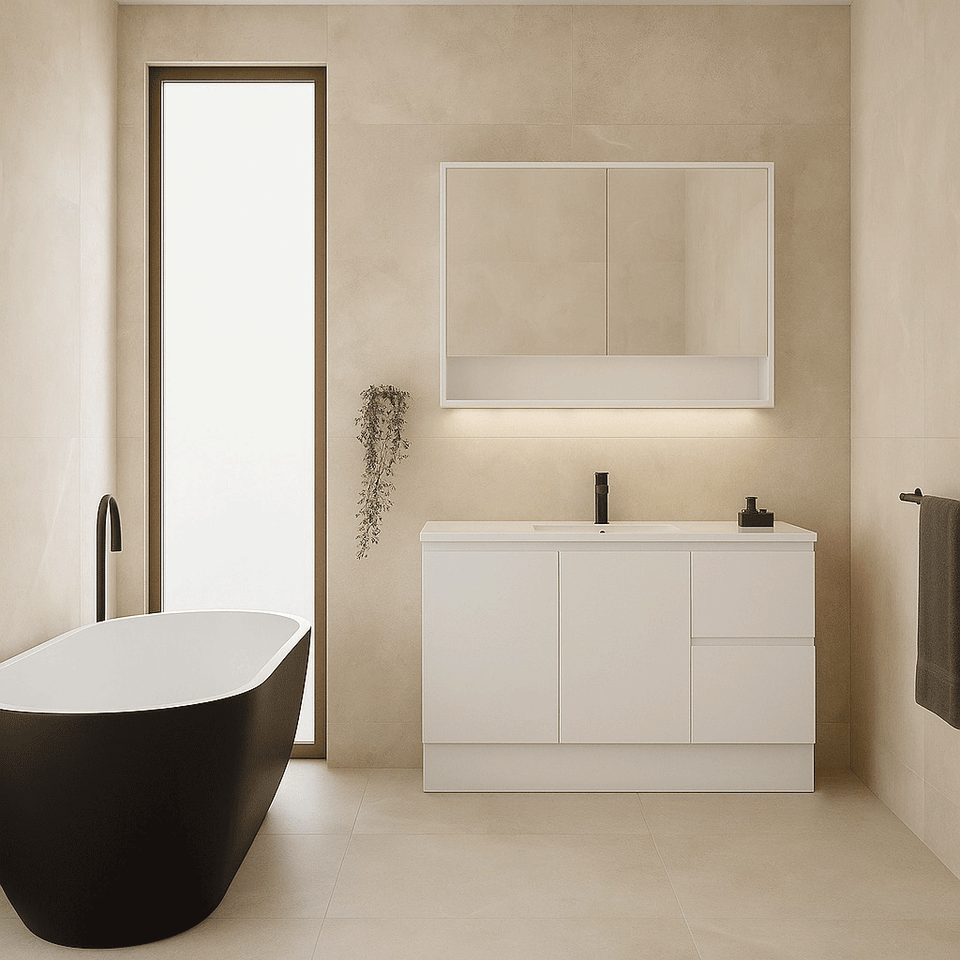

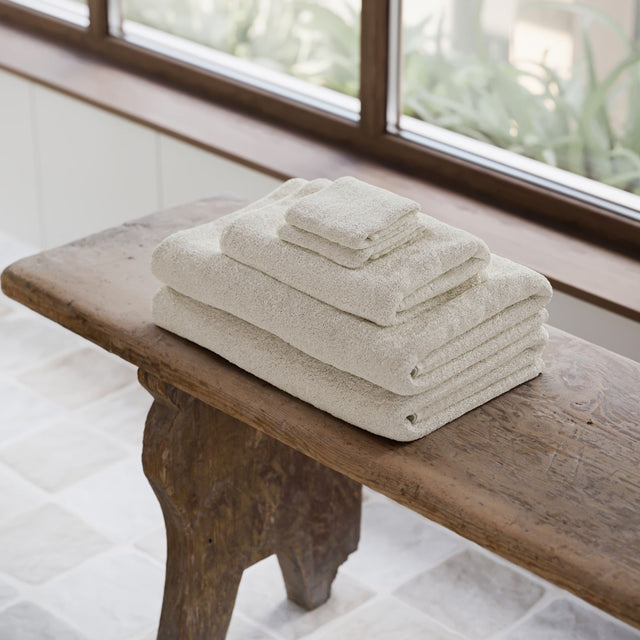
Spend over $800 and receive free gifts in your cart. Towels, accessories and full length mirrors!


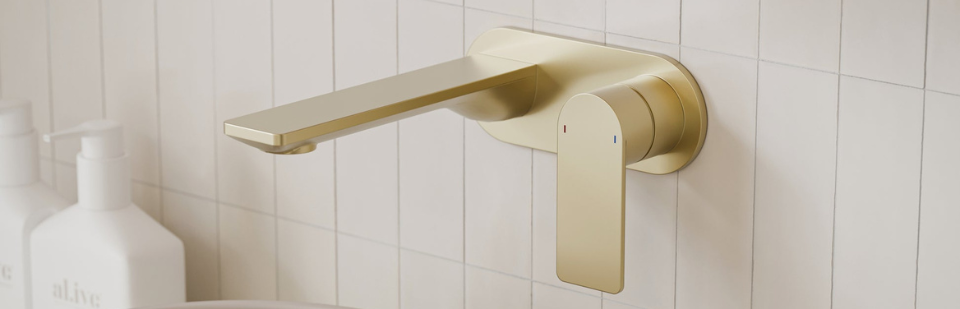


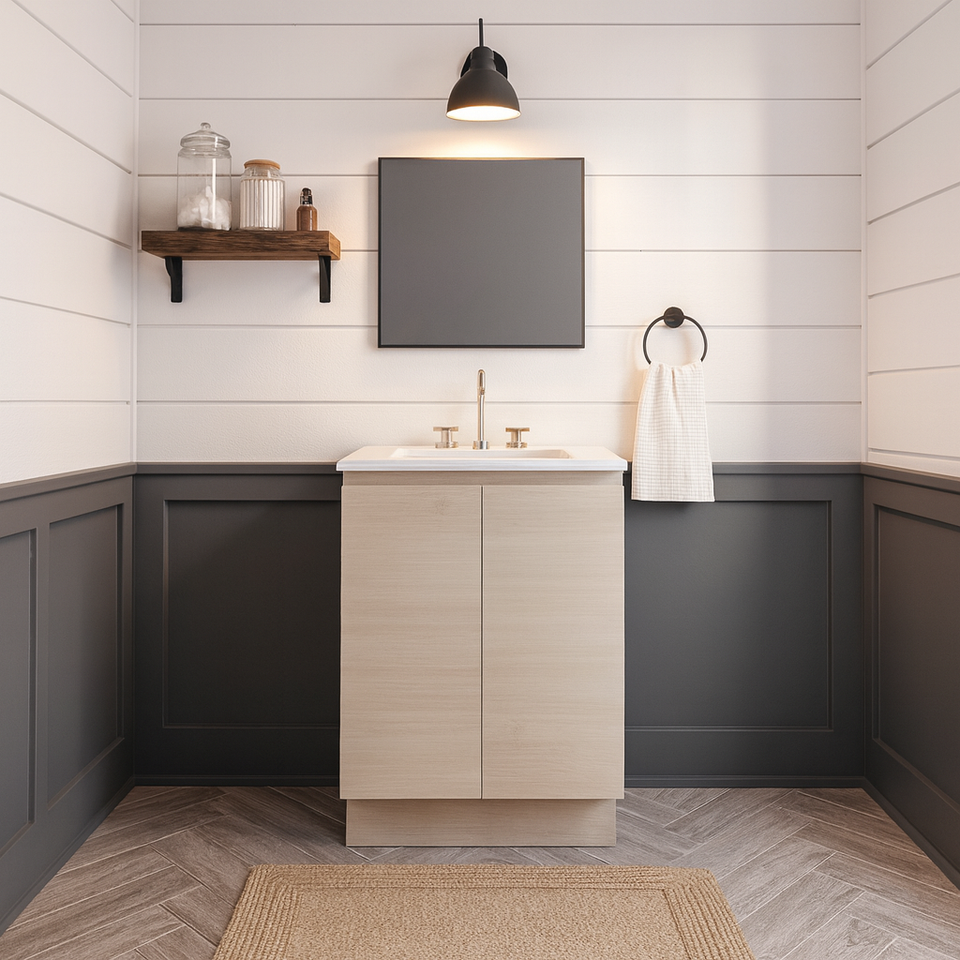


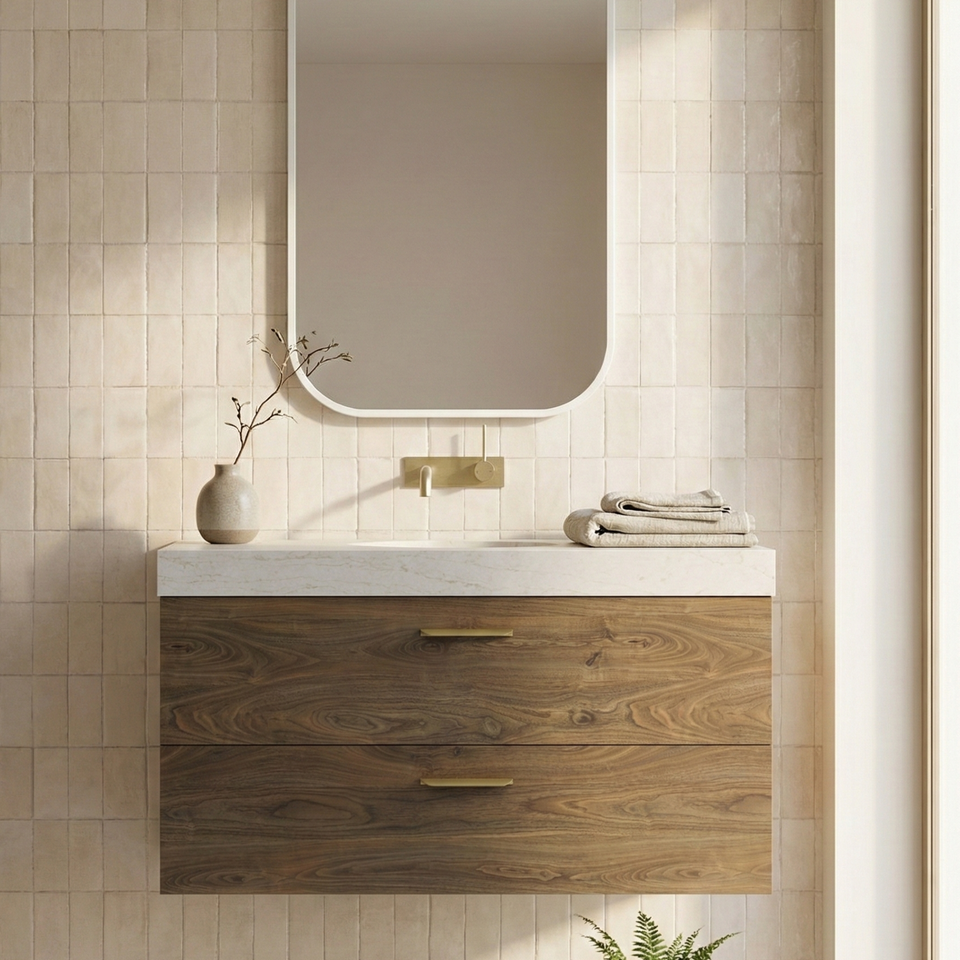

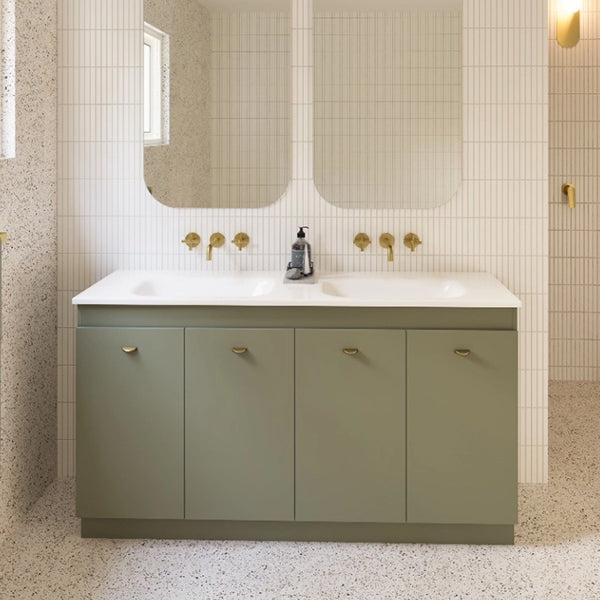


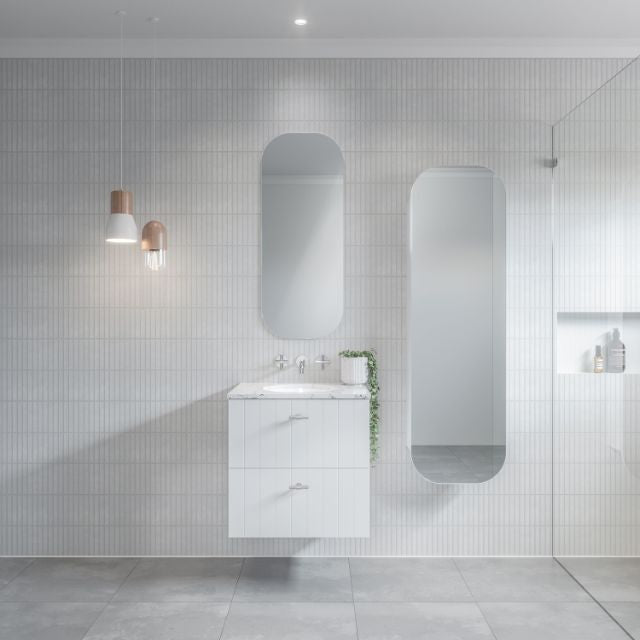

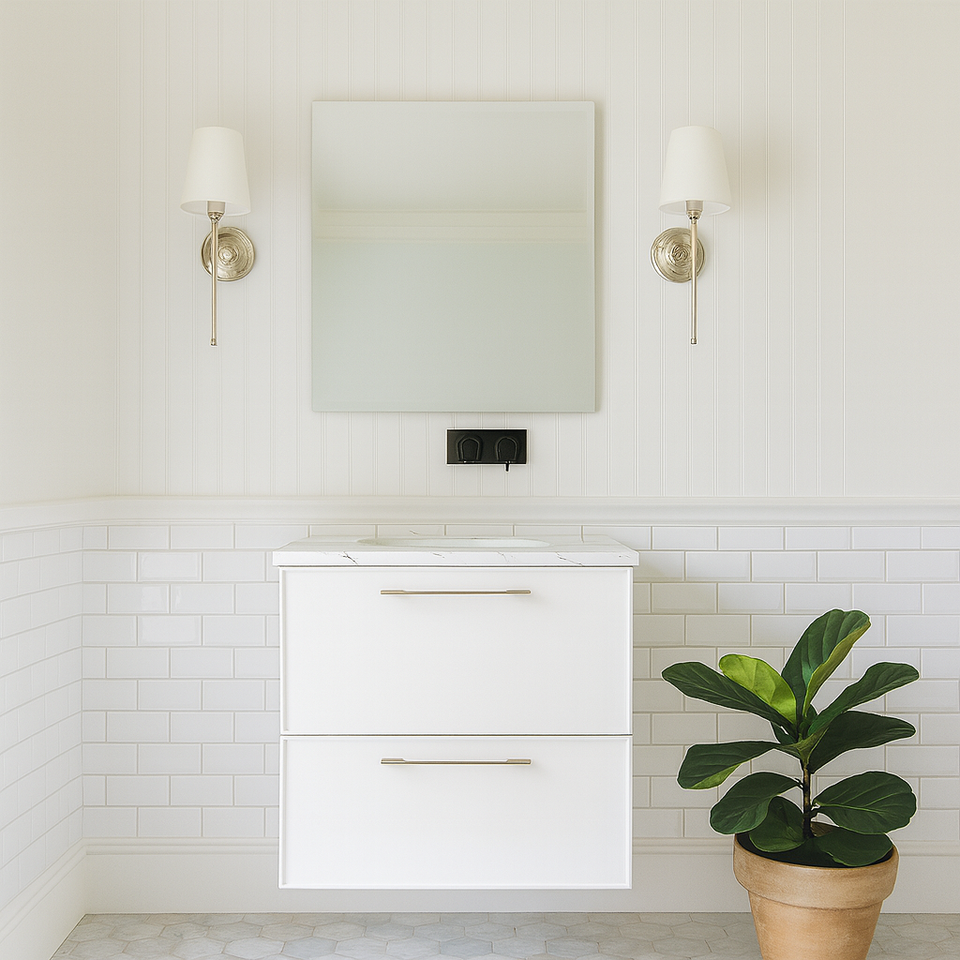


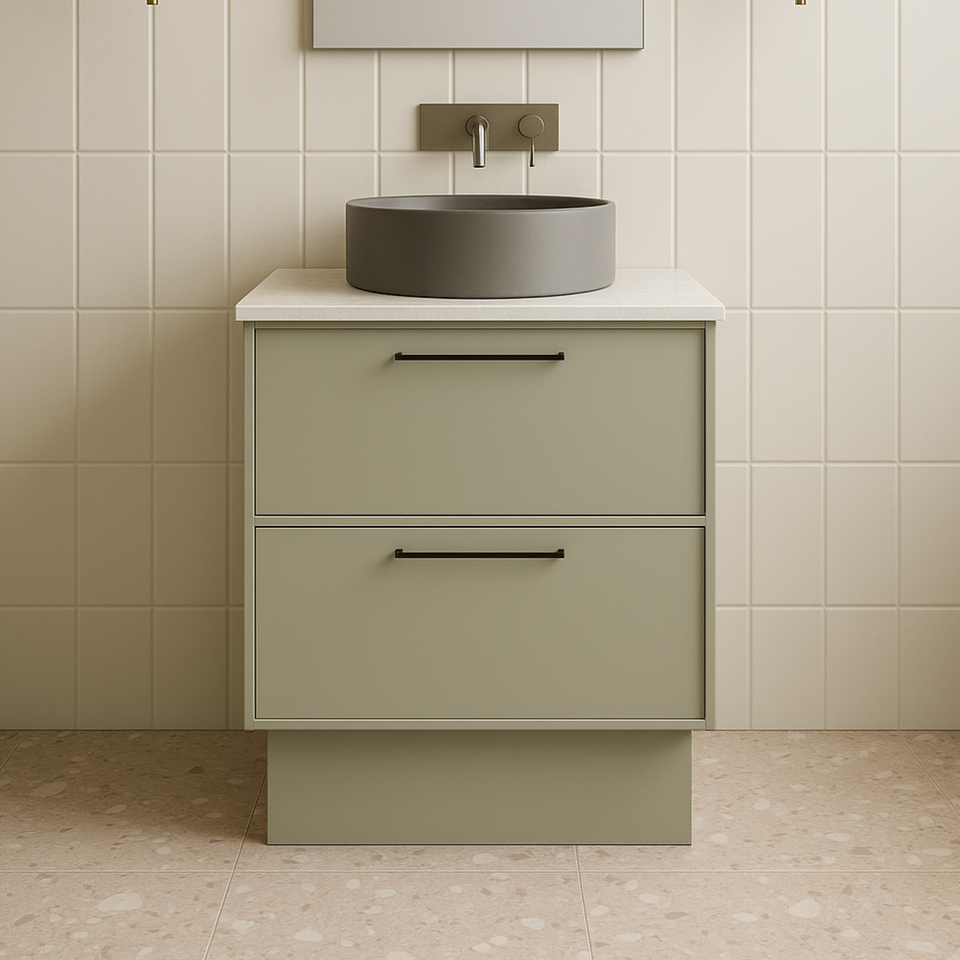
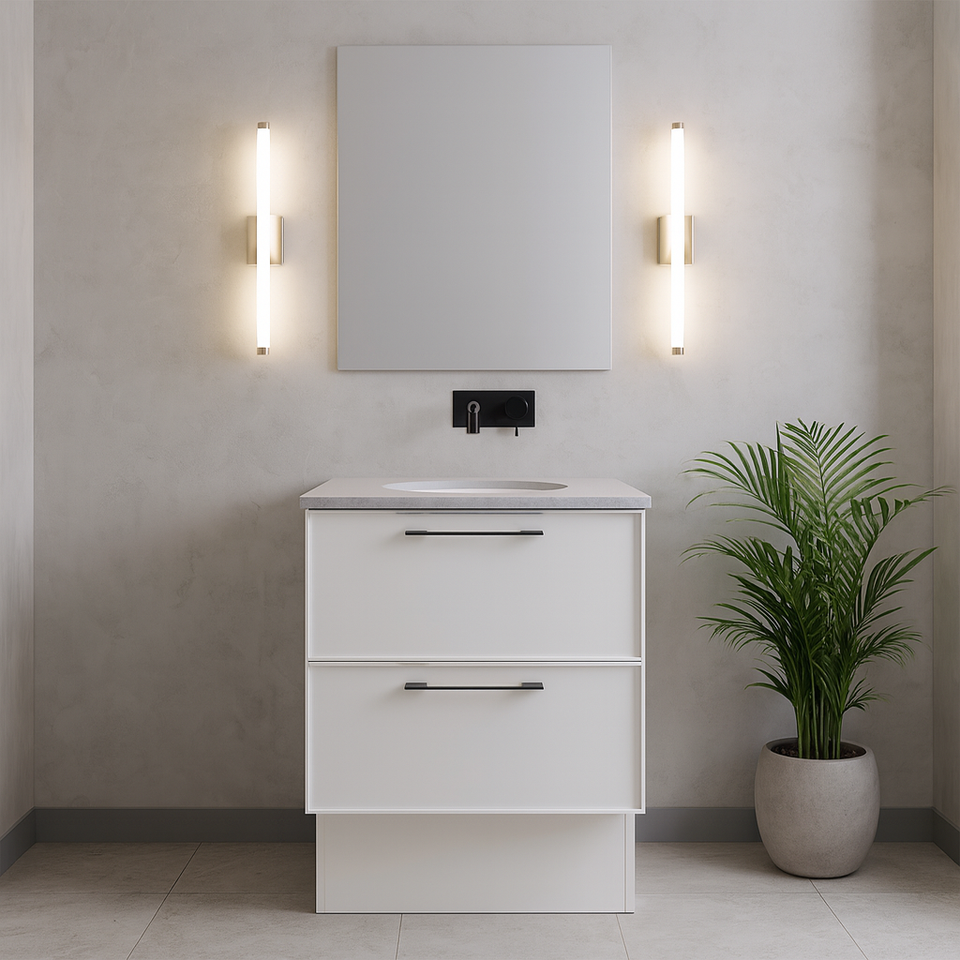

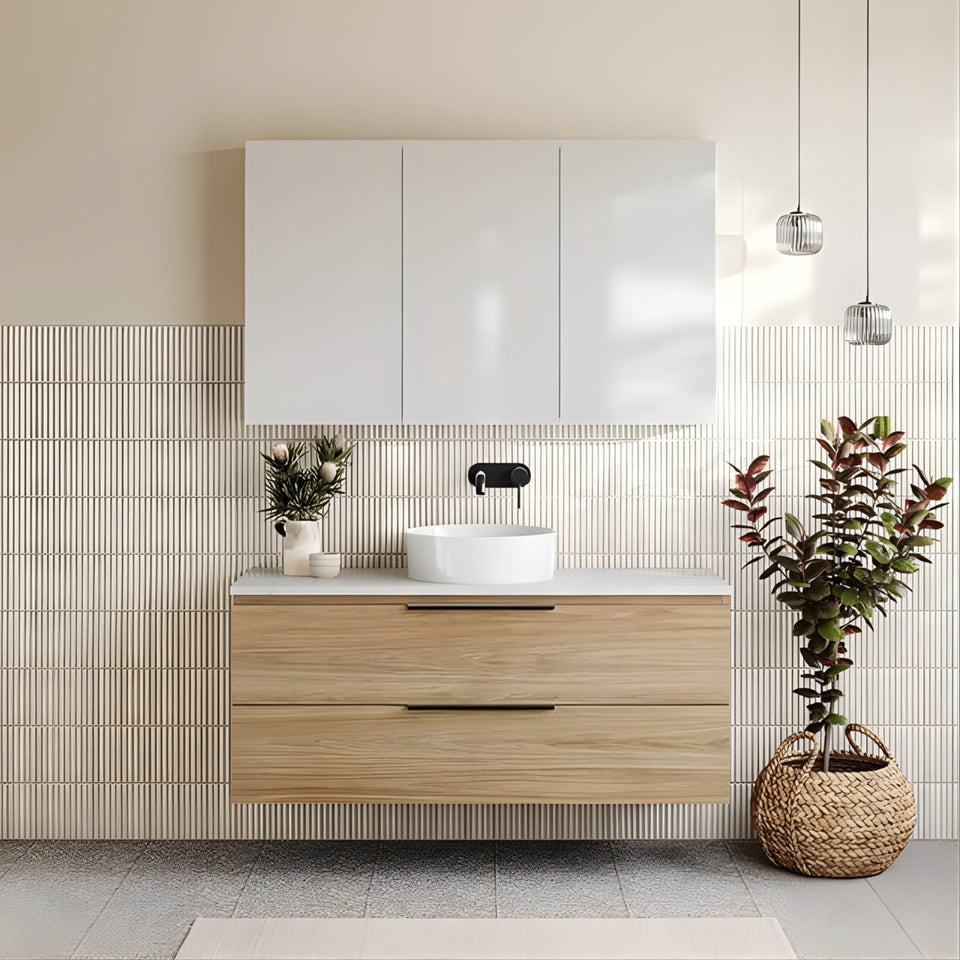


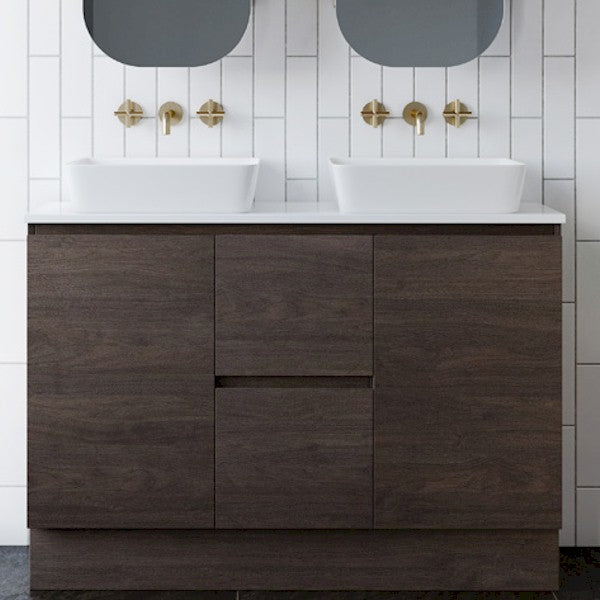
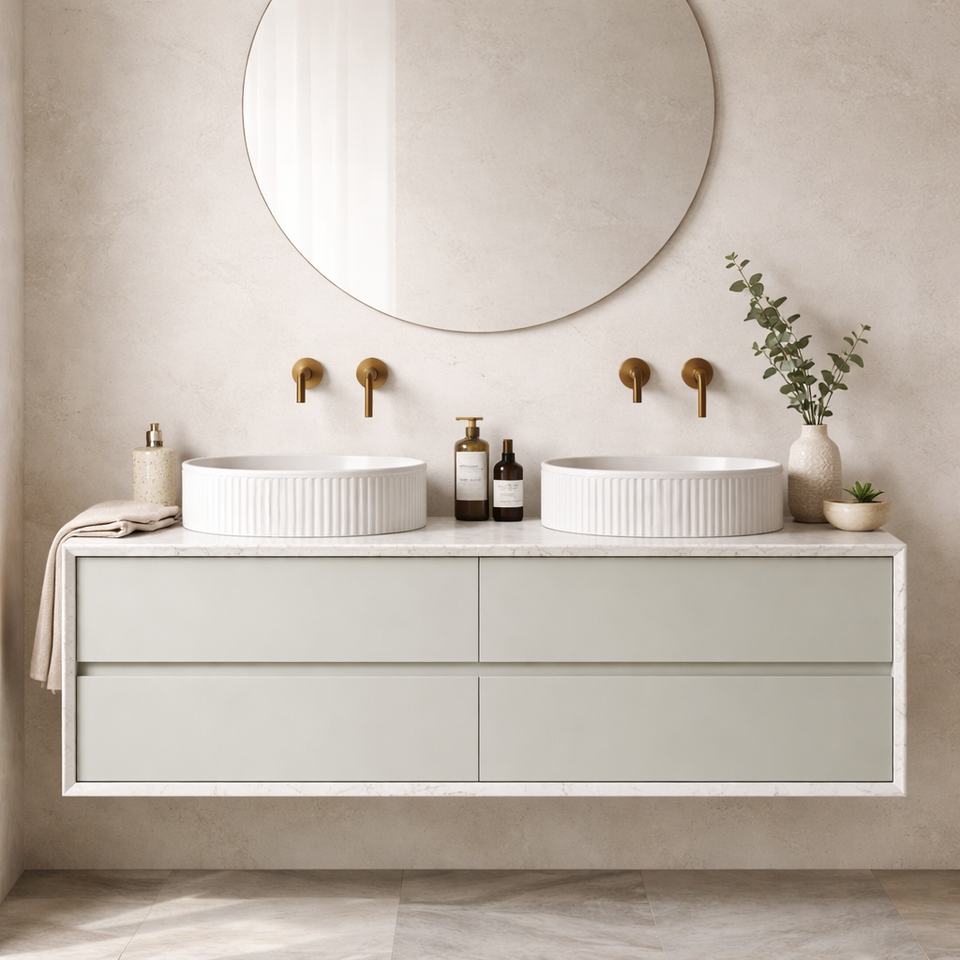

Timberline vanities are custom made in Armidale, in northern NSW, and the range is built around one idea: you choose the cabinet, the top, the basin, the finish and the handle, and Timberline builds the combination. That freedom is also the difficulty. This page holds a wide spread of Timberline ranges, from compact units for a powder room to cabinets more than two metres wide, so the useful question is which range fits your room, not which vanity is best. This guide sorts the ranges by front style and size, explains the tops, basins and finishes, and points to the pages that go deeper on a single range.
Timberline's own vanities page groups its vanities into a few families, and that grouping is the easiest way to find your way around. There is the Nevada collection, which comes as four lines. There are the tailor-made ranges, which are the largest group and carry names such as Bargo, Carlo, Victoria, Takano and Taro. There is Contemporary Living, which includes the compact lines. And there is the Sutherland House collection, designed with Shaynna Blaze.
The ranges that have their own page here are Nevada, Takano, Taro and Elwood. Start there if you already know the name. If you do not, read on.
The front of the cabinet is what you see every day, so it is the best first filter.
Curved and fluted fronts start with Santos, which has curved ends and profiled surfaces, in woodmatt or painted finishes. Socoa has rounded ends and two selectable fluting styles, with a stacked drawer layout and a space saver plumbing kit included to hide the pipes behind the drawers. Elwood is offered with a 12mm pitched profile and angled fluting in its Dockland version, and a 25mm pitched profile with gentle curves in its Apollo version. Colby has a gracefully curved design with full extension drawers. Saba has soft curved edges and a vertical routed front, with a hidden internal drawer that can be removed. The fluted vanities and curved vanities pages show the same shapes across other brands.
Shaker and routed fronts include Victoria, which is offered in four door styles, Classic Shaker, Sussex Shaker, Victoria and Washboard, and can be colour matched to nearly any paint. Windsor has routed front panels and detailed legs, and Nevada Classic routs a panel into its doors and drawers. Routed shaker fronts come only in painted finishes. The Hamptons vanities page shows how this profile sits in a coastal or traditional room.
Flat and contemporary fronts include Takano, which sets inset door and drawer fronts within a 16mm surround. Delaware has a woodgrain finish with a 16mm surround and an all-drawer layout. Taro is described as combining contemporary design with everyday practicality. Bargo has a sleek fascia panel with doors and drawers, Marshall and Taylor have wide drawers and door storage, and Grange is all-drawer. Henley comes as Vertical and Kent versions with an under-counter or above-counter basin.
Some ranges are defined by the top. Oxbow has a 90mm box top with large double drawers. Embrace has a 20mm SilkSurface top that wraps the whole vanity. Ainsworth has a 20mm waterfall top. Kingsley has a box top. Rockford has a Haven Dolomite basin top, and Kansas has open shelves at the bottom with a Regal acrylic top. If the bench is the feature, choose from this group.
The Sutherland House collection was designed by Shaynna Blaze with Timberline and comes in four fronts: Regency, Farmhouse, Deco and Retro. All have a routed panel on the drawer fronts, and the listings offer designer drawer organisers, a secret inner drawer, cabinet lighting and cabinet power points as options.
The compact lines are shallow as well as narrow, which is the point. Oscar and Ollie are 220mm deep, and Oscar's top extends to a chrome towel rail so a hand towel stays near the basin. Lottie is 240mm deep, with side access shelves for storage. Frankie is a small vanity for powder rooms that can be ordered in a two-tone cabinet. Florida Ensuite has a 360mm projection, in 800mm and 1000mm sizes. Timberline gives a typical vanity height as 850mm to 900mm off the floor and a standard depth of around 460mm, so these compact lines save between 100mm and 240mm of floor. The small vanities, ensuite vanities and slimline vanities pages list the compact options across all brands.
Most ranges are made both ways. A wall hung cabinet leaves the floor clear, and it needs solid backing behind the wall lining, which is easiest to fit while the framing is open. A floor standing cabinet sits on a plinth, a kick or legs, and a kick covers pipes that come up through the floor. Installation guides say wall hung is easiest to plan at framing stage and floor standing is often the more practical choice in a finished, tiled room. See wall hung vanities and freestanding vanities for the comparison across brands.
Most Timberline ranges run from 600mm or 750mm up to 1800mm, with a centre bowl, an offset bowl or a double bowl depending on the width and range. The widest ranges, including Bargo, Carlo, Grange, Marshall, Taylor and Sutherland House, continue to 2100mm. Size guides match width to use as follows. A 750mm vanity suits a small main or guest bathroom with one basin. A 900mm vanity is the main and family bathroom size for one basin and is not wide enough for two. A 1200mm vanity is a large single or a tight double. A 1500mm vanity is the comfortable double, and 1800mm gives two users separation. The size pages list what is available at each width: 600mm and smaller, 750mm, 900mm, 1200mm, 1500mm, 1800mm and 2000mm to 2100mm. The 2000mm to 2100mm page also explains what to do for a wall that measures exactly 2000mm.
The top changes how the vanity looks and cleans, so it is worth deciding early.
SilkSurface is a 20mm acrylic solid surface that Timberline offers in colours such as Arctic White, Carrara, Calcutta Snow and Grigio Stone. The Taro listing says it resists fingerprints and water marks. A 20mm Caesarstone selection is also offered. Ceramic tops, including Alpha Ceramic, Liberty and Urban ceramic, have the basin moulded in, so there is no join between the bench and the bowl. Other tops include Regal acrylic, Grand mineral composite and Haven Dolomite, each on specific ranges.
Where a vanity has a separate basin, the listings include a gloss white ceramic basin or basins, and matte, coloured, solid surface and stainless steel basins are also offered. An above-counter basin sits on the bench. An undermount basin sits beneath it, so water wipes straight from the bench into the bowl. The basin range lists the shapes.
The tap hole count is set when the top is made, so choose the tapware first. Most ranges offer none, one or three holes. A few ranges, such as Kansas and Swift, offer a single hole only, and the Nevada 1200mm double bowl is not offered with none. Browse bathroom taps and mixers for a mixer that suits the hole count.
Timberline's finish guide separates two kinds of cabinet finish. Painted colours are a two-pack polyurethane process, satin unless noted, and they are the only finish on routed shaker vanities. Woodgrain colours are melamine, matt or textured, and they are not available on routed shaker vanities. Handles come in named styles including Arch, Curve, D, Flat Knob, Leather Pull, Ova, Retro, Round Knob, Solid Lip, Square and fingerpulls, in finishes such as chrome, black, brushed nickel and satin gold.
The guide also lists what a screen cannot show. Gloss finishes look noticeably different from the matt samples. Painted colours can vary slightly between batches. Woodgrain patterns do not line up across panels, and horizontal grain is standard on vanities. SilkSurface slabs vary naturally and may be substituted with an equivalent colour. Timberline offers a samples box, so order it before committing to a dark painted colour or a woodgrain.
The specifications list a moisture-resistant board carcase and premium European soft-close hinges. Drawers run on European steel runners with soft-close, and many ranges are full extension. Several lines have a Classic White melamine interior, and some include bamboo storage trays. Colby uses European recyclable soft-close drawers on full extension runners. Socoa includes a plumbing kit that hides the pipes behind the drawers. Many Timberline listings say the vanity is delivered fully assembled, including the basin or basin top, so the first job on delivery is checking the unit for damage before anyone starts to plumb. Moisture-resistant board resists damp but is not waterproof, so wipe standing water off the cabinet face and ventilate the room.
The product pages carry more decision information than they first appear to. The size selector combines the width with the bowl layout, so "1200mm Double Bowl" and "1200mm Centre Bowl" are different options on one page. The title names the top and the basin position, such as "SilkSurface Top and Above Counter Basin", which tells you whether a basin comes with it. The bullet list states the tap hole options, and a listing that offers an add-on plug and waste says so, so add it to the order. The "Pictured" captions name every component in the photograph, including finish, benchtop, handles and basin, so they are a record of combinations that have been built. The "Downloads" list links a specification sheet per size and layout, and those sheets are what a plumber needs before the walls are closed.
Two checks save the most trouble. Read the width range on the listing, because a range that is sold to 1500mm in one top and 1800mm in another is the difference between a cabinet that fits and one that does not. And read what is included, because listings differ on whether a basin and a plug and waste come with the vanity.
The listings point to the Vanity Visualiser, a TBS tool that takes you through the build in three steps. First the configuration: measure the space, mark where the plumbing comes out, and decide on doors, drawers or both. Then the finishes: cabinet, benchtop, handle and basin. Then accessories, which include in-drawer power points, vanity bins and drawer lighting. A style quiz at the start narrows the options. See the Vanity Visualiser to start, and the custom vanities page if a size you need is not listed, because it covers sizes that are not listed.
Plumbing work belongs to a licensed plumber. Mark where the waste and supply pipes come out, and check them against the specification sheet for your size before ordering. The Nevada listings link a one-page specification sheet for each size and layout, and the usable drawer space on it is the number to compare between two vanities of the same width, because the waste takes room from the drawer under the basin. A double bowl needs two wastes, two mixers and two traps.
Timberline's own documents do not give fixing heights or spacing for wall hung installation, so follow the notes that come with the unit. Manufacturer installation guides share some points that are worth planning for. Support noggins are fitted between the studs before the wall is sheeted, with the noggin wider than the vanity, and the cabinet is fixed to at least two support beams. The wall must be plumb and flat, with the vanity packed out where it is not. A vanity is kept clear of wet areas, with distances between 300mm and 400mm given. Tiles run behind the vanity, and every edge is sealed with non-acidic silicone. Measure for the finished height too: a wall hung vanity is set on site, usually so the top sits between 800mm and 900mm above the floor, and an above-counter basin adds about 100mm to 150mm.
A mirror hangs best slightly narrower than the vanity, in about 50mm to 100mm from each side, and about 100mm to 200mm above the bench or basin rim so it clears the tap handles. Browse mirrors by width, and see white bathroom vanities if you are working to a white scheme. The bathroom vanities guide covers the decisions that apply to every vanity, from sizing to plumbing.


