
*View accurate shipping rates and availability






53 Items


Up to 70% off across the store, plus free towels and mirrors up for grabs on orders over $800*
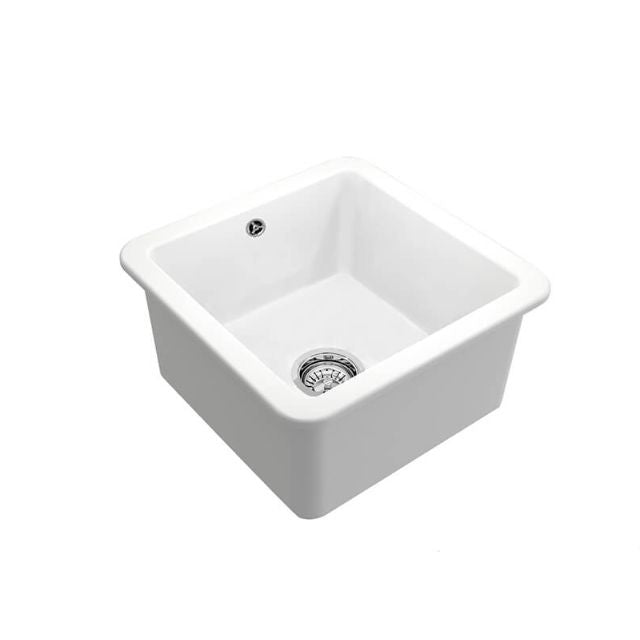


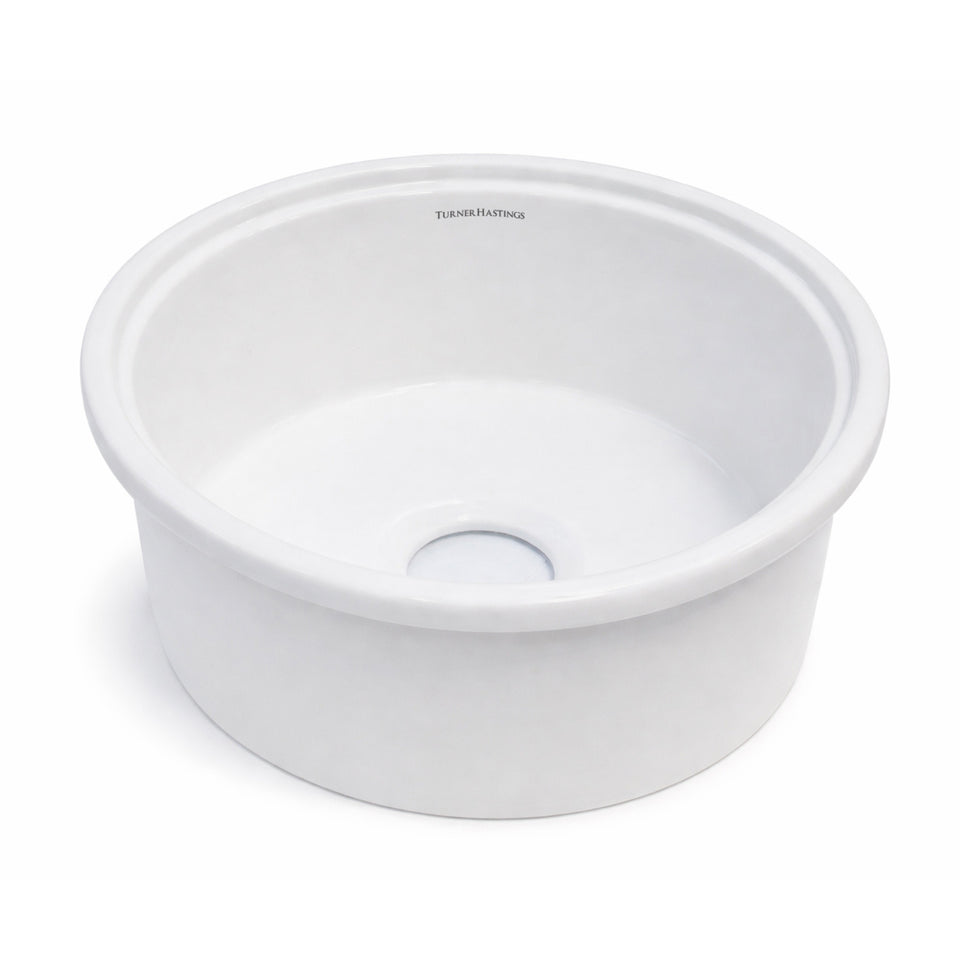


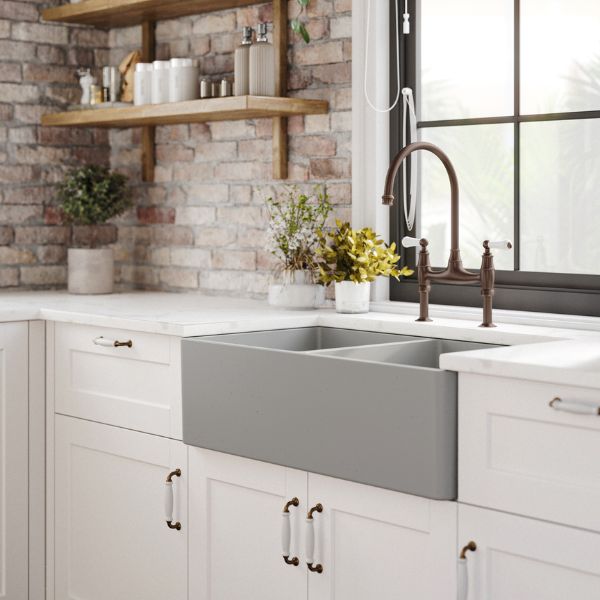
Turner Hastings sinks here are fine fireclay sinks in three families. Cuisine is a range of inset or undermount sinks from a 457mm square to a 1160mm double with a drainer. Novi, Cove and Chester are the butler sinks with an exposed front, and a concrete look finish completes the range. This guide explains what fine fireclay is, what each family is for, what the listings state about size, weight, depth, waste and overflow, and how to choose, fit and care for one. A retailer page describes the brand as aiming to be a leading supplier of European ceramics, and its fine fireclay sinks as moulded by hand. For most kitchens, the practical call is a Cuisine sink in gloss or matte white, fitted undermount under stone, with the cabinet planned for its weight. Each source is named in the text.
Fireclay is a name for clays that resist melting or deforming at very high temperatures, and a retailer article notes they are used in the bricks that line kilns. A sink made from it is a clay body with a glaze. The Turner Hastings listings explain the process in their own words: fine fireclay is fired at a higher temperature than standard ceramic, so the glaze is fused to the clay, which the listings say makes it more durable. Several listings add that the sink is double glazed. The same listings describe fine fireclay as stronger and less brittle than ceramic, and highly resistant to stains, scratches and chemicals. A retailer page says the fine fireclay sinks are moulded by hand, resist heat, stains and impact, and are food-safe and easy to clean. These are the brand's and retailer's statements, and they match the guides to fireclay generally, which describe it as non-porous and resistant to scratches and stains. For the full guide to ceramic and fireclay sinks, see ceramic kitchen sinks.
Heat is the common worry. The Cuisine 68 and Cuisine 81 listings say the sink is thermal shock resistant, which they describe as withstanding fast changes in temperature such as boiling water. The Chester listing says fine fireclay has a higher hot and cold temperature tolerance than standard ceramic. A sink maker's guide still warns against repeatedly pouring boiling water into one spot and following it with cold water, and says to follow the maker's care instructions for any glazed sink. The sensible rule is the careful one: use the sink as a normal sink, rest very hot pots on a board, and avoid repeated extreme changes in one place.
The Chester and Belfast listings add that fine fireclay is a natural product and subject to variation, which they present as part of its beauty. One listing gives the tolerance: variations of plus or minus 2 percent. That matters when you measure. Two sinks of the same size can differ by a few millimetres, so confirm the cut-out against the sink you have, and the Chester, Belfast and Otti listings recommend buying the sink before you give final measurements to the cabinet maker.
Cuisine is the largest family, and every sink in it is listed as inset or undermount. The listings give the sizes you can measure a cabinet against.
The Cuisine 60, 68, 81 and round listings suggest installing undermount and cutting a drainer into the stone benchtop. The Cuisine 60 and 93 listings say they are suitable for use with a food waste disposer, with an extended flange and a model with an anti-vibration collar recommended. See undermount kitchen sinks and inset sinks for the fitting methods, and small sinks for the compact end.
The butler sinks have an exposed front and need a cabinet built around them. The listings give mounting options of butler (front showing), counter top, glazed on all four sides, or under counter with shelving required.
See Turner Hastings butler sinks and Turner Hastings Chester farmhouse sinks for the range pages, and butler and apron sinks for the guide to cabinets, benchtops and fitting.
The finish is the visible choice. The range comes in gloss white, matte white and matte black, and a concrete look in the butler sinks. A retailer's guide states white shows marks more readily than darker finishes, and that glossy white shows minor scratches more readily than matte. A guide to fireclay says a chip or scratch compromises the glaze, so a grid in the bowl is sensible whichever finish you choose. The Cuisine 68 listing offers an optional stainless steel protective grid, and another listing recommends a grid or a rubber sink mat, purchased separately. For colour guidance, see white sinks and black kitchen sinks.
Fireclay is heavy, and the listings state weights where it matters: 13kg for the smallest Cuisine, 19kg for the 46 square, 38kg for the 116 double and 46kg for the 85 double, and 30kg and 40kg for the Novi singles. A sink maker's guide advises two people to handle a large fireclay sink and setting it before the benchtop goes on. A buying guide says the cabinet needs bracing or a support frame for fireclay, and that the sink must line up with adjacent cabinets. For the butler sinks, the listings say shelving or supportive cabinetry is required. Plan the support first.
A retailer article on fireclay says the clays resist heat, boiling water, acidic liquids and cleaning agents, and that the blend of glaze and clay makes the sinks very hard to stain or scratch, with robust exteriors that are very hard to crack or chip. Other guides are more cautious about impact. A guide to ceramic sinks says sudden impact from a heavy object can chip or crack one, and that a chip compromises the glaze. Taken together, the sources describe a surface that handles heat, stains and chemicals well, and a body that can chip if a heavy pan is dropped into an empty bowl. That is why the care advice leans on a grid and a mat, and why the Turner Hastings listings suggest a protective grid or a rubber mat to protect the base. Fireclay is also a natural product: the same retailer notes that clay is abundant and that fireclay can be recycled.
The benchtop matters as much as the sink. A buying guide gives the behaviour of common benchtops around a sink. Natural stone such as granite or marble is porous and needs sealing, and marble and some granites stain easily. Engineered stone is non-porous and needs no sealing. Wood needs sealing and oiling, especially around the sink, and the cut-outs and joints should be sealed. Laminate is more vulnerable to water damage and has limited edge profiles. For an undermount fit, a solid, waterproof surface is the match. For an inset or butler fit, the options are wider, and the cabinet maker needs to build the support the listing describes.
The comparison depends on how the kitchen is used. Stainless steel is lighter, resists heat and does not chip, and it scratches and shows water spots. Composite is hard and quiet, and a buying guide notes it is heavier than steel and a heavy dropped pot can cause hairline cracks. Fireclay is non-porous, resists scratches and stains, and has a glazed finish, but it is heavy and a chip often means replacing the sink. Choose fireclay for a classic, glazed look in a kitchen that will treat it with care, and stainless steel for the most forgiving surface in a hard-working kitchen. See stainless steel sinks and granite and stone composite sinks.
Most fireclay sinks have no draining board, so plan drying space before the benchtop is cut. A guide to farmhouse sinks says benchtop drainer grooves cut deeper toward the sink so water runs into it, which is the option the Cuisine listings point to when they suggest cutting a drainer into the stone top. The Cuisine 116 x 50 gives a built-in drainer instead, handed left or right. The Cuisine 81 listing suggests another way to build a layout: place it beside one of the other two square-shaped sinks in the range, side by side, for a bowl-and-a-half design. Whichever way you plan it, give the cabinet maker the listing's overall dimensions and the mounting option before anything is cut.
Read each listing. The Cuisine and Novi listings generally include a 90 x 50mm stainless steel basket waste, the Cuisine 68 gloss white a chrome basket plug and waste, the Belfast a chrome waste outlet, and the Chester a stainless steel waste with an overflow kit. The Cove listings state the basket wastes are not included. Overflow varies: the Cuisine 46 x 46 and 68 x 48 are available with or without, the Cuisine 60 is listed without, and the Cuisine 116 x 50 comes with or without. Tap holes also vary. The Cuisine 30 states none, the Cuisine 86 x 50 and 116 x 50 are listed with a tap hole, and the Chester is available with or without. See kitchen taps, gooseneck sink mixers and sink wastes.
Because of the size and weight, a guide recommends a professional cabinetmaker for a large sink, and a retailer guide says drop-in preparation can be done by the owner but connecting the water needs a licensed plumber in every state and territory. Another retailer guide says an inset sink works with almost any benchtop, including laminate. For an undermount fit, the benchtop needs to be a waterproof solid surface such as stone, held with clips and adhesive. The listings tell you which methods each sink supports. See drop in kitchen sinks for the inset method.
The routine is short and the guides agree on it. Rinse after use so stains do not set, wipe with mild dish soap and a soft cloth, and use a baking soda paste for stains and metal marks. Dry the bowl to reduce water spots. Avoid steel wool, harsh bleach and abrasive pads, which can scratch or dull the glaze, and rinse thoroughly after any cleaner. The Chester listing says fine fireclay is easier to clean and more hygienic than stainless steel, which is the listing's claim, and the fireclay guides describe the surface as easy to keep clean. A grid in the bowl protects the glaze from pans.
Choose by the job. For a main sink under a stone benchtop, a Cuisine in white is the plain choice. For a compact kitchen or pantry, the Cuisine 30 or the Cuisine Round. For hand washing with a lot of dishes, a Cuisine double or the 116 with a drainer. For a farmhouse or Hamptons kitchen, a Novi, Cove or Chester butler sink with the cabinet designed around it. For a contemporary kitchen, matte white or matte black. For a pantry, the Novi 50 and Novi 51 listings describe themselves as among the shortest width butler sinks on the Australian market.
For the full guide to choosing any sink, see kitchen sinks. For other makers' ranges, see Fienza kitchen sinks and Otti butler sinks. For laundry use, see laundry sinks and ceramic laundry sinks.
Whatever you choose, read the listing's dimensions, weight, waste and overflow, and tap hole before you order.


