
*View accurate shipping rates and availability






653 Items


Up to 70% off across the store, plus free towels and mirrors up for grabs on orders over $800*


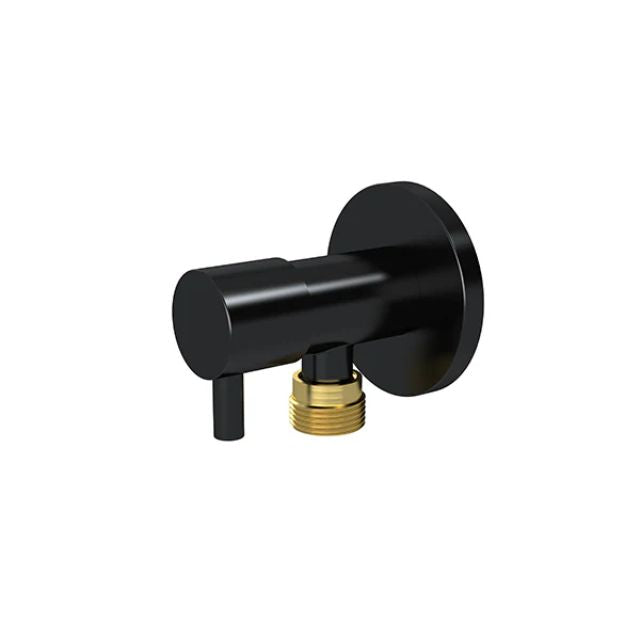


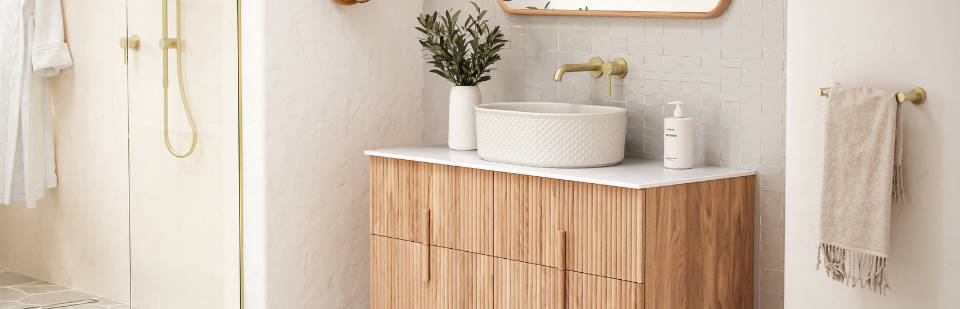


Black tapware is a finish choice before it is a product choice. The colour decides how the taps look against your tiles, vanity and light, and the finish process decides how well they hold that look in a wet room. This page holds black taps for the basin, bath, shower, kitchen and laundry, from several brands, mostly in matte black. The guide below covers what the finish is, how to care for it, what it suits, and what to measure before you order.
Yes. Matte black has been the most common alternative to chrome in Australian bathrooms for years, and it has not dated, because it is a neutral that sits with almost every palette. It suits modern, contemporary, industrial and Japandi rooms, and it works in a Hamptons or farmhouse room when the tap shape is traditional. The shape of the tap matters more than the colour for fitting a style: a round mixer reads softer, a square or slimline mixer reads sharper.
The black on a tap is a coating over a brass or stainless steel body. Three processes are used. Electroplating deposits the coating with an electric charge and gives a smooth, corrosion resistant layer. Powder coating bakes a dry powder onto the surface and gives a flat, even matte. PVD, which stands for physical vapour deposition, bonds a thin metal layer to the body in a vacuum and is the hardest of the three.
Matte black is a flat, non-reflective surface. It hides fingerprints better than chrome and it does not throw glare under downlights. Gloss black is a mirror-dark finish that looks sharper and shows every mark, so it suits a powder room or a feature wall more than a family bathroom. Most of the black taps on this page are matte, and you can confirm which you are buying before you order.
Durability comes from the quality of the coating, not the colour. A good coating resists scratching, moisture and corrosion. A poor one fades, goes grey or chips, usually near the handle and spout where hands and water meet it most often.
Two habits protect the finish. At installation, wrap a cloth around the tap body before gripping it with a wrench or multigrips, because tools mark a matte surface. After installation, wipe the tap dry. Black taps need the same plumbing care as any other tap, and a licensed plumber should fit them.
Use warm water, a little mild soap and a soft microfibre cloth. Rinse, then dry the tap so water does not dry on the surface. That is the whole routine.
Avoid bleach, ammonia, acidic or chemical bathroom sprays, abrasive creams, scourers and wax polishes. They dull a matte surface and can strip the coating. If you want to use a cleaner you have not tried before, test it on a hidden spot at the back of the tap first. Dust and powder leave a thin film on matte surfaces, so a cloth kept near the basin saves a stronger clean later.
Matte black shows fingerprints less than chrome and hides small water marks well. It does show soap film and dust more than a brushed finish does, so a quick wipe after use keeps it looking even. In hard water areas, minerals build up where water dries, so drying the tap matters more there. A brushed nickel or brushed brass finish is the quieter option if you want the lowest day to day upkeep. See brushed nickel tapware and brushed brass taps.
Black pairs with white basins, pale or terrazzo tiles, timber vanities, marble and natural stone. It also works against dark cabinetry and charcoal tiles when the room has good light, because the taps then read as a deliberate accent.
Keep the main fittings in one finish: the basin mixer, the shower mixer and head, the bath outlet, the towel rail, the robe hooks and the toilet roll holder. Black accessories exist for most of these, including black towel rails, black heated towel rails, black toilet roll holders and black cabinet handles. For a whole room in one finish, see black bathroom and black baths.
Limit a room to two finishes: let one lead and use the other as an accent. Black combines well with brushed brass or gold for warmth, with brushed nickel or chrome for a cooler pairing, and with gunmetal for a tonal dark scheme. Mixing two close but not identical dark metals looks like a mistake, so match them exactly or contrast them clearly. See chrome taps, gunmetal tapware, gold taps, bronze taps and white tapware.
Basin mixers are the main choice: one lever sets temperature and flow. They suit a single tap hole, and standard Australian basins use a 35mm hole, so check the hole in your basin before you order. Measure the basin rim height as well. Inset and undermount basins suit a standard height mixer, while vessel and above counter basins need a tall mixer or a wall mounted tap.
Spout reach decides where the water lands. It should fall near the centre of the basin, not on the rim or the back wall. A reach that is too short splashes, and one that is too long pushes the water toward the drain. See basin mixers and bathroom basin taps.
Black basin mixers in this collection include the Nero Mecca and Serenity ranges, the Phoenix Vivid Slimline and Gloss MKII ranges, the Caroma Urbane II and Liano II ranges, the Fienza Kaya, Empire and Tono ranges, and the Meir Round, Paddle and Pinless ranges. The ranges are covered on Nero taps, Phoenix taps, Caroma taps, Fienza taps, Meir taps and Clark taps.
Choose the mounting first, then how easily the tap can be serviced, then the look. A wall mounted tap saves bench space and clears the vanity top, but the plumbing is roughed in before tiling, so the decision is locked once the tiles go on. It needs a wall water inlet and exact plumbing measurements, and typical pipe centres for a wall set are 150mm. Settle it with your plumber early in a renovation.
A hob mounted tap is more forgiving and suits most standard Australian vanity setups. Check whether a wall set includes the in-wall body or only the trim, because a trim kit without its body will not work. See wall basin and bath mixer sets.
For the bath, you choose between a wall mounted spout, a hob spout on the deck of a built-in bath, and a floor mounted filler beside a freestanding bath. Measure the distance from the wall to where the water should fall, because that sets the spout length. See bath fillers.
For the shower, a mixer controls temperature and flow with one handle. Choose a round or square plate and check its size, 60mm or 80mm, or a separate back plate. A mixer blends the water before it leaves the outlet, which lowers the risk of scalding. Keep the shower head, arm and rail in the same black as the mixer. See shower mixers.
Matte black is popular in kitchens because it hides fingerprints from wet, busy hands. A standard sink mixer is the simple choice. A gooseneck has a tall curved spout for deep sinks and tall pots. A pull out mixer draws out of the spout so you can rinse the corners of the sink. A pot filler mounts on the wall behind the cooktop. For tall and pull out models, check the clearance under overhead cabinets and the thickness of the bench.
See black kitchen taps and mixers, kitchen taps, sink mixers, pull out sink mixers and laundry taps. For a sensor mixer that starts the water when hands are under the spout, see electronic sensor taps.
We recommend a solid brass body and a ceramic disc cartridge. A ceramic disc cartridge uses two ceramic plates to control the water, and it is smoother, holds its shut-off better over time and drips less than older washer designs. Check that a local plumber can source replacement cartridges, aerators and handle parts for the model you choose.
WELS is the Australian water efficiency label, and more stars means the tap uses less water. Use the rating as a screening tool: it compares water use, but it does not tell you whether the tap suits your basin, your pressure or your daily use. Shower and bath taps do not require a WELS rating. Check WaterMark approval too, because it affects legal installation in Australia.
The National Construction Code requires lead-free tapware at the point of installation in Australia from 1 May 2026. The limit is 0.25 percent lead for copper alloy plumbing products that carry drinking water, so the kitchen tap and the basin tap are the ones to check. See lead-free taps.
The box depends on the type of tap. A basin or sink mixer comes with the mixer, an installation kit and instructions, and flexible hoses where the model uses them. A wall mixer comes either with the in-wall body and trim together or as the trim alone. A wall set with separate taps includes the spout, the hot tap and the cold tap. Read the box contents on the product page before you add a tap to the cart, so you know what you still need to buy.
For a black finish in a brand set, see Clark black tapware. For the full tapware range in every finish, see taps.


