
*View accurate shipping rates and availability






54 Items



Up to 70% off across the store, plus free towels and mirrors up for grabs on orders over $800*


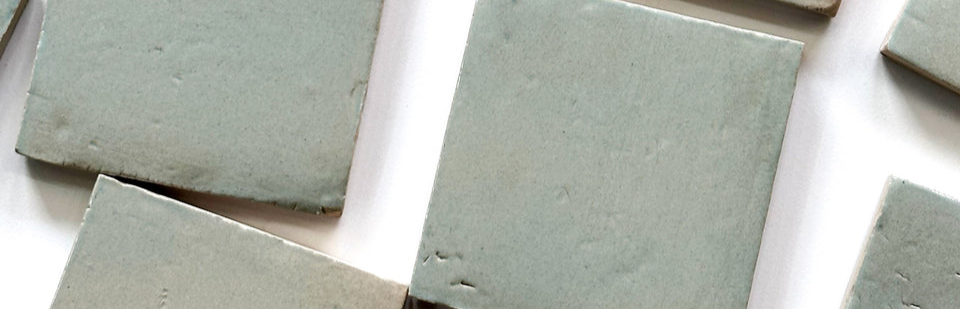


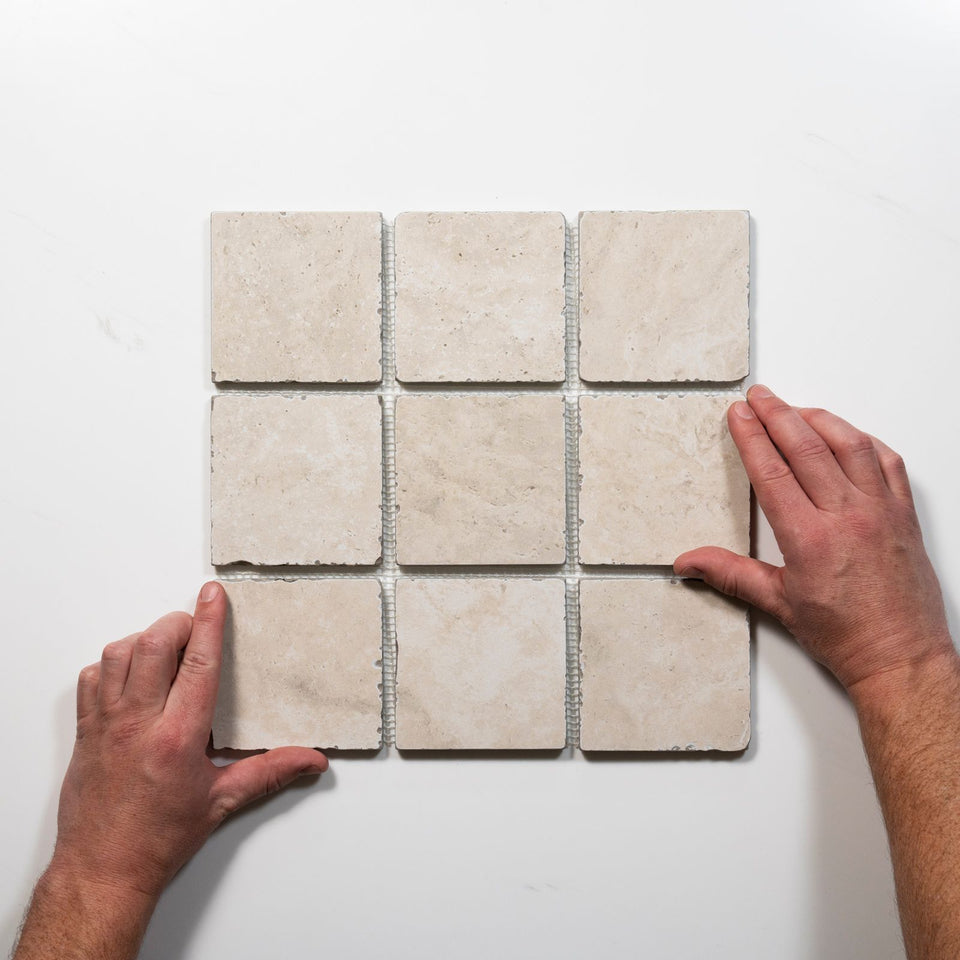


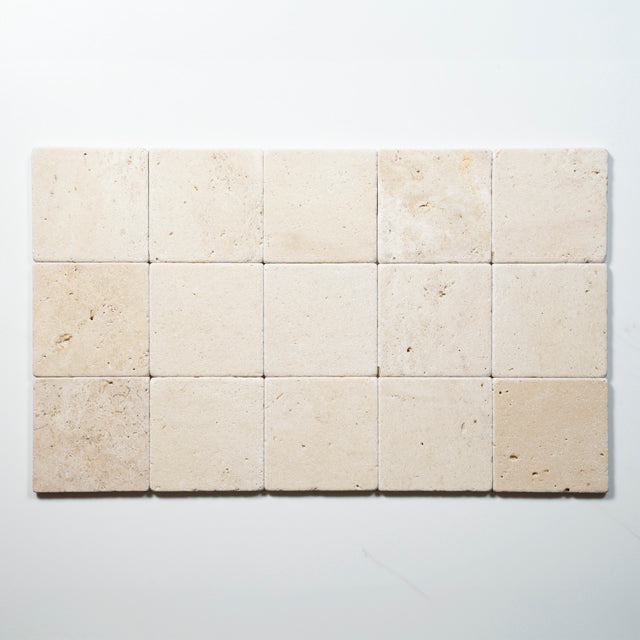

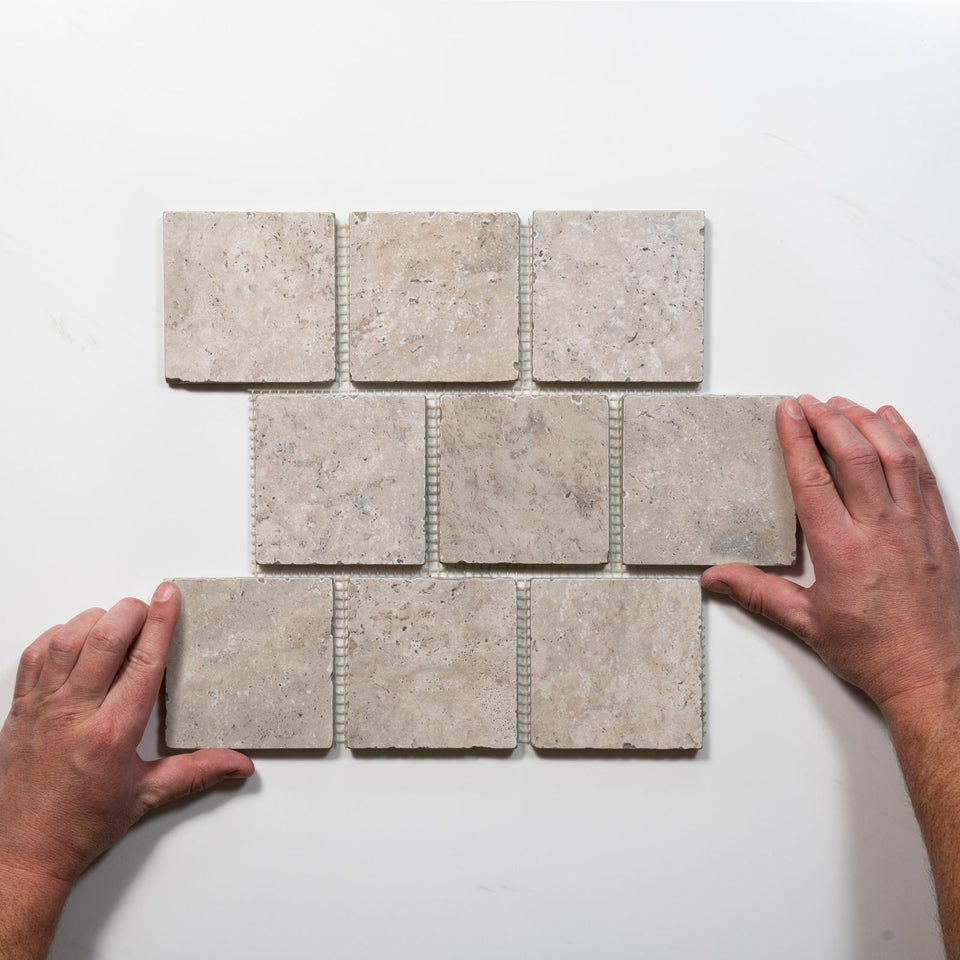






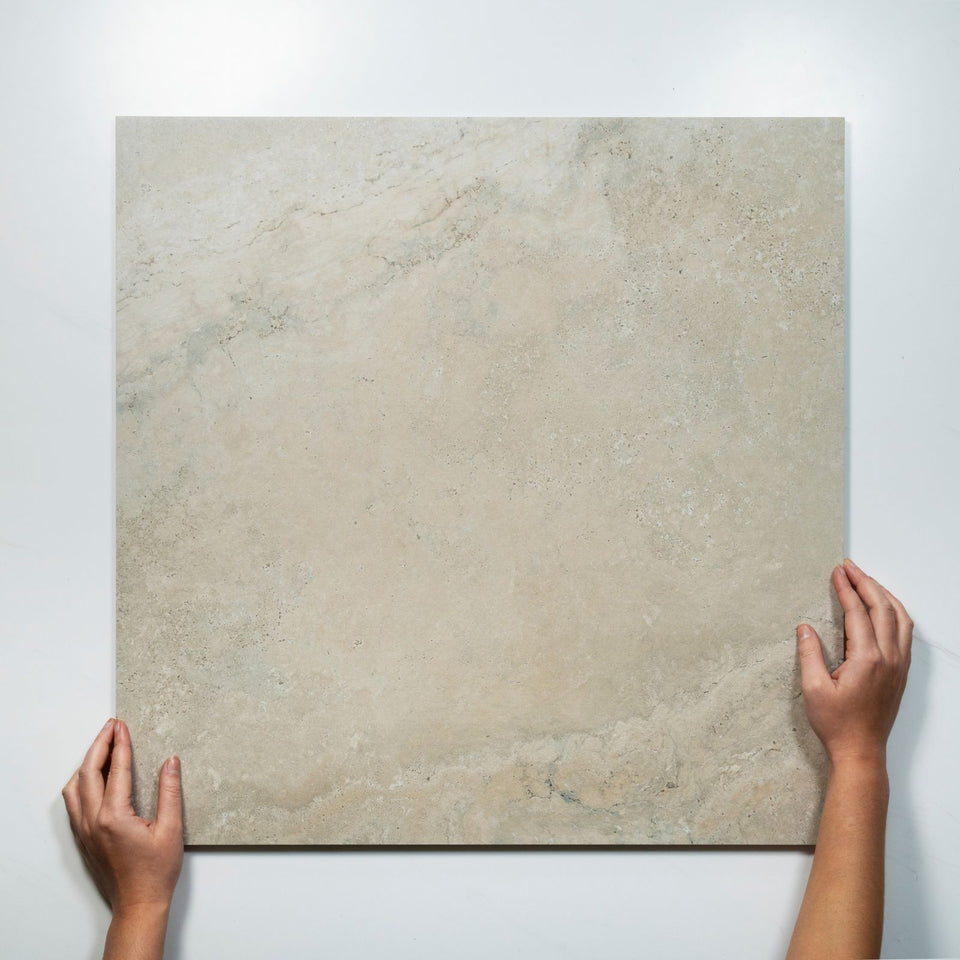


Travertine tiles come in two kinds. One is cut from the stone. The other is porcelain made to look like it. This collection is mostly the second kind, with a small natural stone option beside it, and the first thing to settle is which one you're buying. Finish and size questions come after that.
The porcelain here follows the cuts and surfaces of the stone: cross cut, vein cut, weathered cobblestone and French pattern, in the beige, ivory, grey and white tones travertine is known for. It leaves out the open pits and the sealing routine. For a bathroom floor, a kitchen splashback or an outdoor area, that trade is why many buyers choose the look-alike, and it's why this page spends time on how the two differ.
What follows covers how the look-alike compares with real travertine, what each cut and pattern is, how finish and slip rating relate to the room, which sizes and thicknesses are listed, and what to read on a product page before ordering. If you'd rather start wider, the main tiles collection sorts every tile by room, size, colour and material.
Real travertine is limestone deposited by mineral-rich spring water. The water leaves cavities as the stone forms, and those cavities give travertine its pitted face and its porosity. Guides to natural travertine agree on what follows from that: the stone needs sealing, and it needs a pH-neutral cleaner, not whatever is under the sink.
The porcelain in this range is described differently. Product pages for Ardenne, Josie, Ivy and Valerie say the surface is easy to clean and needs no sealing. The Ardenne page goes further and calls the surface non-porous and stain-resistant, cleaned with standard household products.
Real travertine has pits you can feel and variation that never repeats. Guides to the stone treat both as part of its appeal and as the main effort in keeping it. The porcelain pages describe a look and a texture instead of cavities. They mention mica flecks, a mica glaze and a set number of printed faces, which is how the porcelain gets close to the stone.
So the choice comes down to what you want from the material. If you want the stone itself and accept sealing and gentle cleaning, the natural stone option here is the one to look at. If you want the appearance with the care routine of a porcelain tile, the look-alike fits better, and it makes up most of the collection.
The wording changes from page to page, so read the one for your tile. Ardenne says easy to clean with standard household products, no sealing, non-porous surface. Josie and Ivy say cleaning is easy and no sealing is required, and Valerie says the same. Tuscan and Amara say easy to clean. None of the porcelain tiles in this range asks for a sealer.
The natural stone tiles read the other way. The tumbled natural beige pages call the tile a care consideration that requires sealing, and add that use on floors and in wet areas may need more care and regular sealing. That's the dividing line between the two kinds of tile here. Suppliers of natural travertine also warn against acidic products such as vinegar, because acid etches the stone.
The porcelain is sold under range names that describe the cut or the layout. Learn the names and the scrolling gets quicker.
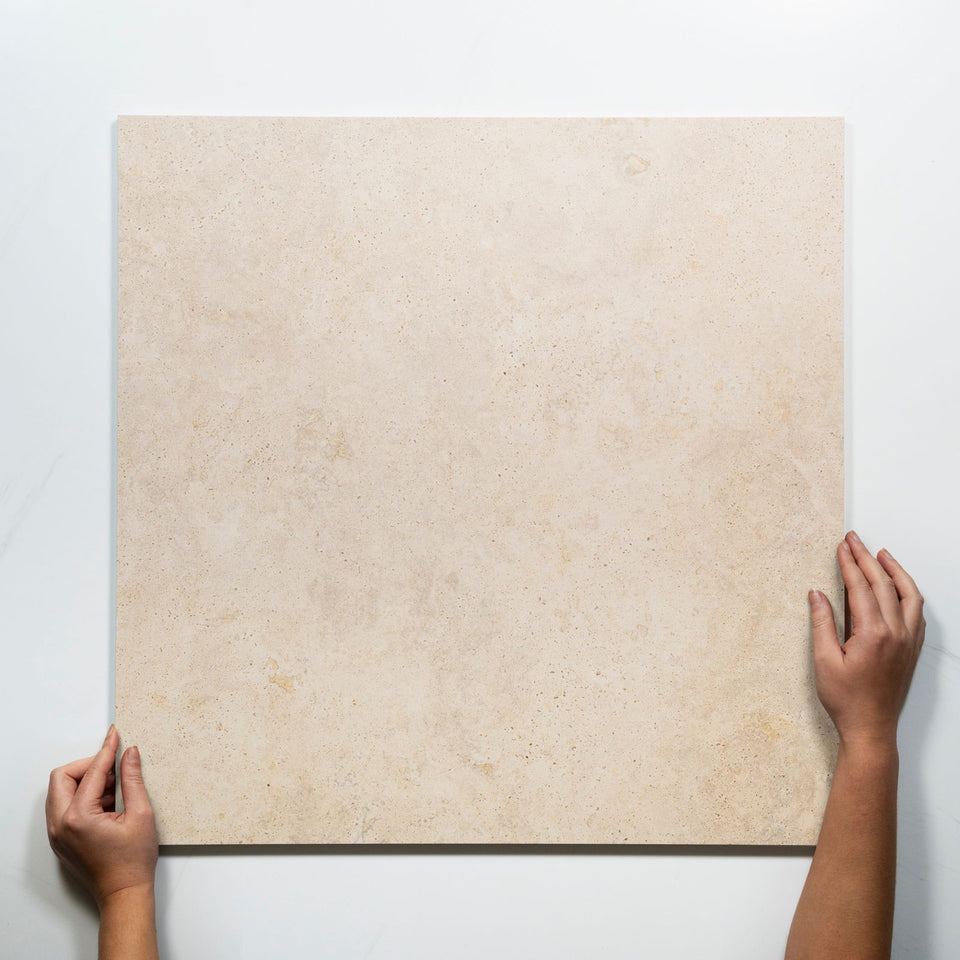
Josie is the cross cut. Its pages say the range shows the natural layers of stone, giving an organic, textured architectural tile in a matt Tech Grip finish with a mica glaze. The uses named include bathrooms, main floors, pools, paths and alfresco areas. Josie is listed for walls and floors, indoors and outdoors, including as a pool waterline, in beige and bianco.
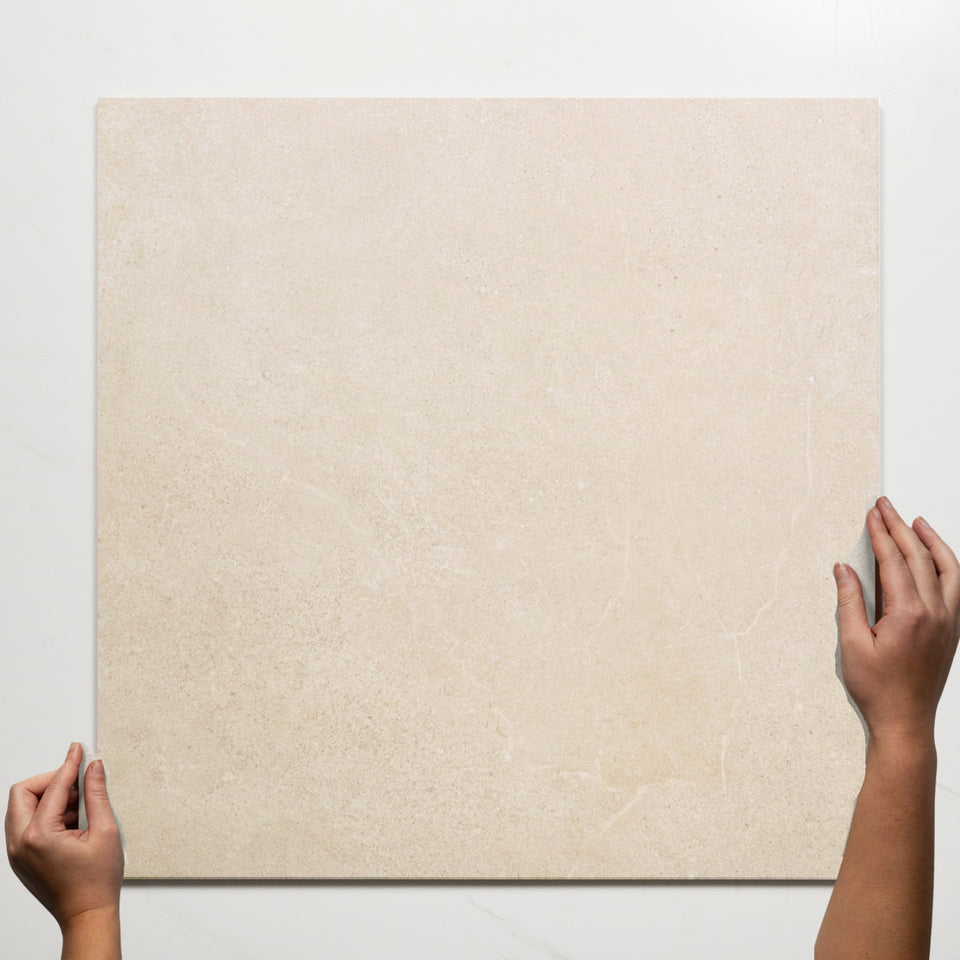
Ivy is the vein cut, in bianco and pearl. Its pages say each tile carries 24 faces and mica speck to replicate vein cut natural travertine. It's listed for walls and floors, indoors and outdoors, in a grip finish.
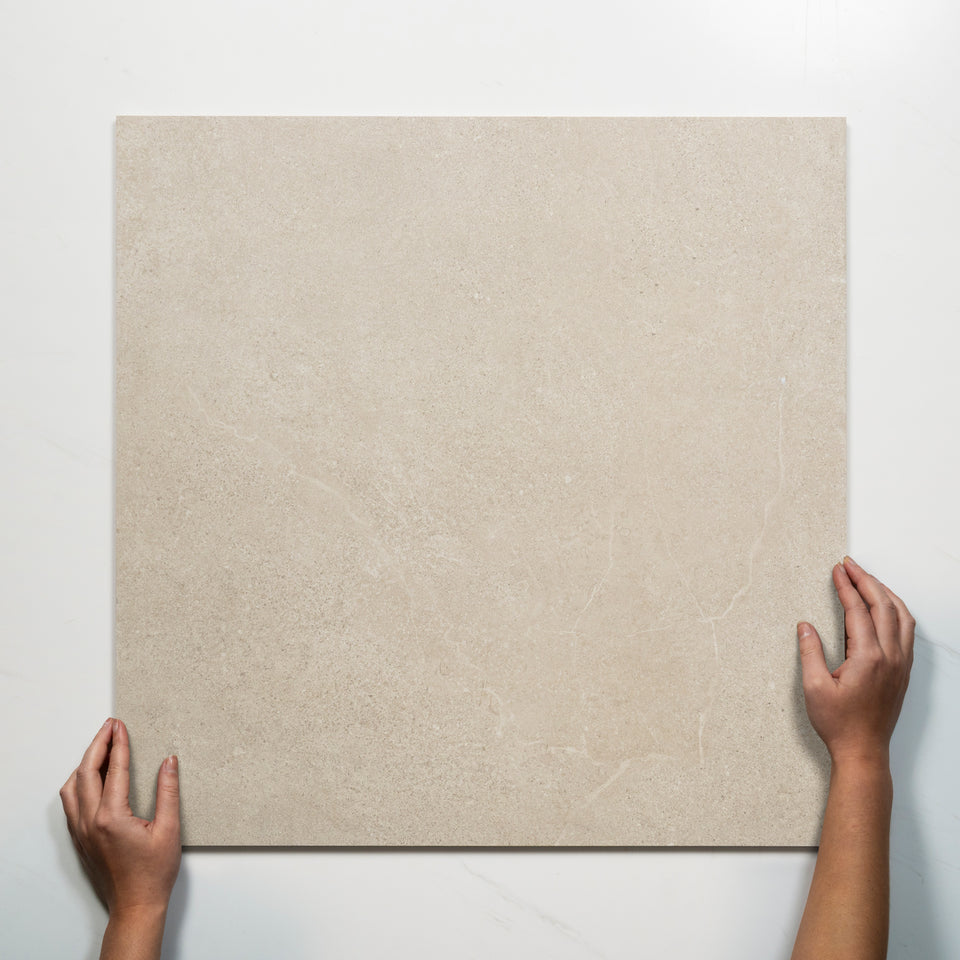
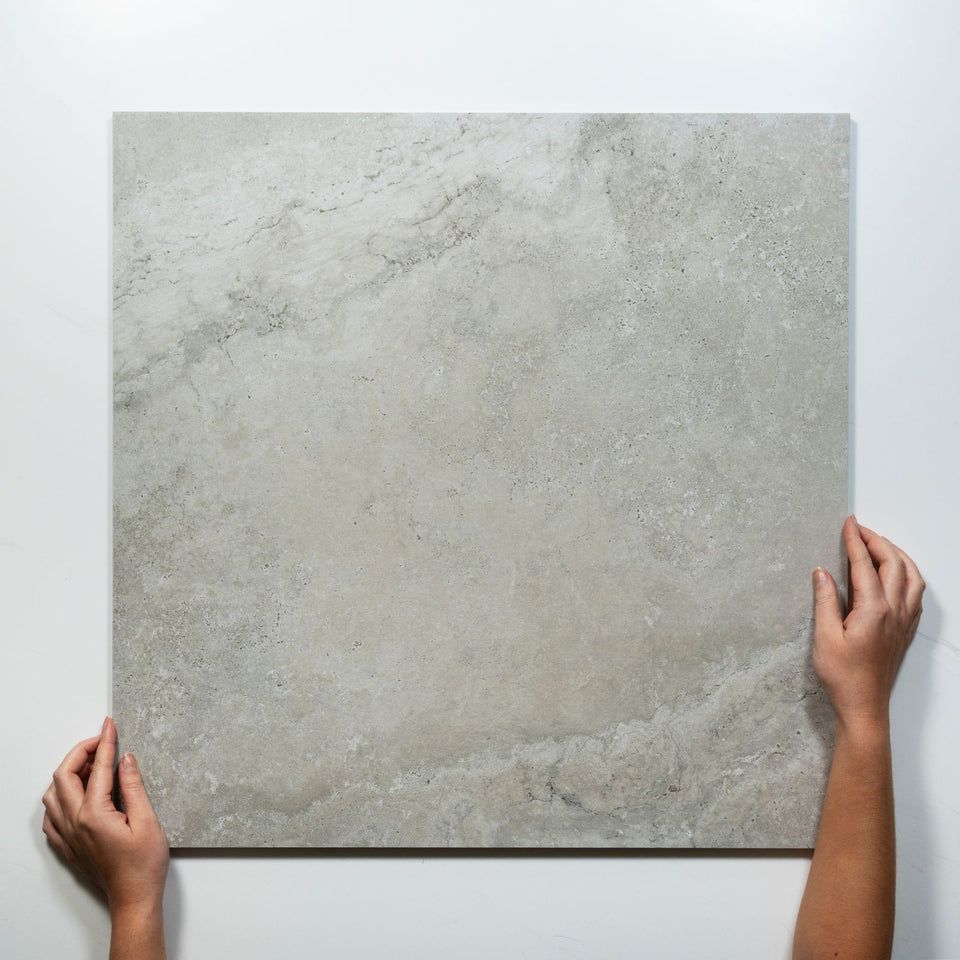
Ardenne sits between the two. Its page says it draws on both cross-cut and vein-cut patterning, with 24 unique faces in the 600 x 600, so repetition is practically a non-issue once the tiles are down. It comes in beige, grey and ivory.
French pattern is a set of mixed sizes laid together. Valerie's French pattern sets hold a mix of four sizes in each set, in ivory and grey. Amara's French pattern tiles come in beige and ivory, as a matt version and an external version. The Valerie pages give a recommended grout gap, so check it before buying spacers. If the pattern is what you're after, the French pattern tiles collection gathers every one.
Valerie also comes in a crazy pave format, in ivory and grey. For other crazy pave tiles across the store, see the crazy pave tiles collection.
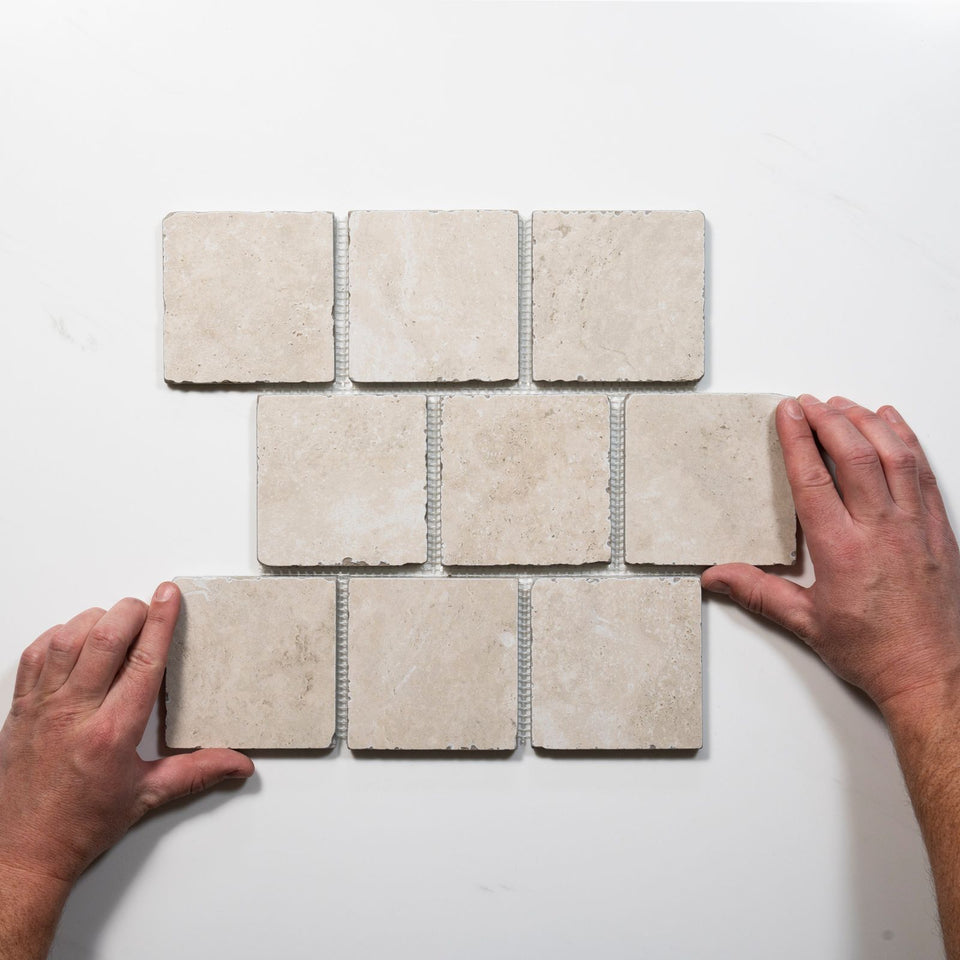
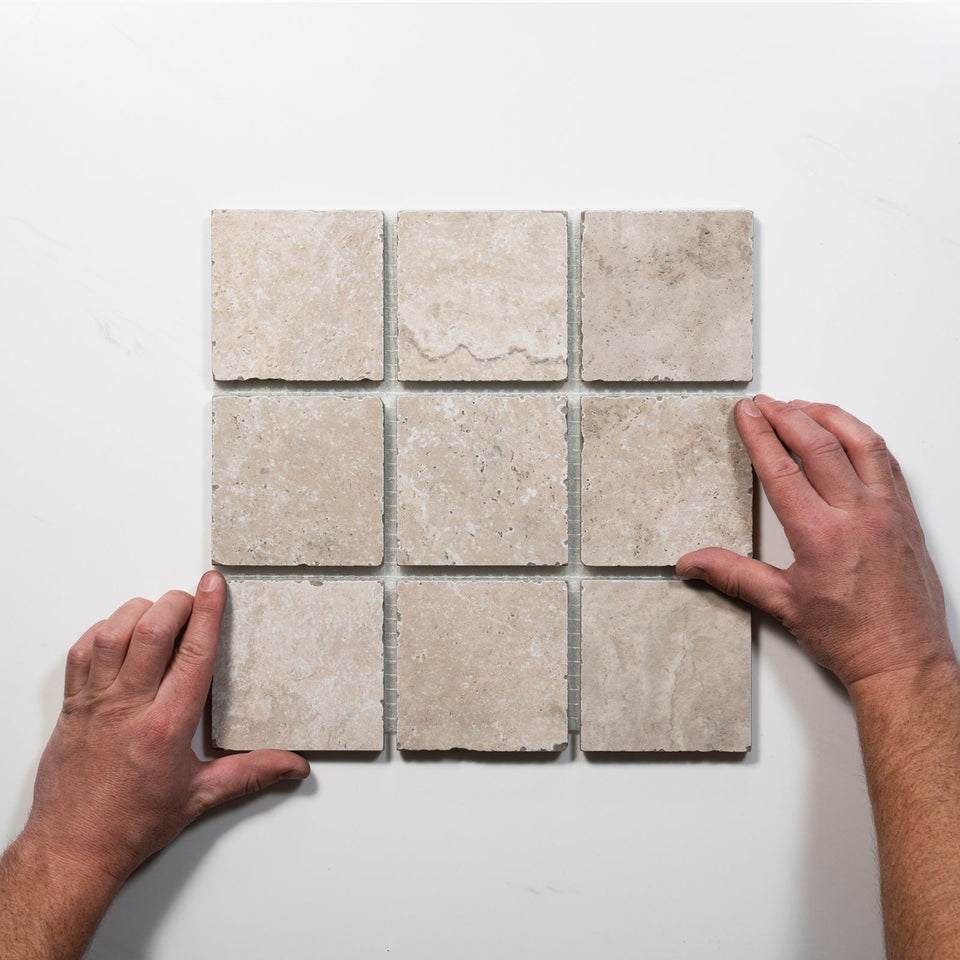
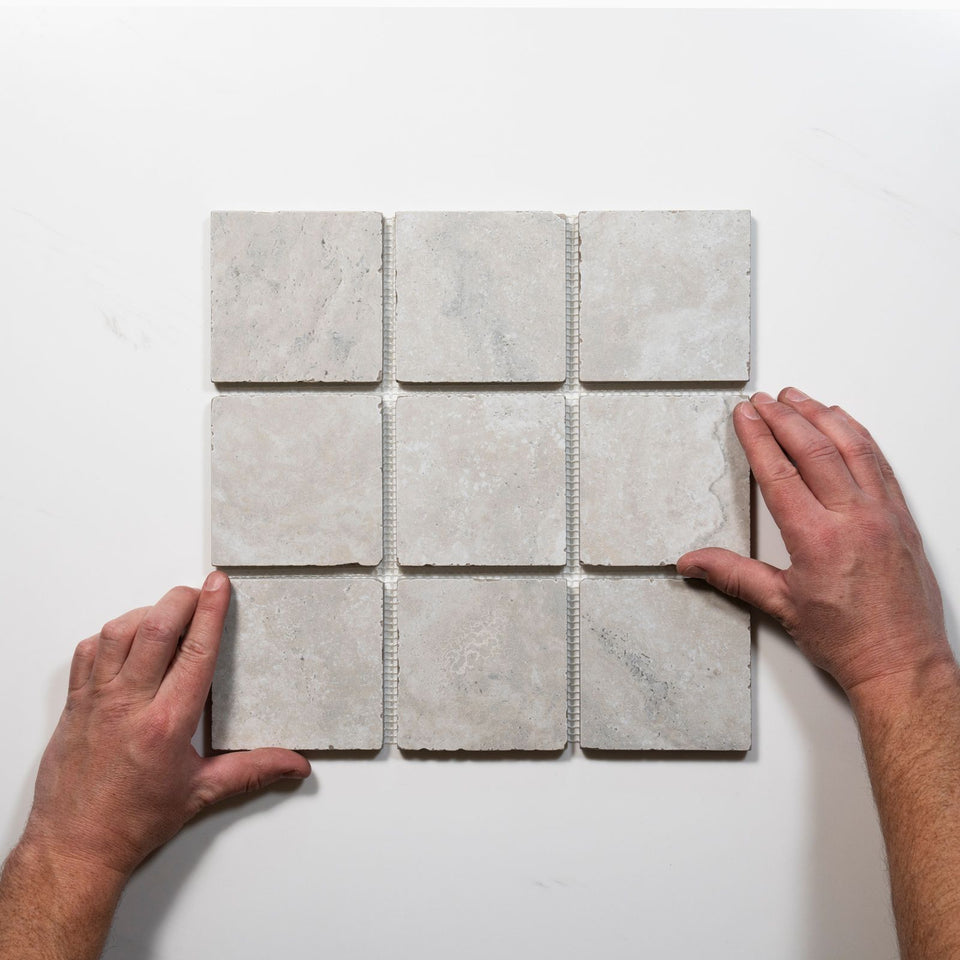
Valerie is also made as a porcelain cobblestone on mosaic sheets, in brick bond or straight bond. The pages describe gentle veining and soft, weathered colour variation, and say the sheets are laid for an easy install on walls and floors, inside or out. The shades are cream, ivory, silver, grey and rustic. For more sheet formats, the mosaic tiles collection has them.
The two natural stone tiles are small tumbled pieces in beige, a subway and a square. Tumbling gives rounded edges and a soft matte face. Their pages print a matte finish, a V4 appearance (substantial variation in colour and texture) and a slip rating of not rated, and they're listed for indoors and covered outdoor areas. The tumbled natural stone tiles collection and the wider natural stone tiles collection have more like them.
Real travertine never repeats. Porcelain does unless the maker prints many different faces, so the number of faces is the first thing to check on a look-alike. Ardenne and Ivy each describe 24 faces, as does Valerie, and the Ardenne page gives that as the reason repetition is practically a non-issue in the 600 x 600.
Pages also carry an appearance code from V1 to V4. One prints V4 as substantial variation in colour and texture for a unique appearance, and others describe V3 as moderate variation. Read the code as a guide to how much shade difference you'll see from tile to tile: a higher number means a busier, more stone-like floor or wall. One Ivy page prints V1 while its description says V4, so for that range go by the product photos and not the number.
The product pages warn that batches can differ too, which is the reason to order enough tiles in one go, covered further down.
Finish decides how a tile feels underfoot and how it behaves wet. Guides to real travertine make the same point from the stone side: a smooth finish can be slippery in a wet area, and a textured one holds grip. Each product page prints the finish.
Ardenne uses a micro-textured Versa-Touch surface, described as smooth underfoot yet slip-resistant wet or dry. Josie and Ivy use Tech Grip, an anti-slip surface with a matte look, as does Valerie, and the Avorio page names a Tech Grip finish too. Standard Tuscan tiles are plain matte. The tumbled natural stone is matte with no slip rating at all.
Slip ratings in the range run from P3 to P5. Ardenne is rated P4 under AS 4586-2013 and described as suitable for wet areas and outdoor use. Standard matte Tuscan tiles are P3, a moderate slip risk, for indoors and covered outdoor areas. The Tuscan external tiles are P5, a very low slip risk, in a grip finish for floors in outdoor areas. Avorio, Ivy and the Valerie cobblestone sheets are P5.
Two things follow. A higher rating belongs on a wet floor, a shower base or an outdoor area, while a lower one is reasonable on a dry wall. And ratings are printed per page, with some wording that differs between pages, so confirm the rating for the exact tile and size you pick and don't infer it from the range name.
The formats match what travertine is usually sold in. Rectangles at 300 x 600 and squares at 600 x 600 turn up across most ranges, with larger 600 x 1200 rectangles in Tuscan and Josie. Small formats include a 100 x 100 square and a 50 x 200 subway in natural stone, a 307 x 307 cobblestone sheet in Valerie, and the mixed French pattern and crazy pave sets. To browse by shape, try the rectangle tiles collection, the square tiles collection or the large tiles collection.
Thickness is printed per tile and sits between 9 and 11mm. Ardenne is 9mm. Standard Tuscan is 9.5mm in the smaller sizes and 11mm in the 600 x 1200. Avorio, Josie, Ivy and Valerie are 10mm. Most of the porcelain has a rectified edge, while the Valerie cobblestone sheets and the tumbled natural stone have a tumbled edge.
The Valerie pages give a recommended grout gap of 1.5mm to 3mm, and so do Josie and Ivy. Use the figure printed for the tile you buy.
The range sits in a narrow band of travertine tones: beige, ivory and cream, grey and silver, white and bianco, plus a rustic option in Valerie.
Retailers of real travertine describe colour by mood, and the tiles here follow the same palette. Ivory, white and silver are described as opening up modern kitchens and living areas with plenty of natural light. Deeper tones suit bathrooms and accent walls, where depth and contrast help. Warm beige and cream give a classic Mediterranean feel, indoors or out. For one colour across the whole store, see the beige tiles, grey tiles and white tiles collections.
The range is tagged Mediterranean, Farmhouse and Coastal, with a few pieces under Japandi and Spa Retreat. The Amara French pattern page describes coastal farmhouse vibes. To shop those styles across the store, the coastal tiles collection and the Japandi tiles collection are the places to start.
Bathroom floor and bathroom wall tags run across the range. For a floor, choose by slip rating first and colour second. Ardenne is rated P4 and listed for wet and dry indoor areas, and the Ivy tiles and Valerie cobblestone sheets are P5. Guides to real travertine say walls are easier to live with than floors, and the same logic is a sensible starting point for the look-alike: a matte, lower-rated tile on the wall, a higher-rated grip tile underfoot. The bathroom tiles collection has every tile tagged for the room.
A tile doesn't waterproof anything. Stone guides point out that the tile sits on top of the membrane and doesn't replace it, and porcelain works the same way. The tile finishes the wet area, and the substrate underneath has to be waterproofed.
Kitchen floor and kitchen and laundry splashback tags appear across the range. A splashback is a wall, so matte makes sense there, and the porcelain pages describe cleaning as easy. Kitchen floors follow the same slip rating rules as bathrooms. The kitchen tiles collection has more.
Living area tags are common. The Tuscan 600 x 1200 feature tiles are recommended for walls only, so if you're planning a floor, pick a tile whose page says floors. The floor tiles collection, the wall tiles collection and the feature tiles collection help narrow it down.
Covered outdoor, outdoor and pool surround tags sit on many tiles, and a few pages state suitability for pool waterline use. Outdoor suitability is where the pages differ most, so read the Area and Application lines. Some tiles are listed for indoors and covered outdoor areas only. The Tuscan external tiles are listed for floors in outdoor areas, in a P5 grip finish. Josie, Ivy, Valerie and Avorio are listed for indoors and outdoors. The outdoor tiles collection gathers tiles by that tag.
The range is built from several families of tile, and what separates them is on the product page, not in the name. Four lines settle most choices.
Area says whether the tile is for indoors, covered outdoor areas or open outdoor areas. Application says floors, walls or both, and some feature tiles are walls only. Slip rating and finish say where in the room the tile belongs. Maintenance separates a porcelain tile that needs no sealing from a natural stone tile that does.
When two tiles look alike, those four lines usually explain why they sit in different ranges. Avorio has its own page in the Avorio travertine look tiles collection, and the Tuscan family is gathered in the Tuscan travertine look tiles collection.
The product pages recommend ordering an extra 15% over the exact quantity to cover breakages and offcuts, and they note that batches can differ in colour, size and texture. Ordering the full amount at once cuts the chance of a mismatch if you need to top up later. The pages also suggest keeping spare tiles for future repairs.
They suggest pairing the tiles with underfloor heating for a warmer, drier, mould-resistant bathroom. The underfloor heating collection lists the kits.
People searching for travertine often ask about the disadvantages, and the answer depends on which kind you buy.
For real stone, the downsides are the porous face, the sealing and the care: a pH-neutral cleaner, no acidic products, spills wiped up quickly. Retailers of the stone also say it takes more upkeep than manufactured options.
The porcelain look-alike has different ones. The pits and cavities of the stone aren't there, since the pages describe a look and a texture. Repetition is possible if few faces are printed, which is why the face count on each page matters. And finish, slip rating and outdoor suitability vary between ranges, so a tile that suits a wall may not suit a wet floor or an open patio.
None of that rules the look out. Read the page for the exact tile, and pick the kind that matches the room and the care you're willing to give it.
For a calm surface across a large floor, look at Ardenne and Josie in the larger formats, or Avorio. For a pattern, look at the Valerie and Amara French pattern sets. For a rustic layout, Valerie crazy pave. For a textured feature wall, the Valerie cobblestone sheets. If you want the real stone and will seal it, the tumbled natural beige subway and square are the ones.
Whichever you choose, order from one batch, check the slip rating for the room and read the care line. For other stone looks in porcelain, the nearest neighbours are the porcelain tiles collection, the marble look tiles collection and the terrazzo look tiles collection.


