
*View accurate shipping rates and availability






4 Items
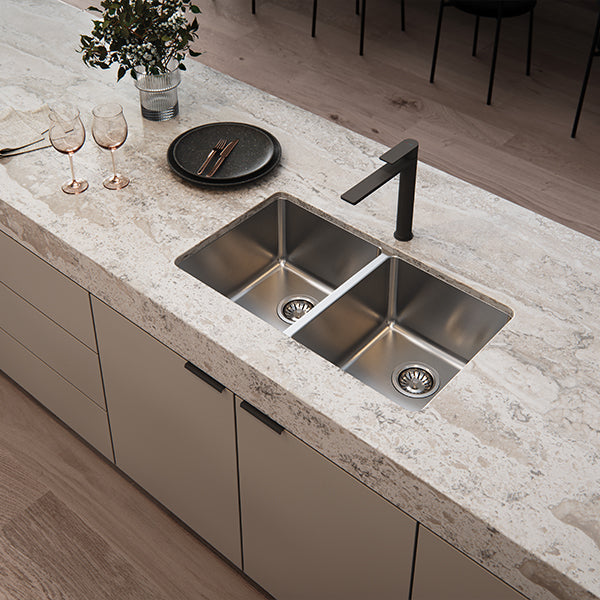
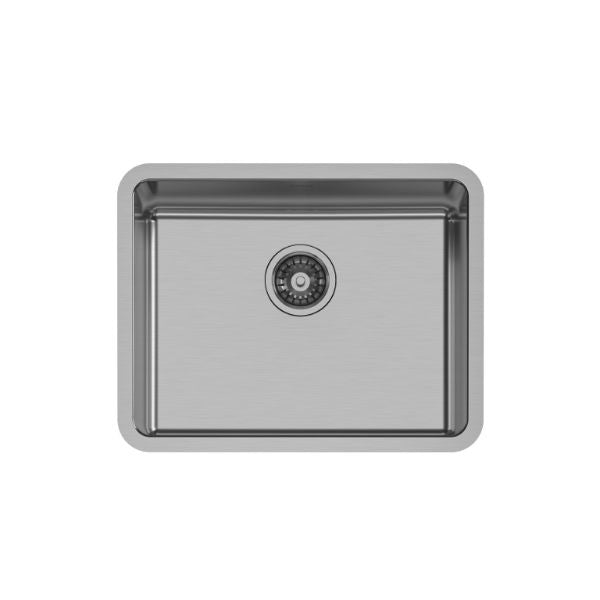
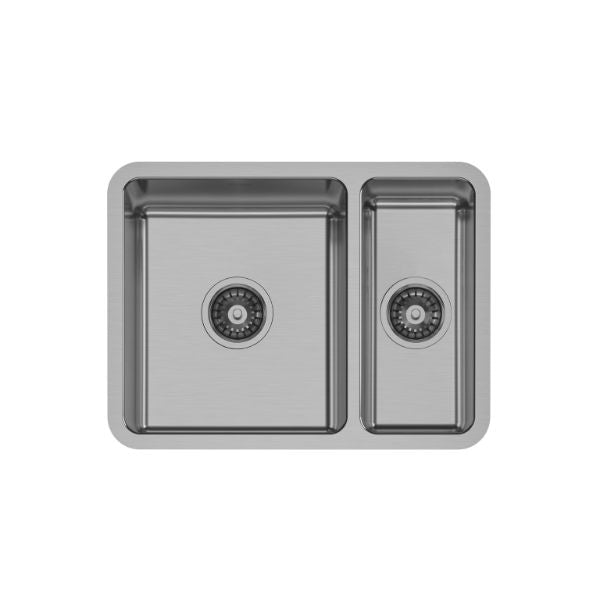
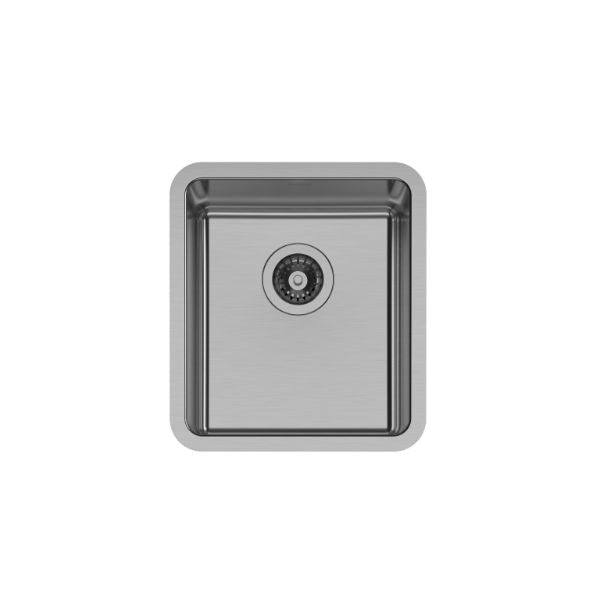
The Phoenix 2000 Series is a set of 304 grade stainless steel kitchen sinks with a pressed bowl, a centre rear waste and the choice of undermount or overmount fitting. The listings give four sizes: a single, a large single, a 1-1/2 bowl and a double. This guide sets out what each size measures, what the 0.9mm steel means in practice, how the rear waste changes the cabinet beneath, how the fitting choices work and how to look after the sink. The sensible default is to choose the width from the cabinet first, because all four sinks share the same 461mm front-to-back size. For the other Phoenix sinks, see Phoenix kitchen sinks.
The listings give the overall width and length, and the bowl depth. Every sink is 461mm from front to back:
The listings do not state bowl capacities. A retailer lists the 1-1/2 bowl at 33 litres for the main bowl and 11 litres for the small one, with depths of 229 and 152mm, and lists the double at 33 litres per bowl. Those are that retailer's figures, and the depths sit within a few millimetres of the TBS ones. A retailer sizes guide gives 460mm as the top of its small range, and describes a standard sink as 500 to 1000mm long, so the single at 411mm sits in the small range and the other three in the normal one.
Each listing states 304 grade stainless steel, a 0.9mm thickness, a brushed stainless finish and a machine pressed design. Each box holds the sink, the stainless steel basket waste or wastes, and a sink fixing kit. The single, the large single and the double carry the listing line that the centre rear waste location allows for more space beneath the sink, and the 1-1/2 bowl carries a centre waste position. A retailer adds that the sinks have an exterior coating to prevent condensation and soundproofing pads, but the TBS listings do not mention either, so check the product page.
A stainless steel guide describes 304 as about 18% chromium and 8% nickel, corrosion resistant but not completely rust-proof. The thickness is a separate question. A buyer's guide says a thicker sheet, which has a lower gauge number, limits flex, noise and denting. Another guide associates 0.8mm with thin imports that dent more and sound noisier, and 1.2mm with sinks it calls quality Australian-made. At 0.9mm, the 2000 Series falls between those two figures, and the sound pads a retailer mentions are worth asking about if quiet is a priority.
The listings say machine pressed. A guide to stainless sinks says a pressed bowl is formed from one sheet, has broad rounded corners and wipes clean quickly. A handmade bowl is cut from panels and welded, with straighter walls and smaller corner radii that need more attention when cleaning. The same guide says a well-made pressed sink can beat a poorly welded handmade one.
The waste sits at the centre of the back of the bowl. The listings say this allows for more space beneath the sink. The listings do not say how large the waste is, so check the basket waste against the pipework before the plumber arrives. A retailer guide says connecting the water supply and the tapware needs a licensed plumber in every state and territory. See sink wastes.
The listings say undermount and overmount. A retailer guide says a topmount sink sits on the benchtop with the rim showing, works with almost every benchtop, laminate and timber included, and is easier to replace later. It lists a rim that can trap debris and silicone that can peel as the downsides. An undermount sink fixes beneath the benchtop with no rim, so crumbs sweep into the bowl. The same guide says it needs a waterproof solid benchtop such as engineered stone, granite, marble or concrete, and is not recommended for laminate or timber.
A Houzz guide says caulking needs replacing every three to five years on both types. Another guide says to check the clips and screws on an undermount sink every month. The box holds a sink fixing kit, and the listings do not describe what is in it. See undermount kitchen sinks and inset sinks for the methods.
A Houzz guide says undermount sinks on benchtops thicker than 30mm need machining on the underside, and that the exposed stone edge around the cut-out needs polishing. It adds that exposed stone edges can chip when large pots knock them. A second guide says do-it-yourself undermount sinks are effectively glued in, so poor installation risks the sink coming away. These points are reasons to give an undermount fit to the benchtop fabricator and not to treat it as a job for the cabinet maker alone.
None of the listings or the retailer pages read gives a cut-out size. A retailer guide says to use the cut-out on the specification sheet or the template, not the outer dimensions, and another warns that a cutting error can mean replacing the benchtop, which is why it advises a professional. Ask Phoenix or the supplier for the template before the benchtop is cut. A guide to confirming the opening says to do it before the benchtop is templated, because stone masons often charge for re-cuts.
For the cabinet, a retailer sizes guide says the sink should be at least 70 to 80mm narrower than the internal width of the base cabinet. By that rule the 588mm sink points to about 660 to 670mm, the 617mm sink to about 690 to 700mm, and the 793mm sink to about 865 to 875mm. The 411mm sink points to about 480 to 490mm. A second guide says a single bowl suits a household with a dishwasher that rarely hand-washes full loads, and a double suits one that hand-washes and preps often. A 1.5 or 1.75 gives a main bowl and a smaller rinse or prep bowl.
The depth of 228mm sits in the standard band of 200 to 250mm in a sizes guide. A bowl that is too shallow splashes and one that is too deep strains posture, according to a buyer's guide. See single bowl kitchen sinks and double bowl kitchen sinks for the layouts across makers.
The 1-1/2 bowl has a main bowl and a smaller, shallower second bowl, 155mm deep on the listing. A retailer lists it as left or right hand, so the small bowl can sit on either side. A retailer page describes a half bowl as useful for rinsing vegetables, draining pasta or soaking utensils while the main bowl is used for washing. See 1.5 bowl kitchen sinks for other makers' versions.
The listings do not mention a tap hole, and the store's product data records none, so the tap goes on the benchtop or the wall. A retailer guide says most sinks have one or two tap holes and to check the count against the tap. A guide says a compact sink suits a standard mixer, and that a deep sink may need a taller mixer or a pull-out. See kitchen taps for the options.
The listings invite you to build a workstation sink by adding matching accessories from a drop-down list on the product page. The Phoenix kitchen sink accessories page holds them. A buyer's guide says a grid protector sits just above the basin floor, prevents scratches and helps drainage, and that clip-in colanders, portable drainboards and over-sink racks are common. The listings do not name which accessories fit which size, so check the accessory's page against the bowl dimensions.
A buyer's guide says thin sheet can sound tinny and to look for sound pads or an undercoating. The listings do not mention sound pads, though a retailer says soundproofing pads are included. If the sink sits in an open-plan kitchen, ask the supplier about the pads before ordering.
A buyer's guide says to rinse with warm water after use, wipe with mild dish soap and a soft cloth, follow the grain on stainless steel and dry with a microfibre cloth to prevent water spots. It says to avoid abrasive powders, bleach, ammonia cleaners and steel wool, and gives a baking soda paste as a gentle option. A retailer guide says stainless steel scratches and shows water spots, and that a satin finish hides marks better than a mirror polish. The listings call the finish brushed stainless and give no care text, so follow the instructions in the box.
A guide to sink sizes gives a pairing by cabinet. For a 600mm base cabinet, a single bowl about 440 to 540mm wide suits an undermount fit. For a 900mm cabinet it suggests a 1.5 or 1.75 bowl with a drainer, or a double bowl about 760mm wide. It gives a typical topmount cut-out in Australia as about 560 x 430mm, and says undermount and large single bowls vary, so the opening should be confirmed. Set against those figures, the 588mm single is wide for a 600mm cabinet and suits a wider run, while the 793mm double is close to the guide's 760mm double.
A stainless steel guide gives an inspection checklist. Check the grade marking, an even brushed grain, consistent edges and corners, the base slope toward the waste, any sound pads or undercoating, the dimensions against the cabinet and the mounting support. Do the check before the benchtop is cut and before the plumber starts, because a fault found after installation costs more to sort out.
A buyer's guide describes stainless steel as light, rust, heat and stain resistant, with some give so that glassware chips less. It lists scratches and water spots as the downsides. A granite composite sink is harder and quieter but heavier, according to a Houzz guide, and may need cabinet reinforcement. According to the same guides, a fireclay sink is non-porous but heavy and fragile. See granite and stone composite sinks and ceramic kitchen sinks for the alternatives.
The Phoenix 2000 listings invite you to build a workstation sink by choosing matching accessories on the product page. An Australian kitchen retailer describes in-sink accessories as a way to turn the sink into a workstation, so you can prepare, wash and clean up without using bench space, and names roll mats, colanders, chopping boards and dish racks. One roll mat on its site is 304 grade stainless steel with a satin finish, made for a 450mm sink, with non-slip detailing, and it rolls up for storage. The retailer lists its uses as washing up, drying dishes, holding heavy items, food preparation and protecting the bench from hot pots. The smallest 2000 Series sink is 411mm wide overall, so size any accessory to the bowl, not to a sink name.
One reviewer of that mat found the metal thin and said it flexed under weight. That is one person's view of another maker's product, but it is a reminder to check the thickness of any accessory that will carry a heavy pan. Also check whether the Phoenix accessory is listed for your sink size, because the listings tie accessories to a model.
A retailer's help-centre guide, as summarised in a search result, says a topmount sink is simpler to install and the only real option on laminate, because the rim protects the exposed laminate edge from water damage. It lists crumbs under the rim as the downside and says a topmount sink is easier to replace because the benchtop does not need to be altered. It describes an undermount sink as sitting under the stone with no rim, so crumbs and water wipe straight into the bowl, but limited to solid waterproof benchtops, harder to fit and costing more to install. The 2000 Series can be fitted either way, so the benchtop decides.
The TBS listings leave some figures open, and a few of them matter for fitting. Ask for the cut-out size, which no source read gives. Ask for the bowl capacities of the single, the large single and the double, because only a retailer states litres, and only for the 1-1/2 bowl and the double. Ask whether the sound pads and the condensation coating that a retailer mentions come with each sink, because the listings do not say. Ask about the weight too, so the cabinet can be checked. A buyer's guide says a bowl that is too shallow splashes and one that is too deep strains posture, and the 228mm depth is a figure to try against the way you wash up. A second guide suggests a double when the benchtop run is 900mm or more and a single when it is under 600mm. A retailer guide says larger sinks need more bench space, deeper cabinets and sometimes reinforcement, and the double at 793mm is the one to check first.
A flush mount sink sits level with the benchtop. A retailer guide and a home-renovation guide both say it has the same benchtop limits as an undermount fit, needs meticulous fitting and gives the highest sealing standard of the three. The listings for the 2000 Series name undermount and overmount only, so a flush fit is not one of the options and would need a different sink.
The rear waste on these sinks leaves the front of the cabinet clearer, according to the listings, and the 228mm bowl depth is the standard figure. A guide to sink sizes gives a depth range of 150 to 250mm and describes anything from 200mm as standard. Before the benchtop is cut, check the cabinet depth and any drawer or shelf under the sink against both the 461mm front-to-back size and the 228mm depth, because the bowl and the waste both sit inside the cabinet.
When a 2000 Series sink replaces an old one, the old opening sets the limit. A retailer guide says to measure both the base cabinet and the existing benchtop cut-out before you order. Compare the old opening with the new sink's template once you have it. A topmount fit is the more tolerant, because a retailer guide says the rim covers the cut edge.
This page covers the 2000 Series only. For other stainless sinks, see stainless steel sinks. If you have not settled on a layout or a maker, the main kitchen sinks page lists every range. One guide counts 20 to 30 uses of a kitchen sink a day, so the width, the mounting and the waste position are worth getting right before you order.


