*View accurate shipping rates and availability
Australia's #1 online bathroom retailer
Australia's #1 online bathroom retailer
Over 1M+ products shipped
60 day extended returns






3 Items
For easy maintenance, choose a sink with a satin (not mirror-polished) stainless steel finish, it hides scratches and water marks far better. Composite granite sinks are highly stain-resistant and durable. Avoid white enamel or fireclay if your household generates heavy staining (coffee, red wine), as these require more careful maintenance. Look for sinks with a waste included in the package to simplify installation.
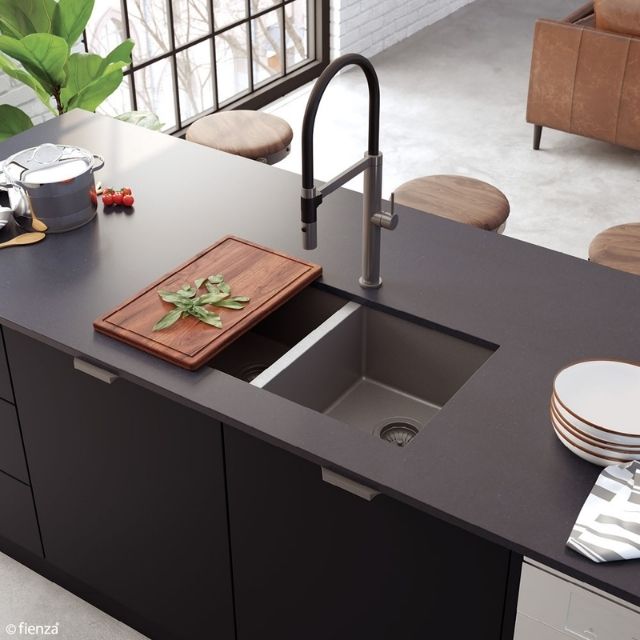
An undermount (undermount) sink is mounted below the benchtop with the benchtop material finishing cleanly at the edge of the sink opening, ideal for stone and solid surface benchtops. A top-mount (drop-in) sink drops into the benchtop from above with the rim visible. Undermount sinks are easier to wipe into from the benchtop and look more streamlined; top-mount sinks are more flexible with benchtop material choices.
The right kitchen sink size depends on your benchtop width and how you use the kitchen. Single bowl sinks typically range from 400mm to 700mm wide and suit smaller kitchens or those with a dishwasher. Double bowl sinks (700–900mm) allow simultaneous washing and rinsing and are popular in larger family kitchens. Measure your cabinet opening carefully, as the sink must fit within the internal cabinet dimensions.
Australian kitchens commonly use stainless steel undermount or top-mount sinks, composite granite/quartz sinks, fireclay sinks (popular for farmhouse-style kitchens), and pressed steel enamel sinks. Stainless steel is the most popular for its durability, affordability, and hygiene. Composite stone sinks offer a premium look with good heat resistance. The Blue Space stocks kitchen sinks from Bao Bath, Turner Hastings, Seima, and other leading Australian brands.
The finish of your kitchen mixer should complement the other metal elements in your kitchen, cabinet handles, appliances, and rangehood trim. Chrome remains a classic, low-maintenance option that suits almost any kitchen style. Matte black has surged in popularity in contemporary Australian kitchens and pairs particularly well with dark stone benchtops and two-tone cabinetry. Brushed brass and gunmetal finishes suit warmer, more design-forward kitchens. From a practical perspective, brushed and matte finishes tend to conceal water spots and fingerprints better than polished chrome, which can show marks more readily in a busy kitchen environment.
Yes. All kitchen tapware sold in Australia must carry a WaterMark certification, which is a mandatory regulatory requirement confirming that the product meets Australian plumbing standards for safety and performance (AS/NZS 3718). In addition, kitchen mixers must display a WELS (Water Efficiency Labelling and Standards) rating indicating their water efficiency. A 4-star WELS rating or higher is considered good practice for kitchen mixers and will reduce water consumption with no practical performance trade-off. When purchasing online or from an importer, always verify that the product carries both a valid WaterMark licence number and a WELS label, these are legal requirements in Australia, not optional extras.

Switch to your local store for faster shipping and local deals.